Category: Wk13-Early Women’s Soccer

  • Women in soccer

    When people think of soccer, they often think of men playing the game. But at least in the U.S, they talk about the U.S women’s team often. And that is talking in modern terms. The thing is that although women’s soccer is talked about today, nobody seems to care about the history of women’s soccer. Which is very unfortunate because they also played a part in the development of popularity in the sport. Although no credit is given to them, based on the readings, it brings to light the history of women’s soccer. And helps bring a new perspective of the sport.

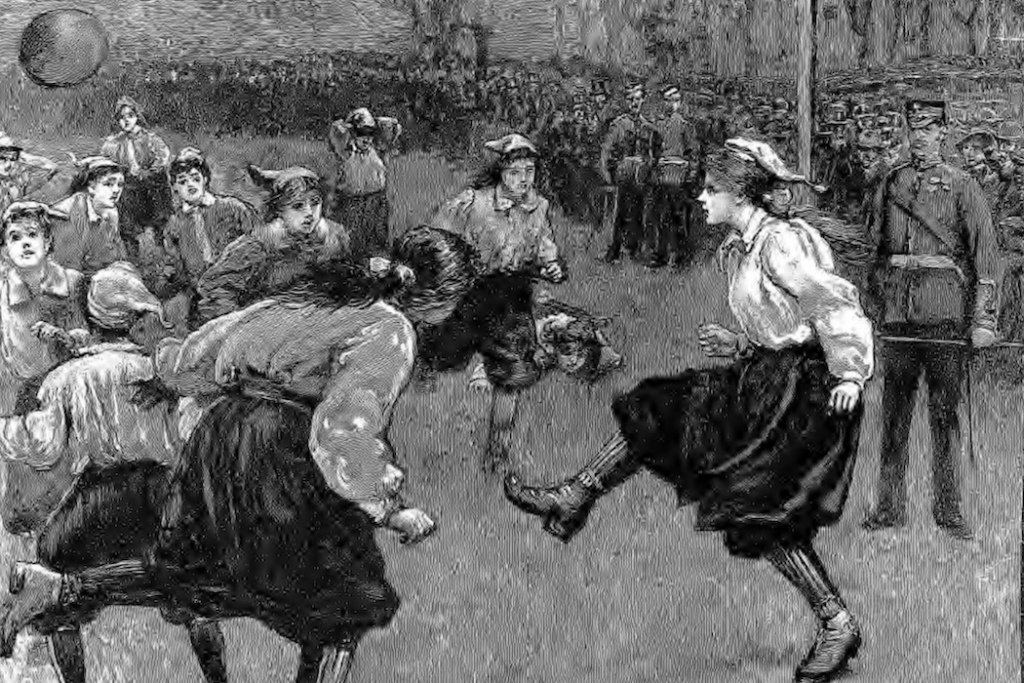
    In chapter seven of From Football to Soccer, it talks about some of the history of women’s soccer in the United States. After the 1893 San Francisco games, there was really no women’s soccer around or at least documented about for the next ten years. But it did talk about how women played in High school and college. Plus it was a much softer sport on the gridiron. There were even women referring to the game. But what is being revealed is how important women were to the sport around that time frame. It is something that should be talked about more.

    Women’s soccer is also not talked about enough in Latin America. In The History of Women’s Soccer  in 1900, women’s soccer was present in Chile and there is even a possibility that it was way before that. There are even photographs in the Chilean National Historical  Museum. And photos of futboleras are shown playing, but they are wearing school clothes and not athletic wear. Basically it shows how women were always present in the sport of soccer. Despite the fact that the majority of people only associate soccer with men. But it does reveal more of the history of the sport.

    To conclude, the sport of soccer has always had women present. Even though it is more common to see women now in the sport. It is important for those who came before. These readings help bring that to light. And finally, in modern society, women are getting recognition in the sport.
  • Women’s Soccer in Relation of WW1

    Due to the outbreak of WW1, which saw most European and American men shipped off to fight in the battles of it, this led to the the need of bodies in important industries, which allowed women to hold jobs and roles that usually men would fill because of this time of need. While that general statement seems to be common knowledge now for anyone who has taken a general history class, what isn’t necessarily talked and what may not be common knowledge about is how women’s soccer was affected because of this war and time period.

    International matches of women’s soccer aswell as women’s football clubs grew in popularity and quantity during this time because of the lack of men’s soccer at the time. This is shown on an international and somewhat professional level in England, and on a collegiate and professional level in the United States. This growth continued at a strong rate and was starting to be seen as evolved along with the men’s game from a popularity standpoint, but when the conclusion of WW1 came and the world began to “come back to normal” as one might say, we saw that the elite class of the men’s soccer game saw the growth of the women’s game not as a positive for the game of soccer, but as a negative to the profits and growth of the men’s game. This led to the slandering of the women’s soccer teams and their involvement in the sport, hurting their development that they were looking to build upon during their growth in WW1, or more generally the early 20th century.

    The main aspects that these chapters share and talk about is the evolution of the women’s game during this period of time. To many people at this time and even to an extent today, most women’s sports teams is an extension of men’s sport teams. This is due to a general male dominance and hierarchy that we have seen historically in traditional European or European adjacent societies, aswell as how we learned in these readings, an effort by high-ranking men to cap the development of women’s sports as to not take away success and profits from men’s teams of the time.

  • Development and Early Struggles of Women’s Football

    The second chapter from The History of Women’s Football, and the seventh chapter of From Football to Soccer: The Early History of the Beautiful Game in the United States, both go over the early struggles and developments of women’s football.

    As described in The History of Women’s Football, women playing football was seen as a threat in ways to the men’s teams.  During the first World War, men were off fighting the war, leaving the women to take the jobs they had and essentially run the country while they were away.  This included the sport of football, which had women playing on the pitch.  After the war ended, and all the men returned, women’s football was still popular among people, which scared the men’s association so badly that they banned them from playing on the pitch, whilst making up some wildly sexist, and quite frankly, nonsense statement that the game of football is “unsuitable for females.”  I find it interesting that the men’s clubs and associations found women playing the sport to be a enough of a threat to their existence for them to just flat-out ban it.  

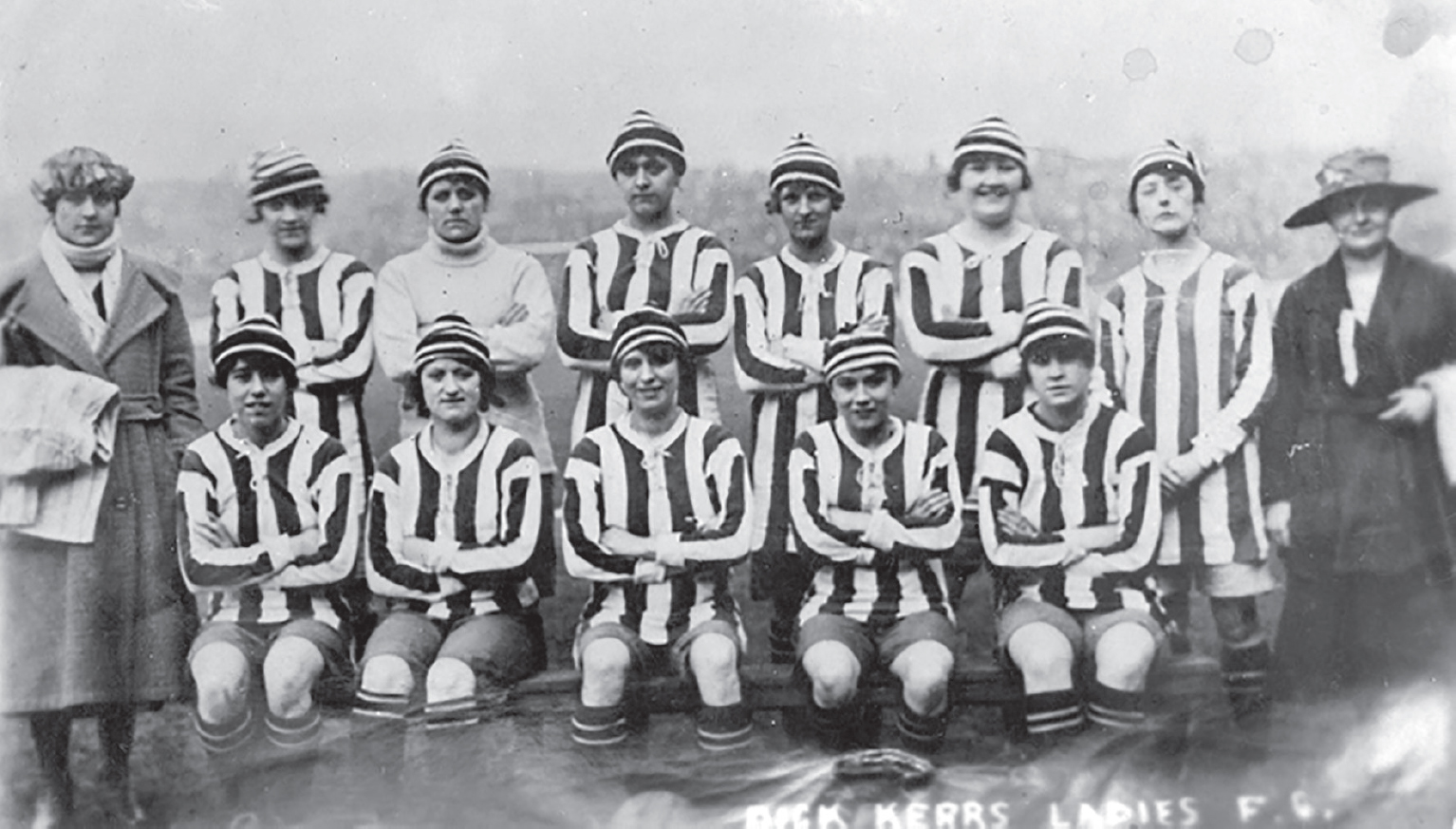
    The rest of this chapter, and the chapter in From Football to Soccer, detail the development of women’s football.  Most of the development from The History of Women’s Football come from before the eventual banning, and showcase the development of teams like Dick, Kerr Ladies, and Atalanta, and eventually the short-lived English Ladies Football Association.  The chapter in From Football to Soccer primarily focuses on the development of the sport in the United States, which was only confined to certain regions, and women’s soccer experienced the same ordeal.  This chapter goes over the development of women’s soccer in schools, in clubs, and mentions Doris and Helen Clark (who are not related at all, and also lived on opposite sides of the country) who helped develop the sport in California and Connecticut respectively.

    All in all, these two chapters talk about the early history, and struggles, of women’s football throughout the world, where it struggled with being put down by men, and in the United States, where it simultaneously faced that issue, and with the fact that soccer was struggling in the United States as a whole.

    By Tommy Oneto

  • Week 13 Blog Post

    What really stands out between these two readings is that women’s soccer wasn’t just about whether women could play, it was about where they were allowed to play and who controlled that space. In the U.S., the game kind of grew quietly in the background, mostly in schools and physical education programs. It was encouraged in a limited way, something healthy, social, and “appropriate”, but that also meant it stayed contained. Without real leagues or consistent competition, it never fully built momentum, even though plenty of women were clearly interested and involved.

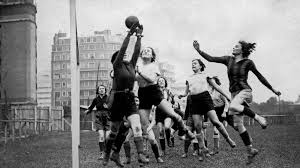
    At the same time, the international side, especially during World War I, shows a completely different version of what women’s soccer could be. With men away at war, women stepped into new roles, and soccer became part of that shift. Games were drawing huge crowds and raising money for charity, and for a moment it looked like the sport might actually stick at that level. But that visibility also created tension. Once the war ended, organizations like the FA stepped in and shut it down, claiming it wasn’t suitable for women. It’s hard not to see that as more about protecting control than anything else.

    Putting these together, it feels like women’s soccer wasn’t lacking interest or ability, it was lacking permission. In some places, like U.S. schools, it was allowed to exist but only in a controlled, low-stakes way. In others, like Britain during the war, it briefly broke through and showed what it could really become, only to be pushed back again. So the story isn’t one of steady growth, but more like stops and starts, shaped by who was willing to let women take the game seriously, and who wasn’t.

  • Sexism in Early Women’s Soccer

    For the two readings assigned for this week, one of the threads between the two readings that stuck out to me the most was the practice of sidelining the roles that women had filled in for when the men had gone to war which would later apply to women’s sports as well. One of the reasons that this occurred is mentioned in both of the readings as being the preservation of women’s “fragile bodies” and womanly qualities. Playing soccer as a professional for women was looked down upon by both England and the United States. As more and more women had the chance to pursue further education in the 20th century, their opportunities to participate in sports increased as well. Educators in the United States pushed intramural sports over intercollegiate competition because they believed that intercollegiate competition would have a negative impact on women’s sports. The popularity of women’s soccer in England threatened the revenues of men’s soccer, which was looking to expand their Football League from the two existing divisions in 1921 to include a division three north and division three south. Clubs in England were asked to withdraw pitches from female teams and the Football Association deemed that soccer was unsuitable for “delicate female frames,” while also declaring that there was too much money in the expenses of players and clubs which provided danger in the sense of avoiding professionalism in a time period where England favored the amateur. These efforts led to the belief that women’s soccer was unappealing and could not bring in spectators although that would inevitably turn out to be untrue. During the first World War, while the men had gone off to fight, women stepped in to fill the roles that the men had left behind. In the United States, the Ogden (UT) Standard had published photographs that contrasted the roles of women in the US versus the roles that women were filling in Europe, with headlines that stated things like “Women War Workers are Taking Lead in All Masculine Sports” and “French girls, doing men’s work now, play men’s games.” These details from the two articles highlight the sexist nature in which women’s soccer was perceived and although these perceptions had negative impacts, they did not fully stop the growth of women’s soccer.

  • The Early History of Women’s Soccer

    Women’s soccer in the early 1900s started to grow in ways that were really shaped by major social changes happening at the time, as shown in Jean Williams’ The History of Women’s Football (Chapter 2) and Brian D. Bunk’s From Football to Soccer (Chapter 7). Early women’s matches in both the United States and Europe helped bring more attention to the sport and slowly challenged the idea that soccer was only for men. Even though women’s participation wasn’t always fully accepted, these early games showed that there was interest and talent, and in some cases women were even taking on roles beyond playing, like helping organize teams or acting as coaches. This helped lay the foundation for women being more involved in the sport at different levels, even if it was still limited.

    World War I played a huge role in changing opportunities for women during this time. With so many men gone to fight, women stepped into a lot of roles in factories and other jobs, and this shift also influenced sports. Women’s soccer teams became more visible and sometimes used matches as a way to raise money and support the war effort, which helped the sport gain popularity and larger crowds. However, after the war ended, things shifted back again, and women’s soccer started to face more pushback. Men’s football organizations often saw women’s growing success as a threat, especially when it came to attendance and revenue, so they started restricting access to fields and stadiums. Some of the reasoning was based on outdated ideas about women’s physical ability, but a lot of it was really about control and maintaining power in the sport.

    Even with these challenges, women’s soccer didn’t disappear, and the early development of the game shows how persistent female athletes were despite not getting equal support or recognition. The readings make it clear that women were already proving they could compete, attract fans, and contribute to the sport in meaningful ways, even if the system around them wasn’t built to support them. Overall, this early history shows both progress and setbacks, and it highlights how long the fight for equality in women’s sports has really been.

  • Early WOMEN’S Soccer By Grayson Banks

    After the 1893 soccer matches hosted in the United States, which only featured women, there started to be a bigger push for women to be allowed to compete in soccer at higher levels, more specifically, the collegiate and amateur levels. In some cases, women would even coach or act as administrators to the team. 

    Soon after this first women’s soccer game, the United States and other countries like England would enter World War 1, where a majority of young men would go overseas to fight. This large number of men leaving to fight created some problems for production during the war, which women were quickly able to step up and fix by working the factory jobs that a lot of men left for the war. These jobs were often dirty and dangerous, as most of the time they were working in factories that produced supplies for war, like weapons or munitions. 

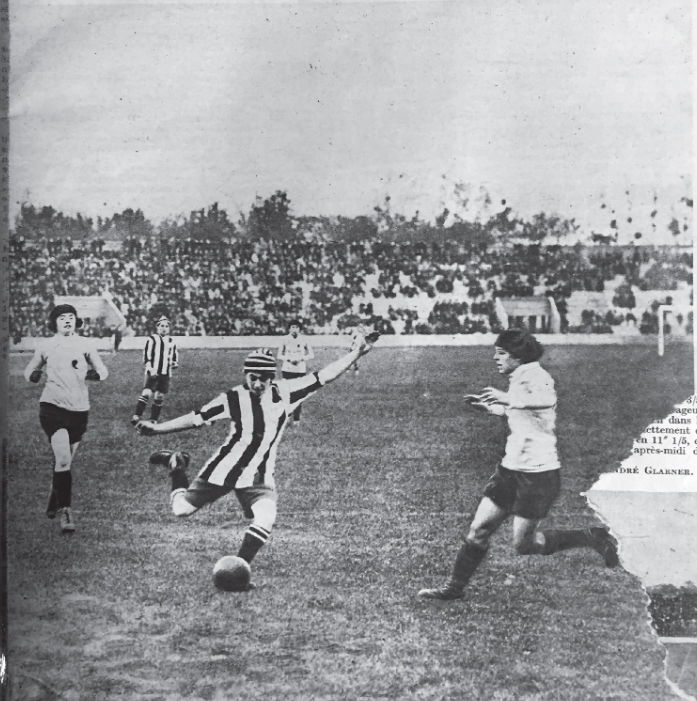
    Women all across the world worked in these factories during the war to try and support their home countries, but they also tried to support another way; all 150 of Britain’s women’s soccer clubs played matches to try and gain money for the war effort. There was also an increase in international football matches between women during this time, where in 1920, two years after the war ended, there was an international between France and England that drew 25,000 spectators to watch England win the match 2-0. 

    After this success, men’s leagues in England began to feel threatened by women’s soccer and wished to protect their revenue stream, so they complained to the English FA about women’s soccer and claimed that the women were too feeble to play on the same fields as the men, and the FA agreed. This led to almost all women’s club teams having to play on public land as they were not allowed to share stadiums and fields with other established men’s clubs. This is a terrible thing to do to the women who held down the production in the country while men were off at war. And the British women’s team seemed more than capable at the time, beating France twice in a week in dominant fashion. But it seems that the only thing that mattered to the men’s clubs was profit, so they made all sorts of negative narratives about women playing sports, how it would hurt their reproductive health, or that they were too feeble to play this sport, which is preposterous. 

    It is great to see that women’s football has been getting more of the respect it deserves recently, but it still has a troubled past with men dictating whether these women are suitable to play for most of the history of the sport in Europe and America. I hope that as we continue to move forward, women’s sports start to get more of the respect they deserve, and that we can give little girls someone to look up to and allow them to see that women’s professional sports are just as important and respected as men’s. 

css.php