The articles for this week including one assigned to the Clutch group highlights the further connection between soccer, politics, and economics, particularly the relationship between political issues and the World Cup as an avenue of entrepreneurship. From the ESPN article that gave graphic depictions of torture and violence and the effect of that on the Argentinian people under the dictatorship of the junta to expansion of regions included in the participants for the World Cup as a result of the effects of decolonization, the growth of soccer as an international sport and the World Cup as the major source of income for FIFA has linked not just the countries participating in the international competition, but the political and societal issues that present themselves among these nations. In the ESPN article, prisoners under the regime of the junta in Argentina had shared their opinions in whispers to each other since communication among inmates was punished. Some desired for the victory of the Argentinian national team in the World Cup while others hated that the dictatorship was utilizing the national soccer team to further legitimize their rule after their successful coup. While televisions were advertising products licensed for the World Cup, Argentinians were being brought to concentration camps and being sodomized in torture chambers. The issues in Argentina brought about by the junta military dictatorship were overshadowed by the World Cup which served to aid the regime as the focus shifted from the camps to the performance of the national team. They mocked the international community fighting against the torture and kidnapping, turning human rights into a slogan of “We are human, and we are right.” Accusations of the rigging of a match against Peru in favor of the Argentinian team in 1978 caused the FIFA entrepreneurship to launch an investigation into the potential foul play in the Argentinian victory against Peru. The Peruvian goalkeeper was born in Argentina and Henry Kissinger and General Videla visited the locker rooms before the match, yet the goalkeeper denied any accusations of corruption and rigging of the match. Soccer was being used as a means of political power while growing FIFA into an economic powerhouse of its own.
Category: Wk08-State and Soccer
-
Week 8: state and soccer
The FIFA World Cup is far more than just a sports game; it is a complex business model of entrepreneurial innovation where the line between business and sport is constantly being crossed. The 1966 and 1994 games are clear examples of the FIFA business model in use. The 1966 game introduced new rules for licensing, merchandising, media, and broadcasting. The 1994 game brought viewership and a new use of commercialism for the World Cup. The game of 1966 also introduced the use of a “swarm theory,” which, in this context, means that each stakeholder (such as sponsors, teams, media, and fans) acts independently like individual bees, but collectively supports and contributes to the World Cup—the hive. While the 1966 and 1994 games demonstrate the success of the “swarm theory,” the 1978 World Cup shows how the “swarm theory” can be used as a weapon.
What I found the most interesting was the contrast of each World Cup. The 1978 World Cup demonstrated how the sport was used as a distraction for kidnappings and tragedies occurring in Argentina. The Argentinan governement was the expioting the business model that was established by the 1966 World Cup. It is almost chilling how the entrepreneurial innovations work exactly as intended in the 1978 World Cup. Unfortunately, these innovations were used for the wrong reasons. The use of advertising and commercialism in 1978 created enough noise and cheers to cover up the screams and voices of those suffering in Argentina.
The readings also demonstrated how the FIFA business machine is heavily intertwined with who is at the controls, whether it is the government or citizens. This highlights how the World Cup is heavily influenced and thrives on political power. Together, these readings and three World Cups prove that the FIFA World Cup is not only about the sport anymore but rather, money, buniesss and power.
-
Mexico City 1970 Pele Win
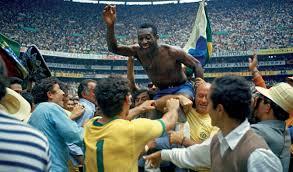
Mexico’s 1970 World Cup was for many firsts
First in
- North America
- In Color
- Higher Altitude
- First Adidas soccer ball
- Use of Substitutions
- Foul Card
The World Cup in Mexico proved the success that soccer can have globally. It was the first World Cup to broadcast in color, allowing millions of viewers around the world to watch the sport in the new, vivid and colorful way, allowing it to grow more popular around the world. Like I mentioned before, it was the first time yellow and red cards were introduced, which gave the referees a more clear way to communicate warnings and expulsions to players and fans watching. Substitutions also became a new major change that allowed new tactical possibilities for teams throughout the tournament. The first game that also featured the new Adidas Telstar ball, which was actually designed for a black and white color display, but captivated the audience during the games as it was now televised in color. As well as becoming and iconic World Cup as Pelé was photographed in the Estadio Azteca after their victory, and becoming world champions. Overall the tournament helped modernize soccer and expand its global influence through invasion. Media exposure, and unforgettable performance is performed by the players.
Abraham Cruz-Hernandez
-
Chile’s 1962 World Cup Diplomacy
The 1962 World Cup in Chile is usually remembered by sports fans as a “boring” tournament. The star player Pelé got injured early on, the games were often violent, and there weren’t many goals. However, historian Brenda Elsey shows us that behind the scenes, this was actually one of the most clever political maneuvers in sports history. At a time when the world was split between the US and the Soviet Union (the Cold War), Chile managed to bring everyone together by playing both sides perfectly.
What makes this story so cool is how Chile won the right to host the games. Because Chile had a mix of both “left-wing” and “right-wing” politicians at home, their football directors were like diplomats. When talking to the Soviet Union, they bragged about their strong worker unions. When talking to the US, they bragged about their democracy and free markets. It worked so well that both superpowers voted for Chile to host. It shows that even a small country at the “end of the world” can lead the globe if they know how to talk to everyone.
Inside Chile, the World Cup was a massive deal for regular people, not just politicians. It brought the first big wave of television, rock music, and female football fans to the country. For a few weeks, people from all different political backgrounds stopped arguing and worked together to make the tournament happen. Even though the government didn’t want to spend much money on it, the local clubs and media stepped up to prove that Chile belonged on the world stage.
Today, many Chileans look back at 1962 as a “golden age.” They remember it as a peaceful time of unity before the country was torn apart by a violent dictatorship in the 1970s. It’s a perfect example of how a “boring” sports event can actually be a powerful symbol of hope and clever politics. It wasn’t just about the goals on the field; it was about a small nation proving it could navigate a dangerous world and come out on top.
-
Progress or Repression – The WC as Political Spoils
There is no denying across this course that the World Cup is a tremendous social, political, and economic opportunity for the host nation. The governments of Mexico (1970) and Argentina (1978) benefited greatly from having the contest inside of their borders.
“In comparing Mexico 1970 to other World Cups via images, it’s clear to see it had more in common with the 12 editions that came after it, than it did with its eight predecessors.”
Mexico 1970 was arguably the first “modern” world cup. The first contest featuring color TV (a fact that helped Mexico secure the tournament to begin with), the first tournament held in North America, and a streamlined version of soccer including the telstar ball and yellow & red cards. This was the final installation of the tournament using the Rimet trophy, awarded to Pele & Brazil.
This tournament was an opportunity for Mexico to display its national pride and advanced technology on the global stage in lieu of internal political tension and repression.
A famous picture of Pele which came out of the 1970 World Cup
“He [Videla] was a serious man, and yet perhaps the most famous photograph of him shows him with a grin, in the clinching moments of the World Cup final, on June 25, 1978… The smile wasn’t a fan celebrating a win but a general celebrating a victory.”
The military junta under Videla also used the World Cup as a political tool. This in my opinion was a significantly more deliberate use of the beautiful game as a political masking tool. Meer yards away from the stadium hosting world cup matches was a prison camp for political disentees.
This quote highlights perfectly how Videla knew the power of the spectacle of the world cup. This event allowed him and his government to be portrayed positively on an international scale – something of huge importance to the legitimacy and rule of his government.
Lots of people who were imprisoned or affected by the dictatorship look back with poor memories of this world cup and the political power that it gave to the government that caused so much harm. In some cases not even eating in restaurants that display pictures of the team from this year.
-
FIFA’s Deciding Factor: Money
Let’s face it, decisions made by FIFA come down to one thing: money. Revenue being a key factor in making said decisions explains why FIFA has selected certain countries to host the World Cup, for better or worse.
The 1966 World Cup is really considered the start of the business model that FIFA would use for World Cups to come. With deals made with the European Broadcasting Union (EBU), whose members included the BBC, this was the first World Cup that was widely televised. It was also the first World Cup to introduce a mascot (Willie), which provided many merchandising opportunities.
The search for more revenue would also be a key factor in the 1994 World Cup in the United States. This World Cup took the merchandising, and promotion that was established in 1966 and cranked it up to eleven. Sponsorships were offered, which allowed companies to create licensed merchandise for the World Cup. It was the most profitable World Cup at the time, and broke many other records, which set it as the model for every World Cup after.
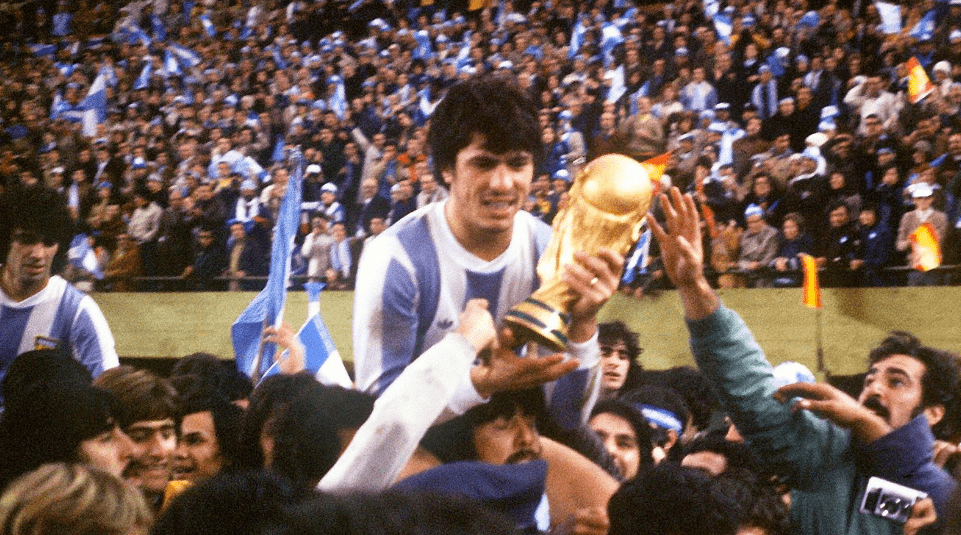
While FIFA’s quest for more revenue has been successful for them, it has also taken them to some dark places. This was seen in the 1978 World Cup in Argentina. Despite the fact that Argentina was under the control of a military dictatorship, and was actively committing many crimes against humanity, FIFA still hosted the World Cup in Argentina. The Argentinian government used the World Cup for their own political gains, and to promote themselves in front of the world. In the background, not too far away from several stadiums, they were torturing political prisoners.
This brings up a common theme with the World Cup, which is that corrupt nations will tend to use it as a way to promote themselves, and sweep their corruption under the rug. This was previously done in 1934 with Fascist Italy. FIFA has been willing to allow the World Cup to be used by corrupt governments for political gains, as long as they are still making money.
By Tommy Oneto
-
1978 – Looking into the Dirty War
The article “While the World Watched” looks into the connection between Argentina’s victory in the 1978 FIFA World Cup and the violence of the country’s military at the time. Argentina was ruled by Jorge Rafael Videla and the military responsible for the Dirty War, a period which had kidnappings, torture, and the disappearance of thousands of citizens. While the world focused on football, the government used the world cup to improve its international image and distract everyone from the truth.
The government presented Argentina as unified, strong and independent, stadiums were filled with fans, representing national pride.There were also detention centers nearby the stadiums showing disparity between the country. At ESMA in Buenos Aires, prisoners were held and reportedly could hear the celebrations from nearby matches; the contrast between all the joy and the suffering shows how the World Cup was a propaganda tool.
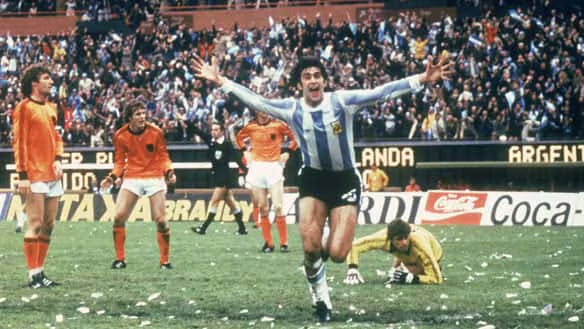
Argentina’s 3 – 1 win over the Netherlands national football team in the final brought genuine happiness to the public. Argentina’s win still remains a historic moment in the country’s history. However, the government used that success to gain more power and cement their rule over the country, presenting the win as proof of national strength and stability.
Groups like the Mothers of the Plaza de Mayo continued to protest, demanding answers about their missing children, their activism highlighted the reality that celebration and repression existed side by side. Ultimately, the 1978 World Cup represents both national achievement and moral complexity, showing how sports can be integrated with politics.
-
Politics and Soccer in Chile 1962 and Argentina 1978
The World Cup isn’t just about soccer, it’s also a way for countries to show off a certain image to the world. Both Brenda Elsey’s chapter on the 1962 World Cup in Chile and Wright Thompson’s ESPN article “While the World Watched” show that governments often use the tournament to make their country look united, modern, and successful, even when there are serious problems at home. The main idea in both readings is that the World Cup can create national pride, but the reality behind the scenes is usually way more complicated.
For example, in Argentina’s 1978 World Cup, Thompson explains that the military government spent a ton of money on stadiums, media, and celebrations to make the country seem stable and modern. But at the same time, they were kidnapping, torturing, and killing people during the Dirty War. The games and celebrations distracted both the world and many citizens from what was really happening, showing how the tournament was used as a tool for political control.
Chile’s 1962 World Cup was kind of similar, but in a different way. Elsey points out that organizers promoted Chile as stable, democratic, and socially harmonious. Official publications made it seem like there were no major political or class conflicts, and the country looked modern and ready for the world stage. But underneath, there were tensions between amateur and professional soccer clubs and inequality in working class communities. The World Cup helped Chile look good internationally while hiding these problems.
Both cases show that the World Cup can tell a story about a country that’s cleaner and more positive than reality. In Argentina, it was the contrast between celebration and state terror, and in Chile, it was the gap between projected unity and real social struggles. Hosting the World Cup lets leaders control the narrative, but it doesn’t erase what’s really going on.
Overall, these readings show that the World Cup is way more than just a sports event, but also a stage for politics and national image. It can create hope, pride, and excitement, but it can also hide serious issues.
-
FIFA’s Bottom Line – Revenue over Ethics
“The rulers made the tournament slogan a pun of the phrase ‘human rights’ — roughly, We are human and we are right — mocking the international community fighting the kidnapping and torture of political enemies.”
-Wright Thompson in While the World Watched
FIFA has a patten of supporting controversial regimes.
This behavior is not outright – the organization isn’t standing on rooftops and screaming their support – rather, it’s a support shown in what they don’t do. Actions speak louder than words, and FIFA’s decisions to allow nations with egregious human rights abuses to host the World Cup speaks volumes to what the organization values most – their revenue.
Kevin Tennent and Alex Gillet, in their 2018 article published in The International Journal of the History of Sport, discuss the commercial aspects relating to the organizing of a World Cup by comparing the 1966 English-hosted and the 1996 U.S.- hosted World Cup. Of particular note to this post is the fact that the World Cup is FIFA’s “…main revenue stream and its flagship activity…” FIFA, in any event that bears their name, stands as a major stakeholder alongside leaders of nations in which their events are being held. Needless to say, FIFA, as an organization, relies on successful World Cups to replenish their coffers quadrennially – the same coffers from which FIFA officials fill their own.
FIFA’s decisions to allow World Cups to be hosted by nations violating human rights is, undoubtedly, tied to their need for revenue.
The 1978 Argentine-hosted World Cup is a pertinent example of FIFA turning a blind eye. The horrors committed by the Argentine regime were known to those living under it and the international community. Public outcry from within Argentina and the international community painted the event – before, during, and after. FIFA, as major stakeholders alongside the Argentine regime, allowed this World Cup to continue. Business as usual for them. Yet, mere blocks from the Estadio Monumental, Argentines were being held prisoner and tortured. Their pained screams mixed with screams of excitement from the footballing crowd. Women marched in circles in the Plaza de Mayo, hoping and begging to know what happened to their loved ones. Hoping that it wasn’t their screams they could hear in the boulevards. Begging that they hadn’t already been dumped into the rivers and oceans from death flights. All as they faced threats of their own disappearances for daring to speak out against the state.
Russia 2018 and Qatar 2022 show both FIFA’s compliance in human rights abuses and their reluctance to cancel World Cups. FIFA has seen backlash to the fast-approaching 2026 World Cup due largely to the Trump Administration’s immigration enforcement policies. This backlash and outcry has only intensified as cartel violence spurred by the government-backed killing of Nemesio “El Mencho” Oseguera Cervantes has rocked to-be host city Guadalajara and Mexico as a whole and the U.S. and Israeli attacks on Iran have led to retaliation attacks across the Middle East.
As always, FIFA sits in a grey-zone. A non-governmental organization under the leadership of a president seen courting the world’s most powerful, FIFA’s decisions in the days to come – whether or not to continue on with the 2026 World Cup – will show the world where Football’s most important organization stands. Will they stand with a world desperate for peace or will they allow the World Cup to continue – filling their coffers once more?
For additional information on the human rights abuses committed by Argentina’s dictators through the lens of the 1978 World Cup see While the World Watched and Papelitos.
-
Week 8- The Duality of the World Cup
In the span of just eight years, the two World Cups of Mexico 1970 and Argentina 1978 told different stories about the power of sport. 1970 showed us a significant leap into modern football, while 1978 exposed how the same tournament could be used to mask terror.
The 1970 tournament in Mexico felt like the birth of the modern era of football. It introduced color television broadcasts, referees giving out yellow and red cards for fouls, in game substitutions, and the iconic Adidas Telstar ball. Watching the world’s biggest stars in color transformed the global experience of soccer. Innovations such as referee Ken Aston’s penalty card system made the sport clearer and fairer, leaving discrepancies such as language barriers in the past. I personally had no clue that red and yellow cards were only implemented relatively recently, I figured they had been in the game for longer since they seem like such staples of the sport. There was also what seemed to be tactical advancement on the field, with Brazil’s famous nine-pass goal in the final showing a new level of teamwork for some of these national teams. Mexico 1970 showed how the World Cup could unify audiences through new rules and technologies. It felt optimistic and looked to be proof that soccer was evolving alongside the modern world.
Then comes Argentina 1978, hosted under dictator Jorge Rafael Videla, and the tone shifts dramatically. Matches were played in the shadow of torture centers like ESMA, which was mere blocks from Estadio Monumental, where the final was played and Argentina lifted the trophy. While millions of fans celebrated goals inside of the stadium and in the surrounding neighborhoods, prisoners listened to the cheers from inside cells. The same sounds that meant joy to fans meant despair to those being tortured.
What I found especially intriguing is how memory works differently for these tournaments. Mexico 1970 is remembered for its “firsts”, while Argentina 1978, despite delivering the country’s first title, is barely honored in places like El Cuartito due to the atrocities that happened behind closed doors. The absence speaks louder than celebration. The 1978 team’s achievement is inseparable from the regime’s crimes. The World Cup, meant to unite, instead divided Argentina’s conscience. It also irks me that the tournament in Argentina that was shrouded in controversy and sociopolitical turmoil occurred 8 years AFTER one of the most glamorous World Cups in history, showing that it was difficult to make true progress in building on all of the advancements and anticipation from the tournament in 1970.
The World Cups in 1970 and 1978 reflected the climates of its time. One tournament expanded soccer’s possibilities and the other exposed its vulnerability to manipulation. What fascinates me most is this duality: the same event that can inspire global joy can also conceal unimaginable suffering. The power of a global event like the World Cup is enormous, and as 1978 reminds us, that power will not always be purely positive or even neutral.
