Category: Wk03-World Cups in North America

  • Politics and Power Behind the World Cup- Zayu Week 3

    Over time, the World Cup has become less about nations playing football and more about who gets to use football as a tool for power. Mexico 1970 and the later World Cups stretching from Spain 1982 to Brazil 2014 seem to tell different stories on the surface. One is remembered as a golden age of beautiful football, the other as an era of political tension, commercialization, and political violence. But when read together, these moments reveal more connectivity through the motives that each respective tournament was used for and who it would benefit.

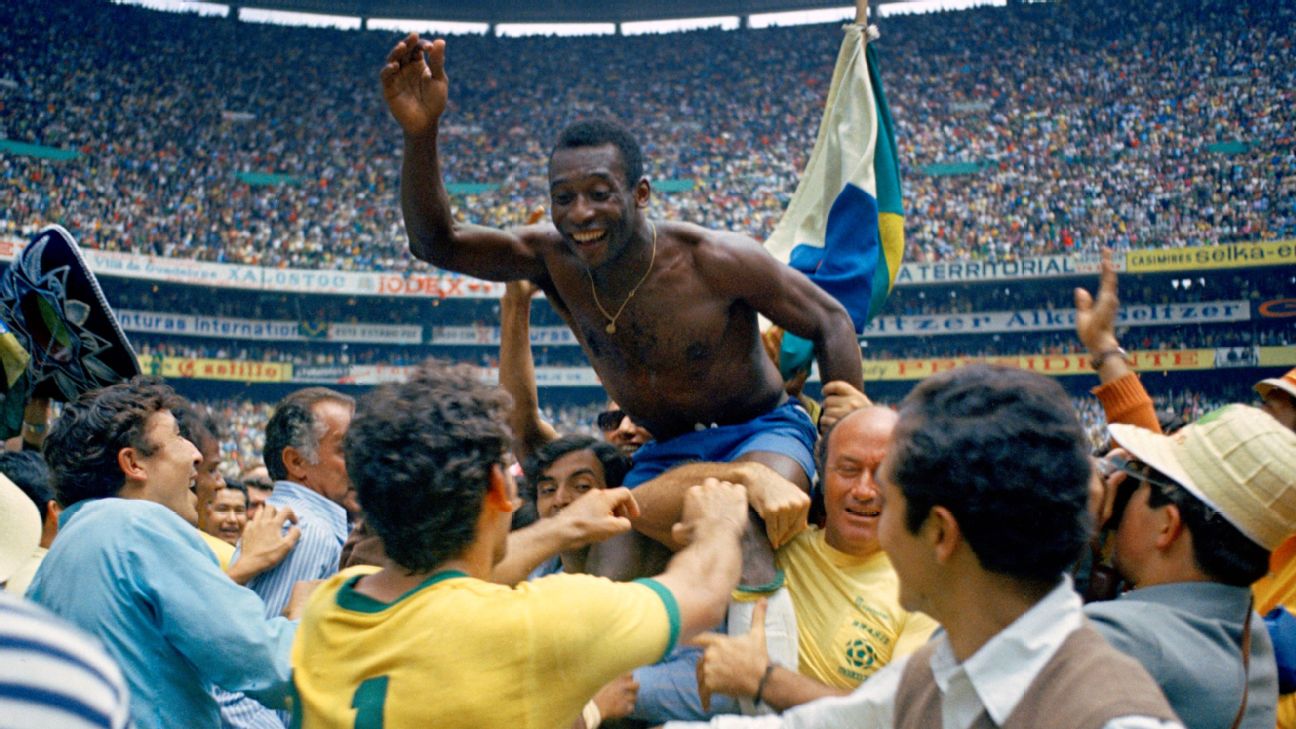
    Mexico 1970 marked a turning point not just in the sport’s aesthetics, but also in its politics and economy. While the tournament took place during the tail end of a long period of economic growth in Mexico known as the “Mexican Miracle,” it wasn’t the Mexican state that truly organized the event. Instead, private elites like Emilio Azcárraga Milmo and Guillermo Cañedo used the World Cup to take control over football and television in the nation. FIFA’s decision to award Mexico the tournament rested as much on promises of better broadcasting technology and commercialization just as much as infrastructure or sporting merit. The construction of the Estadio Azteca was a big symbol of this shift. It became not only one of the most recognizable World Cup venues of all time, but also a stadium that was designed to be televised. Even as Mexico projected stability and modernity abroad, the World Cup quietly reinforced football’s transformation into a media-driven global commodity.

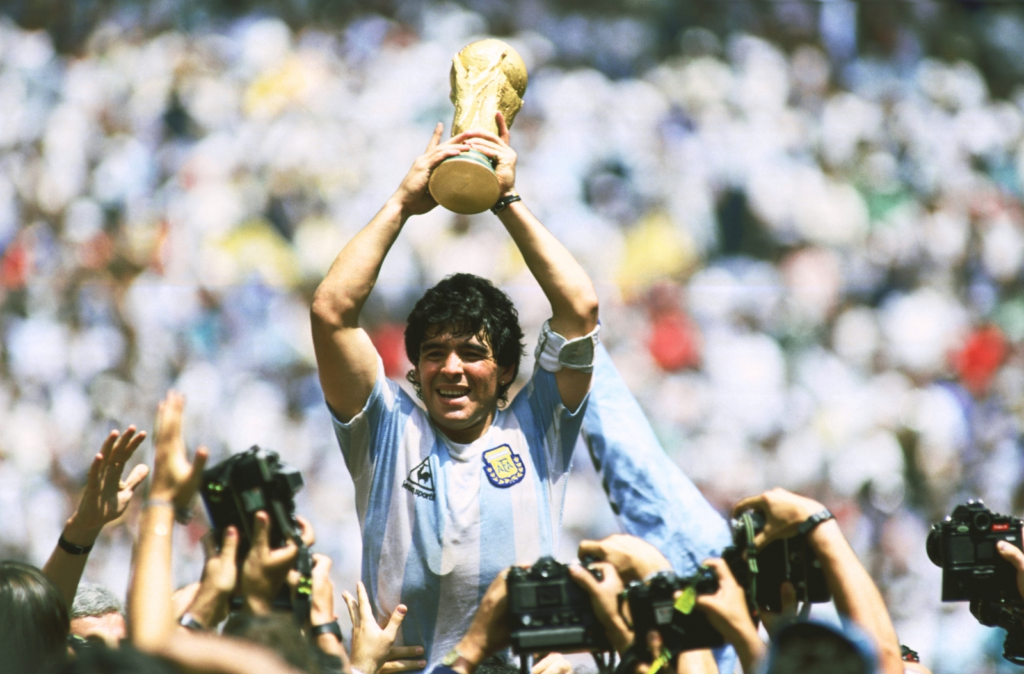
    Since Mexico 1970, sociopolitical transformations have become impossible to ignore in later World Cup tournaments. Spain’s hosting of the 1982 World Cup was a major step towards a proper democracy after the reign of Franco ended, yet success on the pitch proved irrelevant to national renewal. Colombia’s withdrawal from hosting 1986 exposed the darker side of FIFA’s priorities, showing that unstable political and economic situations mattered less than maintaining corporate interests and television markets. By the time Mexico was re-awarded the tournament, FIFA had made clear that hosting wasn’t necessarily about benefitting the nation as a whole, but much more about institutional continuity, and over time this logic brought more consequences that were often brutal to people who didn’t have a say in organizing these tournaments. Argentina’s 1986 victory became a political tool following the Falklands/Malvinas War, while Colombia’s disastrous 1994 campaign ended in the unfortunate murder of defender Andrés Escobar. A rare positive case would be South Africa 2010, where the tournament symbolized an end to apartheid oppression, but obviously sociopolitical motives remained interwoven with the tournament. In none of these cases did football remain “just a game.”
  • Week 3

    The World Cup has usually been regarded as a mere large soccer championship, but after reading Bowman and Jiménez, I have come to understand that it is more than that. The World Cup is an influential instrument that plays a role in creating the image of countries, affects world politics, and shapes nationalism.

    Bowman (2020) describes the way the World Cup is a form of cultural diplomacy. It enables countries to display their values and enhance their political influence at the international level. This concept made me understand that hosting the World Cup is a tactic by nations in their quest to acquire international power. Jiménez (2020) further explains how the Mexican World Cup of 1970 was exploited to establish a new and modern image of the country. Prominent personalities such as Guillermo Cañedo and Emilio Azcarraga Milmo contributed to the dissemination of this new image throughout the world through the broadcasting of the event by the use of television.

    In spite of these observations, I still wonder what will become of the World Cup. Bowman (2020) is critical of the growing prominence of the media and corporate sponsors who are shaping the priorities of the event. Do the World Cup games stand to be more financially profitable and less politically and culturally relevant going forward?

    This made me see how the World Cup has ceased to be a nation-building tool and emerged as a media and economic phenomenon around the globe. Both Bowman and Jiménez demonstrate how the World Cup has been exploited to create national pride, but also witness how it has become commercially charged by the media and corporations. The 2026 World Cup, to be held in Mexico, the US, and Canada, will likely be a step towards a World Cup focused on media rights and economic aspects, rather than a political and cultural phenomenon.

    References

    Bowman, W. D. (2020). The World Cup as world history. Rowman & Littlefield.

    Elías Jiménez, A. (2020a). Mexico 1970: football and multiple forms of modern nation-building during the 1970 World Cup. Soccer & Society, 21(8), 876–888. https://doi.org/10.1080/14660970.2020.1793623

  • The ’94 World Cup, and the Continued Struggles of Soccer in the U.S.

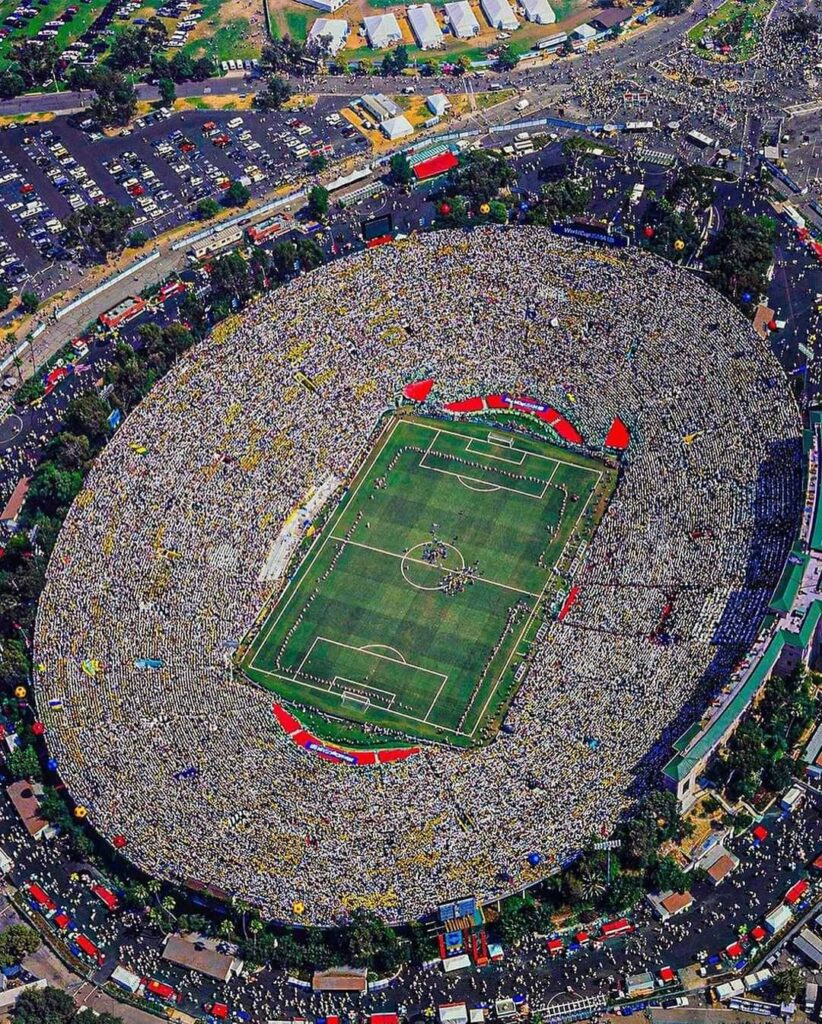
    A photo of the Rose Bowl during the 1994 World Cup Final.

    The 1994 World Cup was a massive success for FIFA.  It broke records in attendance and viewership, and brought in a turnover of $4 billion according to the former (and disgraced) FIFA President Sepp Blatter.  Despite this, soccer in the United States still struggled to replicate the results of the World Cup for a multitude of reasons.

    For starters, soccer still had an image problem in the US.  Soccer was, and still is, mainly viewed as a youth sport.  Not that there’s anything wrong with that, but it has contributed to the struggles that soccer has had with gaining a big foothold in the US market.  It also has the past connotations of being a sport for immigrants.  Unfortunately, the US does have a pretty xenophobic past (and present), which has also contributed to the struggles of the sport.

    Another issue, and probably the biggest one, is the struggle of the professional soccer leagues in America.  The NASL (North American Soccer League) was the predominant US soccer league in the 1970s and 80s, but was struggling to stay afloat.  The attempt to draw a World Cup to the United States was made in order to hopefully save the league, but the world cup came too late as it would fold in 1985.  However, with the World Cup coming to the US, the MLS (Major League Soccer) would form, and while it would struggle at the start, it would eventually slowly expand to a 30 team league, similar to most of the big American sports leagues.  While this sounds all fine and dandy, it ignores a big problem that the MLS has dealt with for much of its existence: the problem that Americans really do not like watching their teams not be “the best.”  Every one of the big American leagues has one thing in common: they have the best the world has to offer in their sport, whether it be the MLB, NBA, NHL, or even the NFL, these leagues showcase the best athletes to an American (or even a World) audience.  The MLS struggles to keep up with the likes of the European leagues, as the best players from the World, and even America, tend to play over there.

    Soccer has struggled in the United States, and while the 1994 World Cup was a massive success, it still highlighted the struggles that soccer had faced, and would continue to face.  Hopefully with the 2026 World Cup, the sport will be able to finally let go of its past struggles, and continue to expand into being one of the big sports in America.

  • The power of soccer

    Moments of national crisis often reveal whether public truly serves the people or mainly tries to protect the state’s image. In Mexico the 1986 World Cup took place shortly after a devastating earthquake, exposing the tension between political image making and real public responsibility. As Bowman and Ridge show, the tournament became a space where power was not only displayed but also questioned.

    After the earthquake, the government’s slow and bureaucratic response weakened public trust in the PRI. Ordinary citizens stepped in instead, organizing rescue teams, setting up shelters, and distributing aid with little help from the state. This movement challenged the long standing belief that the government was the central force holding the nation together. Rather than supporting these efforts, officials focused on preparing for the World Cup, pouring resources into stadium renovations and international appearances. To many citizens, this made it clear that global image mattered more than the suffering of displaced communities.

    However, the World Cup was not just a tool for distraction. As Ridge argues, it also created public spaces where official narratives could be challenged. While the state and Televisa tried to present the tournament as proof of stability and recovery, fans reshaped its meaning. Through chanting, jeering, and el desmadre, spectators turned stadiums into places of symbolic resistance. This disorder reflected the same collective energy seen after the earthquake, reinforcing the idea that authority did not rest solely with political institutions.

    Taken together, these readings challenge the idea that mega events always strengthen state power. Instead, the 1986 World Cup exposed cracks in Mexico’s political system. Although the government hoped to replace memories of failure with images of celebration, citizens used the visibility of the event to express frustration and solidarity.

    Ultimately, the World Cup revealed a contradiction in Mexican political life. Designed to project unity and strength, it instead highlighted how fragile those ideals had become. At a moment when official leadership fell short, a growing civil society redefined public space and national identity on its own terms.

  • How Mexico’s 1970 world cup changed futbol forever

    This weeks article was about the first World Cup ever hosted in North America. Which has a huge impact on the way the rest of the world in how Mexico represented a different model of nation-building and showing the modernity instead of the state-led project behind the 1968 Olympic Games. During 1940’s-1970’s known as the Mexican Miracle the Mexican Government used sports as part of their cultural diplomacy. It wasn’t until the 1970 World Cup where it wasn’t planned out by the state instead it was through private networks of the football and media elites.

    When it comes to Mexico it very politically dominated and corrupt and although it brought economic growth to the country it was also unfortunately under the authoritarian rule of the PRI political party. Unlike other countries where they had a major input on the outcome of these events. Soccer was completely dominated by rich private businessmen who owned clubs, stadiums, and media outlets.

    The article highlights the rise of Guillermo Cañedo and Emilio Azcárraga. As Azcárraga rose to fame as the heir of Televisa which owns Club America and controlled the television broadcasting at the time. Cañedo rose to fame from a small club owner to President of the Mexican Federation and Vice President of FIFA. Together they both dominated the Soccer industry in Mexico.

    Despite Mexico winning as host nation for the 1970 World Cup not just because of their infrastructure but as well as the Cold War and decolonization issues going on. This also reinforced the power of Cañedo and Azcárraga as their business grew bigger as they did also the planning for the World Cup.

    -Abraham Cruz-Hernandez

  • WK03: World Cup Politics and Culture

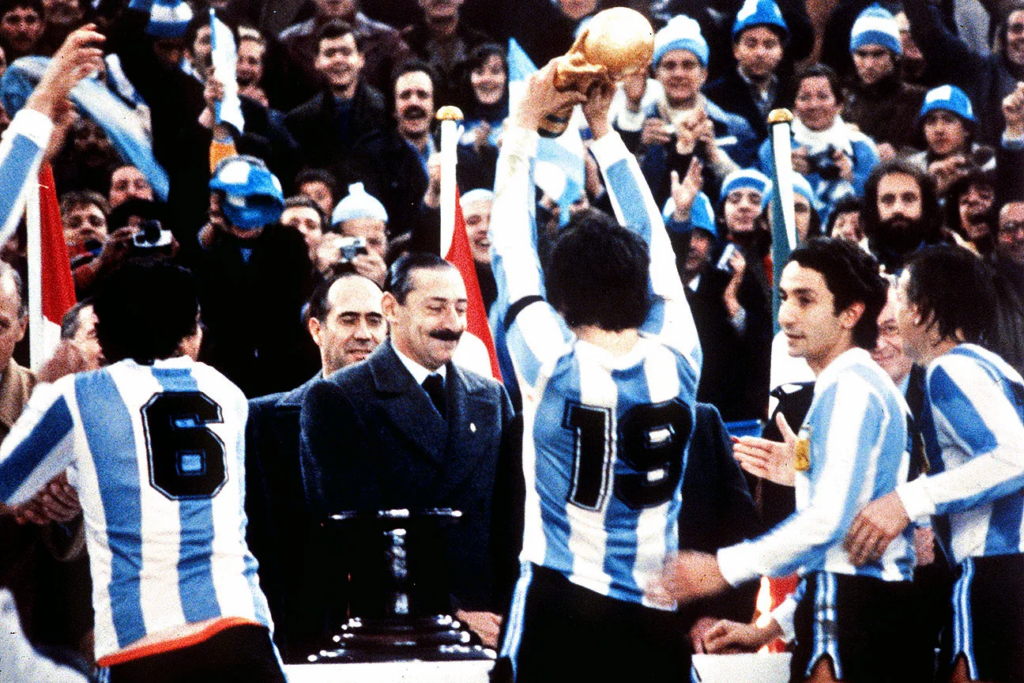
    While it may not seem like it, the World Cup has historical relations to politics as well as culture. There is also a distinct connection to economic profits for the famous event as well. An interesting note about the 1986 World Cup in Colombia is that they had to back out of hosting the event and cited financial reasons for doing so which dealt a blow to the pride of many Colombians. Their football scene had already dealt with corruption and forms of match fixing. This establishes a connection between the economics and culture for the host nation of the World Cup. Football in America was struggling, and the denial of their bid in 1986 and the relocation of the World Cup to Mexico dealt a blow to the pride of those trying to bring professional soccer to American audiences. Steve Ross, head of NASL (National American Soccer League) said ““I will not put in another dime, I’m out, it’s the end of football for me.” Since soccer is an international sport, it would be nearly impossible to be completely avoidant of geopolitical issues, such as Ulster loyalists noted in the article discussing the 1994 USA World Cup, where they raised images such as the Ulster flag and the cross of Saint George. The World Cup in 1978 in Argentina was used to mask murder and torture going on within the country, and the junta military forces tried to get closer and closer in association with the national football team in order to mask the societal issues the nation was suffering from and legitimize their rule. The issues in Argentina were put on full global display after overplaying their hand and challenging the British led by Margaret Thatcher at the time. The conflict between England and Argentina made for interesting tensions when Argentina played against England in 1986. Some of the newspapers and commentators covering the match used military language as well as images in the build up to the event. This highlights how international affairs can have an effect and an impact on the matches of an international, globalized sport.

  • Who is Mexico? How the 1970 WC Final displayed Mexican Modernity

    “The 1986 World Cup finals will not be held in Colombia. The golden rule whereby the championship would serve Colombia and not a group of multi-national companies was not observed. Here we have many other things to do and there is no time to attend to the extravagances of FIFA” – Belisario Bentacur. Without getting too deep into the technicalities/reasons behind the 1986 Fifa World Cup Finals (WC) being hosted in Mexico instead of Colombia, I believe that this quote is a good analysis of the power, both politically and monetarily that the WC holds. This was evident 16 years earlier with the 1970 World Cup in Mexico – and the way it was displaying Mexican Identity.

    The 30 years after 1940 Mexico experienced a period of economic growth and relative political stability – a period dubbed “Mexican Miracle.” During this time the government exhibited this progress through different mediums, most notably sports and television. One of the main ways that the Mexican Government thought to present themselves to the world was through hosting of large-scale, international sporting events. The Mexican government wanted to hose The Olympics & World Cup, amazing opportunities to present “an image of a modern Mexico”. The Mexican government applied to host the 1956, 1960, and 1968 Olympics, eventually hosting the 1968 edition.

    Although there was interest from the Mexican Government as early as 1958 to host the World Cup, the actual 1970 bid was posed from a a group of businessmen. Emilio Azcárraga Milmo and Guillermo Cañedo being two of the most prominent. Azcáarrga, who was the heir to his families media empire controlling lots of the Mexican TV stations and later becoming owner of Club America. His family had broadcasting rights to the Mexican Football League which gave him a foothold into the world of Mexican Sports. Cañedo, on the other hand, rose through the ranks of soccer administration via his success with ‘Club Zacatepec’ winning 2nd and then 1st division titles. He became President of the Mexican Football Federation and director of Club America in 1961. It is at Club America where these two men met, a partnership that saw Cañedo get involved with Azcárraga’s media company. This created a bond where soccer and media grew off of one another, and later became influential in the World Cup organizing commitee (OCMX70)

    Connecting this back into the theme for the week, this partnership became an important stakeholder in the 1970 World Cup. Although they were approaching the same task as the Mexican Government had been with the Olympics, that is displaying the modernity and culture of their Nation, they were also doing so in a way that consolidated both their power/wealth and that of their friends. But hey no one ever said FIFA wasnt corrupt.

    Bowman, William D. The World Cup as World History. Available from: Appalachian State University, Bloomsbury USA, 2019.

    [CT] Bunk, Brian D. “Colleen Bawns and Bonnie Lassies: Women’s Soccer and Sporting Culture in Late Nineteenth-Century San Francisco.” In Soccer Frontiers.

  • World Cup of ‘94

    This week’s readings were about the 1994 World Cup in the US. It focuses on the influence of soccer on the US, both expected and in reality. Before going into this reading, I knew there was a huge, but unsuccessful, push to turn the US into a soccer nation. These efforts were prominent in the 1950s to 90s, and would eventually stagnate for years. This nation has never been closer to fully embracing soccer. Major shifts in the American soccer world, including Messi moving to Miami and the World Cup being held here, have contributed to it. The article talks about how, after the 94 World Cup, despite being held in America, the sport was still marginalized. There was a massive push to turn the sport into a major American sport industry. The authors tie this failure to a few different factors. The first was a lack of deeper girth in the population. While the World Cup was a spectacle, the soccer institutions of America didnt capatalize on this. The momentum that the World Cup gave died off after a few months.

    The 94 World cup majorly capatalized on corporate sponsors. The event was essentially shaped by them. This caused two major effects. Firstly, it established the new trend of corporate control over the sporting events, limiting the influence of grassroots and other smaller organizations. Additionally, it would cause these events to become major spectacles. Mechendisinng and advertisements would become a ludicrous business that future events would follow through on.

    This article highlighted lots of trends that started with the 94 World Cup. I found it interesting how many of these trends benefited the organization in the long run, but didn’t work in the US. I think this year’s Cup will be far more successful than the one well over thirty years ago. The unique mixture of our current soccer landscape in the world will produce an interesting World Cup.

    Week 3

    -Porter Cockrum

  • Week 03 Zayu/How the World Cup Serves Power

    When you analyze these two readings together they suggest that the World Cup has rarely ever been just a sporting event. Instead, it repeatedly becomes a tool through which political and economic power is exercised, disguised, or even defended. Whether through authoritarian regimes seeking legitimacy or private business networks consolidating control, the tournament often promises national unity while serving interests that extend far beyond the pitch.

    The case of Mexico 1970 shows how this process does not always rely on overt state control. Unlike Argentina in 1978, Mexico’s government was not the primary architect of the World Cup’s meaning. Instead, private businessmen tied to soccer administrations and television broadcasting shaped the event’s purpose. What mattered most was not reimagining the Mexican nation or addressing political realities, but transforming soccer into a televised product. The World Cup became less about civic identity and more about spectatorship, commercial reach, and media dominance. National imagery still existed, but it was secondary to the logic of trying to selling soccer globally.

    The broader historical chapter on the politics of the World Cup helps clarify why this shift matters. Across multiple tournaments, governments have repeatedly treated soccer success as a shortcut to political legitimacy. Argentina’s 1978 victory briefly masked the violence of the military dictatorship, but the celebration could not erase repression or economic instability. Similar patterns appear elsewhere; hosting or winning the World Cup creates emotional unity, but that unity is temporary or fragile. Once the tournament ends, unresolved political and social problems resurface, often more clearly than before.

    What connects these cases is the illusion of permanence. Whether driven by authoritarian regimes or corporate networks, the World Cup offers a powerful emotional moment that feels transformative but rarely produces lasting change.

  • More Than a game: How The 1986 World Cup Exposed Political Failure In Mexico

    In moments of crisis, the line between spectacle and responsibility becomes painfully clear. When the state fails its citizens, public space and popular culture can either mask that failure or expose it. What makes the Mexican case especially striking is how the World Cup functioned simultaneously as a tool of political distraction and as a site of resistance.

    After the earthquake, the Mexican government’s slow and impersonal response shattered expectations of state production. citizens did not wait passively; they organized rescue brigades, shelters, and relief networks on their own. This grassroots action challenged the long-standing authority of the PRI by proving that collective power could exist outside official institutions. Rather than acknowledging this civic mobilization, the government pushed forward with preparations for the World Cup, signaling that international image and national prestige mattered more than addressing human suffering. Stadium renovations costing billions of dollars became a symbol of misplaced priorities, reinforcing public anger toward the state.

    The World Cup, however, did not operate only as a distraction. As Patrick Ridge shows, stadiums like Estadio Azteca became spaces where political meaning was contested rather than controlled. while the government and Televisa attempted to stage the tournament as proof of national unity and recovery, fans disrupted this narrative through boos, whistles, and chaotic collective behavior, what they called el desmadre. This disorder was not apolitical; it echoed the same popular energy that fueled earthquake relief efforts. In both cases, ordinary people reclaimed public space to make visible the government’s failures.

    Taken together, these readings suggest that mega-events do not automatically consolidate state power. Instead, their meaning depends on how people engage with them. The Mexican government hoped the World Cup would overwrite memories of corruption and incompetence with images of celebration. Yet fans repurposed the spectacle, transforming it into a platform for dissent and solidarity. The stadium mirrored the streets after the earthquake: both became arenas where citizens asserted agency when formal leadership fell short.

    Ultimately, the 1986 World Cup reveals a paradox. Designed as a symbol of order, progress, and nationalism, it exposed the fragility of those claims. Far from unifying the country under state authority, the tournament helped amplify a growing civil society that questioned who the nation truly belonged to, and who it was being run for.

    Week 3, Maple, Weston Scambler.

css.php