Category: Wk13-Early Women’s Soccer

  • Womens Soccer England v.s. U.S.

    When looking at the growth and importance of soccer, one must not confine their studies simply to men’s soccer or soccer in general. It is important to look at women’s soccer and the journey it has taken as it is much different to what many know of soccer. Specifically, women’s soccer has a much more unique origin in regards to how it first started to be played and how it was viewed. Even in this regard however, it differs from its start in England to its start in the United States, with it taking different roles in each.
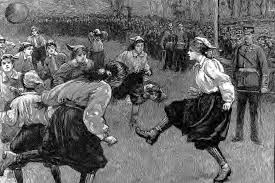
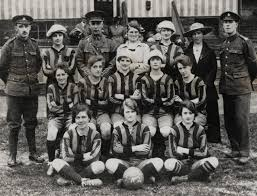
    In England, women’s soccer really started to gain traction during WW1. At this time, many teams were comprised of workers and the teams were often groupings of coworkers from the same company/job. During the war men were called away to fight, so women began to fill in the workspace. Eventually they began to play games just as the men had previously. These teams often represented the companies they were comprised of or were sponsored by them. However there was intense pushback to the point that women were banned from using official pitches for their matches. However, play continued often in support of charities.
    In the United States, women’s soccer had a much different start. Rather than being centered around actual games and competition, even if for charity, women’s soccer was seen more as a safe and healthy form of exercise, especially when compared to American football. It became deeply ingrained within the school system with teams being formed tied to the schools. However, these teams did not play in leagues and there was almost no continuity to the games played.

    Overall, there were many differences between the two women’s soccer landscapes. However, there were some similarities as well. There was great pushback on both sides by fans and the men’s soccer organizations. Players were ridiculed and matches were forced to stop at times. Ultimately both sides persevered and serve as the foundations for what we know as women’s soccer today.

  • Women’s Football: More Than Just a “Late Arrival”

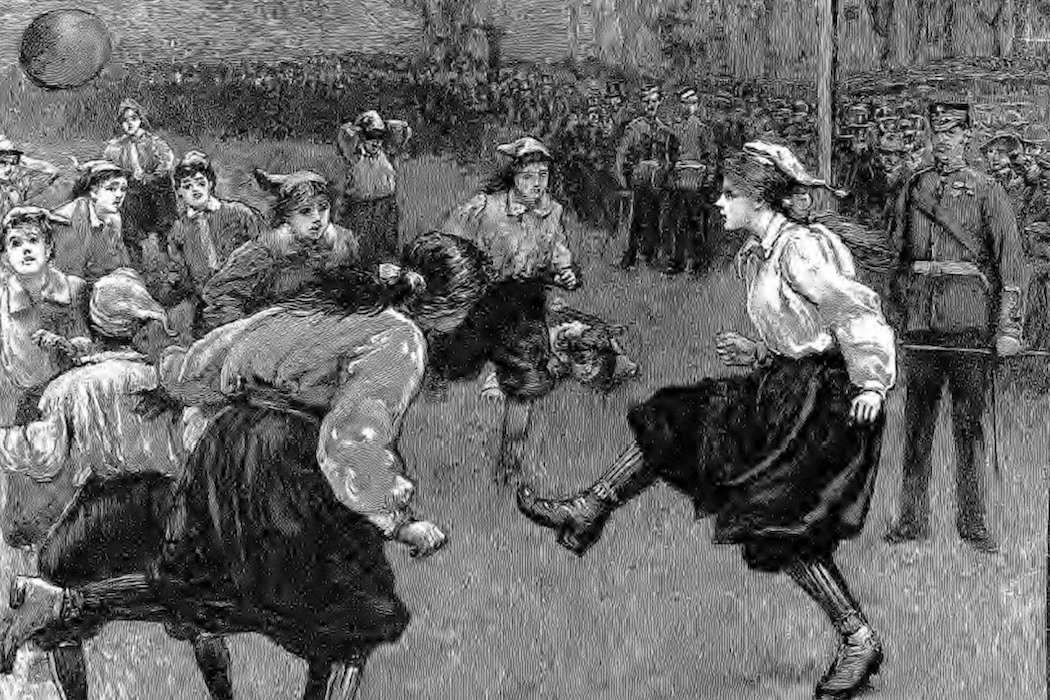
    Women’s football has been around way longer than most people think, but the way it developed shows how much power and gender roles shaped the sport. In The History of Women’s Football, Jean Williams explains that women were already playing organized football in the late 1800s and early 1900s, and people were actually showing up to watch. It was not some small thing either, it had real attention and growth. But instead of continuing to build, the sport got pushed back when organizations like the Football Association banned women from playing on official fields. That decision was not really about the game itself, it was about controlling what women were allowed to do in society.

    At the same time, Brian D. Bunk in From Football to Soccer shows that women in the United States were also involved in soccer during the early twentieth century, even though the sport was not as popular overall. Because soccer was still growing in the U.S., women’s participation looked different, but the interest was still there. Women found ways to play and be part of the game even without strong support or structure. This shows that the issue was not a lack of interest, but a lack of opportunity and recognition.

    When you put both of these together, it becomes clear that women were never really absent from football. They were pushed out and limited, and that is why it seems like they came into the sport later. The history is not about women joining the game, it is about them being excluded from it and having to work their way back in. That completely changes how we should look at women’s soccer today, because its growth is not just progress, it is more like a comeback after being held back for years.

    This also shows how sports reflect bigger social ideas. Who gets to play and who gets taken seriously is not random, it connects directly to what a society values at the time. Women’s football makes that really clear because its history is shaped just as much by gender roles and power as it is by the game itself.

  • Early Womens soccer

    Both of these weeks’ readings explored the introduction of women to football. The bunk reading shared the US perspective, and the Williams shared the UK’s perspective on women playing soccer. I thought the vastly different reactions of both places were very fascinating. The UK wanted to put an immediate stop to women post World War I, while the U.S. was intrigued by the idea of women playing soccer, especially in the schools. Women’s soccer in the U.S seemed to be heavily integrated within the college and schooling system. Therefore, drawing the famous UK women’s teams to tour the U.S in 1922. The U.S. brought opportunity and new components to women in the sport.

    While the U.S were intergrating women’s soccer into schools, the UK put a full stop to women in the sport in 1921, post world one. They deemed sport “not suitable for the female body.” This example of institutional gatekeeping is really interesting to me since it is a striking contrast compared to women’s soccer in the U.S at this time. It is very clear in the UK that once men came back from war, they felt threatened by the crowds women’s soccer was bringing. I believe that the ban in the UK was strategic and was placed in order to transfer the focus back to men’s football. Post World War I, UK men had no interest in sharing the sport with women. Across the sea in the U.S, soccer was seen completely differently. The sport was refined as a “safe” or  a “schoolgirl” sport for women, further supporting the claim that men’s soccer in the UK was threatened by women, therefore causing a ban on women in the sport.

    Ultimately, the stark contrast between these two nations reveals the many perspectives on the introduction of women in football. With the U.S bringing curiosity to women in the sport, it was viewed as a “safe” sport and a better alternative to violent sports that were “not suitable for women” at the time. The U.S allowed women in the sport to flourish in an academic setting; on the other hand, in the UK their was a just a complete ban on women in the sport. In conclusion, it is profoundly ironic that the U.S. welcomed women into the sport because it was defined as “safe,” while in the UK, women were banned from playing specifically because the game was labeled as “unsafe” for the female body.

  • Womens football and its early development

    Women’s football didn’t just appear randomly it took lots of set backs before it started to create growth and popularity around the world, the readings looked into how women’s football started with key milestones throughout the early 20th century. The readings look into both Europe and the US growth of the sport.

    The readings both use similar ways to say that the main start to women’s football’s popularity is through moments where society temporarily allowed women more roles in the public eye, like world war 1 when the men went to fight, as well as it evolving alongside immigration. After this women’s football wasn’t just ignored the men actively sought to get in the way and put a stop to the games, for example they ended up being banned by the FA in 1921 due to men trying to push them out after returning from the war.

    Even when the women were allowed to play they faced other issues due to their gender, the readings emphasize issues like their clothing, bodies and negotiating social boundaries, these are all things not found in the male game and are only due to femininity. As well as these issues women faced issues with how they played, typically most games were internal or semi organised, showing their growth and how they navigated their way to be able to play organised football.

    The main differences in these readings is showing how one focused more on how football grew in the US vs the other emphasising it on a more global scale. Over in America women’s football was mainly played in colleges and informally which is how it gained its popularity as over in England there were leagues just facing challenges of their own. Either way they both showed similar patterns in the growth showing that it grew big during the war times, and began with a strong early interest, which then followed by pushback after the men returned, all showing that they were treated as if they were insignificant

    I think these are both really cool and informative pieces and both look at different areas of the world but almost tell the same story. I also think that more recently women’s soccer has become even more popular and more widely accepted in recent times, but there was clearly always an interest and it would have been interesting to see its development if it wasn’t scrutinised in its early development.

  • Emergence of Womens Soccer

    This weeks reading’s dove into the early days of the beautiful game’s origins with women and the women’s game.

    These two pieces observed the development of the women’s soccer across the globe – although more specifically the UK and USA (however also touching on parts of South America & the rest of Europe). Throughout both readings the authors commented on the political, cultural, and economic factors that led to, and derived from, women beginning to play soccer.

    Soccer developed very differently in the USA and UK, the former best being described as “use sport to develop ‘womanly qualities’ preserve reproductive health, and provide recreational opportunities for all students” and the latter as “the business model of women’s football mirrored that of men’s football: attracting large paying crowds through advance publicity and playing games in large stadiums, therefore maximizing the sums of earned”

    Even though it is seen through two different scopes, the rise of women playing soccer goes hand-in-hand with the rise of opportunity, wether educationally or vocationally. In the US the rise of soccer is tied to education and college programs having the opportunity for women to play sports (tying in directly to the quote from earlier). On the other hand, soccer in the UK saw a sharp incline due to men going to war and women taking their jobs in factories.

    Additionally, the development in both countries came with political ties as well. In America Doris Clark, a prominent womens soccer player and journalist, is believed to have used her platfrom to promote womens issues. Womens soccer in the UK faced backlash and reprimands as it was believed it would “take over” the mens game.

    What highlights some of the differences in the way the sport developed is when Dick, Kerr Ladies came to play in the US (after being banned from playing in the UK) but were not allowed to play against collegiate teams in the US.

    I think that these two readings do a tremendous job of laying out the development of the sport in their respective countries and allows a reader to draw interesting conclusions when comparing the two. Most interesting for me was how clear it was that deespite their differences, the development of the game had real effects outside of just the sporting world.

  • The “Safe” Sport?

    I always assumed the sport only really blew up after the 70s, but it turns out there was this whole hidden scene back in the early 1900s. It’s wild to realize that women were out there competing and organizing games over a century ago, long before the modern era we’re used to.

    One of the most interesting things I found was that soccer was actually marketed as the “safe” choice for women. Back then, American football (gridiron) was seen as way too violent and dangerous for girls, so educators pushed soccer because they thought it was “less taxing.” It’s kind of funny looking at how intense and physical the NWSL is today and realizing the sport originally got its foot in the door because people thought it was “calmer” enough for women to handle.

    Helen Clark, who was literally nicknamed the “Queen of the Whistle” in 1918. She wasn’t just a player; she was refereeing matches and even coaching boys’ teams to championships. Seeing that a woman was such a powerhouse administrator and leader in the sports world during World War I really changes how I think about the “pioneers” of the game. Women like her and Doris Clark weren’t just playing; they were building the entire infrastructure of the sport.

    This history really shines a light on the fact that the passion for soccer has always been there—it just kept getting dimmed by people who didn’t think women belonged on the pitch. The media back then used to describe female players as “modern Amazons,” treating them like some sort of spectacle rather than athletes. Reading this makes me realize that today’s stars aren’t just starting a movement; they’re finishing a game that started in the 1910s. We really owe a lot to those early players who fought for a spot on the grass!

  • Women and Soccer

    By: Abraham Cruz-Hernandez

    The WWI-Era Women's Soccer Team Who Could Beat the Men | HISTORY

    During the World War’s many of the men who played soccer left to go to war. So women took over the working industry and sports.

    During this time the norms of women in the industry were frowned upon and they were not allowed to play in a sport like soccer. Despite it being frowned upon they started their own teams and leagues and had their own games. The chapter highlights the issues women faced during the time and the way they used this as a way to gain more independence and visibility int he public life.

    When World War I came around the women had a chance to play more through the roles of men. It was a society where many of the men of the countries involved were at war and women were left behind to take care of the day to day. Women became involved in soccer and their matches drew in large crowds. Unfortunately they were only seen as a form of entertainment to forget about the war but never as a true and legitimate competition. Institutional Barriers limited long term growth. Organizations and governing bodies never took it serious and did not support women’s soccer as they saw it as a male sports only.

    Women during this time were not only athletes but also breaking barriers and trying to reach gender equality. It highlights the struggles they had and how they had to reemerge later in the twentieth century.

  • The Early Days of Women’s Football- Week 13

    In “Women and Soccer in the Early Twentieth Century” and second chapter from “The History of Women’s Football”, we see that women’s football was well and truly in its earliest stages. As described in “The History of Women’s Football”, women playing football was heavily frowned upon. Men went off to fight overseas during World War 1 which allowed women to take over in American societies and play roles that they traditionally hadn’t been in before. This shift of course extended to sports, where women stepped onto the pitch and built something hugely popular. The scale of that popularity was huge, with matches drawing crowds up to 55,000, and teams like Dick, Kerr’s Ladies dominating, winning 58 out of 59 games at one point while raising a considerable amount of money for charity. 

    In “Women and Soccer in the Early Twentieth Century” women like Doris and Helen Clark helped develop the sport in the United States by organizing women’s football matches in the 1910s. The chapter focuses mainly on journalism by women during this time period, but there is an inherent connection to soccer that shows women were an important part of this expanding space in sport. The idea that women like Doris and Helen “showed that women could not only play the game but successfully take on other important roles in the sport” reflects a reality that, considering the rising popularity of the women’s game nowadays, transcends time.

    Both chapters emphasize how quickly this success was seen as a problem. Even after the war, women’s football remained popular, which prompted the men who returned from war to claim the sport was not a female sport. The FA’s official statement that football was “quite unsuitable for females and ought not to be encouraged” reveals how sexism was used to protect the men’s game while undermining the growth and popularity that the women’s game had in such a short period of time, as well as the different opportunities that it gave to many women even if they didn’t play the sport.

    These chapters tell us the sad story of rapid growth followed by suppression. Women’s football definitely had the audience and organization to succeed, but society as a whole was not ready to accept that.

  • Early History of Women’s Soccer

    The history of women’s soccer, particularly North America, had little to no coverage in newspapers, and so when games were played the only record would be the mention of the team names and the final score. There is so little we know of women’s soccer before the 1950’s, and in this weeks readings of From Football to Soccer : The Early History of the Beautiful Game in the United States (Chapter 7) and The History of Women’s Football (Chapter 2), we see what few records have to show about the progression of women’s soccer, and what factors influenced those changes.

    In From Football to Soccer, these sparse records say that women who had gone to college in order to get a job as “Playground Supervisors” were the ones who began these early women’s soccer clubs, and even scheduled matches with other local teams. The records are so little however, that when multiple articles state the “first-ever” match between these women’s clubs had occurred, researchers find it hard to dispute because there just isn’t enough evidence lying around to fully know how many teams have existed and how many games have been played. World War 1 had made it so women had these opportunities to play sports and games, albeit MUCH more “safely”, that the men of the time were playing professionally. Even if the matches involving women led teams weren’t played in a competitive sense, many used the opportunity to raise charity for British soldiers in WW1, yet even so, as the rise and enjoyment of women’s soccer reached a peak towards the end of the War, many Football Associations feared it would take the enjoyment away from men’s soccer, like when women had taken up “masculine” jobs to support their families.

    Even through obstacle after obstacle, the determination of early women’s teams showed just how much they loved the game of soccer, with the creation of opportunities to play in matches persisting even after the FA ban of women from many soccer pitches, since the owners of the land games were played on loaned it to them for matches. The drive to show how women could compete on the same level as men showed not only their hope for recognition, but to fight for their place in society even with so many restrictions facing them.

  • Week 13

    The module on women’s football has deepened my understanding of the battles women have had to overcome to participate in football in both the UK and the US. The module broadened my knowledge of the barriers women faced in playing football, how gender-related barriers influenced the early growth of football, and how public attitudes and institutional policies impeded their participation. Through the course readings, I learned a lot about the persistence of women who were the first to play football, despite facing great opposition.

    According to Williams (2022), there have been numerous instances of gender discrimination and exclusion from certain sports. One such instance was the FA ban on women participating in football on affiliated pitches in 1921. The reason for the ban was that football was unsuitable for women due to their physiological makeup. In addition, football was deemed unsuitable for a woman’s behavior. The occurrence had a severe effect on the participants who were gaining popularity among spectators at football games.

    Likewise, Bunk (2021) underscores that female soccer players in the US faced significant social resistance to playing soccer, given societal norms that made it difficult for women to participate. Although institutional obstacles were fewer than in the UK, women were nonetheless marginalized by virtue of these gender-based social norms. However, despite such barriers, women not only engaged in the sport but also became involved in coaching, refereeing, and organizing soccer games (Bunk, 2021).

    In both cases, there is a clear theme of resilience. Though institutional opposition, such as the FA ban, kept women’s football from flourishing in the British context, the opposition women faced in the United States was less blatant but equally important. Both readings illustrate that women’s desire to prove themselves was just as strong. These early pioneers paved the way for the growth of women’s sports internationally, and I continue to wonder how women’s football battle these obstacles today.

css.php