Category: Wk02-Origins of soccer in the United States

  • Soccer and its southern roots

    This article directed its focus on soccer in the South. Reading this article brought some eye-opening points and things that I would never have thought about. In the introduction it starts off with how soccer started to expand in the United States. Typically, efforts for the sport to expand was focused on the Northeast and Midwest regions of the United States. Reasons behind why the sport was not taking off in South was because of how rural it was and segregation. Also, a lot of its major cities lacked European immigration where the sport could have taken off. The sport only started to take off through the seaports of the region. The sport first took off in New Orleans in the nineteenth century since it was the largest city in the south at the time. 

    In 1908, the first recorded match in Atlanta took place. It was the newly formed Atlanta club against a new team from Lithonia, Georgia. This was a union affiliated team and most of the players were Scottish and Welch players. Although it was not really the first match between the two since the first game took place in 1907. This game took place in DeKalb County.  

    There is so much I can write about, but I am only giving out some of the information provided from the article. This article as a whole shocks me because I never once thought about sport and its history in the south. What I can reflect on from this reading is how important sport is in U.S history. I never realized its rich history in the region. I honestly believed that its history was more recent. But the fact that it dates to the nineteenth century is astounding. I hope to learn more about in the U.S and it influence. 
  • Early Southern Soccer

    During the early 1900s, Soccer began to become popular in the South. While it was seen as a Northern sport reserved for the Ivy League scholars, the small communities of Irish and British immigrants caused the sport to have a foothold in the South. Most of this influence came from them. The mining communities, particularly coal and granite, would have families who were knowledgeable in the sport. This allowed for an organized series of games to be held with a present fan base.

    Going into this reading, I knew about some soccer games held in the south. Particularly about the Dallas Athletics Program, a soccer team formed in 1908. However, learning about these communities in Georgia and Alabama that had a particular interest in the sport is new to me. It makes sense that communities of immigrants would want to engage in a shared past time, one that’s competitive in nature and relatively harmless, which would be sure to attract Westerners with an interest. I also thought it was interesting that the first game played in the south was a friendly charity match between the Irish and Scottish immigrants on St Patricks day of 1892. Another thing I found interesting was the 1911 Atlanta Soccer Football Club’s inclusion of a non-white player. They had a Native American on the team who went by the name “Charlie Wahoo.” Atlanta during this time was highly segregated, so the fact that they included him on the team speaks volumes about both his skill as a player and the progressiveness of the sport.

    Eventually, the sport would begin connecting the North to the South through games and clubs between them. The article talks about upcoming teams across the southeast that were contacted by the Alabama team. They wanted to have a more structured league and needed teams to play against. So the invitation to upcoming teams in Alabama, North Georgia, Florida, Tennessee, and Louisiana was sent out. I did not know that teams in these areas existed. Upcoming soccer leagues in the southeast during this time were rare. With baseball and upcoming football leagues, I imagine that the popularity of the sport was few and far between. I also imagine the stigma of the European immigrants making up a large portion of the community did no favors for the popularity of the sport. That may also play into how progressive the early clubs were.

    Week 2,

    -Porter Cockrum

  • Zayu Week 2- Womens Soccer in Late 19th Century San Francisco

    This article highlights the beginnings of expanded athletic opportunities for women in the United States. History was made in December 1893 when the Colleen Bawns beat the Bonnie Lassies 2-0 on a soccer field in San Francisco in what is recognized as the first ever women’s soccer match played on American soil. Women had been playing different forms of football up until this point, but this game in particular stands out because it was the first game played under modern rules created in England. More games would go on to be played by these teams later on, but no league was formed and it was seen mainly as a way for organizers to create a spectacle for profit, rather than trying to develop the women’s game in its earliest stages.

    There are many reasons as to why women’s soccer had difficulty taking off at this time, and even for the decades to follow. Cultural norms and patriarchal sentiments at the time stunted the advancement of women in many fields, especially in sports. There was a big divide between what was perceived as a “manly sport” and a “female exercise”, with doctors claiming that women’s bodies were too fragile to compete in most sports. Nonetheless, women’s physical education programs began to expand before the 20th century, but soccer was pushed to the side in favor of other sports. These games were commercialized and promoted to the public in the area. Local promoter Daniel R. McNeill was crucial in getting people to attend these games, as he was in promoting other women’s sports in San Francisco, however most who attended focused more on the women’s appearance rather than the actual gameplay. This reflected the idea that women in sports were still seen as a spectacle to men rather than actual competitors who looked to kickstart the growth of women’s sport.

    The games that were played in San Francisco mattered much more than what was performed on the pitch. The players, who were working class women getting paid about $2 per game, cared deeply about their participation in the sport and would help spark a renaissance in women’s sports that saw higher participation in other areas such as basketball, cycling, and field hockey, among others. These games represented a beginning to a bigger story that looked to break century old barriers and challenge limitations that have been imposed on women.

  • Week 02- maple

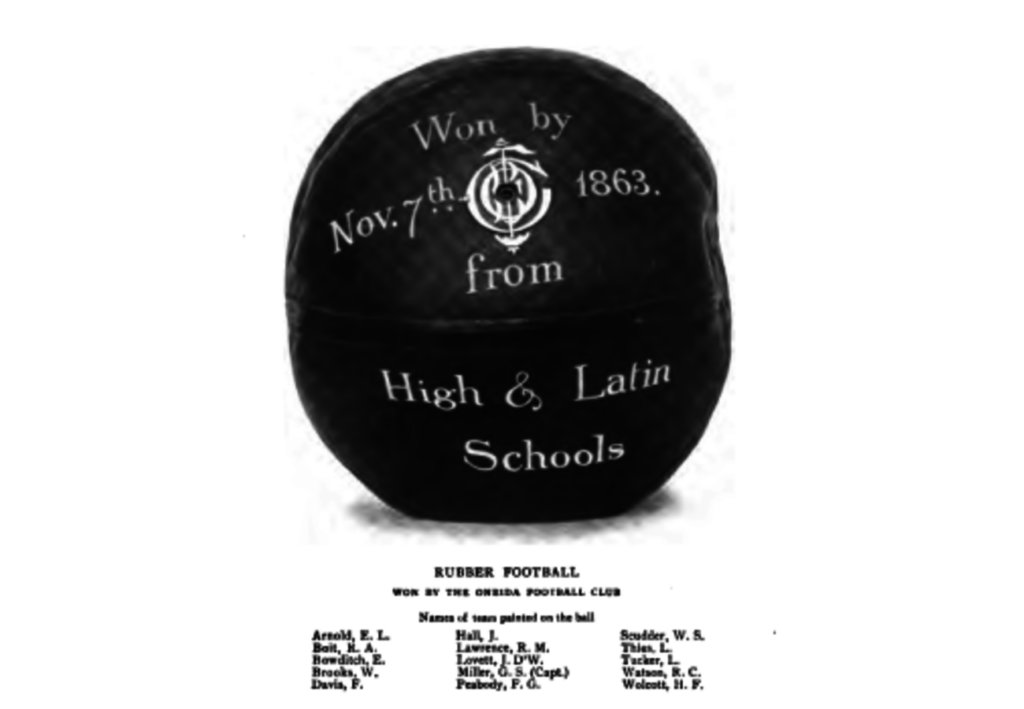
    In most cases, history is written by winners. The truth is pieced together by the people who had the most involvement or triumph, but not in the case of American soccer, which was really “created” by the people with connections. In the source The Origins of Football in the United States Foundation Myths, Memorialization, and Rethinking the Oneida Football (Soccer) Club written by Kevin Tallec Marston and Mike Cronin, we are shown how one of the biggest origin stories of soccer was actually just people trying to shape how they are remembered. 

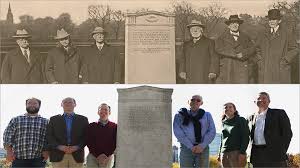
    The club was started in 1862 by a group of school boys, but while they were an actual team, the authors argue that the boys status as the founders is only because of their success in making it seem like they were, even when they weren’t. The Oneida boys didn’t just play and move on, they were busy telling everyone about how they were the founders. Sixty years after they stopped playing, some of the members that still were alive got together and put up a huge granite monument on the Boston Common. They did this in order to turn their idea of a school yard game into a memorial. By building a statue to memorialize their accomplishments, people assumed that they were important. 

    Cronin and Marston also dove into research from others, such as Melvin Smith and Tony Collins, while diving into the history of American soccer. They showed how Smith found proof that soccer games happened way before 1862, which shows how the Oneida boys were not the first. Collins explains how football was a transitional process, and meant that it was developing all over the world at the same time, not just all of a sudden in Boston. 

    The authors describe this history as “palimpsest”, and that the history was written, erased, then written again by new people. The Oneida boys erased other names and wrote theres on the history of soccer so big that people didn’t seem to notice how the history of soccer was bigger than just a group of boys in America. The Oneida boys had more of an elite status so they had the social status and money to do things like put the monument up. 

    In conclusion, this chapter shows how the past can be controlled by people with power and money. These people make sure that they are the ones in the history books, not the actual founders.

  • Soccer’s Beginnings in the American South

    Chapter six of the book Soccer Frontiers: The Global Game in the United States, 1863-1913, delves into the origins of soccer in the American South, the challenges the sport faced in terms of popularity and expansion, and the overwhelming influence immigrants held over the sport.

    Patrick Sullivan, the author of this chapter, makes clear that the South’s relationship with soccer has often been overlooked in discussions regarding the sport’s history in the U.S.. To this, he credits the region’s distinctiveness to the rest of the nation as well as it’s lack of urban industrial work opportunities that often attracted immigrant groups (especially those from the British Isles) who brought the sport along with them.

    New Orleans lays claim to the first established amateur soccer league in the South (1896) but from 1863-1913, Atlanta and Northern Georgia arguably saw the most success with the sport.

    The sport is believed to have made it’s way to Northern Georgia via immigrant stone workers (often from Aberdeenshire, Scotland and Penmaenmawr, Wales) who were recruited by quarry operators for their expertise in stonework. In the communities surrounding these quarries, immigrant laborers played soccer in their free time, a sport they often grew up playing. Lithonia, roughly 20 miles east of Atlanta, known as the capital of the southern granite industry, quickly became “the heart of soccer in Northern Georgia.” Different communities began challenging others to friendly matches and soon the sport found footing in metropolitan Atlanta, with the A.G. Spalding & Bros. sporting goods store becoming it’s hub. Similar stories of immigrant-led soccer leagues sprouted up in other southern cities such as Birmingham and the sport could be found at the collegiate level. Yet, organized soccer collapsed in the South when immigrants left to enlist in World War I.

    Sullivan, when describing why soccer struggled to find a stable foothold in the American South, even in markets that were receptive, never explicitly addresses the stigma soccer carried (and still carries) as a sport introduced and dominated by immigrant communities. His main arguments revolve around the lack of competition in the region, struggles to form consistent leagues and teams, and lacking transportation infrastructure. Yet, it can be argued, that much of this could have been solved had Americans taken up the sport in stride. Sullivan, when discussing Tom Harland’s move away from the South, states that there was a “…low level of commitment demonstrated by the American teenage players in Atlanta toward soccer…” It is not unlikely that stereotypes of the immigrant groups that played the sport – rowdiness and drunkenness – bleed into the American’s view of soccer as a something not worth their time, especially during the progressive era, and with growing support for prohibition.

  • Week 01 – Zayu

    When read together, the stories of Cole Palmer and Curacao show how football can turn inherited roots into something both personal and shared. Neither article is really about tactics or results. Instead, they highlight how identity, migration, and memory continue to shape the game, especially for small Caribbean nations that rarely sit at the center of global attention. Palmer’s connection to St Kitts and Nevis is quiet, but it carries real weight. He did not grow up there, and he represents England internationally, yet the flag stitched into his boots says more than any press statement could. It links his success back to his grandfather’s Windrush era migration and forward to an island community that sees itself reflected in his rise. What makes the gesture matter is that it feels genuine. Palmer is not trying to brand himself or perform an identity for an audience. He is simply acknowledging where his family comes from, and in doing so, he turns a personal history into something others can take pride in. Curacao’s World Cup qualification tells a similar story on a much larger scale. Most of the squad was born in the Netherlands and had other, more visible international options available to them. Choosing Curacao meant long travel, fewer resources, and less exposure. But as the article makes clear, this choice was about more than career calculation. Representing Curacao allowed these players to turn ancestry into commitment. Wearing the badge was not just a technical eligibility decision; it was an emotional one. What connects these two stories is the way football gives legitimacy to identities shaped by migration. For both Palmer and Curacao’s players, belonging is not defined strictly by birthplace or residence, but by memory, recognition, and choice. In a sport often dominated by money and power, these moments remind us that meaning does not always come from trophies or rankings. Sometimes, it comes from simply being seen. Together, the articles challenge the idea that globalization has weakened national identity in sport. Instead, they suggest that identity has become more flexible, and more intentional. Small nations and communities are not fading from the global game. They are finding new ways to assert themselves, carrying their roots forward.

  • Womens Soccer THROUGHOUT The U.S.

    Women’s soccer is an often overlooked aspect when studying the history of soccer. While sometimes running on a parallel track as men’s soccer it is most often vastly different due to a myriad of factors. The first known women’s soccer match in the U.S. using the association rules codified in England occurred in 1893. While the two teams would play each other more than once, it did not lead to the creation of any actual clubs or schedules. The games were more so played in order to make money. This is something that can often be seen with women’s sports throughout American history. Games played are often not taken in a serious manner with an attempt to create a stable league or allow it to develop into a profession. Rather, these games are consistently seen as a novelty and while they often do garner attention do not result in any long term stability. This can be seen in as recent an event as the tennis match between Nick Kyrgios and Aryna Sabalenka that occurred in late 2025. During the second half of the 19th century, men’s sports became increasingly more commercialized. On the other hand, women’s sports largely remained limited in regards to professional opportunities. However, there was an increase in the availability of athletic activities for women. There remained a distinction between these activities with many women’s sports being labeled as “exercise” rather than an actual competitive sport. Actual women’s soccer tournaments occurred in England before in the United States, which would stand to follow reason seeing as how soccer originated as an English school game. San Francisco had a booming sports industry with baseball in particular rising to extreme popularity in the 1840-50s. San Fransisco would go on to become a hub for women’s soccer with the first long lasting league being created there. Part of the attempts to introduce both attending and participating in sports was a reactionary attempt to reconcile negative conceptions surrounding sports, baseball in particular. McNeil, the supporter of this women’s soccer league was determined to follow through with his attempts to create a long lasting league despite previous kickback to competitive women’s sports. Ultimately, despite the ideology of the day, women were slowly able to gain a foothold in both private sports and eventually competitive sporting leagues.

  • Fifa

    From what I have read, it seems that both tend to focus on money. To be more specific, it seems that they are both aiming for profit. In the first article, the president of Fifa seems to be focused having strong ties with world leaders. In the second article, it is focused on the issue of ticket prices. Why is this important? Fifa is already known well around the world, and many people are willing to pay as much as they can to be present for the games. The organization recognizes and it is obvious that they are doing for profit. It seems that it is no longer aimed towards people who genuinely love the sport. As controversial as it seems, politics has played a role. From a quote from the first article it states, “In a way Infantino’s masterstroke has been to shield Fifa from charges of shady back-door dealing by conducting its power games entirely in the open.” and in the second article a statement from a fan said, “”Everything they’ve done so far seems to be just concerned about maximizing profit and nothing, absolutely nothing, else.” These statements that have been made points out the issues with the organization. It exposes what might really be going on. Even though the organization will not admit that. These articles have revealed the issues with organization. The question is what will happen from here on out. That is one that cannot be answered but only have the fans wondering. With the world cup around the corner, one can only imagine how much profit will be raised from it since it is going to held in three different countries. Especially in the United States because the last time it held Fifa, a lot of revenue was made from it. And with the president of Fifa creating strong ties with President Trump, the amount of money that will be made from this event is going to be massive. What can be concluded from this is what is going to happen next? How will this event affect the sport, especially in the United States.

  • The Oneida Football Club By Grayson Banks

    Soccer supposedly first began in the United States with the formation of the Oneida Football Club in Boston, Massachusetts. The Oneida football club was formed in the fall of 1862 by a group of boys from the Dixwell Private Latin School, making it the first organized football club in the United States. The club only lasted three years, but during this time, other informal clubs in public and private secondary schools across Boston started to compete in sports like football and baseball. Eventually, football would spread across the Charles River to Harvard University, where students would transform the sport, and they would start competing in the “Boston Game,” eventually developing intercollegiate gridiron football matches.

    The Oneida Football Club claims that its club was the first organized soccer club in the United States and that it is the inventor of American Gridiron football. In reality, sports have very long, convoluted histories that can often be hard to pinpoint specific founders or inventors of sports. These sports often evolve and change over time, with different people and time periods bringing different ideas that either stick or don’t stick. And in most cases, like with Abner Doubleday, who supposedly invented baseball, myth can often overtake the reality of the sport’s creation. Usually, these myths are created long after the passing of the supposed creators of the sports, but with the Oneida football club, a lot the the members actually lived to see the sport they are said to have invented become popular. 52 members were included in the monument to the Oneida football club, and this really signified that the club was not really organized in the sense we think of today, but instead it was a group of boys who would meet up to play the game whenever they had time. A lot of the boys in the groups came from affluent Boston families, with a lot of them having connections to Harvard University, with 37 of the 52 boys attending Harvard.

    The Oneidas never really laid claim to being the inventors of gridiron football or the first organized football club; instead, they just viewed it as they always had a group of friends playing their game in the Boston Commons.

  • Money & Power In FIFA

    Colin Bittner: Week 2 Blogpost

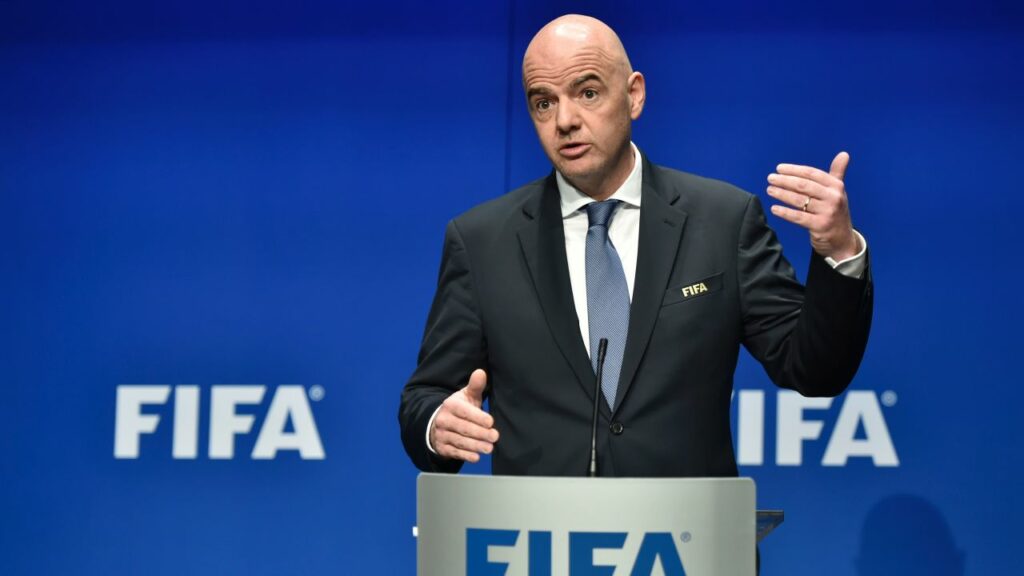
    The group that I was in read about Gianni Infantino and his relationship with Donald Trump and other powerful political leaders, as well as another article about the extreme increase in ticket prices of the World Cup Games being held in America compared to other games that were being held in Qatar in 2022.

    “Perhaps this is why Infantino looks so comfortable in the company of the rich and powerful.”

    I chose this quote to highlight the shared trait and connection between these articles as well as to really drive home the point of what these articles are trying to touch on. Infantino, as the president of FIFA, has worked continuously to do two major things: To grow the game of Soccer into more markets, and make more money. This is backed up by his upheld relationship with Donald Trump and the selection of the Americas for the 2026 World Cup, as well as the gouged prices of seats for these games because of the “higher market” that America and it’s neighboring countries has. He is attracted to what he can do to make these goals of his come true. The expansion of the World Cup to 48 teams for this tournament also supports the claim of expanding the World Cup and FIFA into a higher market, exposing more countries at once to the biggest event in Soccer. All of these factors tie into the profit margin of FIFA, the nonprofit, to put back into the expansion of the resources available to clubs across the globe. This is the public claim, but these kinds of politicizing and diplomatic tactics are out of the ordinary for a nonprofit, and raises questions about the legitimacy of the financial integrity of the FIFA organization. This is combined with the prior knowledge of FIFA’s previous president’s corruption scandal and the racketeering and money laundering of referees.

css.php