The second chapter from The History of Women’s Football, and the seventh chapter of From Football to Soccer: The Early History of the Beautiful Game in the United States, both go over the early struggles and developments of women’s football.
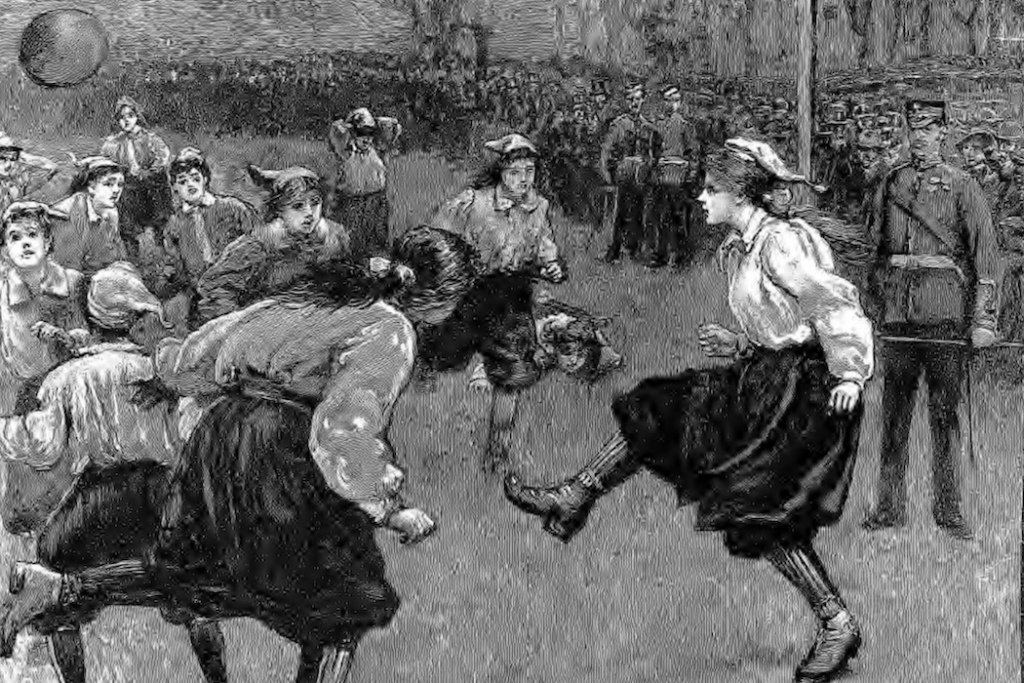
As described in The History of Women’s Football, women playing football was seen as a threat in ways to the men’s teams. During the first World War, men were off fighting the war, leaving the women to take the jobs they had and essentially run the country while they were away. This included the sport of football, which had women playing on the pitch. After the war ended, and all the men returned, women’s football was still popular among people, which scared the men’s association so badly that they banned them from playing on the pitch, whilst making up some wildly sexist, and quite frankly, nonsense statement that the game of football is “unsuitable for females.” I find it interesting that the men’s clubs and associations found women playing the sport to be a enough of a threat to their existence for them to just flat-out ban it.
The rest of this chapter, and the chapter in From Football to Soccer, detail the development of women’s football. Most of the development from The History of Women’s Football come from before the eventual banning, and showcase the development of teams like Dick, Kerr Ladies, and Atalanta, and eventually the short-lived English Ladies Football Association. The chapter in From Football to Soccer primarily focuses on the development of the sport in the United States, which was only confined to certain regions, and women’s soccer experienced the same ordeal. This chapter goes over the development of women’s soccer in schools, in clubs, and mentions Doris and Helen Clark (who are not related at all, and also lived on opposite sides of the country) who helped develop the sport in California and Connecticut respectively.
All in all, these two chapters talk about the early history, and struggles, of women’s football throughout the world, where it struggled with being put down by men, and in the United States, where it simultaneously faced that issue, and with the fact that soccer was struggling in the United States as a whole.
By Tommy Oneto

Leave a Reply