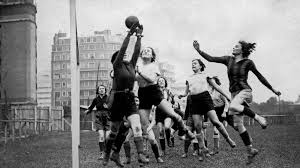
Women’s soccer in the early 1900s started to grow in ways that were really shaped by major social changes happening at the time, as shown in Jean Williams’ The History of Women’s Football (Chapter 2) and Brian D. Bunk’s From Football to Soccer (Chapter 7). Early women’s matches in both the United States and Europe helped bring more attention to the sport and slowly challenged the idea that soccer was only for men. Even though women’s participation wasn’t always fully accepted, these early games showed that there was interest and talent, and in some cases women were even taking on roles beyond playing, like helping organize teams or acting as coaches. This helped lay the foundation for women being more involved in the sport at different levels, even if it was still limited.
World War I played a huge role in changing opportunities for women during this time. With so many men gone to fight, women stepped into a lot of roles in factories and other jobs, and this shift also influenced sports. Women’s soccer teams became more visible and sometimes used matches as a way to raise money and support the war effort, which helped the sport gain popularity and larger crowds. However, after the war ended, things shifted back again, and women’s soccer started to face more pushback. Men’s football organizations often saw women’s growing success as a threat, especially when it came to attendance and revenue, so they started restricting access to fields and stadiums. Some of the reasoning was based on outdated ideas about women’s physical ability, but a lot of it was really about control and maintaining power in the sport.
Even with these challenges, women’s soccer didn’t disappear, and the early development of the game shows how persistent female athletes were despite not getting equal support or recognition. The readings make it clear that women were already proving they could compete, attract fans, and contribute to the sport in meaningful ways, even if the system around them wasn’t built to support them. Overall, this early history shows both progress and setbacks, and it highlights how long the fight for equality in women’s sports has really been.

Leave a Reply