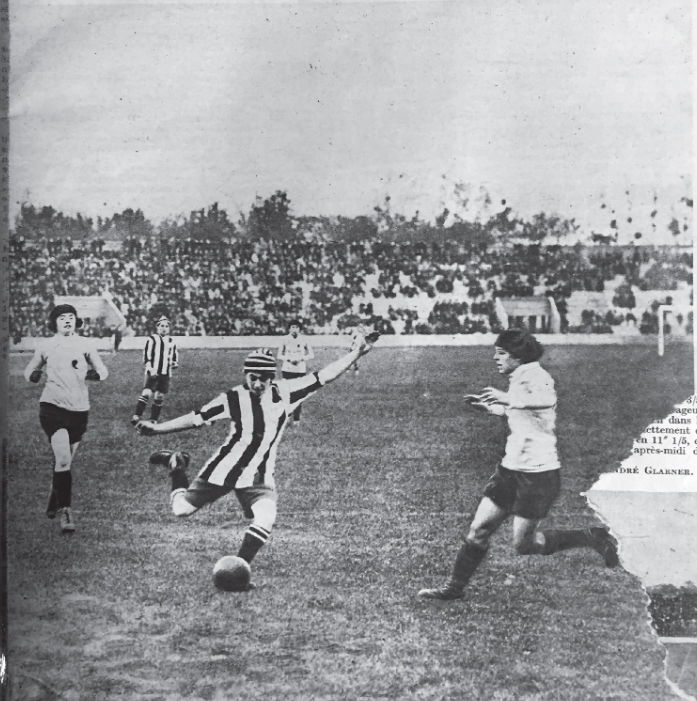
Due to the outbreak of WW1, which saw most European and American men shipped off to fight in the battles of it, this led to the the need of bodies in important industries, which allowed women to hold jobs and roles that usually men would fill because of this time of need. While that general statement seems to be common knowledge now for anyone who has taken a general history class, what isn’t necessarily talked and what may not be common knowledge about is how women’s soccer was affected because of this war and time period.
International matches of women’s soccer aswell as women’s football clubs grew in popularity and quantity during this time because of the lack of men’s soccer at the time. This is shown on an international and somewhat professional level in England, and on a collegiate and professional level in the United States. This growth continued at a strong rate and was starting to be seen as evolved along with the men’s game from a popularity standpoint, but when the conclusion of WW1 came and the world began to “come back to normal” as one might say, we saw that the elite class of the men’s soccer game saw the growth of the women’s game not as a positive for the game of soccer, but as a negative to the profits and growth of the men’s game. This led to the slandering of the women’s soccer teams and their involvement in the sport, hurting their development that they were looking to build upon during their growth in WW1, or more generally the early 20th century.
The main aspects that these chapters share and talk about is the evolution of the women’s game during this period of time. To many people at this time and even to an extent today, most women’s sports teams is an extension of men’s sport teams. This is due to a general male dominance and hierarchy that we have seen historically in traditional European or European adjacent societies, aswell as how we learned in these readings, an effort by high-ranking men to cap the development of women’s sports as to not take away success and profits from men’s teams of the time.

Leave a Reply