Category: Wk07-Post-WWII & Cold War era

  • Diamonds in the Rough: Pelé, Garrincha, and the Two Souls of Brazilian Soccer

    The article “Diamonds in the Rough” by Brian Phillips is a masterclass in how to weave together the scientific, the surreal, and the deeply cynical. What struck me most was the author’s ability to take the cold, hard chemistry of carbon and turn it into a metaphor for the commodification of a human being. The fact that we can now use $60,000$ times the standard atmospheric pressure of Earth to bake a pound of human ash into a blue-tinted gemstone is a feat of engineering, but as Phillips points out, it is also a bizarre “peripheral freak show” that trails the World Cup.

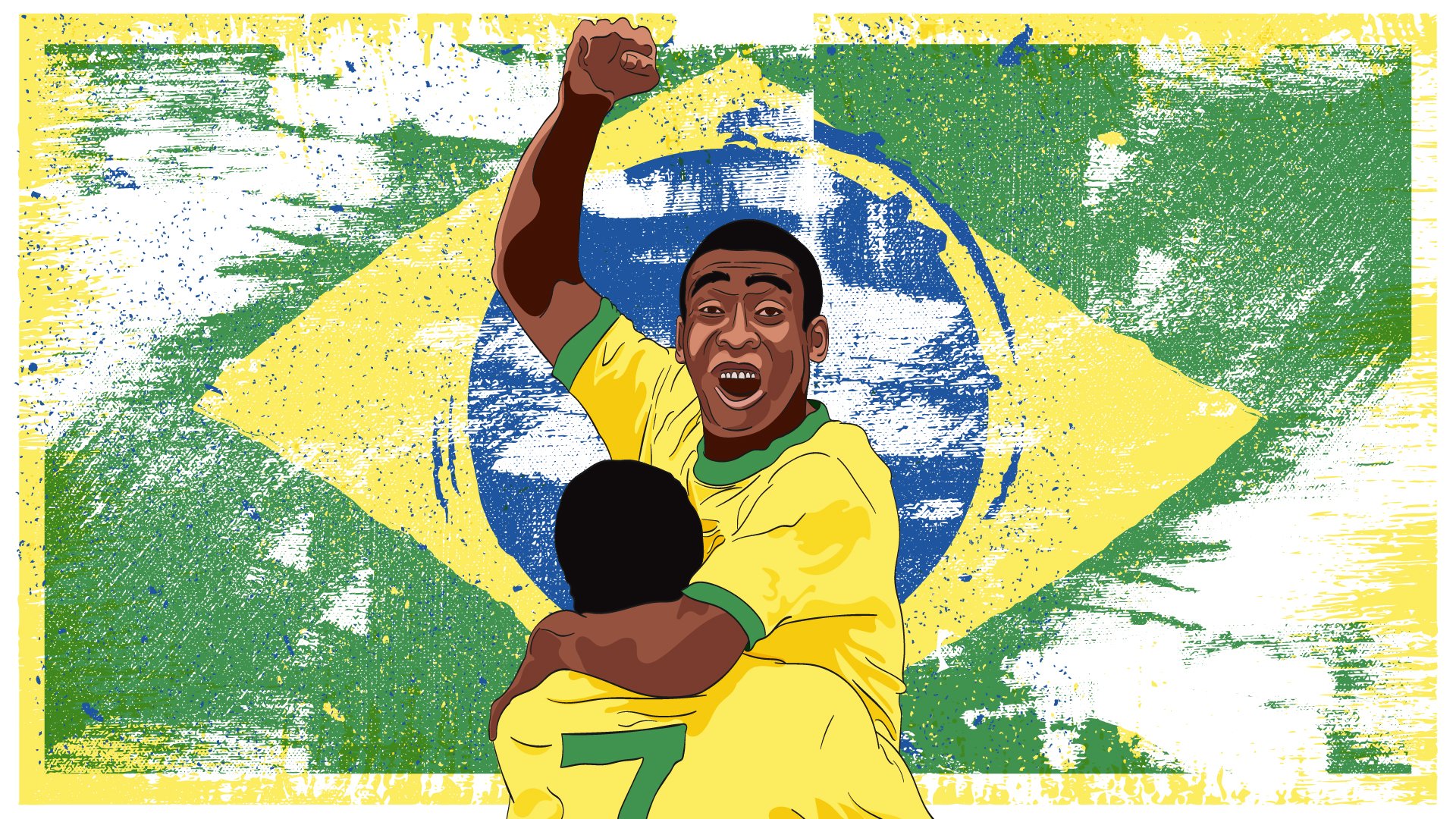
    I found the “apotheosis” of Pelé particularly fascinating. Phillips describes him as a “living god” who has spent his retirement in the “uneasy territory” of a corporate spokesperson. The imagery of Pelé’s hair being harvested to create 1,283 diamonds—one for every goal in his disputed record—is both a poetic tribute and a sharp critique. It suggests that Pelé has been so thoroughly marketed that his physical body is now literally being sold off as “sentimental finger bling.” He isn’t just a legend anymore; he’s a luxury product.

    The most jarring part of the piece, however, is the “blindness” Phillips attributes to Pelé regarding the socio-political state of Brazil. While the country was wrestling with runaway economic inequality and violent protests, Pelé’s main concern seemed to be the “smooth tinkling of the FIFA cash register.” The contrast is stark: on one hand, you have a man being transformed into eternal, sparkling diamonds; on the other, you have a population struggling with crushing poverty. It paints a picture of a hero who has become so compressed by his own brand that he can no longer see the world outside the stadium.

    Ultimately, the piece serves as a reminder of the weirdness that the World Cup attracts. It’s not just about soccer; it’s a collision of “psychic octopuses,” “celebrity witch doctors,” and now, “memorial-diamond companies.” Phillips manages to show that while a diamond is forever, the reputation of a legend is far more fragile, especially when it’s being sold for $7,500 a pop. It makes you wonder if the “two souls” of Brazilian soccer are actually one soul that’s been split between the magic of the game and the cold reality of the business.
  • Week 8 Discussion

    The video about Pelé really helped to open my eyes and show me how much of an impact Pelé had on the World Cup success Brazil had. I have always viewed soccer as a team sport and believed that since there are eleven players on the pitch, it is hard for one specific player to stick out and be the heart of the team. 

    But when I saw some of the video clips of Pelé playing on the international stage, I realized that it was possible for one player to completely take over the game. The clips of a 17-year-old Pelé scoring a hat trick to help beat Sweden in the World Cup final on Swedish soil are extremely impressive, and they speak to his composure and ability to live up to big moments. When Pelé was on the pitch, he was usually the best player on it, but he had some trouble staying on during the 1962 and 1966 World Cups in Chile and england respectively. He was injured before the final in the 1962 World Cup, but his Brazilian teammates were able to power through without him, leading to their back to back world cup wins. 

    The 1966 World Cup in England was rather controversial as Portugal was attempting some rough tackles against Pelé, which eventually led to him having to come off the pitch, which would lead to the Brazilians losing three to one against Portugal. In fact, the treatment of Pelé was so bad at the 1966 World Cup that he actually vowed he would never play in a World Cup again. Thankfully, Pelé decided that he would give the World Cup another shot, and he played in the 1970 World Cup in Mexico, where he did well, scoring four goals and assisting his teammates with a multitude of other goals. Pelé helped to deliver a header goal and an assist in the world cup final game against italy and his contributions helped lead Brazil to a four to one victory over Italy and Pelé’s third World Cup, which then subsequently put an end to his World Cup career.

    Brian Phillips article Diamond in the Rough ” discusses new technology that has been created that could create diamonds out of things like human ashes and hair. He then goes on to describe the 1,283 gemstones that were created out of Pelé’s hair that signify every goal he scored throughout his career. Pelé is attempting to sell each of these gemstones for $7500, and the proceeds will be donated to the pediatric complex of Brazil. This seems to be a noble thing for Pelé to do, and I do think it’s awesome for him to donate the money he earns to the pediatric complex, but Phillips argues that this sort of grand act of making his hair into diamonds shows the disconnect between Pelé and the modern Brazilian society. 

    Phillips looks into the argument that Pelé makes about the huge wealth disparity between rich and poor in Brazil and how Pelé believes that people should not protest things like the building of new stadiums for the World Cup when hundreds of thousands of Brazilians live in extreme poverty with no real help from the government and with no real social services being provided. Pelé has long navigated being a living god and being a corporate shill who will put his name on anything for a check. 

    I personally don’t hate Pelé for doing this, as I see him alot like Shaq, who is using his likeness to make as much money as they can, and they earned that through their hard work in sports and their hard work in showing their personalities to the world. Phillips frames Pelé as a star who went out of touch with people when he got money and I can kind of see that with some of his opinions on people protesting the 2014 world cup but I also think he has made his way out of poverty and built something from nothing so he can have his views on the protests and can market himselff however he wants. And I don’t think we should fault someone for wanting to donate money to the pediatric complex, even if it is through something weird like diamonds made out of Pelé’s hair; the money is still going to a good cause. 

  • More Than Skill: Brazil, Race, and the Pressure of the World Cup

    Reading Bowman with Brian Phillips, the Pelé video, and Dubois made me realize that the World Cup is about way more than just skill on the field. It’s really about race, national identity, and how countries and players are judged in front of the whole world. Brazil is probably the best example of this because its soccer identity has always been pulled in different directions.

    Bowman explains that by the mid-twentieth century, the World Cup had become a way for countries to show they were modern, disciplined, and deserving of respect. For Brazil, that meant pressure not just to win, but to win in a way that looked organized and controlled, especially from a European perspective. Because of that, Brazilian soccer started to feel like it was always being judged instead of just appreciated.

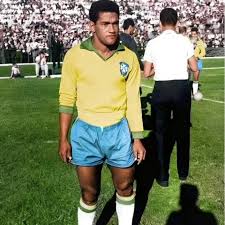
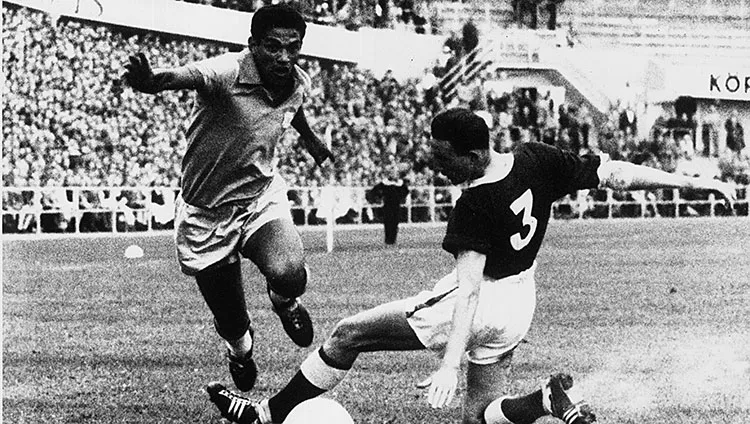
    Brian Phillips really shows this tension through Pelé and Garrincha. Pelé represents the version of Brazil the world was most comfortable with, disciplined, professional, and basically the perfect global superstar. Garrincha was completely different. His style was more chaotic, creative, and unpredictable, and it didn’t fit neatly into systems that valued order. Phillips points out that Garrincha’s style was connected to his class background, which made people uneasy even though they loved watching him play.

    The Pelé FIFA video adds another perspective because you can see how proud he was to represent Brazil, but you can also tell how much pressure he carried. He wasn’t just playing for himself, he was expected to represent the whole country and prove Brazil belonged at the top. That shows how the World Cup turns players into national symbols.

    Dubois helps explain why race is such a big part of this conversation. Black players have always been central to the World Cup, but they’re often only fully accepted when they succeed and quickly blamed when they don’t. This connects directly to Brazil, where Black players shaped the country’s soccer identity but still faced racial expectations. Winning created opportunities, but it didn’t erase inequality.

    What really stood out to me across all these sources is that Brazil never fully resolved these contradictions. Even when they were dominating the world, issues of race, class, and control were still there. The World Cup didn’t hide those tensions, it put them on display. Soccer became a space where freedom and discipline, joy and pressure, all existed at the same time.

    Overall, these readings made me see the World Cup less as just a tournament and more as a global stage where identity is constantly being shaped and debated. Brazil’s story, especially through Pelé and Garrincha, shows how complicated and powerful that process really is.

  • Diversity in International Football

    This year [2018], there will be two additional African teams in the competition: France and Belgium.

    -Laurent Dubois in Afro-Europe in the World Cup

    Within the last few decades, Africa has established itself as a football powerhouse. The 2010 World Cup, held in South Africa and the politics surrounding the choice, serves as evidence of this fact. Yet, as football’s foothold has grown in the continent, so has Africa’s foothold on the sport outside the continent grown.

    The quote above is evidence embodies this idea. France and Belgium, two European teams, had been dubbed “African teams” by the media in the follow-up to the 2018 World Cup – hosted by Russia. This was, and is, due to the prominence of Afro-European players on their teams – players of African descent born in the European countries for which they now wear the flag for on their chests, playing on the international stage.

    These players, such as Romelu Lukaku for Belgium and Mamadou Sakho for France, stand out against the expectations of players from their countries – white skinned, light haired Europeans. Yet, these players are no less European than their counterparts, no less French than the French, no less Belgian than the Belgian. They were born in their nations, bear the flag of their nations, and represent their nations at the global stage, giving their all to win the game for their nation. Players of African descent, like Lukaku and Sakho, are often star players of their teams.

    Star players of African descent, playing for nations who do not accept their ethnicities and identities, is not new in footballing history. One cannot forget Afro-Brazilian players like Pelé, Garrincha, and Leônidas da Silva or Afro-Uruguayan players such as José Andrade, Isabelino Gradín, and Juan Delgado (additional information about these players can be found in The World Cup as World History). These players, like many Afro-European players playing for European teams, face racially-motivated insults and threats while playing for the country they call home.

    It’s, in a sense poetic, how European nations have found themselves “saved” in the realm of football by players from nations which they once colonized. France, a nation known for it’s harsh stances on diversity – take, for example, the bans on abayas and other religious coverings – has found itself relying on players from ethnically diverse backgrounds to propel it’s national football team. Yet, it seems no matter how hard these players fight for their countries (I’m thinking about Mbappé’s successes for France in 2018 here) they find themselves in a grey-zone – not white enough for the place they call home.

  • Xenophobia and political power

    What stood out to me from both readings were two completely different things but I personally believe are very interesting. I do have many thoughts from the readings. The first came from chapter six of Golazo! I understand in this time period how xenophobia was prevalent. But why? It is obviously self explanatory. Its racism and a superiority complex. With The World cup as History, I see a transitional period from war to seeking economic power. And that is what Brazil was trying to do. It sought to not only take over the game of soccer, but also economic and political power.

    To briefly explain, there were already conflicts of Anglo saxon attitudes towards the Argentinians. Charles Buchanan, who was an editor of Football Monthly, believed that referees from England should come over and officiate the games. He believed that those with latin blood were hostile. To his point, the English referees did not have pistols in games like the Argentinians. But this was incredibly xenophobic and racist. Because that would have meant that Buchanan already had a disposition of how people were in Latin America. It seemed also to be an attempt to glorify those of Anglo-Saxon ancestry. But let’s fast forward past World War II and look at Brazil.

    After World War II, Brazil sought to not only dominate in the sport of soccer, but also economically and politically.  They had decided to do this through the sport of soccer. The Brazil government had decided that they were going to do this by investing in the sport. So in 1950 they had decided that they were going to host the world cup. They had also decided that they were going to build another stadium called Maracana. This was a testament to the significance of growth for Brazil globally.

    What I can conclude from this while trying to tie down both together is this. Both seemed to push for some power and superiority. While one was doing it through xenophobia, the other did it politically. They both wanted something out of the sport of soccer. The question is by what means? They seemed to want to have their investments through those who supported the game. But at what cost? And the cost was revealed as the readings continued. Which involved a lot of propaganda.

  • National Identity in the World cup

    The readings all look at the idea that the World Cup isn’t just a soccer tournament, it is a stage where countries find out identity, race, power, and money.

    In the Diamonds in the rough  reading, the author uses Pele and Garrincha to show two different sides of Brazilian football. Pele became the global icon closely tied to sponsorships and Garrincha feels like the opposite, deeply connected to ordinary fans. By setting this contrast during the 2014 FIFA World Cup, the article suggests that Brazil feels split. There’s pride in hosting the world cup, but also frustration about corruption, inequality, and how commercial the sport has become. Soccer, which symbolized national creativity and unity, now also reflects tension.

    The afro europe in the world cup reading looks at race and belonging in Europe it focuses on how players of African descent have reshaped national teams like the France national football team and the Belgium national football team. These teams show what modern Europe actually looks like which is diverse and shaped by immigration. The article also points out how fragile acceptance can be when these teams succeed, diversity is celebrated yet when they struggle, some fans question whether those players are actually French or Belgian. The World Cup becomes a spotlight, exposing unresolved debates about race and citizenship.

    In The World Cup as World History, Bowman looks broader; he argues that the tournament mirrors global history from decolonization and migration to the rise of international media and corporate power. The World Cup didn’t grow in isolation; it expanded alongside globalization and the influence of massive governing bodies. He argued Issues of race, nationalism, and economics aren’t separate from the sport  they are built into it.

    These all work to show that the World Cup symbolizes more than just the game. Whether in Brazil’s debate over commercialization, Europe’s struggle with ethnic identity, or the broader forces of globalization, soccer becomes a way countries can tell stories about who they are.

  • Race, Politics, Power.

    Garrincha

    The readings for this week as well as the video for the Brazilian player Garrincha highlighted a particular common thread amongst themselves. Race and ethnicity plays a massive part in the evolution of soccer as a sport and the diversity of national teams has created superstars that are both revered and despised simultaneously. In countries in Europe as well as South America, there was debate over the inclusion of players of different races on the national teams that would be sent to compete in the World Cup. The inclusion of important players to national teams such as Pele and Garrincha for Brazil, Gradin and Delgado for Uruguay, and Sakhou and Lakuku for France sparked debates in their home countries that they were representing in the national competition. In particular, Brazilian soccer in the 1920s and 1930s suffered from issues regarding race in clubs and at the national level. Players such as Friedenreich and Domingos tried to “cover up” their blackness and pass as mixed or white players. Leonidas could not pass as anything other than black, and suffered racial abuse as a result of a characteristic that he is unable to control. There are also important ties to politics as well as corruption within the sport as well. Far-right French politicians attacked the French national team in their qualifying run for the World Cup in 2014 to be held in Brazil. After a loss to Ukraine, Marine Le Pen, the daughter of a French politician in the 1990s known as Jean-Marie Le Pen attacked the French national team by accusing them of being too “foreign” and claiming the bad results of the national team were an effect of “ultraliberalism” in France. She even suggested that the French national team stop being paid to participate in matches for the country, highlighting a connection between soccer and politics. In 2001, the Brazilian Football Confederation was the subject of a congressional investigation into corruption where Nike had bought the right to schedule the teams matches and Ronaldo was called in to testify to why the Selecao was unable to mark Zinedine Zidane in the 1998 World Cup.

  • Week 7

    While the FIFA World Cup has been considered an event for the sports world, it can also be considered an important reflection of the history, politics, and identity of the world. As Bowman explains in “The World Cup as World History,” the tournament mirrors nationalism, colonial legacies, and global inequality (Bowman, 2020) The World Cup is not only an event for the world’s best sportsmen, but it is also an important reflection of the way the world’s countries show their pride, power, and conflicts, all based on the history of the countries themselves. The World Cup is an important tool for the forces of history to shape the modern world through the eyes of its global audience.

    Dubois (2018) describes an example of African descent players and their opposition to the traditional concept of European identity. The players, like Mamadou Sakho or Romelu Lukaku, symbolize multicultural countries that were created as a consequence of colonial migrations. Moreover, FIFA (2012) describes an example of how a colonial player of Mozambican descent became an icon of Portuguese football history. This is an example of how colonial descent is used in modern national teams, as Bowman suggests. Their presence in the global arena leads countries to wonder which players symbolize their countries and evoke national identity in the post-colonial world. I have observed that players often symbolize broader social discourses about identity and citizenship.

     Another aspect is presented in Phillips (2014), which discusses commercialization and political influences in Brazil. Pelé is the face of globalization, while Garrincha represents authenticity and joy. This relates to Bowman’s work on globalization and power, demonstrating how heroes in football are subject to both national and capitalist ideologies. These images collectively demonstrate how the World Cup can transform individuals into icons of the struggle between culture, politics, and economics.

    To conclude, the world cup is a competition which brings together race, politics, capitalism and national identity in some significant observable ways. It poses some of the most basic questions where the whole world is united by the World Cup and here it also focuses on the imbalances which are present. Such a wide outlook on football suggests a new look at the game itself.

  • Fifa vs Soccer

    For many, Fifa is soccer. When they think of soccer they think of Fifa and the World Cup, recognizing the myriad of other leagues but relegating what soccer is to the World Cup and its related affairs. With the politics, national pride, and soccer teams competing on the biggest stage imaginable, it is easy to see how one could come to think of that. However, soccer is much more than just Fifa. Indeed, the sport itself carries much more weight and means much more to people than what one imagines when thinking of the World Cup.

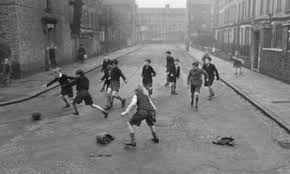
    In many ways, soccer means the most to the people playing it and also the people watching it. That may seem like an obvious statement, but there is more to it. Soccer as seen in so many cases is something that can bring people together. Whether that be on a national level in the world stage or just kids playing in the street, it holds true. Soccer is not just about the grand stages and audiences with the most prestigious trophies on the line. It is about community and a sense of belonging. It is about a form of art that people can appreciate and be drawn together by. This can be seen at the highest levels, it is true, however it can also be seen at any number of local leagues.

    Soccer is a sport where one can find themselves and find themselves a community regardless of ethnicity or race. It is method that people have used for decades to form communities or ingrain themselves into new ones. For immigrants in some cases it would be a way to keep their old communities alive while in others it would be a way to join a new one.

    While there are numerous cases of pushback against players of different race or ethnicity to the majority of where they play, it never stopped the players from being drawn to the sport. Ultimately, soccer remains a game created to have fun. It is something that can be put at the pinnacle of the sporting world or as a match between students. In either case it creates a sense of camaraderie and a multitude of connections for people who might need them.

  • More Than a Jersey- Week 7

    This section of The World Cup as World History by William Bowman, along with the articles on Afro-European players and Brazil’s World Cup legacy, all focus on how race and heritage have shaped the way fans and nations view their own teams. A common theme across these readings is that players representing a country but from different racial or ethnic backgrounds are often judged as outsiders, until success forces the nation to reconsider who truly belongs.

    An example of this appears in discussions of European national teams with immigrant backgrounds, often described as “Afro-European” squads. As immigration increased in countries like France, Germany, and the Netherlands, national teams began to include players whose families came from Africa or other former colonies. Even when these players were born and raised in Europe, fans and media often questioned whether they were truly national representatives. Bowman explains that the World Cup exposes these tensions because it places national identity on display in a highly emotional setting. When diverse teams succeed, they challenge older ideas that nationality must equal ethnicity.

    Brazil’s history shows a similar pattern in a different racial context. As described in both the Bowman textbook and the Brazil article, the loss in the 1950 World Cup final led to heavy blame placed on Black Brazilian players, reinforcing racial hierarchies within Brazilian society. For a period afterward, there was pressure to favor lighter-skinned or European-descended athletes on the national team. This dynamic changed dramatically with the rise of Pelé and other Afro-Brazilian stars in the late 1950s and 1960s. Pelé’s dominance on the field and global popularity made him not only Brazil’s greatest athlete but also a national symbol who complicated racial stereotypes. Alongside players like Garrincha, he helped lead Brazil to World Cup victories in 1958, 1962, and 1970, proving that the country’s identity and success were rooted in its racial diversity rather than in European heritage alone.

    Pele and 1970: How the greatest player of all time cemented his legend -  BBC Sport

    The Afro-European discussion and Brazil’s experience ultimately point to the same idea: success in international sport can transform social attitudes faster than politics alone. When diverse teams win, they force fans to associate national pride with players they may have previously viewed as different. The World Cup becomes a moment where identity is renegotiated in real time. Victories create new symbols of belonging, while defeats often revive exclusionary thinking.

    Taken together, these readings suggest that the World Cup is not only about competition but also about defining who represents the nation. Teams that reflect migration and racial diversity often face skepticism at first, yet their achievements, especially those of icons like Pelé, can expand national identity itself. In this way, soccer becomes a powerful space where societies confront and sometimes overcome their own prejudices.

    Weston Scambler, Maple Group

css.php