Category: Digital Project

  • Final Digital Project: Understanding White Elephants

    My final digital project for this course revolved around the idea of white elephant stadiums, focusing specifically on the Cape Town Stadium, also known as Green Point Stadium or DHL Stadium.

    I first became interested in the topic of stadiums during the last World Cup held in 2022 in Qatar. I remember hearing about the horrendous working conditions employed to build stadiums and how they now sit empty. I started here, working my way through secondary research about stadia, with specific focus on World Cup stadia, before landing on the 2010 FIFA World Cup hosted by South Africa and the Cape Town Stadium.

    I chose to host my project on my personal website, bejanns.com, due to my familiarity with website-building through WordPress and my desire to create an informational project in which viewers could click on what subjects interested them the most.

    My overarching topic revolved around Cape Town Stadium’s status as a white elephant. My sub-topics are presented in the following order:

    -The World Cup Comes to Africa: World Cup Bids, Danny Jordaan, and Organizing a Mega Event

    -Stadia Development: The Role Played by the Government of South Africa to abide by FIFA Requirements and Regulations

    -The Role of the Host City

    -Usage During the 2010 World Cup

    -Local Views Following the World Cup

    These sub-topics were chosen to provide viewers with a general understanding of how the World Cup found it’s way to South Africa, how South Africa chose to organize their hosting effort from a national, provincial, and city scale, how FIFA impacted stadia development as well as specific insights on the Cape Town Stadium in usage statistics, local perceptions of the stadium, and how it has evolved over time. Although organized in chronological order, I believe that the ability for viewers to chose which topics they wish to explore is crucial to their enjoyment of my project. For example, if a viewer wants to learn about South Africa as a host, they can focus on the first three topics and ignore the rest. Or perhaps a viewer is initially interested in the role of the host city and would rather jump around in their exploration of Cape Town Stadium’s existence as a white elephant stadium.

    The project concludes with a section titled “Concluding Thoughts” in which I explain how these sub-topics, seemingly connected only by the role they play in hosting a mega sporting event, all affect the development of stadia such as Cape Town Stadium and can lead to the emergence of stadia as white elephants.

    My work can be found on my website under the “projects” heading or direct at: bejanns.com/understanding-white-elephants

  • Final DIGITAL Project

    Link: https://www.sutori.com/en/story/sportswashing-and-political-manipulation-in-the-1934-fifa-world-cup–oukC4uhHsC6UN6q2hSYmdAZq

    For my project, I used Sutori to build a timeline that explores the 1934 FIFA World Cup. The 1934 World Cup was exploited by the Italian fascist regime as a means of sportswashing. In my project, I examine the infiltration of fascism into Italian football and culture. I analyzed key events during this World Cup, including the quarterfinals, semi-finals, and the final match. Each match Italy played was marked by controversy and pure aggression. This project explores how these matches were more than just a sporting torment, but a carefully orchestrated display of propaganda.

    To present the history of this World Cup, I used Sutori to create an interactive timeline of the tournament’s key moments. In the Sutori, I included primary sources to illustrate the regime’s tactics and integration into the World Cup. Furthermore, I included photographs from the events and matches. These primary sources help bridge the gap between history and reality by showing the real-time stories of the games.

  • Digital Project- Weston

    For my digital sport history project, I created a StoryMap timeline titled Development, Identity, and Global Legitimacy: The U.S. Men’s National Team in Global Soccer. This project examined the history of the U.S. Men’s National Team with a focus on the gap between youth development success and inconsistent senior-level international performance. My main argument is that this gap is not simply about talent, but instead is shaped by structural and cultural factors such as the pay-to-play system, the late development of professional leagues, and the increasing globalization of player development. Using the StoryMap format allowed me to organize this argument through key moments in time, including early immigrant soccer communities, the NASL era, the 1994 World Cup, the creation of MLS, youth national team success, and more recent changes in player development.

    One of the biggest benefits of using a digital format like StoryMapJS is that it allows historical work to be presented in a more interactive and visual way. Instead of just reading about events, viewers can move through time and space, seeing specific locations tied to historical moments such as the Rose Bowl in 1994 or Trinidad in 2017. Finding images, videos, and maps for each slide actually helped me better understand the history because I could visualize the events and contexts I was writing about. It also made the project feel more like telling a story rather than just presenting information, which I think makes the argument clearer and more engaging. The digital format also allowed me to combine primary sources, like photos and match footage, with secondary research, which made the project feel closer to how historians actually work with evidence.

    At the same time, there are some drawbacks to this type of project. One challenge was making sure the argument stayed clear while also using images and media effectively. It is easy for a digital project to become more about visuals than analysis if you are not careful. I also ran into technical issues, such as images not loading correctly, which can affect how the project is presented. Another limitation is that you cannot include as much detailed writing as you would in a traditional paper, so you have to be more selective about what information you include. Because of this, I had to focus more on key moments and themes rather than trying to include everything I learned in my research.

    Overall, this digitally-infused research assignment helped me think about history in a different way. Instead of just writing about the past, I had to think about how to present it visually and how to guide an audience through a historical argument. The StoryMap format made it easier to show change over time and connect different moments in U.S. soccer history to a larger argument about development, identity, and globalization. While it comes with some challenges, I think the digital format is a powerful way to present historical research in a way that is both engaging and analytical.

    StoryMap Link: https://uploads.knightlab.com/storymapjs/ad9574865f02efa722730a1cd6fff217/development-identity-and-global-legitimacy-the-u-s-mens-national-team-and-the-role-of-youth-success/index.html

  • FInal Project: Nathanael Cox

    https://canva.link/vj63r506mrt7ikr

    My research question was “How has the German national soccer team been used as a tool for promoting social integration?” Beyond that main topic I had several sub questions. These included: To what extent has the German national soccer team’s success in international competitions influenced public attitudes towards immigration and cultural diversity? How do the experiences of players affect and reflect broader social and political dynamics? What amount of different backgrounds in fans have felt represented by the soccer team? How has the team brought people together? I decided to create a timeline focused on 6 major specific years/timespans. These points on the timeline include from the creation of the German National Soccer team to 2000, 2000-2009, 2010, 2014, 2018, and finally 2020 through the present.

    These main points in time each represent a distinct aspect of the journey that the German National Soccer Team underwent. By looking at all 6 points in time one can see the growth and setbacks that occurred during said journey. each of these points in time, I focused on several events that happened as well as the general progress of diversity and its relation to the team. I tried to include images that represented either the major event related to the time or that represented the general feel of how diversity was viewed during that time.

    There were many interesting things that I learned over the course of this project. As someone who did not have much knowledge of soccer I did not have much to go off of. The only real connection I had was that my grandmother is German and she is a fan of soccer. However, that was pretty much it. I think that seeing the pushback and setbacks in the process was something that I was not really expecting, but does make sense when thinking about it. I guess I had thought that it would have been a constant state of progress towards a more diverse team for example, but seeing the pushback against the team at certain points went against that idea. Another aspect I was surprised by was the teams state pre-2000. I had thought that after WWII the German team in particular would have been pushed by the government in an attempt to show a sense of change and distance themselves from the previous regime. However that was not the case as many previous ideologies and thought regarding diversity carried over. Once this change did start however, I was also suprised to see just how much it was pushed by the German government at times. Much of the change that I highlighted happened directly due to the German government and their attempts to use the team for political purposes. It was interesting as it was another case of a national team being heavily tied to political uses by their government, but this time in a way that went against what we had seen in class so many times.

  • Final Digital Project

    Link to Final Digital Project: https://www.sutori.com/en/story/from-spectacle-to-survival-fifa-war-and-the-reinvention-of-the-world-cup–rUWQsC33Le2YADHYP45uzR4T

    What stood out to me most while building and reflecting on this timeline is how quickly the idea of the World Cup shifts from something that feels simple and almost experimental into something deeply tied to the world around it. At the very beginning, looking at 1930, it’s easy to think of the tournament as just the start of international football, something new, exciting, and still figuring itself out. The description of it not even being fully “world” yet really captures that feeling. It was limited, uneven, and still very regional in nature, even if it carried the potential to become something much bigger. But what becomes clear as the timeline moves forward is that it doesn’t stay simple for long.

    As I worked through the early and mid-1930s, the shift is pretty striking. Football stops being just about sport and starts becoming a tool, something that governments and nations can use to project power, identity, and even ideology. The 1934 World Cup in Italy is probably the clearest example of that. Seeing how Mussolini used the tournament as a form of political theater really reframes how I think about international sports. It’s not just about who wins or loses, but about what those wins are made to represent. That moment, along with the broader idea of football helping shape national identity in the mid-1930s, shows how quickly the game becomes tied to something much larger than itself .

    Then the timeline hits 1938 and everything starts to feel tense. There’s this sense that the tournament is still happening, but the world around it is falling apart. That uneasy feeling carries straight into 1939, where the World Cup doesn’t just change, it disappears. I think that’s one of the most important moments in the entire project. The complete halt of the tournament during World War II really exposes how dependent global sport is on political stability. It’s easy to think of sports as something separate from world events, but this moment makes it clear that they’re actually very fragile in the face of global conflict .

    What I found especially interesting during the wartime years is that football doesn’t fully go away. It survives, but in a much more fragmented and localized way. Stories like the “Death Match” of Kyiv or even the fact that the World Cup trophy had to be hidden in a shoebox under a bed show how the game continues to exist, just in completely different circumstances. It’s no longer about global unity or international competition, it’s about survival, resistance, and sometimes even defiance. That shift in meaning is something I didn’t fully appreciate before working through this timeline.

    The post-war section really brings everything back together, but not in the same way it was before. By 1945 and into the late 1940s, FIFA isn’t just rebuilding, it’s changing. The expansion of membership and the influence of decolonization show that the organization is becoming more global, but also more political in a different way. Football starts to reflect a new world order, where more nations are trying to assert themselves on an international stage. That idea carries directly into 1950, where the return of the World Cup feels less like a continuation and more like a reintroduction.

    The 1950 World Cup, especially moments like the “Maracanazo,” really drive home how much weight the tournament now carries. It’s not just a game, it’s tied to national pride, expectation, and identity on a massive scale. Even smaller stories, like the United States upsetting England, show how unpredictable and globally connected the sport has become. By this point, the World Cup is no longer just an event; it’s a reflection of a world that has gone through massive upheaval and change.

    Looking back at the project as a whole, the timeline format ended up being the perfect way to tell this story. It allowed each moment to build on the last, showing a clear progression from spectacle, to disruption, to survival, and finally to reinvention. That was the main idea I was aiming for in my rough draft, that the World Cup was never just a sporting event, but something shaped by and reflective of global realities. Seeing it laid out step by step makes that argument feel much more real and visible.

    More than anything, this project changed how I think about sports history. It’s easy to separate sports from politics or global events, but this timeline shows that they’ve always been connected. The World Cup doesn’t just exist alongside history, it moves with it, reacts to it, and in some ways, helps shape it too.

  • Final

    This project examines how the 2022 World Cup in Qatar exposed the connections between global sports, labor systems, and political power. While the World Cup is often seen as a celebration of international unity, Qatar 2022 revealed the ethical costs behind that image. My argument is that FIFA’s pursuit of power and profit played a major role in shaping the tournament, often at the expense of migrant workers and basic human rights. By focusing on labor conditions, FIFA’s decision making, and global reactions, this project shows how modern sporting events can reflect deeper inequalities in the world.

    To present this argument, I created a visual presentation using Prezi that walks through the key themes of the project, including FIFA’s global influence, the role of migrant labor, and the international response to human rights concerns. The format allows for a clear progression of ideas while also using visuals to highlight the contrast between the spectacle of the World Cup and the realities behind it.

    PREZI

  • National Soccer Styles

    Map

    For my project, I chose to examine the relationship between nations’ cultures and how we perceive their national teams. A national culture is reflective of the nation’s past, and sometimes nations build their culture to fit better the narrative they are perceived as. I am a big fan of the Apple TV show Ted Lasso, so much so that it inspired me to make this project. I have always preferred presenting to writing an essay.

    When I began this project, that was my end goal: a Google map with a video file explaining my findings for each country. However, this was easier said than done; it proved very difficult to embed the video files in a way I felt was up to my standard. So I decided to break it down into smaller sections for each country.

    I like studying cultures, and this allowed me to look into the reasons behind these beliefs. I am happy with my final project; it blends lots of what I wanted to do. I was even able to interview a friend of mine from Scotland to get some insight into English soccer.

    Overall, this assignment had its challenges; it was difficult to create the bridge between true culture and perceived culture. Germany, for example, is seen as a strategic powerhouse with ridged structure, but in reality, they play with an adaptive and fluid style. Additionally, finding places to put markers was a challenge. Some locations were easy to place because of their significance, while others were in random locations because I couldn’t place them in a meaningful way.

    This was a very fun assignment, and I enjoyed the creative liberties we were afforded for it.

  • The Impact of the 1999 Women’s World Cup

    The digital timeline I created focuses on the rise of women’s soccer in the United States and how it connects to broader themes of gender equality and visibility in sports. I chose Canva to organize my findings historically in addition to visually and graphics. The ease of merging chronological historical events with an array of media formats was a compelling reason to select this platform, as it provided additional context and depth to the final product, in addition to being more than a simple tabulation of historical events in the development of the women’s game.

    As I constructed the timeline, I specifically focused on significant events, including the passing of Title IX, the formation of the U.S. Women’s National Team, and the legacy of the 1999 Women’s World Cup, providing context around the event and explaining how each event fostered the development and success of women’s soccer in the U.S. Additionally, I incorporated visual elements that complement the written information, including pictures of two teams celebrating successful seasons and notable achievements within the women’s soccer community.

    Creating the project was a challenge for me in the way I organized the timeline. Initially, I created a timeline that had too many events centred around 1999, but once I redesigned my timeline, I was able to create a better flow of events from the very beginning of the development of the project, and through to today’s activism. By doing this I made my point much clearer, and easier for someone else to follow.

    This project has helped show me that when you present history via digital tools, it is not merely sharing data/information, but also about the way in which that data/information is laid out (structure), and how someone experiences that data/information. This was something that I learned because by including multimedia in this project, it enabled me to create a more engaging way of conducting research, and subsequently demonstrate the significance of each moment.

    https://canva.link/3qj6pe96kk841id

  • Final Digital Project

    Here is the link to my PRODUCT and to my SOURCES

    Looking back at the process for my product, a lot has changed since I began, and I have enjoyed the direction it has gone. Having the opportunity to use a storymap such as I did helps because I enjoy the type of media that moves and can be interacted with. I believe that the storymap also helps the creator summarize their points in a concise and resourceful way. Throughout my research, finding certain articles regarding youth soccer in a certain country proved difficult, and I had to rely on not so trustworthy sports blogs and navigate their sources that way. I would have preferred to give myself more time to delve into online sources, but with my topic ever evolving it became hard to hammer down what specific sources I included. Many include the soccer academies website that includes their mission statements and what they strive to teach young players. There are also a few YouTube videos, as I always enjoyed a video or two included so as to not lose interest completely. I think after finishing compiling my research into my digital project and reflecting on the semester long process, I think online mediums such as my storymap are incredibly useful to circumvent the traditional lectures that many students experience. It being online however does present a drawback as some may not have the technology to access it at all, or that it’s only in one language. Online mediums, especially in todays times, are becoming increasingly important, but we have to be careful as history and technology become more and more intertwined.

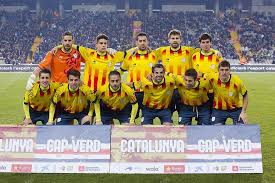
  • Catalunya, Spain, and Futbol; How Soccer is Used as a Political Tool in Sub-National Spain – Judah bawcombe

    https://sites.google.com/appstate.edu/catalunyaspainandfutbolhowsocc/home?authuser=0

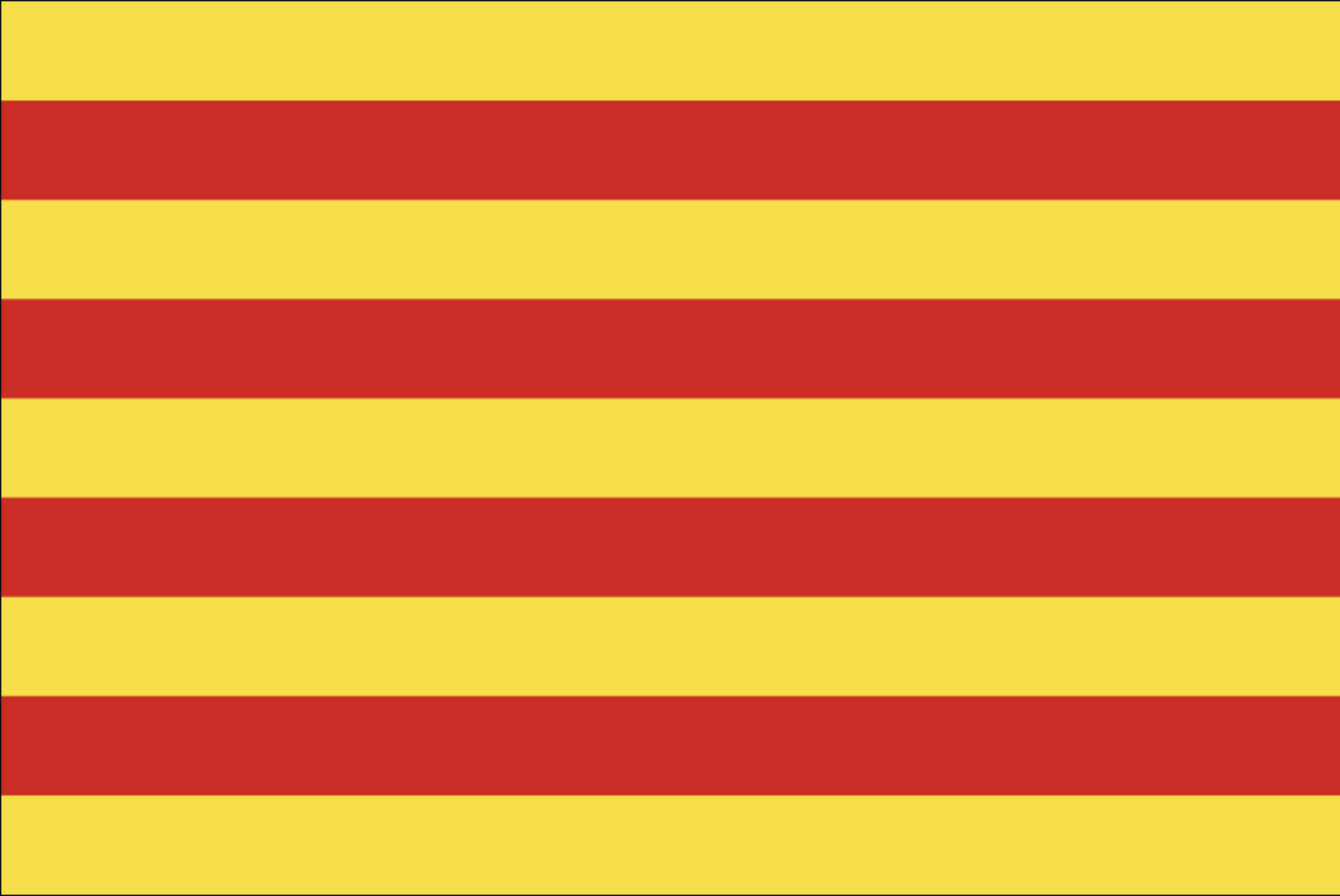
    The concept of nationalism in Spain means something different as to what we think here in the US. Spain has 17 autonomous communities who all have a range of unique cultural, economic, and linguistic differences. Catalunya, the region in the Northeast of the country is one of these communities. Over the history of the nation Catalunya has seen varying degrees of independence and autonomy – something that time and time again causes friction with the national government.

    Most known in the soccer world for FC Barcelona – the team that was home to Messi for over two decades, Catalunya is also home to its own sub-national team, the Catalan XI.

    From the founding of the Catalan Federation in 1900, the first match (and loss) in 1910, and most recently a victory in 2025, the Catalan XI has played many games over the years against FIFA recognized national teams, other regional (sub-national) teams in Spain, and other teams across Europe.

    The website that I created allowed me to break up different eras of the Catalan XI/Spain & Catalan history to create commentary on the development of Catalunya politically and as a footballing nation.

    My project is broken up into 4 different eras 1. Beginnings 2. Guerra Civil (Civil War) 3. Franco Era 4. Present Day. Breaking up the project like this allowed for more clarity of the topic at hand.

    I decided to switch from JSlab timeline as it was very hard to include lots of the strong sources that I had found as they would not upload well onto the website.

    Besides the formatting issue there were two other main issues. Firstly, lots of secondary sources focus specifically on FC Barcelona. Now while FCB is objectively a political force in Catalunya and linked directly with the Catalan Federation and Catalan XI (as mentioned in the project itself) I did not want to soley focus on the club. Secondly, there was lots of very cool information about different matches the Catalan XI has played however they did not tie into this project so they had to be left out.

css.php