Category: Wk09-Fandom and Mythmaking

  • Week 9

    One observation from the readings is the paradox surrounding Uruguay’s global influence in football. Despite the country’s small size, its football history has had a significant global impact on its national identity. This is an indication of the power of the country’s football culture in defining its global image. The module has helped me understand the power of football as a unifying force in the country and as a global political tool. I now understand the role that countries like Uruguay play in shaping their global image through football.

    Both Golazo! and Bowman’s “The World Cup as World History” explore football as a means of national identity and political assertion. Campomar (2014) discusses Uruguay’s unique football culture and how it has come to symbolize the nation’s pride and identity. In contrast, Bowman’s “The World Cup as World History” discusses the World Cup in a global context and examines how it has served as a means of political assertion for nations in the post-colonial world (Bowman, 2020). Thus, through these two readings, it is possible to understand how football operates at both global and national levels. While Campomar (2014) offers a unique perspective on football from a national point of view, Bowman’s work offers a unique perspective on the global implications of football’s power and thus complements Golazo! in its analysis of football’s political and cultural significance.

    One key observation from these readings is the paradox of Uruguay’s influence on global football. Despite being a small nation, its football history has had a disproportionate impact on its national identity and global standing. This highlights how a country’s football culture can shape its broader international image. The module deepened my understanding of how football can serve both as a unifying force within countries and as a global political tool, and I now see how nations like Uruguay use it to assert their relevance on the global stage.
  • Intensity and Fan Interaction

    The style of viewership that soccer brings in to itself naturally, aswell as the national appeal that it plays into with the World Cup compounds into a viewing experience and reputation that seems almost unreal when taken in all at once, such as watching in person in a crowd of 100,000 people in one of the beautiful and extravagant stadiums across the globe. These factors fit together to affect in a unique way both the fans watching in the stands and on TV, as well as the players on the pitch.

    There is no denying that the national pride that global soccer and FIFA hone in is extremely effective and an integral part of the game over it’s history. It’s one of the biggest reasons why soccer viewership and soccer fans have the reputation they have around the world. When your pride and heritage as a nation is at stake at the hand’s of a soccer match, it demands a sort of energy that a regular sports match would not require. This is the thought process behind “hooliganism” that has been mainly attributed to English soccer in the 80s and 90s. The need for violence in the crowds of soccer matches stems from the intense emotions that soccer demands in its viewership.

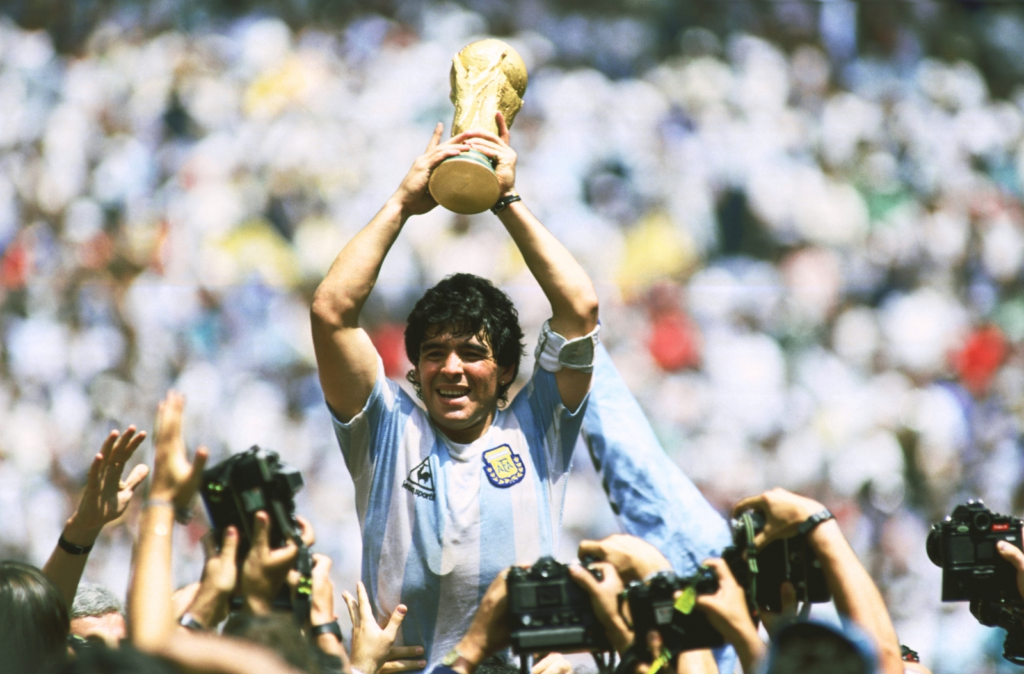
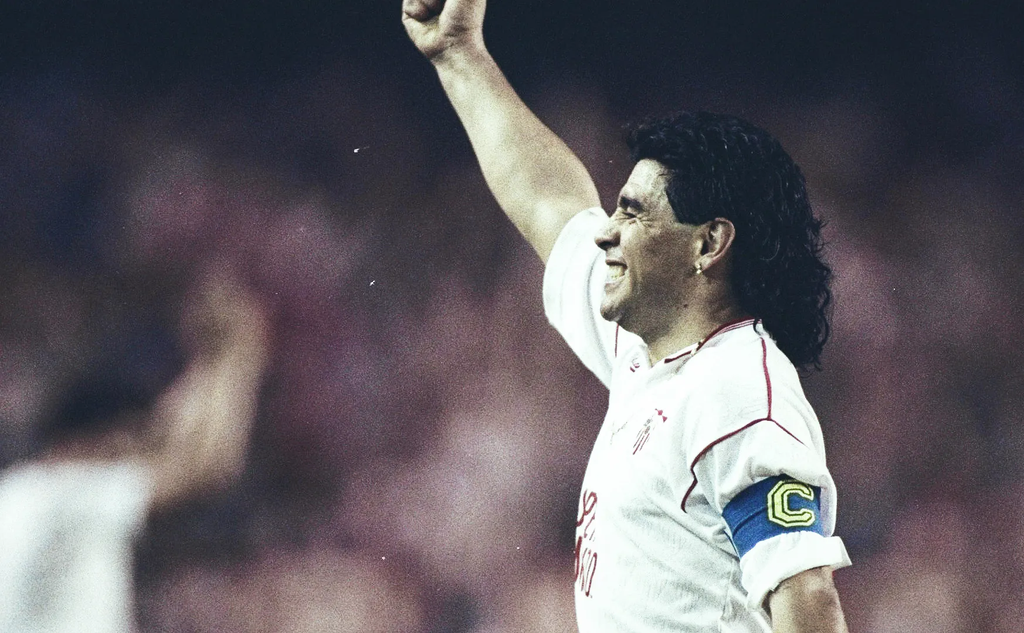
    This effect of intense emotions do not entirely stay in the stands however, as the players who represent their countries on one of the biggest stages in the world also feel those emotions and pressures exalted upon them. This is explored in Golazo! Maradona was a national phenom for Argentina, but through scandals and controversies slowly lost his star status in Argentinian sports, and even though he is posthumously regarded as one of the greats, this love was not reciprocated in his final years. The large expectations and pressure placed upon Maradona and other soccer players goes hand in hand with the almost impossibly achievable experience around global soccer.

  • The Mythmaking of Soccer Legends

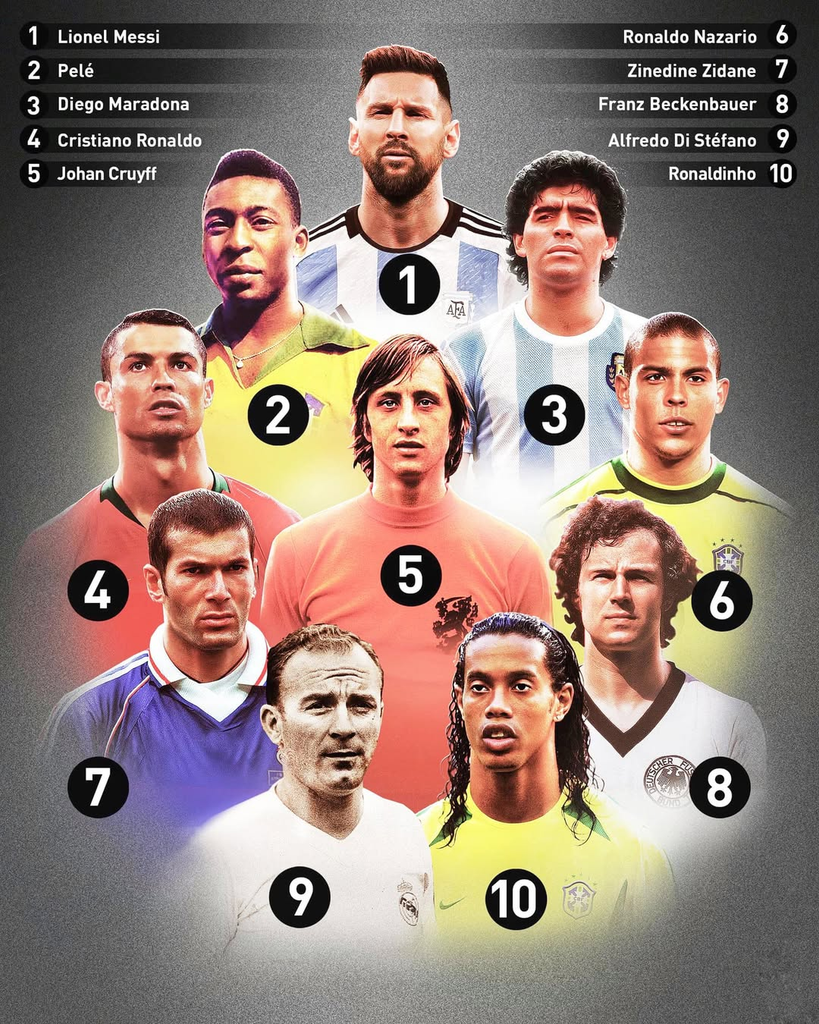
    This week’s readings really focused on the idea of fandom in soccer and how fans help turn players into legends. In The World Cup as World History and Chapter 9 of Golazo!, the authors talk about how the passion surrounding soccer doesn’t just stay on the field. Instead, it creates stories, myths, and huge reputations for players. Soccer has always had star players, but because the sport is so global, those stars become known around the world. Players like Ronaldinho, Lionel Messi, and Cristiano Ronaldo aren’t just famous athletes, but soccer icons.

    One thing that stood out to me in the readings is how much fans contribute to the creation of these legends. Players obviously have to be talented, but their reputation really grows through the stories fans share about them. Diego Maradona is probably one of the best examples of this. He grew up in a working class neighborhood in Argentina and eventually became known as “El Pibe de Oro,” or “The Golden Kid.” That kind of background makes his success feel more story based, and makes the fans root for the “underdog”. As Bowman explains, star players in soccer are often seen as characters like heroes and antiheroes, which makes the game feel like more than just a sport. When it is thought about that way, a soccer match almost feels like a performance where fans are watching a story unfold in real time.

    At the same time, the readings also show that this level of passion can have a darker side. When fans become extremely invested in their teams, rivalries can sometimes turn into violence. Soccer hooliganism is one example of this, where groups of fans look for fights with supporters of rival teams. While this doesn’t represent most fans, it has still been a part of soccer culture in several countries. One of the most tragic examples happened at the 1985 European Cup Final between Liverpool and Juventus. During the chaos between fans, a wall collapsed and thirty nine people were killed. It’s a reminder that while soccer can bring people together, the intensity of fandom can also go too far.

    Overall, these readings made me think about how unique soccer culture really is. Fans don’t just watch the sport, they actively shape it. Their passion helps create legends and unforgettable moments, but it also shows how powerful sports can be in bringing out strong emotions in people. In many ways, soccer isn’t just a game, it’s a global story that both fans and players make into legend.

    Picture Source: https://www.facebook.com/LeoMessiFanZoneOfficial?__cft__[0]=AZZuqNLNOiVUXgK3JPY1EcDk101nojY_MPHcvCiwywfAkJ-AqHWvwbttGq2BOQdyC-E57NHRElXBEOaifggHsZylo2gAoOf_bfkqCXAMKclec21EWPmM6BMDJNjFLHQZx2zKExjrShacbeF8NCPoD_s7DtuvL-LLf9BI1rBtG2Y9cQ&__tn__=-UC%2CP-R

  • The Intensity of Football Fandom

    The readings for this week had a distinct focus on the intensity of fandom in football, and with that intensity comes worldwide renown for certain players based on their play or their style of play. Many of the legends of football were birthed by the fans and their intense love for the sport. There are many legendary names in football, such as Diego Maradona, Ronaldinho, Messi, Ronaldo, and many others who are renowned around the world for their stardom in the space of international football. The course literature makes distinct mentions of players like Maradona, who came from a working class slum who grew to have the title of El Pibe de Oro, which translates to The Golden Kid. Legends such as Maradona are one of the elements that make football a spectacle to watch, as mentioned by Bowman in the textbook, noting that star players are “written about as heroes, antiheroes, and supporting cast.” To think of star players as heroes, antiheroes, and supporting casts puts football in a light that shines on the field as a performance, and thus, when tens of thousands of fans show up to watch the games unfold in person, the outcome of the match may create dissent in fans. This can lead to the birthing of “hooligans”, which the textbook describes as fans looking for physical or violent encounters with fans of the opposing side. In 2016, there was an incident between Russian and English outside the stadia at the European Championship in France in which it is also noted that club teams in other nations like Serbia, Argentina, Brazil, and Italy have also had to deal with these “hooligans”. The intensity of fandom in football creates legends out of star players as well as violence outside of the stands. One might say that hooliganism is a part of the spectacle of football as well, but that comes at a cost. In the 1985 European Cup Final between Juventus of Italy and Liverpool of England, thirty-nine people were killed, mostly Italians and six hundred more were injured after opposing supporters rushed and were crushed to death when a wall collapsed at Heysel Stadium in Brussels, Belgium. It highlights how much passion there is for the game but also how that passion can go too far and create dangerous and even deadly situations.

  • Week 9-Fandom and Mythmaking

    Soccer is a sport all about rhythm and flow, as the game has become more globalized through the ease of access to media such as sporting events, thanks to the development of television, streaming services, and radio worldwide. As interest in soccer grows, players become national celebrities not just in their home countries or the countries where they play, but around the world. Heroes, villains, and supporting cast are all very crucial parts of the story that soccer is trying to tell, and we as humans always tend to create narratives around these celebrities that make them larger than life when compared to most average people. 

    With the rise of the internet, it has allowed more people to constantly interact with others and to also constantly be consuming soccer media, whether that be through games being watched on television or highlights of the match being shown on TikTok. The experience of being a soccer fan in the modern age allows you to connect with your team alot more, but the overexposure of your team can take away from the overall magic of the experience. Teams used to invest very heavily in their stadiums and the environments that were a part of those stadiums because that is the only place you would be able to see the team play; you couldn’t watch a highlight on TikTok or watch the game on television; you had to actually be in the stadium to experience the environment.

     Teams have more to focus on in the modern age, like streaming rights and who has deals with what television companies. They often put less focus on the stadium and its environment, and that can take away from the experience of watching a game in a stadium. Soccer has always been a sport of spectacle because of the number of people around the world who watch and care about soccer. This has led countries to invest alot of money into these teams and the stadiums they play in. Some stadiums can hold up to 200,000 people, and they are filled quite regularly. The accessibility and flow behind soccer have led to the sport becoming so popular, and with countries like Brazil, England, Italy, and Argentina investing so heavily in the sport, it has allowed it to flourish and become the beautiful game it is today. 

    The story of soccer’s beautiful evolution throughout the seventies sadly contrasts with the political situation of the seventies in South America, where the decade was marked by political turmoil and dictatorships. The most prominent country that was an example of this was Argentina and its militaristic dictatorship, which had hundreds of thousands of college students and professors “vanish” from the country, all while Argentina was hosting the world cup that they would eventually win. South American countries were entering a great period of political reform and contrasting political ideas on the continent, and this led to many external conflicts as well as internal conflicts, like the one in Argentina. 

    The biggest external conflict that arose from this time was the aptly named football war between El Salvador and Honduras. After the two countries competed against each other in qualifying matches for the 1969 World Cup, riots broke out over some more deep-rooted issues the two countries had been facing for years, like the mass migration of Salvadorians into Honduras and land reform disputes between the two countries. 

    Soccer, especially in international competition, can become something more than a sport because of the nationalism most people feel in watching their team play, and if they lose, that can often feel like a reflection of the country, which people do not like. Soccer competitions are often where people feel the most nationalistic, so it would only make sense that it is also the place where they throw the biggest tantrums when their team loses or is “cheated” by the referee.

css.php