Blog
-
While the FIFA World Cup has been considered an event for the sports world, it can also be considered an important reflection of the history, politics, and identity of the world. As Bowman explains in “The World Cup as World History,” the tournament mirrors nationalism, colonial legacies, and global inequality (Bowman, 2020) The World Cup is not only an event for the world’s best sportsmen, but it is also an important reflection of the way the world’s countries show their pride, power, and conflicts, all based on the history of the countries themselves. The World Cup…
-
For many, Fifa is soccer. When they think of soccer they think of Fifa and the World Cup, recognizing the myriad of other leagues but relegating what soccer is to the World Cup and its related affairs. With the politics, national pride, and soccer teams competing on the biggest stage imaginable, it is easy to see how one could come to think of that. However, soccer is much more than just Fifa. Indeed, the sport itself carries much more weight and means much more to people than what one imagines when thinking of the World Cup.…
-
This section of The World Cup as World History by William Bowman, along with the articles on Afro-European players and Brazil’s World Cup legacy, all focus on how race and heritage have shaped the way fans and nations view their own teams. A common theme across these readings is that players representing a country but from different racial or ethnic backgrounds are often judged as outsiders, until success forces the nation to reconsider who truly belongs. An example of this appears in discussions of European national teams with immigrant backgrounds, often described as “Afro-European” squads. As…
-
The overarching theme of the readings is bringing to light some high flying names of great black players throughout different eras, as well as documenting the struggles these same players have had to face for the color of their skin. This includes barring from playing for national teams as well as ridicule from the media for not “truly representing” their national team. One of the players highlighted through the readings if Brazilian player Manuel Francisco dos Santos, or Garrincha. Born with deformed legs that had his knees bend at awkward angles, this gave him a unique…
-
Brazilian soccer player Garrincha was a star player back in the day. His dribbling and shooting abilities were unmatched during his hayday and he became one of soccer’s most successful players. Despite being born with an extremely disabled leg, he was one of Brazil’s greatest players. He was among the star players who immortalized Brazil’s name in the soccer world. His debut performance was during Brazil’s match against the USSR, where he played alongside a young Pelé. He transformed the game by leading the charge in a new, much more offensive-based play style. He would eventually…
-
This section of the book, The World Cup as World History by William Bowman, focuses on the negative stereotypes players receive when they have a different heritage than the national team they are playing for. An example of this in the text is the 2014 German national team, which fielded a bunch of players who weren’t one hundred percent ethnically German. Some players of note are Miroslav Klose, whose family is originally from Poland, Mesut Ozil, the midfielder who is from a Turkish background, and Sami Khedira, who is of Tunisian heritage. Mesut Ozil was born…
-
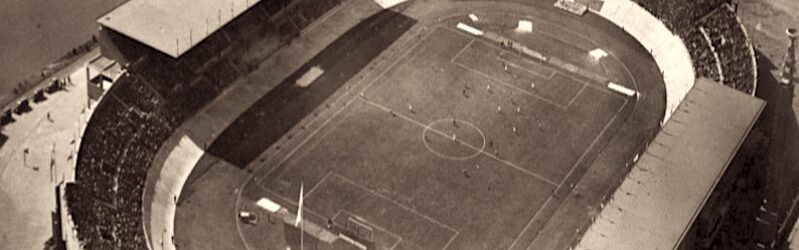
Reading through these pages of The World Cup as World History really drives home the idea that soccer is never “just a game”—it’s more like a massive, high-stakes therapy session for entire countries. In 1950, Brazil built the Maracanã stadium as this huge monument to their own greatness, basically planning a national party to prove they were a modern, unified “racial democracy.” But when they lost the final to Uruguay, the mask slipped. Instead of sticking together, the public immediately started blaming the Black players, like goalkeeper Moacir Barbosa, showing that their “unity” was pretty much…
-
Reading Bowman and Campomar made me think about how the World Cup is never just about soccer. It feels like a space where countries try to show who they are, but also where that identity can get questioned or reshaped. Bowman points out that even when governments or big organizations try to control the meaning of the tournament, they cannot fully do it because the game itself is unpredictable and fans bring their own emotions and interpretations. That idea stood out to me because it shows how sport can slip away from political control even when…
-
Football defeats can shape national identity just as much as victories can. Both texts for this week tell us that the postwar World Cup became a stage where politics and identity were fought for in front of a global audience. Andreas Campomar focuses on the story of the Maracanazo at the 1950 FIFA World Cup. Brazil hosted the first World Cup after World War II in an effort to present itself as a modern nation, and the newly built massive Maracanã stadium became a symbol of that progress into modernity. Brazil needed only a draw against…
-
While reading chapter two of Bowman’s The World Cup as World History and chapter six of Campomar’s Golazo! I found a difference in their approaches to injury and violence as pertaining to the sport of soccer. Injury and violence has been imbedded in the sport and it’s accompanying tournament since it’s early days. It isn’t something that should surprise anyone interested in this sport and it’s history. Yet, the way that Bowman and Campomar mention this topic differs. Campomar seems to uses injury and violence almost as a sort of comedic break in between analysis of…
