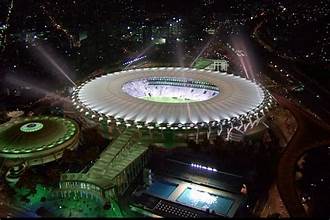
Reading through these pages of The World Cup as World History really drives home the idea that soccer is never “just a game”—it’s more like a massive, high-stakes therapy session for entire countries. In 1950, Brazil built the Maracanã stadium as this huge monument to their own greatness, basically planning a national party to prove they were a modern, unified “racial democracy.” But when they lost the final to Uruguay, the mask slipped. Instead of sticking together, the public immediately started blaming the Black players, like goalkeeper Moacir Barbosa, showing that their “unity” was pretty much a myth the second things went sideways.
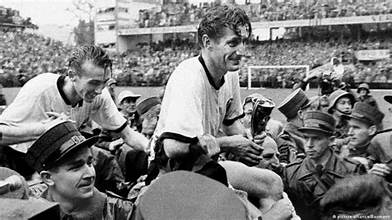
Then you look at West Germany in 1954, and it’s the exact opposite vibe. They were still digging out from the wreckage of WWII and carrying massive national guilt, but then they pulled off the “Miracle of Bern” by beating a legendary Hungarian team. It wasn’t just a trophy; it was like the country finally got a “get out of jail free” card to feel proud again without it being tied to their dark past. For them, 11 guys on a pitch did more to rebuild the national spirit than any politician could have at the time.
Honestly, what I took away from this is how much we project onto these players. In 1950, a loss exposed Brazil’s deep-seated racism, while in 1954, a win gave Germany a brand-new identity. It’s wild to think that 90 minutes of chasing a ball can literally change how millions of people see themselves. Whether it’s a “national funeral” in Rio or a “rebirth” in Bern, the scoreboard ends up writing the history books as much as the sport.

Leave a Reply