Author: HannahB

  • Beyond the Pitch: Women, Power, and Policy in FIFA – Final project – Hannah Bumm

    Working on this project about women’s influence in FIFA soccer definitely changed my perspective of the history of the sport, and soccer in general. Before starting, I knew soccer was a male-dominated sport, but I didn’t fully understand how much that inequality was woven into the game’s history. Learning about things like the 1921 ban on women’s soccer and the long-standing lack of funding and media coverage made it clear that these barriers weren’t accidental, they were part of a larger system that limited women’s roles for decades. At the same time, what stood out most was how persistent women have been in pushing back, whether through organizing their own matches, advocating for equal pay, or working their way into leadership positions.

    One of the most interesting parts of researching this topic was seeing how change has developed over time. It’s easy to look at where soccer is today and assume progress just happened naturally, but that’s not really the case. Women had to actively challenge the structures that excluded them, especially within organizations like FIFA. Learning about female referees officiating matches and women gaining leadership roles showed me that representation isn’t just symbolic, it actually impacts decision-making and the direction of the sport. It also made me realize that soccer reflects larger social issues like gender inequality, but it can also be a space where those issues are confronted and changed. At the start of my research, I did not fully grasp how many aspects go into the fight for equality in soccer, such as media viewing, unequal pay, and leadership opportunities.

    Using Prezi as a multimedia outlet changed the way I approached the assignment. Instead of just focusing on writing, I had to think about how to present my argument visually and in a way that would keep people engaged. Including images, videos, and music helped highlight the contrast between my sections. By having a clear timeline build within my project, I wasn’t only able to show the different aspects of the history of women’s soccer, but also show the progression. This project also pushed me to think more about my audience and how to communicate ideas effectively beyond just text.

    Overall, this project made me see soccer as more than just a game. It’s also a space where power, culture, and social change intersect. Women’s growing influence in soccer isn’t just about inclusion, it reflects a larger shift toward equality and recognition. Even though there’s still progress to be made, it’s clear that women have already had a major impact on the sport. This project not only deepened my understanding of soccer, but also showed me how sports can serve as a platform for meaningful change.

    https://prezi.com/view/fIGtyXfFyERIzXlmlr79/?referral_token=Hpjo6-lnB3FN
  • The Early History of Women’s Soccer

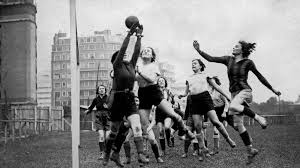
    Women’s soccer in the early 1900s started to grow in ways that were really shaped by major social changes happening at the time, as shown in Jean Williams’ The History of Women’s Football (Chapter 2) and Brian D. Bunk’s From Football to Soccer (Chapter 7). Early women’s matches in both the United States and Europe helped bring more attention to the sport and slowly challenged the idea that soccer was only for men. Even though women’s participation wasn’t always fully accepted, these early games showed that there was interest and talent, and in some cases women were even taking on roles beyond playing, like helping organize teams or acting as coaches. This helped lay the foundation for women being more involved in the sport at different levels, even if it was still limited.

    World War I played a huge role in changing opportunities for women during this time. With so many men gone to fight, women stepped into a lot of roles in factories and other jobs, and this shift also influenced sports. Women’s soccer teams became more visible and sometimes used matches as a way to raise money and support the war effort, which helped the sport gain popularity and larger crowds. However, after the war ended, things shifted back again, and women’s soccer started to face more pushback. Men’s football organizations often saw women’s growing success as a threat, especially when it came to attendance and revenue, so they started restricting access to fields and stadiums. Some of the reasoning was based on outdated ideas about women’s physical ability, but a lot of it was really about control and maintaining power in the sport.

    Even with these challenges, women’s soccer didn’t disappear, and the early development of the game shows how persistent female athletes were despite not getting equal support or recognition. The readings make it clear that women were already proving they could compete, attract fans, and contribute to the sport in meaningful ways, even if the system around them wasn’t built to support them. Overall, this early history shows both progress and setbacks, and it highlights how long the fight for equality in women’s sports has really been.

  • Week 11, Spain and futboleras

    Football isn’t only about what happens on the field, it’s also a powerful way people express politics and identity, especially during major matches. In Spain, this is really clear in the Copa del Rey, one of the oldest football competitions, dating back to 1903. Adam L. Winkel explains that the tournament isn’t just about winning, but also a place where people express their views about the Spanish nation. Because it’s tied to the monarchy and the state, it often becomes a stage for protest. For example, in 2018 the president of Barcelona encouraged fans to whistle during the final, not just to support the team but to push back against how Catalonians are treated. Moments like booing the national anthem or the king aren’t random, they’re meant to send a message. The Copa del Rey has existed alongside major changes in Spain’s government, from monarchy to dictatorship to democracy, and reflects those shifts. Because of this, it becomes more than a match; it’s a public display of how people feel about Spain and whether they even identify with it as a single nation.

    At the same time, Spain’s national team in the late 2000s and early 2010s shows a completely different side. According to BBC Sport, coach Vicente del Bosque called this period a “great era.” Spain won Euro 2008, the 2010 World Cup, and Euro 2012 back to back, making them one of the most dominant teams ever. What’s interesting is that many players came from regions that don’t always get along, like Catalonia and Madrid. Normally those differences matter, but on the national team they seemed to not matter at all. In the 2010 World Cup final against the Netherlands, the game stayed 0-0 for most of the time. Spain’s goalkeeper made huge saves, the defense stayed strong, and the team kept pushing until Andres Iniesta scored in extra time. When the whole team ran to celebrate together, it showed how connected they were despite their different backgrounds.

    These two examples show how football in Spain can mean very different things at the same time. The Copa del Rey highlights division, protest, and political tension, while the national team represents unity and shared identity. Spain has a long and complicated history with strong regional identities that don’t always align with the idea of one nation. Football doesn’t erase those differences, but it does put them on display, and sometimes, it shows that unity is achievable.

  • The Mythmaking of Soccer Legends

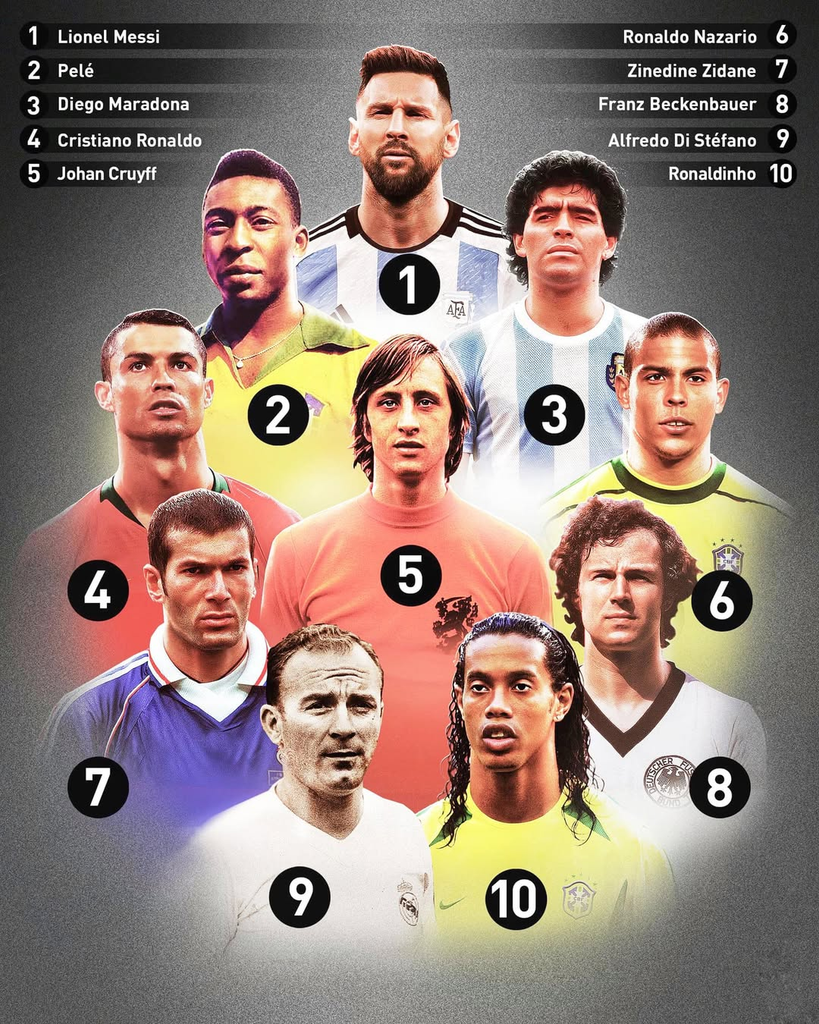
    This week’s readings really focused on the idea of fandom in soccer and how fans help turn players into legends. In The World Cup as World History and Chapter 9 of Golazo!, the authors talk about how the passion surrounding soccer doesn’t just stay on the field. Instead, it creates stories, myths, and huge reputations for players. Soccer has always had star players, but because the sport is so global, those stars become known around the world. Players like Ronaldinho, Lionel Messi, and Cristiano Ronaldo aren’t just famous athletes, but soccer icons.

    One thing that stood out to me in the readings is how much fans contribute to the creation of these legends. Players obviously have to be talented, but their reputation really grows through the stories fans share about them. Diego Maradona is probably one of the best examples of this. He grew up in a working class neighborhood in Argentina and eventually became known as “El Pibe de Oro,” or “The Golden Kid.” That kind of background makes his success feel more story based, and makes the fans root for the “underdog”. As Bowman explains, star players in soccer are often seen as characters like heroes and antiheroes, which makes the game feel like more than just a sport. When it is thought about that way, a soccer match almost feels like a performance where fans are watching a story unfold in real time.

    At the same time, the readings also show that this level of passion can have a darker side. When fans become extremely invested in their teams, rivalries can sometimes turn into violence. Soccer hooliganism is one example of this, where groups of fans look for fights with supporters of rival teams. While this doesn’t represent most fans, it has still been a part of soccer culture in several countries. One of the most tragic examples happened at the 1985 European Cup Final between Liverpool and Juventus. During the chaos between fans, a wall collapsed and thirty nine people were killed. It’s a reminder that while soccer can bring people together, the intensity of fandom can also go too far.

    Overall, these readings made me think about how unique soccer culture really is. Fans don’t just watch the sport, they actively shape it. Their passion helps create legends and unforgettable moments, but it also shows how powerful sports can be in bringing out strong emotions in people. In many ways, soccer isn’t just a game, it’s a global story that both fans and players make into legend.

    Picture Source: https://www.facebook.com/LeoMessiFanZoneOfficial?__cft__[0]=AZZuqNLNOiVUXgK3JPY1EcDk101nojY_MPHcvCiwywfAkJ-AqHWvwbttGq2BOQdyC-E57NHRElXBEOaifggHsZylo2gAoOf_bfkqCXAMKclec21EWPmM6BMDJNjFLHQZx2zKExjrShacbeF8NCPoD_s7DtuvL-LLf9BI1rBtG2Y9cQ&__tn__=-UC%2CP-R

  • Politics and Soccer in Chile 1962 and Argentina 1978

    The World Cup isn’t just about soccer, it’s also a way for countries to show off a certain image to the world. Both Brenda Elsey’s chapter on the 1962 World Cup in Chile and Wright Thompson’s ESPN article “While the World Watched” show that governments often use the tournament to make their country look united, modern, and successful, even when there are serious problems at home. The main idea in both readings is that the World Cup can create national pride, but the reality behind the scenes is usually way more complicated.

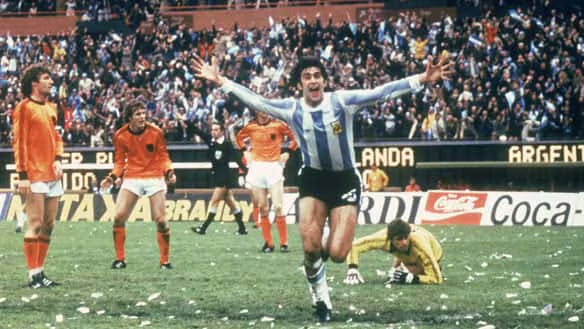
    For example, in Argentina’s 1978 World Cup, Thompson explains that the military government spent a ton of money on stadiums, media, and celebrations to make the country seem stable and modern. But at the same time, they were kidnapping, torturing, and killing people during the Dirty War. The games and celebrations distracted both the world and many citizens from what was really happening, showing how the tournament was used as a tool for political control.

    Chile’s 1962 World Cup was kind of similar, but in a different way. Elsey points out that organizers promoted Chile as stable, democratic, and socially harmonious. Official publications made it seem like there were no major political or class conflicts, and the country looked modern and ready for the world stage. But underneath, there were tensions between amateur and professional soccer clubs and inequality in working class communities. The World Cup helped Chile look good internationally while hiding these problems.

    Both cases show that the World Cup can tell a story about a country that’s cleaner and more positive than reality. In Argentina, it was the contrast between celebration and state terror, and in Chile, it was the gap between projected unity and real social struggles. Hosting the World Cup lets leaders control the narrative, but it doesn’t erase what’s really going on.

    Overall, these readings show that the World Cup is way more than just a sports event, but also a stage for politics and national image. It can create hope, pride, and excitement, but it can also hide serious issues.

  • World cup shaping national identity

    After World War 2, the World Cup became much more than just a soccer tournament, it evolved into a major political and cultural event. In The World Cup as World History, Bowman explains how global competitions pushed nations to consider whether soccer could reduce political tensions or actually intensify them. The 1950 World Cup in Brazil serves as a strong example. Brazil viewed hosting the tournament as an opportunity to present itself as a modern, powerful nation. The country built the massive Maracana stadium and invested heavily in the event to showcase its growth and strength to the world. President Eurico Dutra even referred to the players as “authentic representatives of Brazil,” highlighting how closely national identity was tied to the team’s performance.

    However, Brazil’s loss to Uruguay in the final revealed the darker political and social divides of the sport. Rather than simply accepting defeat, many fans blamed the team’s Black goalkeeper, Barbosa. As both Bowman and Golazo! Chapter 6 illustrate, soccer does not only reflect national pride; it can also expose deep social divisions. In Brazil’s case, the loss intensified existing racial tensions, and it took years before another Black goalkeeper was given a place on the national team.

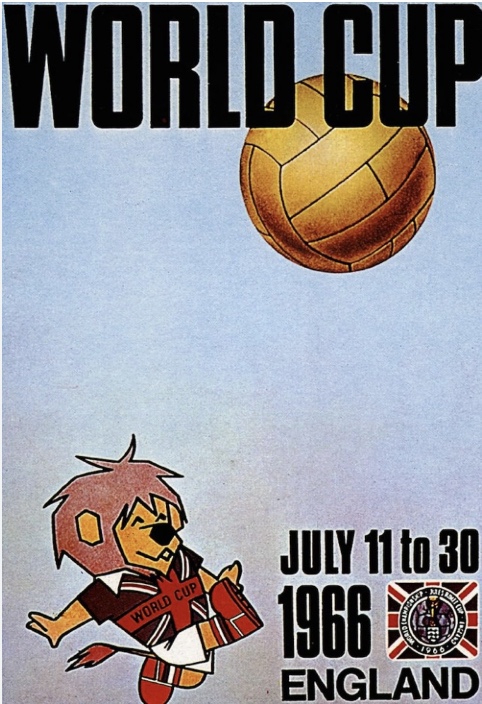
    Political tensions also influenced later tournaments, including the 1966 World Cup in England. Several African nations boycotted the competition due to limited qualification spots, while Latin American teams criticized what they perceived as European bias in officiating. These controversies contributed to structural changes within FIFA and eventually supported the rise of Joao Havelange, who advocated for greater representation of non European nations.

    Overall, the readings demonstrate that the World Cup is never solely about sport. It functions as a global stage where nations attempt to build pride, power, and international reputation. At the same time, it can expose inequality, political conflict, and social division. Soccer has the ability to unite people, but it can also bring existing national tensions to the surface.

  • Politics and the world cup

    Chapter two of The World Cup as World History by William D. Bowman focuses on how the early World Cups were influenced a lot by politics. One major example is the first World Cup in 1930, which was hosted by Uruguay. Even though it was supposed to be a global competition, many European teams chose not to attend. Most European countries were worried about the cost and difficulty of traveling to South America. Only the four European nations of France, Belgium, Yugoslavia, and Romania ended up participating. England refused for a different reason, believing that the tournament was beneath them and that English soccer was already superior to the rest of the world’s.

    Hosting the 1930 World Cup was politically important for Uruguay. The country had already shown its strength in soccer by winning gold medals at the 1924 and 1928 Olympics. By hosting the World Cup, Uruguay wanted to prove its importance within South America, especially against larger and more powerful South American countries like Brazil and Argentina.

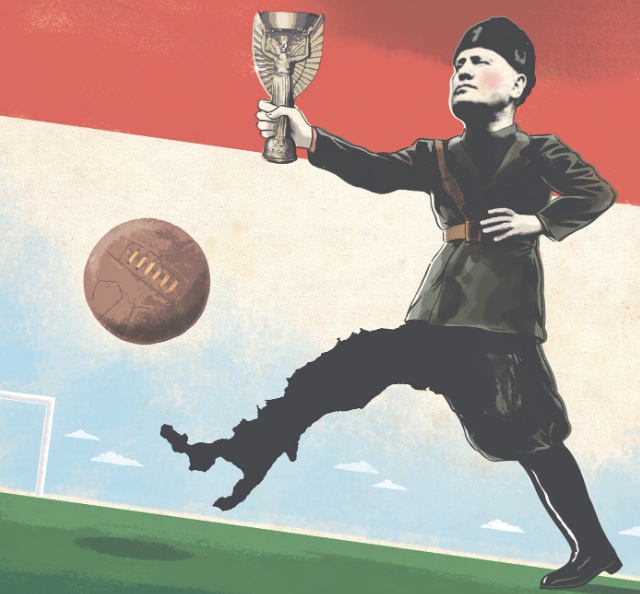
    Politics became even more obvious during the 1934 World Cup, which was hosted by Italy under Benito Mussolini’s government. Mussolini used the tournament as a way to promote nationalism and his political ideas, especially as soccer was becoming more popular worldwide. This World Cup included sixteen teams, an increase from thirteen teams in the 1930 World Cup. Uruguay did not participate, partly because of financial struggles but also because they were still upset about European teams refusing to attend the World Cup they hosted in 1930.

    Mussolini pushed political propaganda throughout the competition, using the international attention to advertise himself and his fascist way of rule. England once again refused to participate because of these political differences. Other teams faced challenges as well, including Argentina, whose roster was weakened when many of its top players moved to Italy. Due to shared immigration history, Italy was able to quickly grant these players citizenship.

    Italy won the 1934 World Cup, but their victory was very controversial. Many teams complained about Italy’s aggressive style of play and accused referees of favoritism. Mussolini used this positive momentum to spread his fascist form of government internationally. Overall, these sources show that the World Cup has always been connected to politics, and I believe that the positive or negative result of these games pushes the country forward, or holds them back a little. 

  • The origins of soccer – week04

    In The World Cup as World History, William D. Bowman explains that soccer didn’t come from just one place, even though many countries like to claim they invented it. Since soccer is the most popular sport in the world, it makes sense that people want credit for it. Bowman argues instead that kicking a ball is something humans have been doing for a very long time, no matter where they lived. Evidence of ball games similar to soccer have been found in ancient civilizations like China and Mesopotamia, showing that sports have always been part of human life.

    One example Bowman gives is from China during the Han Dynasty. People played a game with two teams, goals, and a leather ball, and while players could move the ball in different ways, using their feet was the most common. Records show this game being played as early as 618 CE. Even though it wasn’t exactly soccer, it shows that organized kicking games existed long before modern sports.

    Bowman also points out that similar games were played in Mesoamerica by groups like the Aztecs and the Maya. Archaeologists have found evidence that these kicking games were being played as far back as 1500 BCE and continued until the Aztec Empire collapsed. When Spanish explorers first saw these games, they were impressed by how fast and intense they were, especially because the rubber balls bounced more than anything used in Europe. Some Catholic clergy wrote about these games when they returned home, although they were also concerned about how violent and rowdy they seemed.

    The version of soccer we recognize today, though, developed in England. Kicking games had been around there for centuries, but elite public schools began creating their own rules and styles of play. As more schools and clubs wanted to compete, it became clear that the game needed standard rules. This led to the creation of the Football Association in 1863, which officially set the rules for soccer.

    After that, soccer exploded in popularity across England. Because England had strong connections with other countries through trade, politics, and culture, the sport spread quickly to Europe and beyond. Over time, soccer became the most popular sport in the world, which eventually led to global events like the World Cup. 

  • Hannah bumm intro

    Hometown: Mesa, Arizona

    Major: History and Social Studies Education

    Background: I am going to be completely honest when I say I have never watched a game of professional soccer in my life. I am an only child, but have grown up playing sports. I played softball for 10 years, I am a blackbelt in karate, and I was on my high schools varsity golf team. Soccer has never really been an interest of mine, mainly because I did not have any connection to the sport, until 6 years ago when I met my boyfriend. He played soccer even longer than I played softball, and was on his high schools varsity team all four years. He has talked about it so much in the past 6 years of our relationship, that my interest has blossomed. Now, his little brother plays soccer and I love going and watching their games (even though they are 7 years old and don’t really know what they’re doing). I am very excited to broaden my horizons of sports history and to learn how my boyfriends favorite sport has come to be where it is now! Below is a picture of what I believe to be the coolest looking logo (from my hometown), Dr. Sibaja said the other day how he thought one logo was the coolest, so I wanted to share mine.

  • The 1986 world cup and the mexican government’s response to crisis

    In 1985, right before the 1986 World Cup, a devastating earth quake struck and hit Mexico City, leaving thousands dead. After a disaster like this, citizens usually think that their government is going to respond quickly to rescue survivors and provide supplies to those who need it. However, the Mexican government’s response was slow and not effective. Communication was cut off and hospitals were left helpless, which made it very difficult to coordinate relief efforts. Since the government wouldn’t help, the people stepped up. They formed volunteer rescue teams, created shelters, and did everything that the government was supposed to be helping with. The Mexican president, Miguel de la Madrid, and his leadership only added to public frustration. He spent very little time meeting with victims and talked about the disaster very professionally instead of with compassion, which left people feeling dehumanized and pushed to the side.

    Even though the earth quake did cause lots of destruction, they still wanted to move forward with the 1986 World Cup. Officials said the repairs would cost about 56 million dollars, but the end cost was about 2 billion because of renovations and such. This made a lot of people angry, mainly because the government decided to out those funds into the stadium instead of using them for the earthquake relief. This also made the people question if the government really cared about as sporting event more than its own people.

    Both of these articles touch on the political use of the world cup, and how it wasn’t just Mexico. Governments have been known to use the tournament as a distraction from other issues that are happening in their country. Some examples include the 1934 World Cup which was Fascist Italy using as a display of strength, and in 1978 when Argentina used the World Cup to distract from the governments human rights issues. Overall, the World Cup isn’t only an international sporting event that brings attention to the host country, but also can serve to benefit the government in more ways than one.

    Week3, Maple, Hannah B

css.php