Author: TommyO

  • Religious & Political Tensions in Fandoms – Tommy Oneto – Final Project

    I chose for my topic to focus on soccer fans from the countries of Scotland, Ireland, and Northern Ireland. For this project I wanted to showcase how the tensions between fans in these nations give a look into the political and religious hostilities in the region. For Scotland, I primarily focused on Sectarianism that is shown in how fans of teams interact, primarily between the Irish-Catholic descendent fans of Celtic FC, and the Protestant fans of Rangers FC. For Ireland, and Northern Ireland, I also focused on Catholic and Protestant tensions, but with the addition of Irish Republicanism and British Loyalism.

    Using the tool, Omeka, I was able to create a website that people can look at on their own time that makes the argument that Football fandoms can showcase historical political tensions between groups of people. I hope that it was able to convey that argument to the best of my ability.

    Overall, this project has made me view fanbases, not just in soccer, but in all sports, completely differently. I wasn’t aware of how much politics can be seen in sports, especially in rivalries of local teams, and it has made me view fandom in a new lens that I quite frankly wasn’t look through before.

    Here is the link to the website: https://onetotj.omeka.net
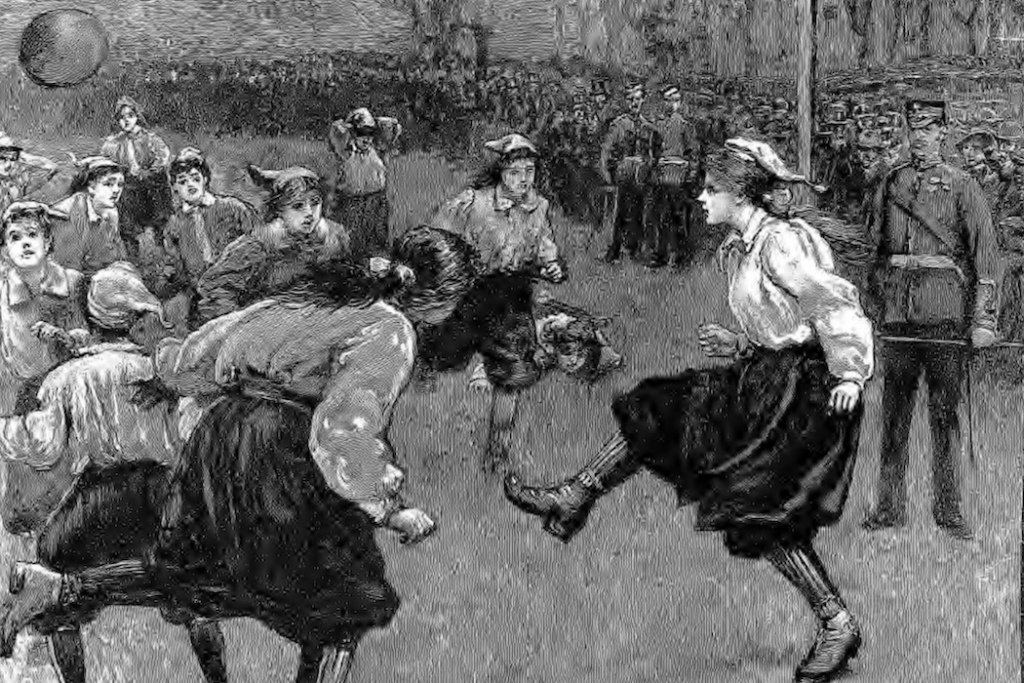
  • Development and Early Struggles of Women’s Football

    The second chapter from The History of Women’s Football, and the seventh chapter of From Football to Soccer: The Early History of the Beautiful Game in the United States, both go over the early struggles and developments of women’s football.

    As described in The History of Women’s Football, women playing football was seen as a threat in ways to the men’s teams.  During the first World War, men were off fighting the war, leaving the women to take the jobs they had and essentially run the country while they were away.  This included the sport of football, which had women playing on the pitch.  After the war ended, and all the men returned, women’s football was still popular among people, which scared the men’s association so badly that they banned them from playing on the pitch, whilst making up some wildly sexist, and quite frankly, nonsense statement that the game of football is “unsuitable for females.”  I find it interesting that the men’s clubs and associations found women playing the sport to be a enough of a threat to their existence for them to just flat-out ban it.  

    The rest of this chapter, and the chapter in From Football to Soccer, detail the development of women’s football.  Most of the development from The History of Women’s Football come from before the eventual banning, and showcase the development of teams like Dick, Kerr Ladies, and Atalanta, and eventually the short-lived English Ladies Football Association.  The chapter in From Football to Soccer primarily focuses on the development of the sport in the United States, which was only confined to certain regions, and women’s soccer experienced the same ordeal.  This chapter goes over the development of women’s soccer in schools, in clubs, and mentions Doris and Helen Clark (who are not related at all, and also lived on opposite sides of the country) who helped develop the sport in California and Connecticut respectively.

    All in all, these two chapters talk about the early history, and struggles, of women’s football throughout the world, where it struggled with being put down by men, and in the United States, where it simultaneously faced that issue, and with the fact that soccer was struggling in the United States as a whole.

    By Tommy Oneto

  • Local Identities in Spanish Football

    Football has a way of exemplifying local identities.  This is seen all over the world, and Spain is no different.  Through competition like La Liga, and the Copa Del Rey, these local identities are shown off.

    The Copa Del Rey, especially the final, has been seen as a battle of local identities, and national identity.  Currently, the Copa Del Rey has been used by teams and their fans for political expressions, mainly seen with FC Barcelona.  Barcelona is located in the Catalonia region of Spain, which has been the subject of political tension for quite some time, mainly with the rising of a Catalan self-determination movement.  This movement contrasted with a rise of nationalism in the nation.  At the time of Dr. Winkel’s writing, the Catalan independence movement was in full-effect, but has since died down.  Still, the political tensions of the time were showcased with football fans during the Copa Del Rey.

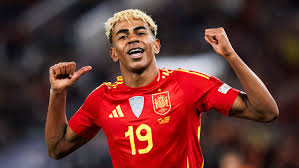
    Local identities have also been seen with the rise of FC Barcelona’s Lasmine Yamal.  During games, Yamal reps the neighborhood he grew up in, Rocafonda, by showing off the numbers, “304,” with a handsign.  Rocafonda, and the city of Barcelona as a whole have also embraced the young player, with comparisons to Lionel Messi, but while Messi was incredible for the success of the team, Yamal has the added benefit of being from Barcelona from the start.  The local identity is beneficial, as the team and the fans have fully embraced him as the future of their squad.

    While Yamal has been helpful with representing local identity, he has been proud to represent his Spanish identity too, especially in international competitions.  He even has gone as far as to guarantee (granted, while somewhat being edged on by the 60 Minutes interviewer) a world cup for Spain in 2026.  We’ll see how that ends up.  

    In conclusion, local and national identities, like in much of the world, have been a major part in the fandoms and operations of football clubs.  This fandom can showcase political tensions that can be seen in Spain, for better, or for worse.

    By Tommy Oneto

  • The Fans’ Experience and Views On Players

    I tried to make this post have a more formal style of introduction, but I’ve realized, especially with the topic of fandom being one that fascinates me immensely, this is not going to be happening.  

    I find it interesting how the Critchley article talks about fandom, and especially with how it is passed down in families.  He mentions how he is a Liverpool fan because that is where his family is from, and that was where his father played for a little bit.  One part of this article that I thought was particularly striking was how he mentioned that when his son was born that he essentially forced him to be a fan of Liverpool as well.  That part, while coming off in the article as a humorous moment, captures such a major part of fandom to me.  That being family identity and influence.  Now, I relate to this as my dad did the same thing to me, though it wasn’t with soccer.  My dad forced my siblings and I to be fans of the New York Yankees from the moments we were born (sorry to every baseball fan in existence, except for Red Sox fans).  Fandom being passed down is such a major part of fandom, and while it was mentioned off-handedly, I think it is such an essential part of the fan experience.

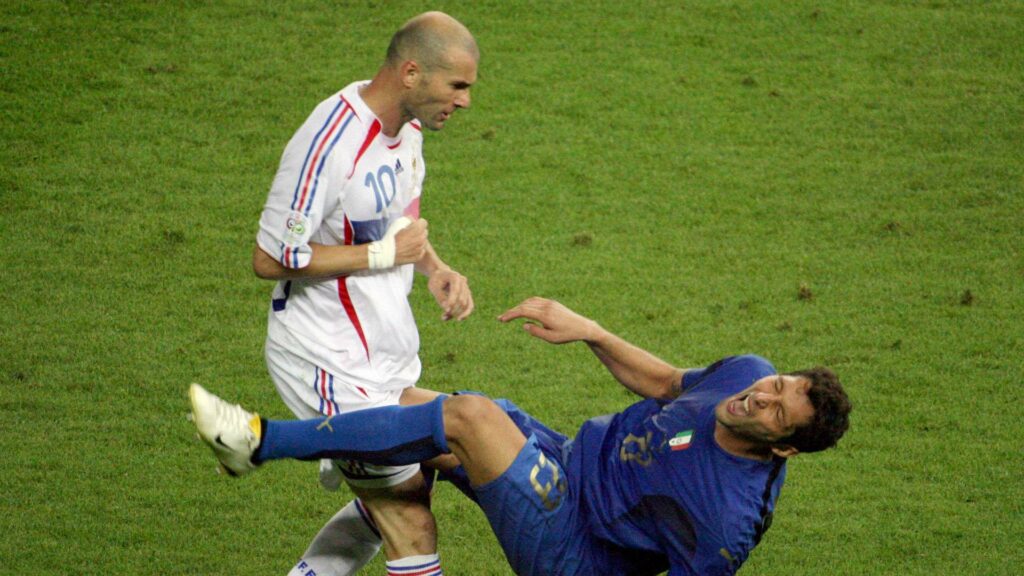
    Zidane headbutting Materazzi in the 2006 World Cup Final.

    Another thing I find interesting about fandom is how some players are viewed as heroes to some fans, and to other fans those same players are seen as villains.  Players like Zinedin Zidane, who was portrayed as a hero in the Critchley article, but in Bleacher Report’s top 25 villains in World Cup history, he was listed as the number 7 villain for headbutting Marco Materazzi.  That headbutt is also interesting as Critchley stated that the world “was wishing that he had head-butted Marco Materazzi even harder.”  Marco Materazzi is also listed as number 6 in that Bleacher Report article, which shows how many people dislike that guy.  Players can be seen by different fandoms as heroes, or as villains, which is another key aspect of the fan experience, in my opinion.

    All in all, I think that these two articles really showcase how the fan experience is, with the more personal aspects listed in the Critchley article, to the typical fan list style of article that Bleacher Report published.  Fandom is one of the most important aspects, not just to the sport of soccer, but to all sports as a whole.

    By Tommy Oneto

  • FIFA’s Deciding Factor: Money

    Let’s face it, decisions made by FIFA come down to one thing: money.  Revenue being a key factor in making said decisions explains why FIFA has selected certain countries to host the World Cup, for better or worse.

    The 1966 World Cup is really considered the start of the business model that FIFA would use for World Cups to come.  With deals made with the European Broadcasting Union (EBU), whose members included the BBC, this was the first World Cup that was widely televised.  It was also the first World Cup to introduce a mascot (Willie), which provided many merchandising opportunities.

    The search for more revenue would also be a key factor in the 1994 World Cup in the United States.  This World Cup took the merchandising, and promotion that was established in 1966 and cranked it up to eleven.  Sponsorships were offered, which allowed companies to create licensed merchandise for the World Cup.  It was the most profitable World Cup at the time, and broke many other records, which set it as the model for every World Cup after.

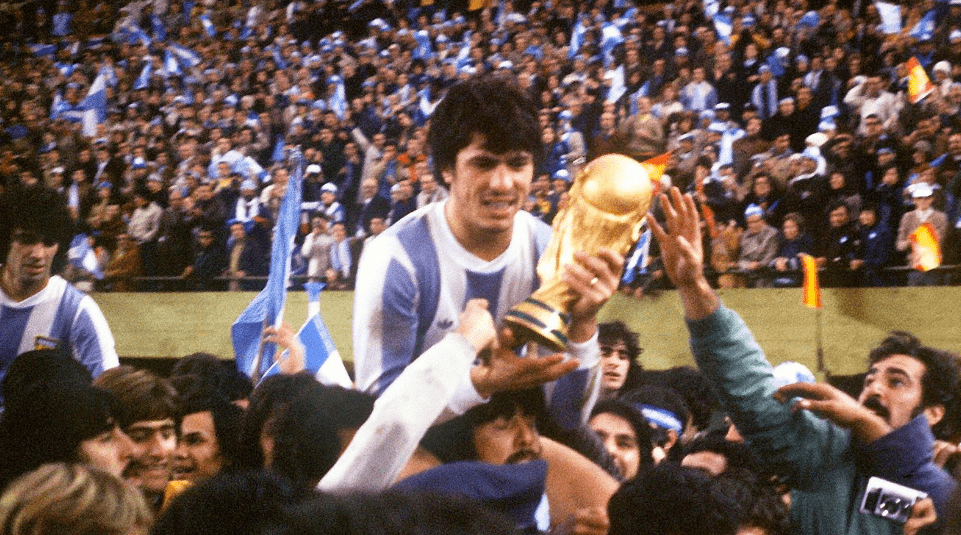
    While FIFA’s quest for more revenue has been successful for them, it has also taken them to some dark places. This was seen in the 1978 World Cup in Argentina.  Despite the fact that Argentina was under the control of a military dictatorship, and was actively committing many crimes against humanity, FIFA still hosted the World Cup in Argentina.  The Argentinian government used the World Cup for their own political gains, and to promote themselves in front of the world.  In the background, not too far away from several stadiums, they were torturing political prisoners.

    This brings up a common theme with the World Cup, which is that corrupt nations will tend to use it as a way to promote themselves, and sweep their corruption under the rug.  This was previously done in 1934 with Fascist Italy.  FIFA has been willing to allow the World Cup to be used by corrupt governments for political gains, as long as they are still making money.

    By Tommy Oneto

  • The World Cup and Brazil

    After the conclusion of the Second World War, the FIFA World Cup would continue to be used for political gains, especially by the nation of Brazil, who became completely enamored with the sport of Soccer.

    Brazil was looking to prove themselves economically, politically, and as a soccer powerhouse.  With their hosting of the 1950 World Cup (the first one since 1938), they were looking to accomplish their goals.  They built a massive stadium, the Maracana, to showcase that they were all in on the sport.  They almost succeeded in winning the World Cup in front of their home crowd, but would end up getting upset 2-1 by Uruguay.  This upset loss stunned Brazilians, which led to author, Nelson Rodrigues, saying, “Our catastrophe, our Hiroshima, was the defeat by Uruguay in 1950.”  This would continue to be viewed as the worst thing to ever happen to Brazil until 7-1.

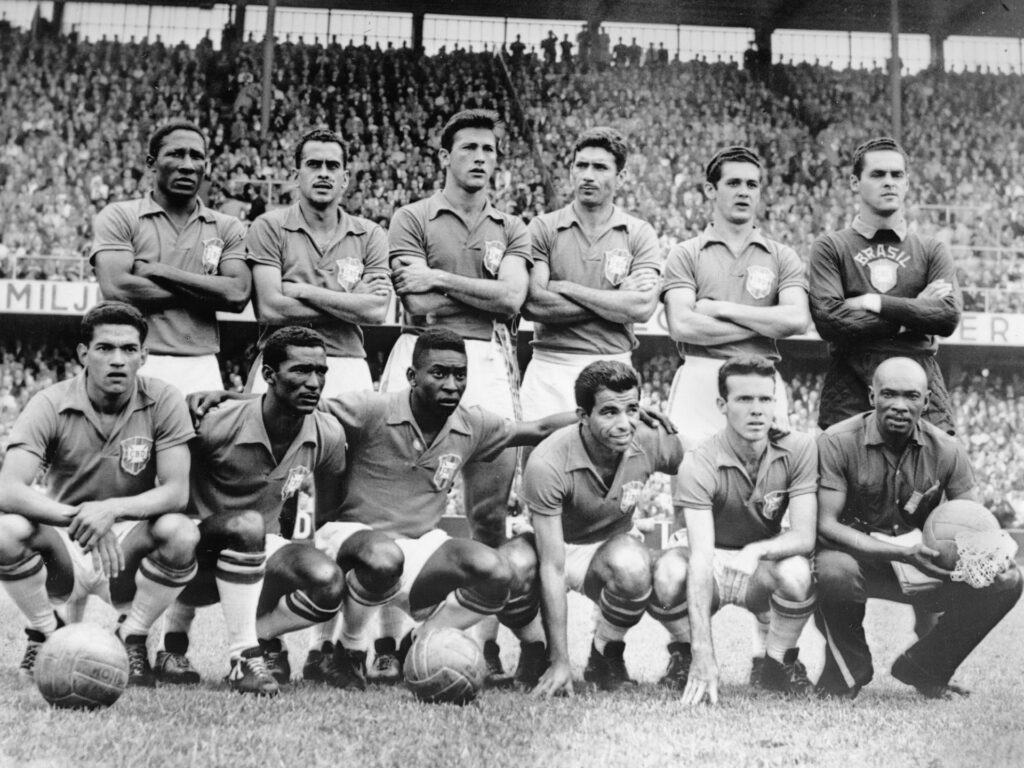
    The 1958 World Cup would also be important to the nation of Brazil, where they finally won their first World Cup.  This one was not hosted in Brazil, but rather was hosted in Sweden, who they would defeat in the final match, finally showcasing to the world that they were the country to beat.  This World Cup was also important as it was the first time that a nation won the World Cup that was not on the continent in which it was hosted, showing that they didn’t need that home advantage to succeed.  This feat would be accomplished three more times: 2002 with Brazil, 2014 with Germany, and 2022 with Argentina.  Brazil would go on to win the World Cup four more times, including a repeat win in 1962, being the second team to accomplish this feat after Italy in 1934, and 1938.  Brazil’s five World Cup victories are the record for most World Cups by any nation.

    Like most nations, Brazil has used the FIFA World Cup for political, and economic reasons, and there likely isn’t any other nation that has been so involved in the sport.  With their victories showing the world that they are a powerhouse, and their losses being viewed as national tragedies, the sport of Soccer has been a key aspect of the culture of Brazil.

    By Tommy Oneto

  • International Soccer, and Its Political Beginnings

    The readings for this week showcased that the first few World Cups established what would become commonplace in future World Cups, which is its usage by nations for political gains.  

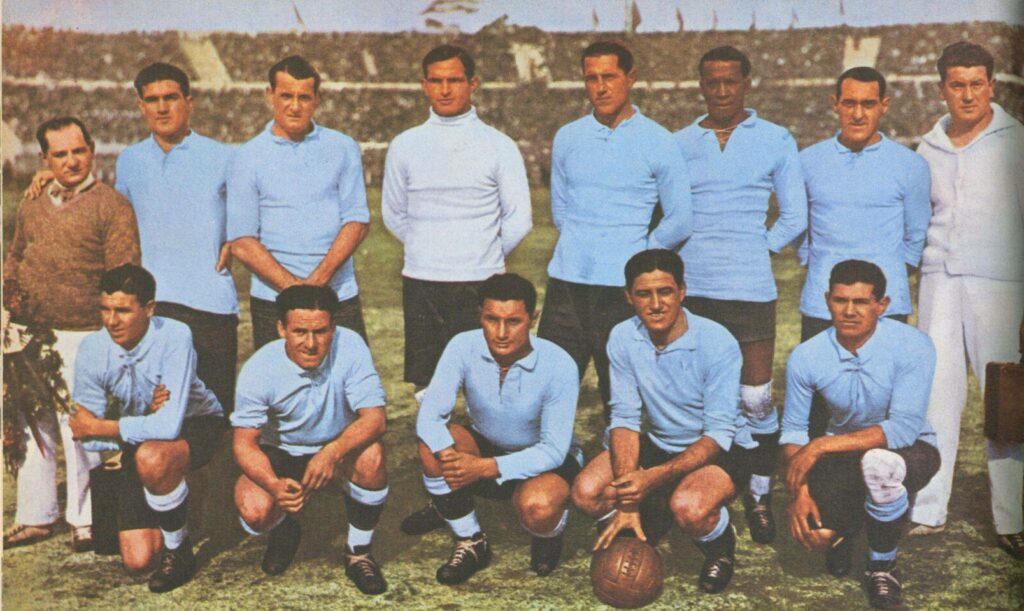
    It started with the Uruguay World Cup in 1930, but this particular story started decades before that with international play in South America.  This international play led to a conference between the nations to establish the CONMEBOL, which was originally based in Montevideo, Uruguay.  This established Uruguay as the center for Soccer in South America, which would later be expanded on with the 1930 World Cup.

    The reasons for hosting the World Cup expand beyond just being the “center for Soccer.”  Yes, they did want to prove themselves to be a soccer powerhouse, which they did with two Olympic gold medals in the sport, and being the first team to not only host, but win a FIFA World Cup, but it also extends to promoting themselves as a nation as a whole.  Prior to hosting the World Cup, and around the same time as the creation of CONMEBOL, Uruguay was going through political reformations, and while they weren’t doing as well economically, they were determined to showcase themselves on the global stage.

    Political gains also extended to the 1934—and to an extent, the 1938—World Cups.  This being with the fascist nation of Italy.  Italy wanted to use the global spotlight to promote their system, and their nation.  With hosting the World Cup, and of course playing in it, they were able to showcase their nation as a powerhouse (even though they played incredibly dirty and faced allegations that the referees were on their side), which they then used for their own political aspirations, and justification for invading the nation of Ethiopia in 1935.

    All in all, the readings established that the development of international play in Soccer has been used for political gains since its very beginnings.  With the establishment of CONMEBOL, and the hosting of the first FIFA World Cup in Uruguay, to the usage of the World Cup for the benefit of Fascist Italy, international play in Soccer has always been political.

    By Tommy Oneto

  • The Spread of Soccer and Challenging Expectations

    Over the course of the two readings from this week, I was not really surprised at how much I didn’t know about the spread of Soccer (Football) in the world.  I knew that Soccer, or at least the modern form of it, stemmed from Britain, and spread throughout the world from there, but that was about it in regards to that.

    Luckily, there were plenty of things about the spread of Soccer that I was not yet aware of.  One of these were the many different forms of kicking games that go back centuries.  Games like Cuju in China, and the Mesoamerican kicking games, the latter dating back to 1500 BCE.  I figured that there had to be much older forms of the game that existed, but I was not aware of how far back they went.

    Another thing I was not aware of was how the game of Cricket took off in Latin America before Soccer did.  Eventually Soccer would take off in the early 20th century, but its rise during the 19th century stemmed from the success of Cricket at the time.  Eventually Cricket would decline, while Soccer would become the game in Latin America.

    The final thing that I was not really aware of was how Soccer was another aspect of European colonization of the world.  Intending for it to be another way of spreading their culture, and influence, the European powers, like Britain and France, would bring the sport to their colonies and to the rest of the world.  I find it really fascinating how, despite it being an attempt to secure their own dominance, it ended up somewhat backfiring on them as a lot of those colonized nations ended up becoming better at the sport than those who originated it.  A little bit of karma came around.

    The spread of Soccer, as someone who does not really know much about the sport, was a fascinating thing to learn about, and featured a lot of aspects I was not particularly expecting, especially with its expansion being an attempt to spread political power.  With it being seen these days as the World’s sport, and being such an important aspect of many nations and cultures, it has certainly come a long way from its origins.

    By Tommy Oneto

  • The ’94 World Cup, and the Continued Struggles of Soccer in the U.S.

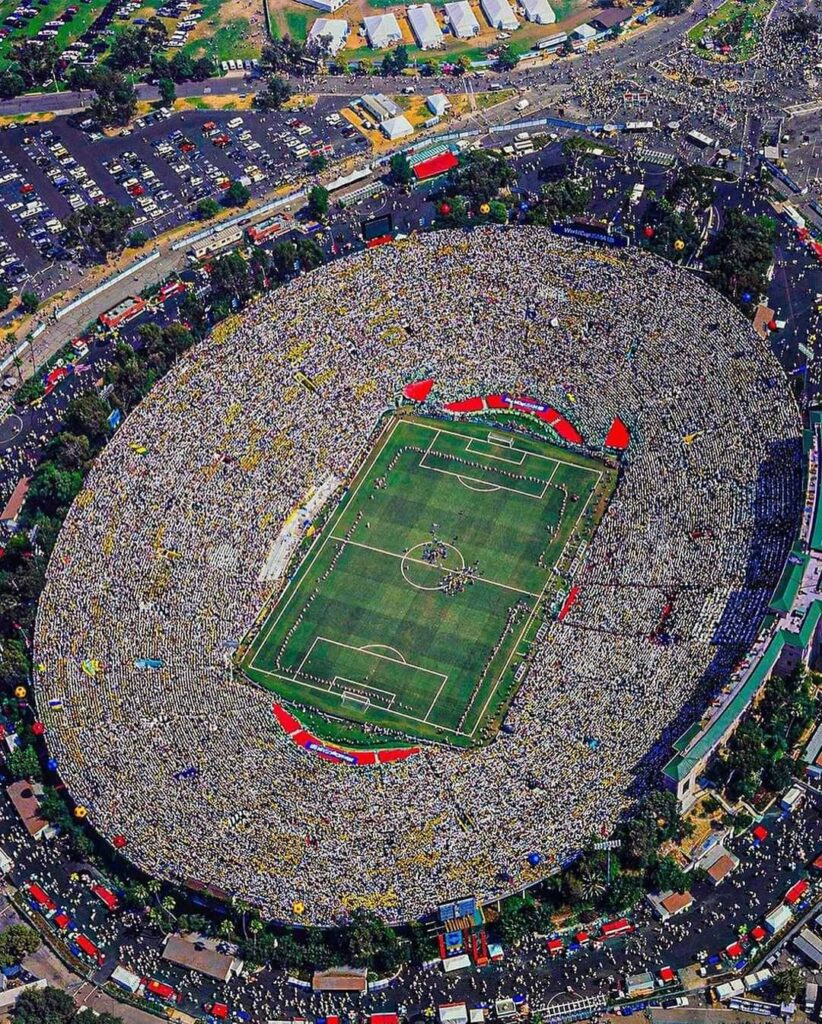
    A photo of the Rose Bowl during the 1994 World Cup Final.

    The 1994 World Cup was a massive success for FIFA.  It broke records in attendance and viewership, and brought in a turnover of $4 billion according to the former (and disgraced) FIFA President Sepp Blatter.  Despite this, soccer in the United States still struggled to replicate the results of the World Cup for a multitude of reasons.

    For starters, soccer still had an image problem in the US.  Soccer was, and still is, mainly viewed as a youth sport.  Not that there’s anything wrong with that, but it has contributed to the struggles that soccer has had with gaining a big foothold in the US market.  It also has the past connotations of being a sport for immigrants.  Unfortunately, the US does have a pretty xenophobic past (and present), which has also contributed to the struggles of the sport.

    Another issue, and probably the biggest one, is the struggle of the professional soccer leagues in America.  The NASL (North American Soccer League) was the predominant US soccer league in the 1970s and 80s, but was struggling to stay afloat.  The attempt to draw a World Cup to the United States was made in order to hopefully save the league, but the world cup came too late as it would fold in 1985.  However, with the World Cup coming to the US, the MLS (Major League Soccer) would form, and while it would struggle at the start, it would eventually slowly expand to a 30 team league, similar to most of the big American sports leagues.  While this sounds all fine and dandy, it ignores a big problem that the MLS has dealt with for much of its existence: the problem that Americans really do not like watching their teams not be “the best.”  Every one of the big American leagues has one thing in common: they have the best the world has to offer in their sport, whether it be the MLB, NBA, NHL, or even the NFL, these leagues showcase the best athletes to an American (or even a World) audience.  The MLS struggles to keep up with the likes of the European leagues, as the best players from the World, and even America, tend to play over there.

    Soccer has struggled in the United States, and while the 1994 World Cup was a massive success, it still highlighted the struggles that soccer had faced, and would continue to face.  Hopefully with the 2026 World Cup, the sport will be able to finally let go of its past struggles, and continue to expand into being one of the big sports in America.

  • Tommy Oneto

    Hometown: Charlotte, NC

    Major: History, BA

    About: I consider myself a big sports fan, but Soccer has been the one sport that I have not paid as much attention to. My father is much more of a fan of the sport than I am, as he played Soccer in his youth and in adult leagues for a little bit (not professional in the slightest bit, there were a lot of fights), but his passion for the sport was not handed down to me. I decided to take this class because I wanted to know more about the sport, and hopefully become a fan of it as well.

css.php