The history of women’s soccer, particularly North America, had little to no coverage in newspapers, and so when games were played the only record would be the mention of the team names and the final score. There is so little we know of women’s soccer before the 1950’s, and in this weeks readings of From Football to Soccer : The Early History of the Beautiful Game in the United States (Chapter 7) and The History of Women’s Football (Chapter 2), we see what few records have to show about the progression of women’s soccer, and what factors influenced those changes.
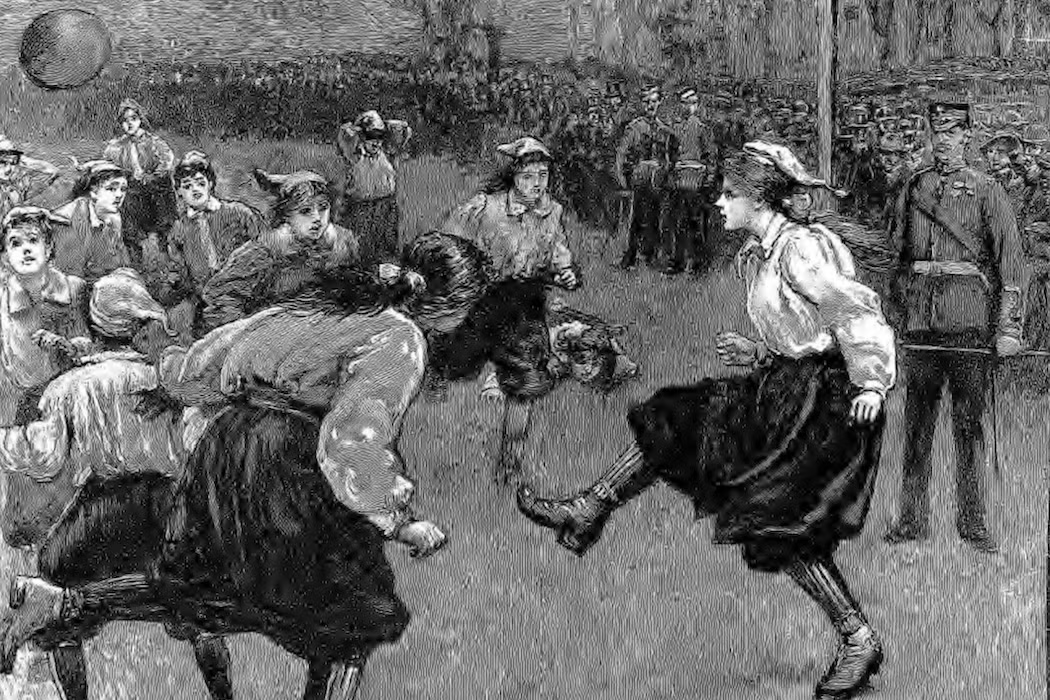
In From Football to Soccer, these sparse records say that women who had gone to college in order to get a job as “Playground Supervisors” were the ones who began these early women’s soccer clubs, and even scheduled matches with other local teams. The records are so little however, that when multiple articles state the “first-ever” match between these women’s clubs had occurred, researchers find it hard to dispute because there just isn’t enough evidence lying around to fully know how many teams have existed and how many games have been played. World War 1 had made it so women had these opportunities to play sports and games, albeit MUCH more “safely”, that the men of the time were playing professionally. Even if the matches involving women led teams weren’t played in a competitive sense, many used the opportunity to raise charity for British soldiers in WW1, yet even so, as the rise and enjoyment of women’s soccer reached a peak towards the end of the War, many Football Associations feared it would take the enjoyment away from men’s soccer, like when women had taken up “masculine” jobs to support their families.
Even through obstacle after obstacle, the determination of early women’s teams showed just how much they loved the game of soccer, with the creation of opportunities to play in matches persisting even after the FA ban of women from many soccer pitches, since the owners of the land games were played on loaned it to them for matches. The drive to show how women could compete on the same level as men showed not only their hope for recognition, but to fight for their place in society even with so many restrictions facing them.

Leave a Reply