When you analyze these two readings together they suggest that the World Cup has rarely ever been just a sporting event. Instead, it repeatedly becomes a tool through which political and economic power is exercised, disguised, or even defended. Whether through authoritarian regimes seeking legitimacy or private business networks consolidating control, the tournament often promises national unity while serving interests that extend far beyond the pitch.
The case of Mexico 1970 shows how this process does not always rely on overt state control. Unlike Argentina in 1978, Mexico’s government was not the primary architect of the World Cup’s meaning. Instead, private businessmen tied to soccer administrations and television broadcasting shaped the event’s purpose. What mattered most was not reimagining the Mexican nation or addressing political realities, but transforming soccer into a televised product. The World Cup became less about civic identity and more about spectatorship, commercial reach, and media dominance. National imagery still existed, but it was secondary to the logic of trying to selling soccer globally.
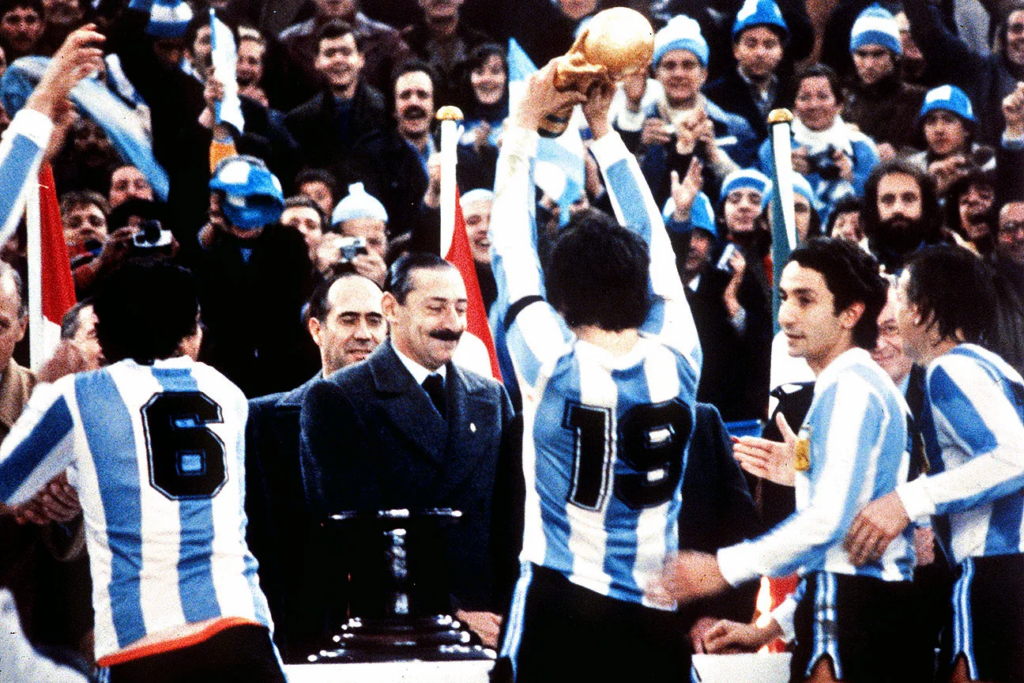
The broader historical chapter on the politics of the World Cup helps clarify why this shift matters. Across multiple tournaments, governments have repeatedly treated soccer success as a shortcut to political legitimacy. Argentina’s 1978 victory briefly masked the violence of the military dictatorship, but the celebration could not erase repression or economic instability. Similar patterns appear elsewhere; hosting or winning the World Cup creates emotional unity, but that unity is temporary or fragile. Once the tournament ends, unresolved political and social problems resurface, often more clearly than before.
What connects these cases is the illusion of permanence. Whether driven by authoritarian regimes or corporate networks, the World Cup offers a powerful emotional moment that feels transformative but rarely produces lasting change.

Leave a Reply