Category: Wk03-World Cups in North America

  • When the World Cup Became a Protest

    What makes this article compelling isn’t just its take on the 1986 World Cup, but how it challenges the idea that sports crowds are passive or easily manipulated. By focusing on fan behavior rather than players or matches, the author shows that disorder and noise (what Monsiváis calls el desmadre) can actually function political expression. This reframes chaos as something meaningful rather than immature or accidental, which is a powerful shift in how we think about protest.

    The argument is especially convincing because it complicates the usual narrative that governments always succeed in using mega-sporting events to control public opinion. While the PRI clearly tried to turn the World Cup into a nationalist distraction, the article explains that people can appropriate these same events for their own purposes. The stadium becomes a contested space rather than a propaganda machine, suggesting that power is never fully one-sided.

    This idea has clear relevance today. Modern sporting events from the Olympics to the World Cup to NFL games are still used to project unity and patriotism, but fans continue to resist in subtle and overt ways whether through protests chants, or symbolic actions. The article encourages us to look beyond official messaging and pay attention to how ordinary people use popular culture to push back against authority.

    The article successfully argues that resistance does not always look organized or formal. Sometimes it is loud, messy, and playful and that may be exactly what makes it effective.
  • FIFA – Politics and Profit

    On page 63 of The World Cup as World History, William D. Bowman features a quote from then Colombian President Belisario Betancur:

    “The 1986 World Cup finals will not be held in Colombia. The golden rule whereby the championship would serve Colombia and not a group of multi-national companies was not observed. Here we have many other things to do and there is no time to attend to the extravagances of FIFA.”

    This quote, as Bowman expands upon in Chapter 2, was indicative of the direction FIFA was moving in – a direction that placed political posturing and profit at it’s forefront.

    Colombia’s decision to pull out of hosting the 1986 World Cup ultimately came down to the question of whether or not the investment the Colombian government would have to place into FIFA-related infrastructure and activities would pay off financially and culturally for the country as a whole. It was decided this would not be the case, especially due to the existing corruption and influence drug cartels had over the country’s professional leagues. The guarantee the country would profit from the World Cup was simply not there.

    Less than a decade later, the World Cup found itself hosted in the United States, a nation in which soccer had struggled to find a foothold in. Although record viewing numbers were achieved during this World Cup, which can be partially attributed to technological advancements in TV broadcasting, impacts on the sport overall in the nation were limited. Initial increases in youth leagues and interest in the sport at the professional level were felt but did not leave a lasting impact, especially since foreign leagues performed at much higher levels than U.S. leagues.

    Yet, as the authors of the article “What’s Left When the Circus Leaves Town? An Evaluation of World Cup USA 1994,” point out:

    “…the real legacy of the USA World Cup, once the circus left town, has been the model of a mean, lean, and immensely profitable event management…”

    This legacy of the 1994 U.S. World Cup seems to have held true and is likely to be proven again in the upcoming 2026 World Cup – where fans are facing high ticket prices and the current FIFA president, Gianni Infantino has cozied up to political leaders, such as president Donald Trump, in the run up to the event.

  • The 1986 world cup and the mexican government’s response to crisis

    In 1985, right before the 1986 World Cup, a devastating earth quake struck and hit Mexico City, leaving thousands dead. After a disaster like this, citizens usually think that their government is going to respond quickly to rescue survivors and provide supplies to those who need it. However, the Mexican government’s response was slow and not effective. Communication was cut off and hospitals were left helpless, which made it very difficult to coordinate relief efforts. Since the government wouldn’t help, the people stepped up. They formed volunteer rescue teams, created shelters, and did everything that the government was supposed to be helping with. The Mexican president, Miguel de la Madrid, and his leadership only added to public frustration. He spent very little time meeting with victims and talked about the disaster very professionally instead of with compassion, which left people feeling dehumanized and pushed to the side.

    Even though the earth quake did cause lots of destruction, they still wanted to move forward with the 1986 World Cup. Officials said the repairs would cost about 56 million dollars, but the end cost was about 2 billion because of renovations and such. This made a lot of people angry, mainly because the government decided to out those funds into the stadium instead of using them for the earthquake relief. This also made the people question if the government really cared about as sporting event more than its own people.

    Both of these articles touch on the political use of the world cup, and how it wasn’t just Mexico. Governments have been known to use the tournament as a distraction from other issues that are happening in their country. Some examples include the 1934 World Cup which was Fascist Italy using as a display of strength, and in 1978 when Argentina used the World Cup to distract from the governments human rights issues. Overall, the World Cup isn’t only an international sporting event that brings attention to the host country, but also can serve to benefit the government in more ways than one.

    Week3, Maple, Hannah B

  • How the 1970 world cup helped represent Mexico as a developing modern nation.

    The 1970 world cup held in Mexico saw outstanding athletic performances with this being the first world cup in which yellow and red cards were used and there wasn’t a single red card in the tournament. Mexico had experienced growth since the 1940s by showing relative political stability and large economic growth. The FIFA archives show that the Mexican football federation (FEMEXFUT) had shown interest in organizing the 1970 World Cup as early as 1958 before the bid for the 1968 Olympic Games was placed, the government was not directly engaged in football but still supported the World Cup bid. 

    FIFA’s recognition of FEMEXFUT allowed teams representing Mexico to participate in international tournaments from 1929 onwards. Mexico sent a team to the 1928, 1948, 1964 and 1968 Olympic Games as well as other tournaments as for World Cup appearances, Mexico was represented by a team in every tournament except 1934 and 1938.  Throughout the twentieth century, the Mexican Government used cultural diplomacy to communicate a favourable image abroad. As journalist Armando Ferrer wrote in 1964: ‘Mexico City is particularly interesting because it provides modernity and many comforts, as well as a rich history with colonial and pre-colonial elements’ This comment enforced the governmental campaigns that represented Mexico as modern and traditional.

    Government officials such as Ernesto P. Uruchurtu, Marte R. Gómez and José de Jesús Clark Flores bid for the 1956, 1960 and 1968 Olympic Games with the goal of using sport to show the world of modern Mexico. The first attempts to host the Olympics in 1956 and 1960 were unsuccessful, yet Mexico’s bid for the World Cup was successful on its first attempt; this may have been due to Latin American countries having already bid for and organized the World Cup previously. Mexico was elected as the host of the 1970 World Cup on 8 October 1964, with 56 votes, while Argentina received 32, and there were 7 abstentions.

    The main organizers for the 1970 World Cup were mostly Mexico City’s elite financial citizens, as the federal government participated through Foreign Affairs, providing visas and regulating international travel. Mexico organized the World Cup once again in 1986, after Colombia withdrew from organizing the event and FIFA held a last-minute selection. In 2026 Mexico will again host the world cup alongside Canada and the United states showing their development and putting their mark on the sport.

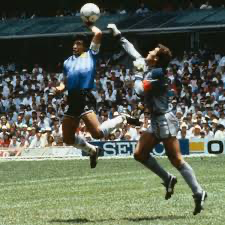
  • You got three hands?

    Week 3

  • The 1986 Mexico World Cup and 1985 Mexico city earthquake By Grayson Banks

    These two articles provide a detailed examination of the infamous 1986 World Cup, held in Mexico, which was marred by significant controversy. In 1985, Mexico City was struck by a magnitude eight earthquake that devastated the city. Normally, when a disaster of this magnitude strikes a city, you expect the government to quickly organize rescue efforts to save people and provide relief, including food, housing, and other necessities, to those who have lost everything.

    But the Mexican government was very delayed in responding to the earthquake due to several factors, such as the earthquake taking out state-run hospitals and communication centers. The people of Mexico City took matters into their own hands after the government failed to help people in a timely manner. They formed rescue parties to try and find survivors, created food and clothing shelters, and assumed duties normally fulfilled by the government. The president of Mexico at the time, Miguel de la Madrid, and the Mexican government as a whole, responded very poorly to the disaster, as President Madrid limited his on-site interactions with people affected by the earthquake, making speeches he gave about the disaster seem more like dehumanized statistics instead of affirmations for rescue efforts being organized by the government and the citizens. 

    Despite this devastating earthquake hitting Mexico City only eight months before they were scheduled to host the World Cup, the government insisted on still hosting the event in the country. The Mexican government told the people that they only planned to spend fifty-six million dollars to host the World Cup, but they needed to update far more stadiums than they initially planned, so that number soared all the way to two billion dollars by the time all of the renovations were completed. This, along with the lack of support from the government during the earthquake, had a lot of people outraged and made alot of them question if the government cared more about the World Cup than they did their own people. 

    This political consideration isn’t anything new for the World Cup, however, as the competition is usually used as either a statement of political power from countries like fascist Italy who hosted the event in 1934, or as a cover-up like the 1978, which was supposed to distract from the horrible things like tortures and murders of political opponents that were committed by the junta in Argentina. In conclusion, the World Cup is a privilege to host as you have the eyes of the whole world on your country for a while, but it can very easily be used for alternative means by the governments in power in certain countries.

  • Politics of the World Cup

    The World Cup has become a very prestigious and popular event for teams and fans to be involved with, however it has even more implications for the nations participating in the tournament. Even more so than just participating in the tournament, hosting the World Cup is an incredible opportunity to propel many facets of a nation. Due to this fact, playing in and hosting the World Cup can lead to a very politically driven atmosphere.

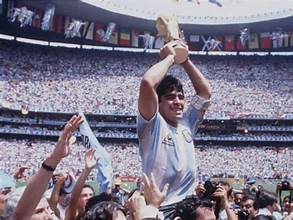
    In the case of the 1986 competition this can be seen through the tensions between Argentina and England, which many placed onto their respective teams play. Despite players such as Diego Maradona refuting these political claims, the tournament remained a politically charged environment. For both nations and even those not involved in the political tensions, winning the Cup is about more than just the team being the best, it brings prestige and influence to their home nation.

    This prestige brought about by hosting the World Cup and the desire to do so, can be seen in every nations bid to be the host nation. Soccer is an incredibly important sport in many nations that brings people together regardless of race or other beliefs. During the World Cup, if one’s national team is participating it is an opportunity to join together in support of it. The effects of hosting can be extremely beneficial due to this and other reasons. It is not unheard of for fanbases to grow disinterested with their national team due to a number of reasons or in some cases lack interest in the sport in general.

    Hosting the World Cup or signing intriguing or “big name” players are seen as two of the most effective ways to bolster interest in local sport teams. These reasons, in order to build up the sport in the nation and in turn the nation in itself, change these actions from being standard actions in pursuit of making a team better, a more politically charged choice.

    In any regards politics have become intrinsically tied to most sports at both a national and local level. These things make it so that almost any action taken by organizations and teams has political implications. They are not just taken in pursuit of creating a better team, but also in creating a more favorable outlook for their team and industry.

css.php