Author: AldenH

  • Final Digital Project

    Here is the link to my PRODUCT and to my SOURCES

    Looking back at the process for my product, a lot has changed since I began, and I have enjoyed the direction it has gone. Having the opportunity to use a storymap such as I did helps because I enjoy the type of media that moves and can be interacted with. I believe that the storymap also helps the creator summarize their points in a concise and resourceful way. Throughout my research, finding certain articles regarding youth soccer in a certain country proved difficult, and I had to rely on not so trustworthy sports blogs and navigate their sources that way. I would have preferred to give myself more time to delve into online sources, but with my topic ever evolving it became hard to hammer down what specific sources I included. Many include the soccer academies website that includes their mission statements and what they strive to teach young players. There are also a few YouTube videos, as I always enjoyed a video or two included so as to not lose interest completely. I think after finishing compiling my research into my digital project and reflecting on the semester long process, I think online mediums such as my storymap are incredibly useful to circumvent the traditional lectures that many students experience. It being online however does present a drawback as some may not have the technology to access it at all, or that it’s only in one language. Online mediums, especially in todays times, are becoming increasingly important, but we have to be careful as history and technology become more and more intertwined.
  • Futboleras: Women Who Changed Soccer

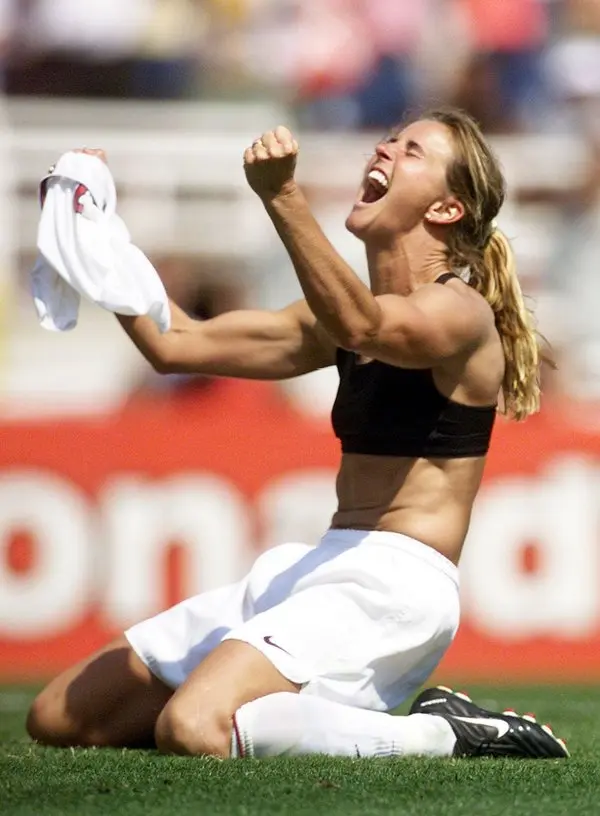
    The challenge faced by women in soccer still isn’t solved, and developments only began popping up within the bast 50 years or so. So much of the history of women’s soccer is lost, either because of the ban on it in certain countries, or out of federation greed who were scared interest from male games would be taken away. So many obstacles still stand in the way of women’s leagues and wanting to achieve true equality with men’s leagues, and in the readings for this week, we see how these icons fought for their place on the world stage of soccer.

    With so little interest from Soccer Federations and Confederations regarding women’s games, the consistency of men’s tournaments shows that the resources are there to support all aspects of the sport, yet the ones in power still sit in the mindset that soccer is supposed to be “masculine” and opportunities given to women’s teams just isn’t worth the effort. In regards to effort, the blatant sexism and racism is much more profound and looked over on women’s teams. With so many Federations picking a coach who isn’t really qualified, it gives way to the coach perhaps using his position of power to make his players vulnerable, ruining their reputation and ruining the future of the team once scandals like that went public. Funding is so misallocated , and even if a team had performed exceptionally well in a season, the Confederations would still hang the threat of budget cuts over the players heads.

    Despite ALL of this and more, so many star players over the last few decades have risen through these tribulations, and have worked their way into a position to fight for what women’s teams have wanted since their inception right along with the men’s teams. With the lack of attention women’s teams face, the united action they take not only unites them better as a team, but connects them as people fighting for their equal place in the sport of soccer.

  • Early History of Women’s Soccer

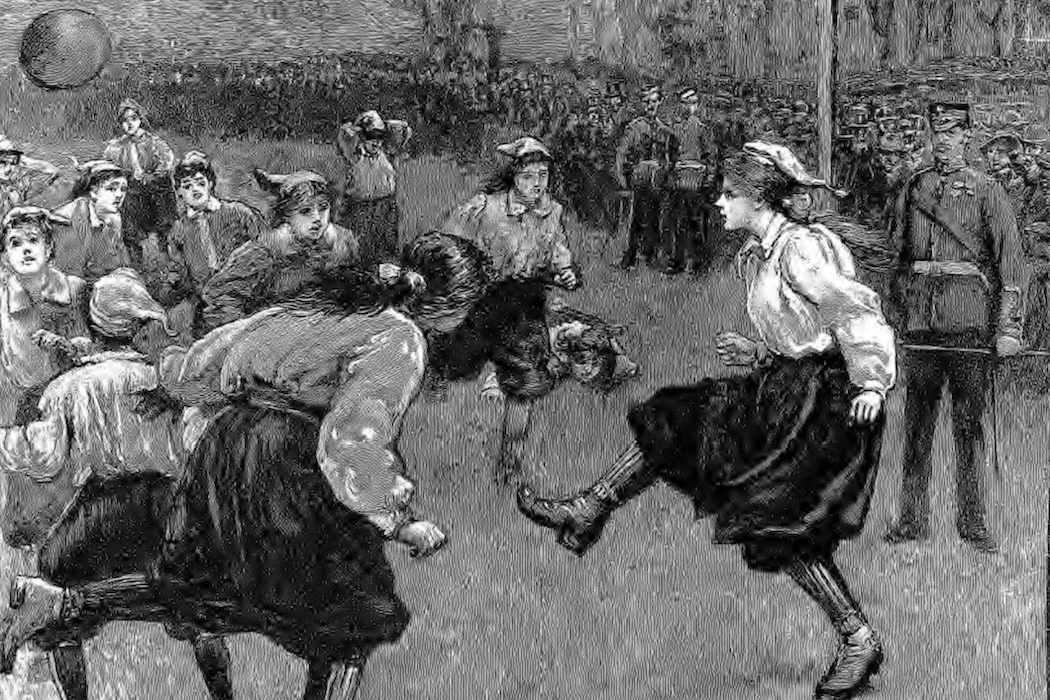
    The history of women’s soccer, particularly North America, had little to no coverage in newspapers, and so when games were played the only record would be the mention of the team names and the final score. There is so little we know of women’s soccer before the 1950’s, and in this weeks readings of From Football to Soccer : The Early History of the Beautiful Game in the United States (Chapter 7) and The History of Women’s Football (Chapter 2), we see what few records have to show about the progression of women’s soccer, and what factors influenced those changes.

    In From Football to Soccer, these sparse records say that women who had gone to college in order to get a job as “Playground Supervisors” were the ones who began these early women’s soccer clubs, and even scheduled matches with other local teams. The records are so little however, that when multiple articles state the “first-ever” match between these women’s clubs had occurred, researchers find it hard to dispute because there just isn’t enough evidence lying around to fully know how many teams have existed and how many games have been played. World War 1 had made it so women had these opportunities to play sports and games, albeit MUCH more “safely”, that the men of the time were playing professionally. Even if the matches involving women led teams weren’t played in a competitive sense, many used the opportunity to raise charity for British soldiers in WW1, yet even so, as the rise and enjoyment of women’s soccer reached a peak towards the end of the War, many Football Associations feared it would take the enjoyment away from men’s soccer, like when women had taken up “masculine” jobs to support their families.

    Even through obstacle after obstacle, the determination of early women’s teams showed just how much they loved the game of soccer, with the creation of opportunities to play in matches persisting even after the FA ban of women from many soccer pitches, since the owners of the land games were played on loaned it to them for matches. The drive to show how women could compete on the same level as men showed not only their hope for recognition, but to fight for their place in society even with so many restrictions facing them.

  • Week 11: Spanish Soccer

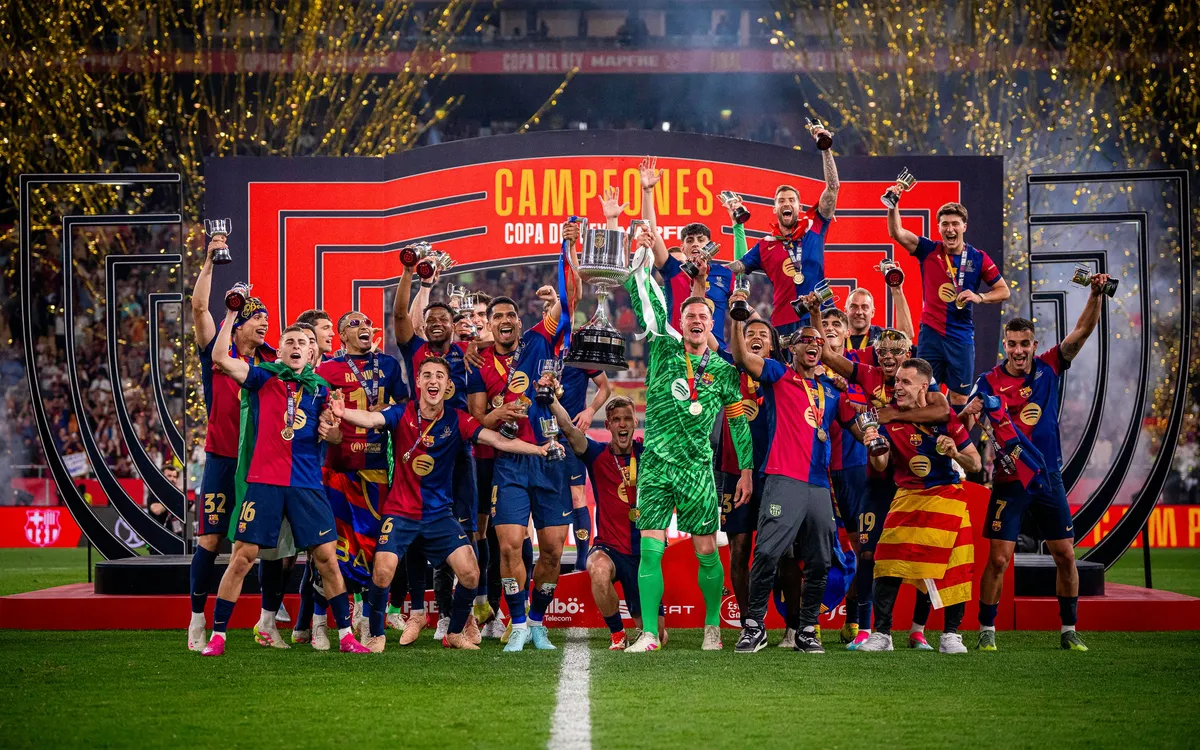
    Our main reading piece for this week was “National Dissonance: The Copa del Ray Soccer Final as a Site of Political Influence” by Adam Winkel, and it covered how soccer is so integral to the regionalism felt throughout Spain and the effect it has on the fandoms of these regions. I am hoping to use this topic to find out more about how the interest in soccer and its processes have grown in the global youth and what it may look like in Spain.

    “Soccer fans enact their behavior as part of cultural performances, ‘occasions in which as a culture or society we reflect upon and define ourselves, dramatize our collective myths and history, present ourselves with alternatives, and eventually change in some ways while remaining the same in others’.”. With this tournament occurring annually, fans use this chance to either stand with their government or denounce it, and believing in a different dream of a “unified Spain”. Soccer is different in Spain, and we can see that ability of the sport to allow players to represent the countless regions in Spain while playing a game they just love, connecting that personal to national (or regional) identity.

    During the Franco Regime (1939-75) however, this understanding of “unity” and personal identity had come under lock and key due to the oppressive powers that controlled the country. As Winkel describes it, “..used the football pitch to enforce discipline and uniformity across Spain, one of the Franco regime’s main objectives”. Having a platform such as soccer that is able to reach just about anyone can be used, good or bad, for the purpose of reaching the fans and speaking to what they believe and want to hear.

    Our other reading for this week was Euro 2012: ‘Great Spain era’, says coach Vicente Del Bosque, and even though this was a shorter piece, the arguments made by Vicente seem like due to recent success for Spain on the international stage, these young stars cannot get complacent and need to understand that winning isn’t forever. The focus of this team should be on playing their own game and working together according to the teams strategies, regardless of how critics think.

    So many factors go into the politicization of soccer, yet in Spain, through the Copa del Rey, the government, players, and fans alike all get a voice and the opportunity to share their thoughts and beliefs, and as alluded to by Winkel, these “soldiers” that are the players, represent so much more than just the region.

  • What makes a Hero (or Villain)?

    The sport of soccer has its icons, and their stardom isn’t considered only what they do on the pitch, but how they represent the sport off it as well. These icons can be respected for a variety of reasons, but like a shining light, with it comes the “darkness” and the types of players that don’t care what opinions are held about them, and in this they write themselves into the role of a villain.

    These villains, described by Tom Sunderland as, “…the figures who garner more disdain than your average participant, whether it be due to crimes committed in a particular competition, their actions preceding a tournament or just because they’re a generally disliked figure of the game…” often use this fandom full of disdain to their advantage, and sometimes these “villainous” acts become what they are known for despite such a renowned scoring or overall record. This article from Bleacher Report, “Ranking the World Cup’s 25 Biggest Villains of All Time“, has portions that seem to have clear bias or exclusion of certain information to seemingly paint players the author may not like in an “evil-only” fashion.

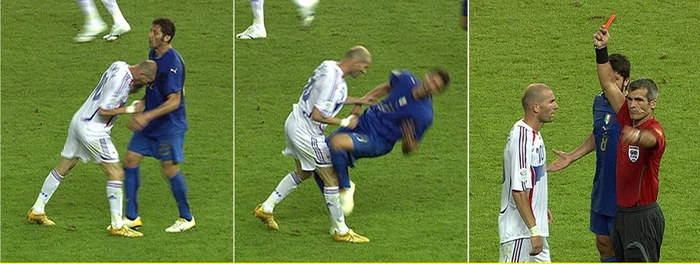
    Take Zinedine Zidane’s situation between himself and Italy’s Marco Materazzi in the 2006 World Cup. The author describes Zidane as “a hero of the highest order to most”, suggesting that this specific incident seemed out of character for the player. Sunderland ranks Zidane 7th on this list seemingly for this reason alone, and Materazzi ranks just above him in 6th place only for the fact that he caused the situation and wasn’t as liked as Zidane, according to Sunderland. Fan adoration appears to be a very prevalent cause in deciding which players are the heroes or villains, and if a player isn’t adored by the masses the littlest scuffle becomes a deciding factor in how fans view them.

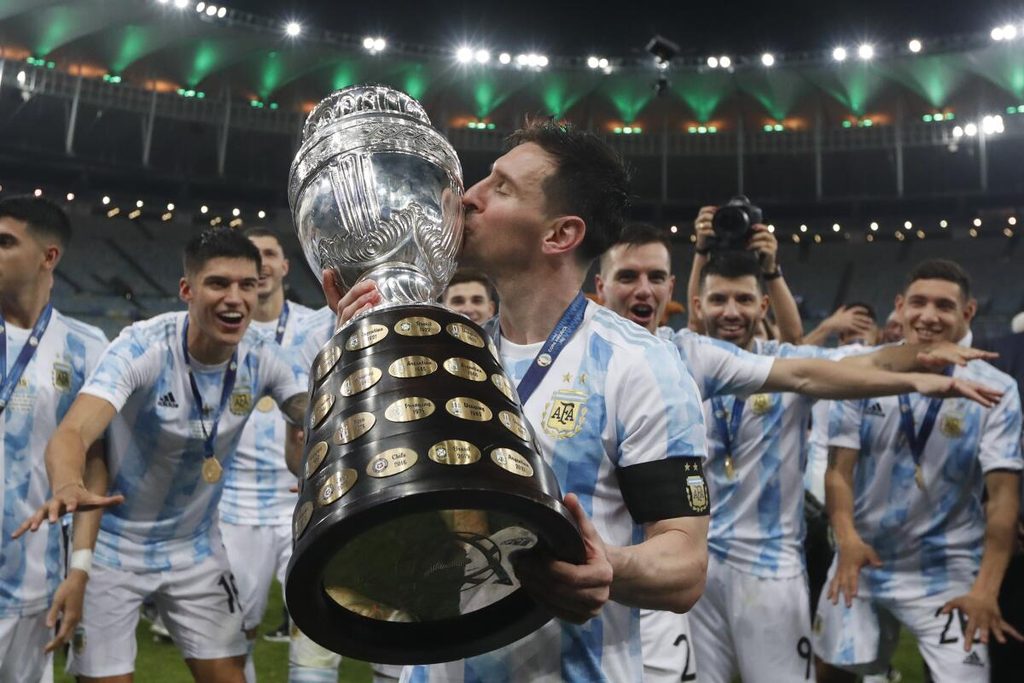
    When discussing how fans view players and consider them a “good” representative of their nation, look no further than the opinions of Argentinian fans and what they think about Lionel Messi. In the article “Stepping out of Maradona’s shadow. How Lionel Messi won over the hearts of all of Argentina” written by Matias Grez, the expectations Argentinians had for Messi to live up to the image that was prime Maradona evidently fell through, and these hopes that Messi would bring success to Argentina weren’t lived up too. Throughout his career in FC Barcelona, his early start saw championship win after win, and the craving fans had for the World Cup trophy fueled Messi’s own desires, and before 2022, that was all he was missing in order to “complete” his soccer career. This was the last stop for him after winning the Copa America the previous year with Argentina, their first major win in 28 years. Even through his club wins, it seemed as though fans just wanted a little more from Messi, and the weight, albeit crushing I’m sure, only motivated him further.

    Understanding the information, nuances of said information, and the expectations that follow these heroes (or villains) can shed light on the reasons they have the reputation they do. It helps us gain insight into the motives behind players actions and WHY they act the way they do.

  • Week 9: Mythmaking and Fandom

    For this weeks readings, we were assigned “Golazo!” chapter 9 and “The World Cup as World History” chapter 5. Both of these chapters focus on the mythmaking behind the biggest names in soccer, and even the myths that surround the sport itself. As media becomes more accessible to those around the world, these soccer stars become the center of stories and narratives of the people who watch this sport, and oftentimes this comes with expectations that players can’t live up to according to their fans.

    There are so many ways to enjoy soccer, with streaming platforms and highlight clips on YouTube for example. Analysts break down play by play of a game, and through this you get to learn how a team functions and what their strengths and weaknesses are, and even how players act on the pitch. With access to all of these games at home, nothing beats the atmosphere and experience of sitting in on a game in person, hearing the crowd roar as goals are scored and seeing the excitement ripple through the stadium. Seeing the reasons the first modernist stadium built for the 1930 World Cup in Uruguay and how its connection to the cultural history of the country helped FIFA host the first World Cup there, and how it symbolized not just the country, but its people and what they represented.

    Fan experience plays such a critical factor in whether players and stadiums alike gain this mythlike status, and when a stadium presents fans with one of the most indescribable encounters, its easy for it to gain notoriety and fame. With all of this notoriety comes those who would use this sporting platform for political purposes, like the terrorist attack near the Stade de France stadium in Paris in 2015, though soccer has long been at the center of international politics.

    One final point would be that as the World Cup garnered more and more attention since its inception in 1930, host countries especially use the “sports tourism” method of promoting games, by promoting the games themselves alongside what experiences the local areas have to offer, in order to entice these tourists and gain a little extra revenue on the side. With the modern era of streaming rights, having this access at home makes the in-stadium experience slightly less desirable, especially with rising ticket prices for World Cup matches and how unaffordable they are for the average enjoyer of soccer. At home or in the stadium, people still have that connection to their national team, and the ones who represent it carry the entire countries hopes of winning on their shoulders.

  • Alden huffman Intro

    Hometown: China Grove, NC

    Major: Secondary History Ed

    About me: When it comes to soccer, I’m an incredibly passive watcher, so my knowledge isn’t as great when conversations come up about specific players and their individual play styles. I can’t wait to see what I can learn that changes my perspective on it, as I played for 10ish years when I was little! Sports as a whole has been such an important part of my life, whether I mean for it to be or not, and I want that importance shared.

css.php