Chapter two of The World Cup as World History by William D. Bowman focuses on how the early World Cups were influenced a lot by politics. One major example is the first World Cup in 1930, which was hosted by Uruguay. Even though it was supposed to be a global competition, many European teams chose not to attend. Most European countries were worried about the cost and difficulty of traveling to South America. Only the four European nations of France, Belgium, Yugoslavia, and Romania ended up participating. England refused for a different reason, believing that the tournament was beneath them and that English soccer was already superior to the rest of the world’s.
Hosting the 1930 World Cup was politically important for Uruguay. The country had already shown its strength in soccer by winning gold medals at the 1924 and 1928 Olympics. By hosting the World Cup, Uruguay wanted to prove its importance within South America, especially against larger and more powerful South American countries like Brazil and Argentina.
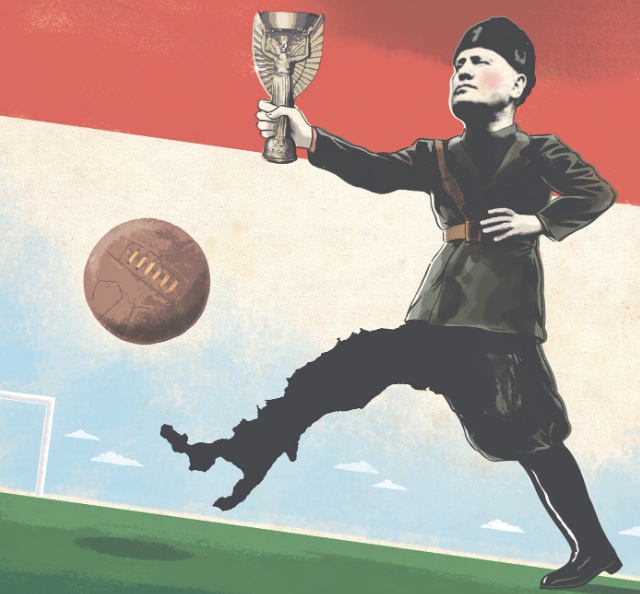
Politics became even more obvious during the 1934 World Cup, which was hosted by Italy under Benito Mussolini’s government. Mussolini used the tournament as a way to promote nationalism and his political ideas, especially as soccer was becoming more popular worldwide. This World Cup included sixteen teams, an increase from thirteen teams in the 1930 World Cup. Uruguay did not participate, partly because of financial struggles but also because they were still upset about European teams refusing to attend the World Cup they hosted in 1930.
Mussolini pushed political propaganda throughout the competition, using the international attention to advertise himself and his fascist way of rule. England once again refused to participate because of these political differences. Other teams faced challenges as well, including Argentina, whose roster was weakened when many of its top players moved to Italy. Due to shared immigration history, Italy was able to quickly grant these players citizenship.
Italy won the 1934 World Cup, but their victory was very controversial. Many teams complained about Italy’s aggressive style of play and accused referees of favoritism. Mussolini used this positive momentum to spread his fascist form of government internationally. Overall, these sources show that the World Cup has always been connected to politics, and I believe that the positive or negative result of these games pushes the country forward, or holds them back a little.

Leave a Reply