The World Cup is an extremely prominent fixture in the sporting world, a competition between nations to see which soccer team reigns supreme. Due to this grand stage, there is an inevitable political aspect to the event. This political side of the World Cup is something that is used by almost all participants and is utilized in several different ways. One of the most prominent manners in which this is seen is through the media side of the competition. News stories, videos, and pictures are all a part of the World Cup and are all used to show aspects of the teams for cultural and political purposes
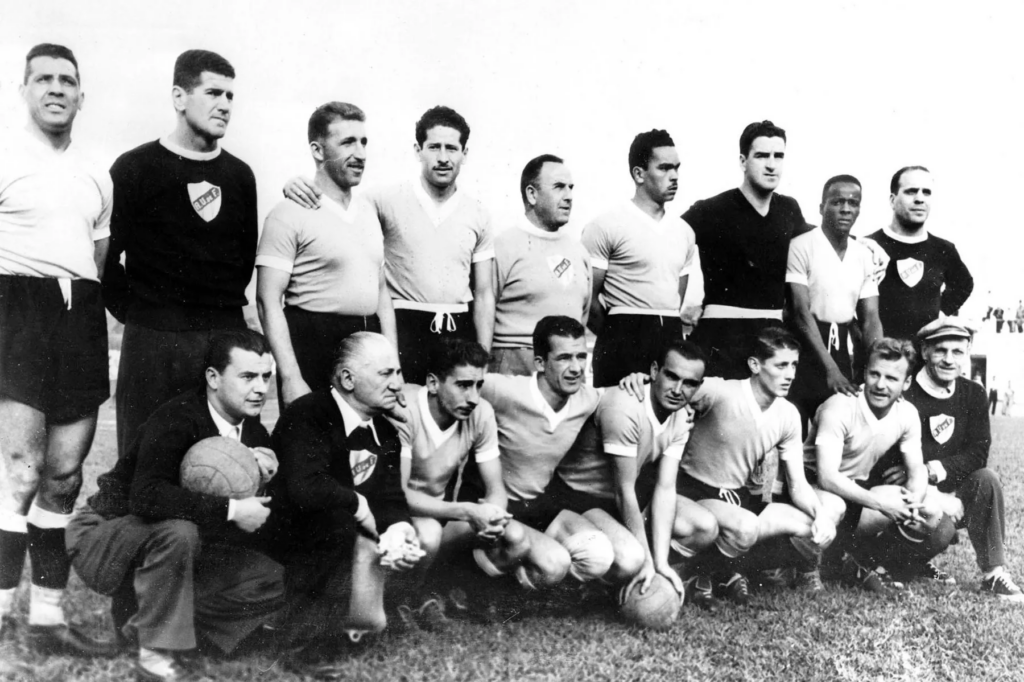
Team photos were not only a way to commemorate the team and their possible success in the tournament, but were also a way to celebrate the brotherhood between the players. This in turn was a celebration of the nation itself and often a way of presenting a form of unity, that in some cases but not be truly representative of the situation of the nation. While some pictures such as the one above of the victories Uruguay team in 1930 can be a heartwarming piece of history, others such as pictures of the Austrian team in the 1930’s belay the political unrest that was occurring in the country. Whether from internal issues or external affairs, the World Cup for some can be a last ditch effort to present a united front and the nation as desired. Whether it is trying to be seen as modernizing or an effort to promote local soccer, how people view the World Cup and not only their nation’s performance, but behavior as well is something that seems to be almost always presented with intention.

Something that often comes up in regards to national teams, whether they are participants in the World Cup or the Olympics is the composition of said national team. Earlier on in the World Cup’s lifespan the rules on who could play for a national team were much less strict. This often led to questions about whether or not the team playing was truly representative of the nation itself. This team composition was yet another aspect of the World Cup that could be used for political purposes. Whether it was used to promote diversity or to question the diversity, it was a prime example of how one topic could be viewed in multiple different ways depending on the presentation.

Leave a Reply