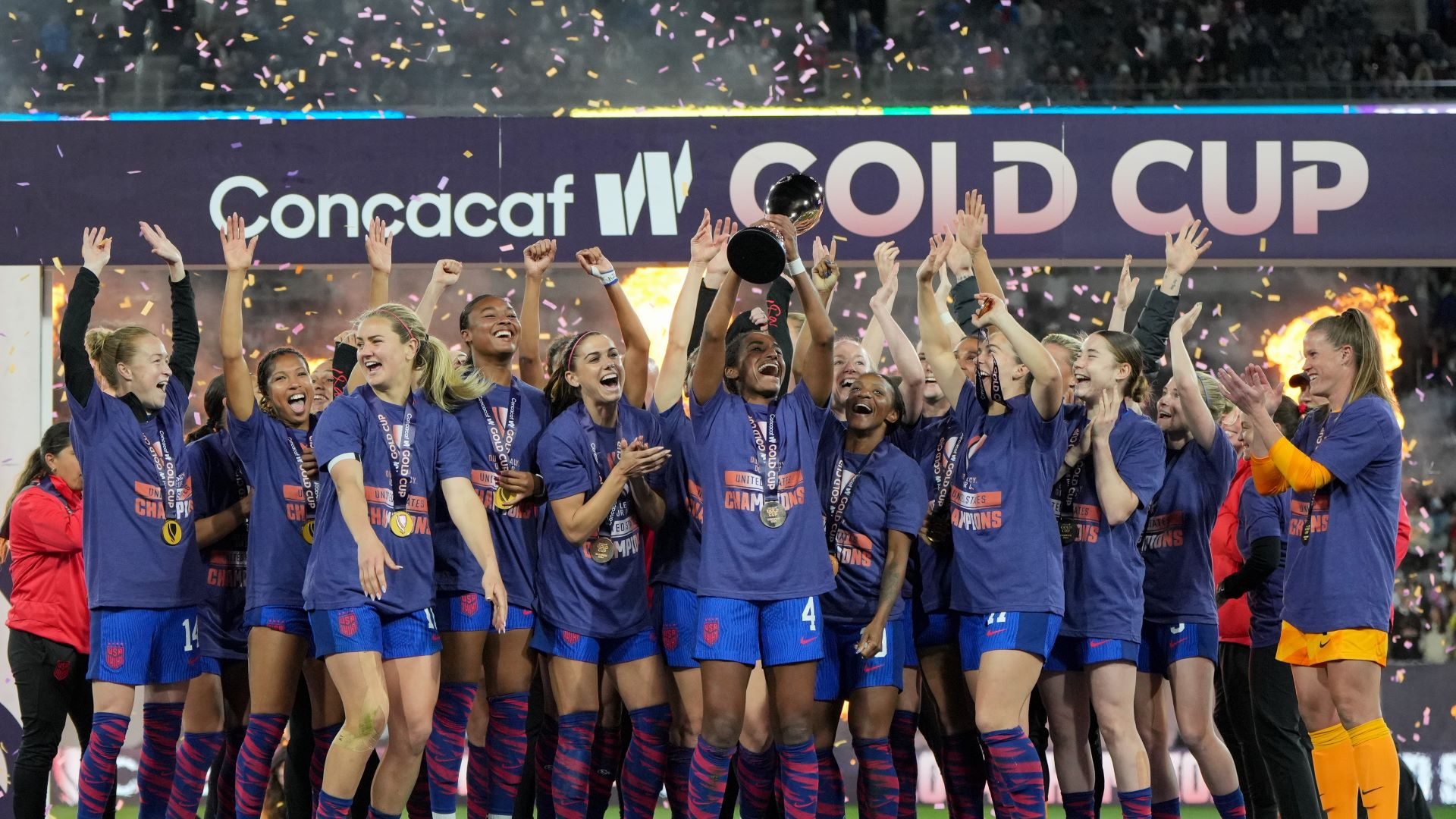
USA Women’s National Team, 2024 CONCACAF Championship
As discussed in our last block of readings, women’s soccer had to grow as an extension of men’s soccer through extenuating circumstances, such as World War 1. Despite this, women’s soccer in some areas of the world and through varying levels of effectiveness has started to grown independently of men’s soccer, and has seen it’s own distinct highs that some people may have thought as unachievable. Through efforts that eventually reached the FIFA organization, women’s national soccer teams have come out to record breaking crowds, sold out stadiums, and a plethora of accolades related to success, this is highlighted by the enormous success of the U.S women’s national team in the late 90s, aswell as the throughout the 2010s.
Fighting against the prohibition of the sport in some spaces, aswell as general disinterest because of inherent misogyny within many atmospheres, the pioneers of women’s soccer in places such as the U.S and Brazil as talked about mainly in these readings, fought against preconceived notions of political and societal power to get their respective sports to the level of monetary and reputation that their effort supports. This is supported and highlighted by the anecdotes presented by Caitlin Murray’s reading about the U.S women’s team trip to the 1999 World Cup, their emergence to the Giant’s stadium crowd, and their victory over China in the final.
These two readings share a story about struggle and striving towards something, with the outcome being that of long awaited success, sharing these themes through both their stories of oppression in the pioneering-era of the growth of women’s soccer, and their stories of rising to international fame because of their success to market and monetize.

Leave a Reply