Author: LucasM

  • My project

    Switzerland: The Ultimate “Neutral Ground”

    You have to remember the headspace of Europe in 1954. Most of the continent was still a total mess. People in the UK were literally still using ration books for food until that July. Then you look at Switzerland: no bomb damage, fully functioning trains, and zero food shortages. It was this “Island of Peace” in a sea of reconstruction.

    For FIFA, picking Switzerland wasn’t just about their HQ being in Zurich; it was a strategic move. With the Cold War heating up, Switzerland was the only place where teams from the Eastern Bloc (like the legendary “Magical Magyars”) and the West could play without it turning into a diplomatic nightmare. It was basically the only safe space for a global party.

    The First “Modern” World Cup

    What’s even cooler is that this was the moment football went “tech.” This was the first World Cup ever televised. Thanks to the Eurovision network, people across Europe could finally watch the drama live instead of just reading about it the next day. It turned the sport from a stadium event into a global media phenomenon.

    And if you’re into sports gear, 1954 is basically the origin story of Adidas. In the final (the “Miracle of Bern”), the pitch was a total swamp because of the rain. The Germans actually won because they had these new screw-in studs from Adi Dassler that let them keep their footing while the Hungarians were sliding everywhere. It’s a classic example of how tech can close a talent gap.

    The “Miracle” and National Identity

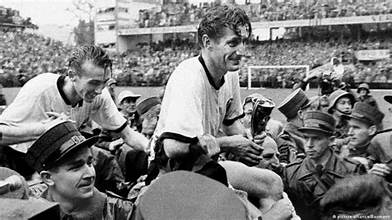
    The biggest takeaway for me, though, is the psychological impact. For West Germany, winning this wasn’t just about a trophy. It was their first real “win” as a country after the horrors of WWII. Historians literally say the Federal Republic was “born” in that stadium in Bern. It gave a traumatized population a reason to feel like they belonged to the international community again.

    TL;DR

    The 1954 World Cup was the bridge between the old, broken world and the high-tech, televised era we live in now. It proved that football could be a neutral ground for healing, even when the rest of the world was divided. If you want to understand how sports became the massive cultural force they are today, you have to start with that rainy summer in the Alps.
  • The “Safe” Sport?

    I always assumed the sport only really blew up after the 70s, but it turns out there was this whole hidden scene back in the early 1900s. It’s wild to realize that women were out there competing and organizing games over a century ago, long before the modern era we’re used to.

    One of the most interesting things I found was that soccer was actually marketed as the “safe” choice for women. Back then, American football (gridiron) was seen as way too violent and dangerous for girls, so educators pushed soccer because they thought it was “less taxing.” It’s kind of funny looking at how intense and physical the NWSL is today and realizing the sport originally got its foot in the door because people thought it was “calmer” enough for women to handle.

    Helen Clark, who was literally nicknamed the “Queen of the Whistle” in 1918. She wasn’t just a player; she was refereeing matches and even coaching boys’ teams to championships. Seeing that a woman was such a powerhouse administrator and leader in the sports world during World War I really changes how I think about the “pioneers” of the game. Women like her and Doris Clark weren’t just playing; they were building the entire infrastructure of the sport.

    This history really shines a light on the fact that the passion for soccer has always been there—it just kept getting dimmed by people who didn’t think women belonged on the pitch. The media back then used to describe female players as “modern Amazons,” treating them like some sort of spectacle rather than athletes. Reading this makes me realize that today’s stars aren’t just starting a movement; they’re finishing a game that started in the 1910s. We really owe a lot to those early players who fought for a spot on the grass!

  • Why the World Cup is the World’s Biggest Product

    One of the most interesting parts of Chapter 5 in The World Cup as World History is the idea that football isn’t just a sport anymore—it’s something we buy and sell. For over 150 years, the game has been “packaged” like a product. Whether it’s the skill of the players or the excitement of the match, everything about the World Cup is designed to be watched and enjoyed by a global audience. It has become one of the most successful “products” in modern culture.

    Today, how we “consume” football has changed because of technology. In the past, fans only cared about simple things like goals or corner kicks. Now, we are flooded with data, like how far a player ran or how many passes they completed. We don’t just watch the game; we discuss it on the internet, watch experts analyze it on TV, and even bet on it. This makes the World Cup a 24/7 business that exists far beyond the 90 minutes on the field.

    Another big point is how we look at the players. They aren’t just athletes; they are like characters in a movie. The media describes them as heroes or villains. This makes the game feel more personal and exciting, which helps sell the “story” of the tournament to people all over the world. By turning players into celebrities, the World Cup becomes a global drama that everyone wants to follow.

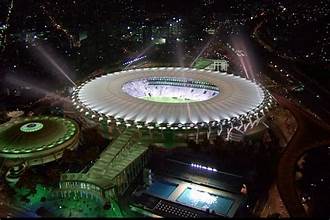
    Finally, the stadiums themselves play a huge role in the “show.” Some of these famous buildings, like the Maracanã in Brazil or Wembley in London, are treated like “cathedrals” or holy places. A great example is the Centenario stadium built for the first World Cup in 1930. Uruguay built it to show the world they were a wealthy and modern country. These massive stadiums are more than just places to play; they are symbols of national pride that make the tournament feel legendary.

  • Chile’s 1962 World Cup Diplomacy

    The 1962 World Cup in Chile is usually remembered by sports fans as a “boring” tournament. The star player Pelé got injured early on, the games were often violent, and there weren’t many goals. However, historian Brenda Elsey shows us that behind the scenes, this was actually one of the most clever political maneuvers in sports history. At a time when the world was split between the US and the Soviet Union (the Cold War), Chile managed to bring everyone together by playing both sides perfectly.

    What makes this story so cool is how Chile won the right to host the games. Because Chile had a mix of both “left-wing” and “right-wing” politicians at home, their football directors were like diplomats. When talking to the Soviet Union, they bragged about their strong worker unions. When talking to the US, they bragged about their democracy and free markets. It worked so well that both superpowers voted for Chile to host. It shows that even a small country at the “end of the world” can lead the globe if they know how to talk to everyone.

    Inside Chile, the World Cup was a massive deal for regular people, not just politicians. It brought the first big wave of television, rock music, and female football fans to the country. For a few weeks, people from all different political backgrounds stopped arguing and worked together to make the tournament happen. Even though the government didn’t want to spend much money on it, the local clubs and media stepped up to prove that Chile belonged on the world stage.

    Today, many Chileans look back at 1962 as a “golden age.” They remember it as a peaceful time of unity before the country was torn apart by a violent dictatorship in the 1970s. It’s a perfect example of how a “boring” sports event can actually be a powerful symbol of hope and clever politics. It wasn’t just about the goals on the field; it was about a small nation proving it could navigate a dangerous world and come out on top.

  • Diamonds in the Rough: Pelé, Garrincha, and the Two Souls of Brazilian Soccer

    The article “Diamonds in the Rough” by Brian Phillips is a masterclass in how to weave together the scientific, the surreal, and the deeply cynical. What struck me most was the author’s ability to take the cold, hard chemistry of carbon and turn it into a metaphor for the commodification of a human being. The fact that we can now use $60,000$ times the standard atmospheric pressure of Earth to bake a pound of human ash into a blue-tinted gemstone is a feat of engineering, but as Phillips points out, it is also a bizarre “peripheral freak show” that trails the World Cup.

    I found the “apotheosis” of Pelé particularly fascinating. Phillips describes him as a “living god” who has spent his retirement in the “uneasy territory” of a corporate spokesperson. The imagery of Pelé’s hair being harvested to create 1,283 diamonds—one for every goal in his disputed record—is both a poetic tribute and a sharp critique. It suggests that Pelé has been so thoroughly marketed that his physical body is now literally being sold off as “sentimental finger bling.” He isn’t just a legend anymore; he’s a luxury product.

    The most jarring part of the piece, however, is the “blindness” Phillips attributes to Pelé regarding the socio-political state of Brazil. While the country was wrestling with runaway economic inequality and violent protests, Pelé’s main concern seemed to be the “smooth tinkling of the FIFA cash register.” The contrast is stark: on one hand, you have a man being transformed into eternal, sparkling diamonds; on the other, you have a population struggling with crushing poverty. It paints a picture of a hero who has become so compressed by his own brand that he can no longer see the world outside the stadium.

    Ultimately, the piece serves as a reminder of the weirdness that the World Cup attracts. It’s not just about soccer; it’s a collision of “psychic octopuses,” “celebrity witch doctors,” and now, “memorial-diamond companies.” Phillips manages to show that while a diamond is forever, the reputation of a legend is far more fragile, especially when it’s being sold for $7,500 a pop. It makes you wonder if the “two souls” of Brazilian soccer are actually one soul that’s been split between the magic of the game and the cold reality of the business.

  • The Pitch as a Mirror

    Reading through these pages of The World Cup as World History really drives home the idea that soccer is never “just a game”—it’s more like a massive, high-stakes therapy session for entire countries. In 1950, Brazil built the Maracanã stadium as this huge monument to their own greatness, basically planning a national party to prove they were a modern, unified “racial democracy.” But when they lost the final to Uruguay, the mask slipped. Instead of sticking together, the public immediately started blaming the Black players, like goalkeeper Moacir Barbosa, showing that their “unity” was pretty much a myth the second things went sideways.

    Then you look at West Germany in 1954, and it’s the exact opposite vibe. They were still digging out from the wreckage of WWII and carrying massive national guilt, but then they pulled off the “Miracle of Bern” by beating a legendary Hungarian team. It wasn’t just a trophy; it was like the country finally got a “get out of jail free” card to feel proud again without it being tied to their dark past. For them, 11 guys on a pitch did more to rebuild the national spirit than any politician could have at the time.

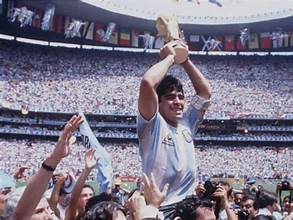
    Honestly, what I took away from this is how much we project onto these players. In 1950, a loss exposed Brazil’s deep-seated racism, while in 1954, a win gave Germany a brand-new identity. It’s wild to think that 90 minutes of chasing a ball can literally change how millions of people see themselves. Whether it’s a “national funeral” in Rio or a “rebirth” in Bern, the scoreboard ends up writing the history books as much as the sport.

  • The 1934 World Cup: When Football Met Fascism

    Mussolini didn’t just want to host a tournament; he wanted to show off “New Italy.” Everything from the massive stadiums to the way the event was organized was meant to prove that his government was efficient, modern, and powerful. It was one of the first major examples of a country using a global sporting event to boost its international reputation.

    The authors talk about the “Double Victory.” It wasn’t enough for Italy to host a cool party; the national team (the Azzurri) actually had to win the trophy to prove their “superiority.” The players were basically treated like symbols of the state, and the pressure to win the final against Czechoslovakia was massive because a loss would have been a political disaster.

    This article shows that the mix of sports and politics isn’t new. Italy 1934 set the stage for how governments use “soft power” to distract from domestic issues or build national pride. It’s a good reminder to look past the scoreboards and think about what’s actually happening behind the scenes of big global events.

  • How the Modern World Built Soccer

    In Chapter 1 of The World Cup as World History, William D. Bowman argues that modern soccer is a direct product of the Industrial Revolution and British trade. He traces the sport’s evolution from chaotic medieval “folk football” to a codified game in 19th-century British public schools, where it was formalized to teach discipline and “muscular Christianity.” The game then spread globally not through government edict, but via the “informal empire” of British sailors, railway engineers, and merchants. This unique method of transmission allowed local populations in places like South America to rapidly adopt and adapt the sport, transforming it from an elitist British pastime into a grassroots global phenomenon.

    The chapter culminates in the creation of the World Cup itself as a response to the rise of professionalism, which the amateur-focused Olympic movement could no longer accommodate. Bowman highlights the inaugural 1930 World Cup in Uruguay as a pivotal moment that immediately exposed geopolitical rifts; the tournament was marred by European arrogance and the economic strains of the Great Depression, leading many European nations to refuse the long sea voyage. This sets the stage for Bowman’s central thesis: that from its very first kickoff, the World Cup has been inextricably linked to the wider political and economic tensions of its time.

  • When the World Cup Became a Protest

    What makes this article compelling isn’t just its take on the 1986 World Cup, but how it challenges the idea that sports crowds are passive or easily manipulated. By focusing on fan behavior rather than players or matches, the author shows that disorder and noise (what Monsiváis calls el desmadre) can actually function political expression. This reframes chaos as something meaningful rather than immature or accidental, which is a powerful shift in how we think about protest.

    The argument is especially convincing because it complicates the usual narrative that governments always succeed in using mega-sporting events to control public opinion. While the PRI clearly tried to turn the World Cup into a nationalist distraction, the article explains that people can appropriate these same events for their own purposes. The stadium becomes a contested space rather than a propaganda machine, suggesting that power is never fully one-sided.

    This idea has clear relevance today. Modern sporting events from the Olympics to the World Cup to NFL games are still used to project unity and patriotism, but fans continue to resist in subtle and overt ways whether through protests chants, or symbolic actions. The article encourages us to look beyond official messaging and pay attention to how ordinary people use popular culture to push back against authority.

    The article successfully argues that resistance does not always look organized or formal. Sometimes it is loud, messy, and playful and that may be exactly what makes it effective.

  • Lucas Mammano

    Winchester: U.S

    History Ed major

    About me, I grew up with soccer around me but it never really stick with me. I played a lot of baseball and my family play college football and were vary successful. when I was little all I knew about soccer was what my friends talked about so knew about Messi being in my mind one of the best soccer players.

css.php