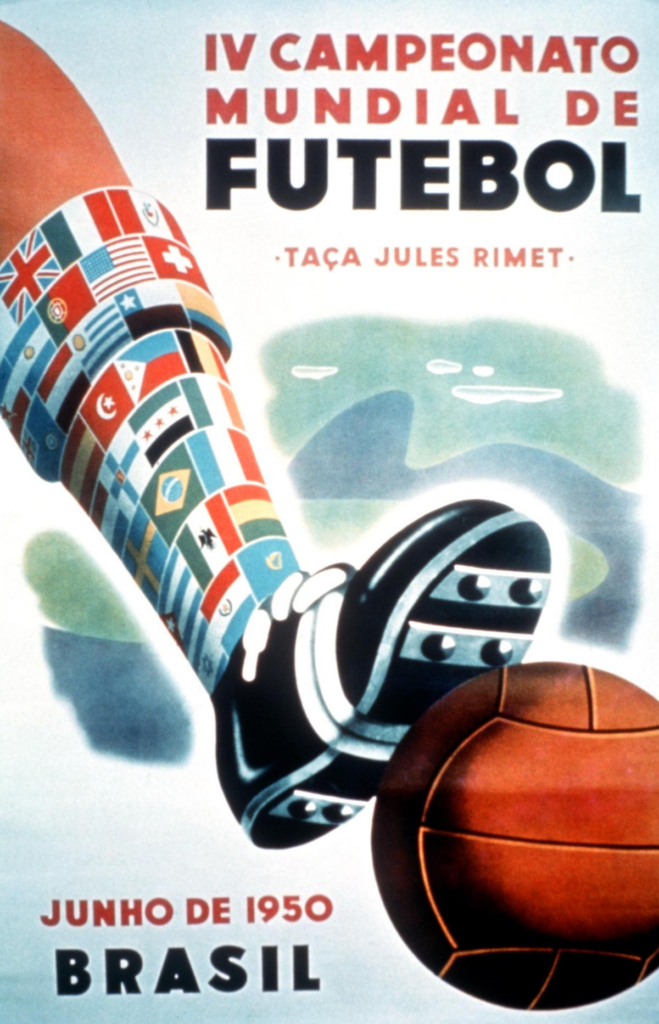
“You who I already consider champions…. you take the field as authentic representatives of Brazil who will prove the worth of the Brazilian people to the entire world”
-Eurico Dutra, President of Brazil.
This quote in my opinion encapsulates an important motif of both the Golazo reading and the Bowman reading which is that at the highest level of association football, they are essentially ambassadors to the world stage; a symbol of the country and it’s overall prowess in the eyes of the other countries at the World Cup. Being able to host the World Cup after a brief hiatus because of the Second World War was an extremely high honor for the country of Brazil, who saw this as an opportunity to push the image of Brazil being a flourishing, emerging powerhouse of the (at the time) modern world. This included the building of the Maracana, and extreme financial investment into tournament quality for the World Cup.
The point of these articles is to highlight the extreme relationship between early international soccer and the political sphere of the world, whether that be in the 1950 World Cup or even modern World Cups such as Qatar 2022. The financial lengths that Brazil went to to present themselves to the world stage proves the role that soccer has on the political climate of the globe. It was more than just a tournament to not only them, but a good bit of the world. Even with a loss to Uruguay after dominating the competition and being overtly disappointed with the outcome, the message they sent to the world that soccer in South America is powerful, and that South Americans are powerful resonated.

Leave a Reply