Author: NathanaelC

  • FInal Project: Nathanael Cox

    https://canva.link/vj63r506mrt7ikr

    My research question was “How has the German national soccer team been used as a tool for promoting social integration?” Beyond that main topic I had several sub questions. These included: To what extent has the German national soccer team’s success in international competitions influenced public attitudes towards immigration and cultural diversity? How do the experiences of players affect and reflect broader social and political dynamics? What amount of different backgrounds in fans have felt represented by the soccer team? How has the team brought people together? I decided to create a timeline focused on 6 major specific years/timespans. These points on the timeline include from the creation of the German National Soccer team to 2000, 2000-2009, 2010, 2014, 2018, and finally 2020 through the present.

    These main points in time each represent a distinct aspect of the journey that the German National Soccer Team underwent. By looking at all 6 points in time one can see the growth and setbacks that occurred during said journey. each of these points in time, I focused on several events that happened as well as the general progress of diversity and its relation to the team. I tried to include images that represented either the major event related to the time or that represented the general feel of how diversity was viewed during that time.

    There were many interesting things that I learned over the course of this project. As someone who did not have much knowledge of soccer I did not have much to go off of. The only real connection I had was that my grandmother is German and she is a fan of soccer. However, that was pretty much it. I think that seeing the pushback and setbacks in the process was something that I was not really expecting, but does make sense when thinking about it. I guess I had thought that it would have been a constant state of progress towards a more diverse team for example, but seeing the pushback against the team at certain points went against that idea. Another aspect I was surprised by was the teams state pre-2000. I had thought that after WWII the German team in particular would have been pushed by the government in an attempt to show a sense of change and distance themselves from the previous regime. However that was not the case as many previous ideologies and thought regarding diversity carried over. Once this change did start however, I was also suprised to see just how much it was pushed by the German government at times. Much of the change that I highlighted happened directly due to the German government and their attempts to use the team for political purposes. It was interesting as it was another case of a national team being heavily tied to political uses by their government, but this time in a way that went against what we had seen in class so many times.
  • Womens Soccer England v.s. U.S.

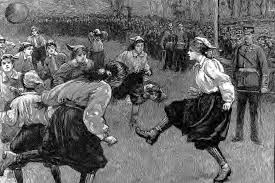
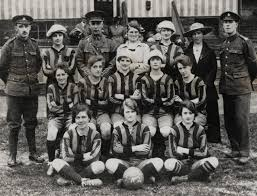
    When looking at the growth and importance of soccer, one must not confine their studies simply to men’s soccer or soccer in general. It is important to look at women’s soccer and the journey it has taken as it is much different to what many know of soccer. Specifically, women’s soccer has a much more unique origin in regards to how it first started to be played and how it was viewed. Even in this regard however, it differs from its start in England to its start in the United States, with it taking different roles in each.

    In England, women’s soccer really started to gain traction during WW1. At this time, many teams were comprised of workers and the teams were often groupings of coworkers from the same company/job. During the war men were called away to fight, so women began to fill in the workspace. Eventually they began to play games just as the men had previously. These teams often represented the companies they were comprised of or were sponsored by them. However there was intense pushback to the point that women were banned from using official pitches for their matches. However, play continued often in support of charities.

    In the United States, women’s soccer had a much different start. Rather than being centered around actual games and competition, even if for charity, women’s soccer was seen more as a safe and healthy form of exercise, especially when compared to American football. It became deeply ingrained within the school system with teams being formed tied to the schools. However, these teams did not play in leagues and there was almost no continuity to the games played.

    Overall, there were many differences between the two women’s soccer landscapes. However, there were some similarities as well. There was great pushback on both sides by fans and the men’s soccer organizations. Players were ridiculed and matches were forced to stop at times. Ultimately both sides persevered and serve as the foundations for what we know as women’s soccer today.

  • What do teams represent

    There has been much discussion revolving political thought and motivations related to soccer. Much of this has concerned the concept of hosting tournaments or the World Cup and there has often been a disconnect in these examples between the actual players and the government of the nation that they represent. However, the national soccer teams are, as one would expect, incredibly important and are often seen as representations of their nation.

    Almost, every team often receives certain characteristics attributed to them and their style of play. These characteristics in turn often influence and are the main way that fans from other nations and those that keep up with soccer view the teams nation as a whole.

    Brazil is perhaps the most recognizable of these teams with their characteristics being defined by a singular term, Joga Bonito (the beautiful game). Many think of the Brazilian team and associate them with artistic flair, style, and individual excellence. On the other side of the spectrum are the characteristics associated with the German national team. They are more so known for their discipline, structure, and teamwork.

    These characteristics are in turn applied to the nation as a whole. In many cases such as the German team in 1940, these traits are supported by their government. Germany wanted to portray a sense of strength, unity, and coordinated play that represented how they wanted their government to be viewed.

    How these teams and their play are viewed can be seen at a national level as well, not only international. This is where more breaks in the portrayal can be seen as those among the nation are usually, but not always, more aware of what is going on in relation to their own government. In Spain this can be seen through the Copa Del Rey, as it was originally called at its conception in 1903. Throughout the years, Spain has changed the name of the tournament as well as what the tournament stands for in relation to their rulers. Due to this, we see how the representation of a team is not limited to other nations and instead can represent their own local region within the nation. Many teams throughout the years have used this tournament as an opportunity to represent their region and spread awareness of their ideals throughout Spain as a whole.

  • The Individuals of Soccer

    Soccer as such a captivating and gripping worldwide sport creates numerous moments, memories, but perhaps most iconic are its players. Soccer like other sports, such as the NBA, creates legendary figures that grow to have an almost cult-like following. However, these figures and their fandom spread even further, as a worldwide sport. With any sport these figures are comprised of both heroes and villains, with each earning their respective love and hate due to their actions, personality, play style, success, etc… These individuals make up the sport as much if not more so than the actuals teams.

    In soccer the players often transcend their team itself. These heroes become so loved that even if they eventually leave the team, the fans of the team, locals from their area, and prior fans of the player stick around as fans. These players garner so much respect that when you ask someone what they know about a sport such as soccer, if they don’t follow it they are as likely if not more so to name off a player rather than a team. These players often represent the culture of the team and area that play for. They become intrinsically tied to the local life as someone that you root for and in cases of the best players you idolize. They can become ambassadors of not only their team, but the sport in general.

    If there are heroes in soccer than there must also be villains in soccer. In regards to the term villain, there are two major categories of a villain in a sport. There are those that are not necessarily villainous, indeed for some they would be the hero. These are often defined by their success either in championships or against a specific team, thus making them a villain to the teams they beat and a hero to the team they are on. There are also villains who are in fact villainous. These players are more so recognized for their foul play, cheating, and often unlikable personality. Whatever the case, having someone to root against is often just as important as having someone to root for. It provides another way to enjoy the sport, you can celebrate when someone you love succeeds and root for them to do so regardless of the team and vice versa you can root for someone to fail and not necessarily dislike their team.

  • What Soccer is?

    Soccer is one of the most if not the most widespread sport played throughout the world. Like almost every sport, it has undergone many changes throughout its lifespan, both in categories such as rules, but also in how it is viewed by fans and the world.

    Soccer used to be relatively hard to access especially in certain countries. Before the matches were televised, one either had to go and watch the game in person or hope that there would be newspaper coverage afterwards. As time has progressed accessibility to the sport has increased respectably. As such, what soccer is and what it means to people has also changed. For many soccer started out as a way to form and find community for people. Immigrants in America would often play soccer to keep their communities alive or people would join soccer groups to join said community.

    For other’s like in Uruguay during the 1970s and 1980s soccer was a form of expression. It was an outlet that allowed people to forget about their worries, but also speak out against them.

    Overtime, soccer has become more of a spectacle. This can be seen through events like the World Cup, where the entire world gathers to watch their teams compete. Due to this widespread importance placed upon the sport it has naturally become more available to more people. People who are not hardcore fans can now read countless articles and look at countless statistics in order to understand the game and its many intricacies often without even having to watch an actual game.

    Due to all of this availability, information, and different ways to consume the game, soccer’s fanbase has continued to grow larger and larger. This leads to an increase in crowds, merchandise purchases, etc… which allows soccer to continue to expand due to the increased revenue.

    In conclusion, soccer is an ever expanding sport. More and more people start to consume soccer in some way, each year. This is a compounding cycle, that allows soccer teams to continue to expand. What was once difficult to understand, watch, or keep up with, has become one of the largest and most widespread markets in the world

  • Fifa vs Soccer

    For many, Fifa is soccer. When they think of soccer they think of Fifa and the World Cup, recognizing the myriad of other leagues but relegating what soccer is to the World Cup and its related affairs. With the politics, national pride, and soccer teams competing on the biggest stage imaginable, it is easy to see how one could come to think of that. However, soccer is much more than just Fifa. Indeed, the sport itself carries much more weight and means much more to people than what one imagines when thinking of the World Cup.

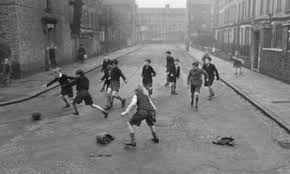
    In many ways, soccer means the most to the people playing it and also the people watching it. That may seem like an obvious statement, but there is more to it. Soccer as seen in so many cases is something that can bring people together. Whether that be on a national level in the world stage or just kids playing in the street, it holds true. Soccer is not just about the grand stages and audiences with the most prestigious trophies on the line. It is about community and a sense of belonging. It is about a form of art that people can appreciate and be drawn together by. This can be seen at the highest levels, it is true, however it can also be seen at any number of local leagues.

    Soccer is a sport where one can find themselves and find themselves a community regardless of ethnicity or race. It is method that people have used for decades to form communities or ingrain themselves into new ones. For immigrants in some cases it would be a way to keep their old communities alive while in others it would be a way to join a new one.

    While there are numerous cases of pushback against players of different race or ethnicity to the majority of where they play, it never stopped the players from being drawn to the sport. Ultimately, soccer remains a game created to have fun. It is something that can be put at the pinnacle of the sporting world or as a match between students. In either case it creates a sense of camaraderie and a multitude of connections for people who might need them.

  • How the World Cup is viewed

    The World Cup is an extremely prominent fixture in the sporting world, a competition between nations to see which soccer team reigns supreme. Due to this grand stage, there is an inevitable political aspect to the event. This political side of the World Cup is something that is used by almost all participants and is utilized in several different ways. One of the most prominent manners in which this is seen is through the media side of the competition. News stories, videos, and pictures are all a part of the World Cup and are all used to show aspects of the teams for cultural and political purposes

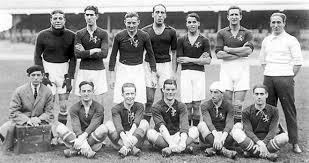
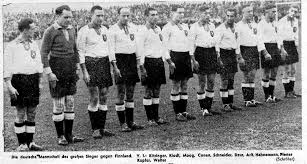
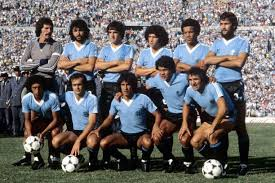
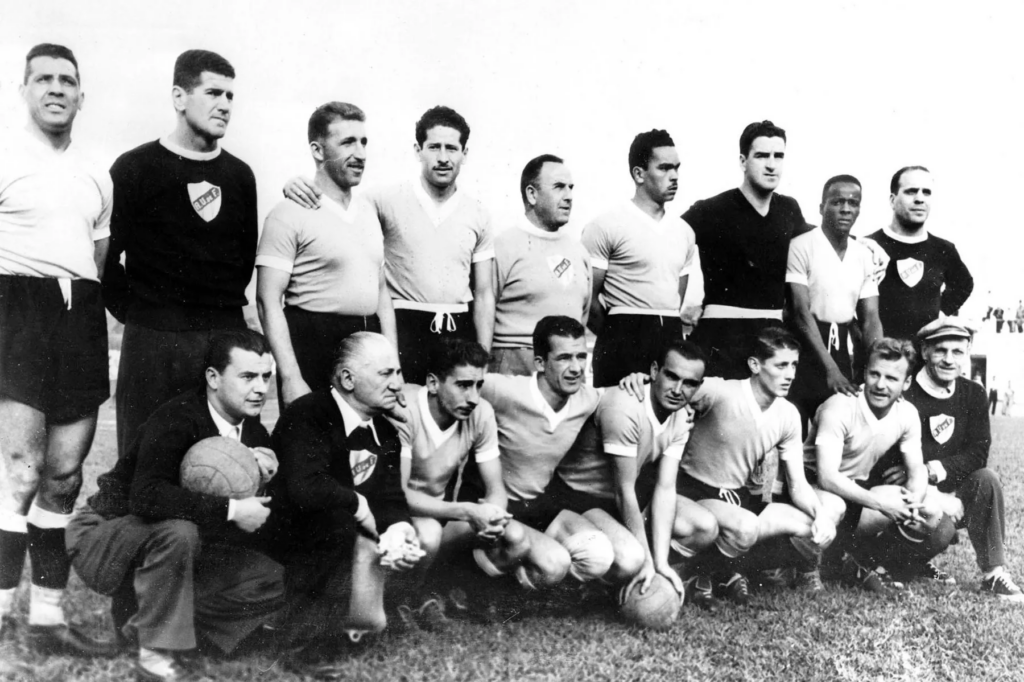
    Team photos were not only a way to commemorate the team and their possible success in the tournament, but were also a way to celebrate the brotherhood between the players. This in turn was a celebration of the nation itself and often a way of presenting a form of unity, that in some cases but not be truly representative of the situation of the nation. While some pictures such as the one above of the victories Uruguay team in 1930 can be a heartwarming piece of history, others such as pictures of the Austrian team in the 1930’s belay the political unrest that was occurring in the country. Whether from internal issues or external affairs, the World Cup for some can be a last ditch effort to present a united front and the nation as desired. Whether it is trying to be seen as modernizing or an effort to promote local soccer, how people view the World Cup and not only their nation’s performance, but behavior as well is something that seems to be almost always presented with intention.

    Something that often comes up in regards to national teams, whether they are participants in the World Cup or the Olympics is the composition of said national team. Earlier on in the World Cup’s lifespan the rules on who could play for a national team were much less strict. This often led to questions about whether or not the team playing was truly representative of the nation itself. This team composition was yet another aspect of the World Cup that could be used for political purposes. Whether it was used to promote diversity or to question the diversity, it was a prime example of how one topic could be viewed in multiple different ways depending on the presentation.

  • Politics of the World Cup

    The World Cup has become a very prestigious and popular event for teams and fans to be involved with, however it has even more implications for the nations participating in the tournament. Even more so than just participating in the tournament, hosting the World Cup is an incredible opportunity to propel many facets of a nation. Due to this fact, playing in and hosting the World Cup can lead to a very politically driven atmosphere.

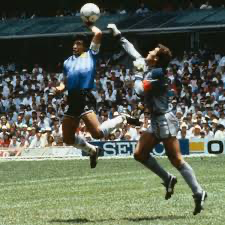
    In the case of the 1986 competition this can be seen through the tensions between Argentina and England, which many placed onto their respective teams play. Despite players such as Diego Maradona refuting these political claims, the tournament remained a politically charged environment. For both nations and even those not involved in the political tensions, winning the Cup is about more than just the team being the best, it brings prestige and influence to their home nation.

    This prestige brought about by hosting the World Cup and the desire to do so, can be seen in every nations bid to be the host nation. Soccer is an incredibly important sport in many nations that brings people together regardless of race or other beliefs. During the World Cup, if one’s national team is participating it is an opportunity to join together in support of it. The effects of hosting can be extremely beneficial due to this and other reasons. It is not unheard of for fanbases to grow disinterested with their national team due to a number of reasons or in some cases lack interest in the sport in general.

    Hosting the World Cup or signing intriguing or “big name” players are seen as two of the most effective ways to bolster interest in local sport teams. These reasons, in order to build up the sport in the nation and in turn the nation in itself, change these actions from being standard actions in pursuit of making a team better, a more politically charged choice.

    In any regards politics have become intrinsically tied to most sports at both a national and local level. These things make it so that almost any action taken by organizations and teams has political implications. They are not just taken in pursuit of creating a better team, but also in creating a more favorable outlook for their team and industry.

  • Nathanael Cox

    Hometown: Boone

    Major: History

    About: I enjoy running and most sports. I have never kept up much with soccer, so I want to learn more as I do keep up with most other sports. The few ties I had to soccer was playing it in elementary school and friends who played it in high school. I’ve always been interested about the history of specific teams in sports, which played a part in me taking this class. I also felt that with the World Cup coming up being partially played in the United States, that now was a good time to expand my knowledge of the history of the World Cup and how it is organized.

  • Womens Soccer THROUGHOUT The U.S.

    Women’s soccer is an often overlooked aspect when studying the history of soccer. While sometimes running on a parallel track as men’s soccer it is most often vastly different due to a myriad of factors. The first known women’s soccer match in the U.S. using the association rules codified in England occurred in 1893. While the two teams would play each other more than once, it did not lead to the creation of any actual clubs or schedules. The games were more so played in order to make money. This is something that can often be seen with women’s sports throughout American history. Games played are often not taken in a serious manner with an attempt to create a stable league or allow it to develop into a profession. Rather, these games are consistently seen as a novelty and while they often do garner attention do not result in any long term stability. This can be seen in as recent an event as the tennis match between Nick Kyrgios and Aryna Sabalenka that occurred in late 2025. During the second half of the 19th century, men’s sports became increasingly more commercialized. On the other hand, women’s sports largely remained limited in regards to professional opportunities. However, there was an increase in the availability of athletic activities for women. There remained a distinction between these activities with many women’s sports being labeled as “exercise” rather than an actual competitive sport. Actual women’s soccer tournaments occurred in England before in the United States, which would stand to follow reason seeing as how soccer originated as an English school game. San Francisco had a booming sports industry with baseball in particular rising to extreme popularity in the 1840-50s. San Fransisco would go on to become a hub for women’s soccer with the first long lasting league being created there. Part of the attempts to introduce both attending and participating in sports was a reactionary attempt to reconcile negative conceptions surrounding sports, baseball in particular. McNeil, the supporter of this women’s soccer league was determined to follow through with his attempts to create a long lasting league despite previous kickback to competitive women’s sports. Ultimately, despite the ideology of the day, women were slowly able to gain a foothold in both private sports and eventually competitive sporting leagues.

css.php