Author: AbramS

  • Final Digital Project

    Link to Final Digital Project: https://www.sutori.com/en/story/from-spectacle-to-survival-fifa-war-and-the-reinvention-of-the-world-cup–rUWQsC33Le2YADHYP45uzR4T

    What stood out to me most while building and reflecting on this timeline is how quickly the idea of the World Cup shifts from something that feels simple and almost experimental into something deeply tied to the world around it. At the very beginning, looking at 1930, it’s easy to think of the tournament as just the start of international football, something new, exciting, and still figuring itself out. The description of it not even being fully “world” yet really captures that feeling. It was limited, uneven, and still very regional in nature, even if it carried the potential to become something much bigger. But what becomes clear as the timeline moves forward is that it doesn’t stay simple for long.

    As I worked through the early and mid-1930s, the shift is pretty striking. Football stops being just about sport and starts becoming a tool, something that governments and nations can use to project power, identity, and even ideology. The 1934 World Cup in Italy is probably the clearest example of that. Seeing how Mussolini used the tournament as a form of political theater really reframes how I think about international sports. It’s not just about who wins or loses, but about what those wins are made to represent. That moment, along with the broader idea of football helping shape national identity in the mid-1930s, shows how quickly the game becomes tied to something much larger than itself .

    Then the timeline hits 1938 and everything starts to feel tense. There’s this sense that the tournament is still happening, but the world around it is falling apart. That uneasy feeling carries straight into 1939, where the World Cup doesn’t just change, it disappears. I think that’s one of the most important moments in the entire project. The complete halt of the tournament during World War II really exposes how dependent global sport is on political stability. It’s easy to think of sports as something separate from world events, but this moment makes it clear that they’re actually very fragile in the face of global conflict .

    What I found especially interesting during the wartime years is that football doesn’t fully go away. It survives, but in a much more fragmented and localized way. Stories like the “Death Match” of Kyiv or even the fact that the World Cup trophy had to be hidden in a shoebox under a bed show how the game continues to exist, just in completely different circumstances. It’s no longer about global unity or international competition, it’s about survival, resistance, and sometimes even defiance. That shift in meaning is something I didn’t fully appreciate before working through this timeline.

    The post-war section really brings everything back together, but not in the same way it was before. By 1945 and into the late 1940s, FIFA isn’t just rebuilding, it’s changing. The expansion of membership and the influence of decolonization show that the organization is becoming more global, but also more political in a different way. Football starts to reflect a new world order, where more nations are trying to assert themselves on an international stage. That idea carries directly into 1950, where the return of the World Cup feels less like a continuation and more like a reintroduction.

    The 1950 World Cup, especially moments like the “Maracanazo,” really drive home how much weight the tournament now carries. It’s not just a game, it’s tied to national pride, expectation, and identity on a massive scale. Even smaller stories, like the United States upsetting England, show how unpredictable and globally connected the sport has become. By this point, the World Cup is no longer just an event; it’s a reflection of a world that has gone through massive upheaval and change.

    Looking back at the project as a whole, the timeline format ended up being the perfect way to tell this story. It allowed each moment to build on the last, showing a clear progression from spectacle, to disruption, to survival, and finally to reinvention. That was the main idea I was aiming for in my rough draft, that the World Cup was never just a sporting event, but something shaped by and reflective of global realities. Seeing it laid out step by step makes that argument feel much more real and visible.

    More than anything, this project changed how I think about sports history. It’s easy to separate sports from politics or global events, but this timeline shows that they’ve always been connected. The World Cup doesn’t just exist alongside history, it moves with it, reacts to it, and in some ways, helps shape it too.
  • Week 13 Blog Post

    What really stands out between these two readings is that women’s soccer wasn’t just about whether women could play, it was about where they were allowed to play and who controlled that space. In the U.S., the game kind of grew quietly in the background, mostly in schools and physical education programs. It was encouraged in a limited way, something healthy, social, and “appropriate”, but that also meant it stayed contained. Without real leagues or consistent competition, it never fully built momentum, even though plenty of women were clearly interested and involved.

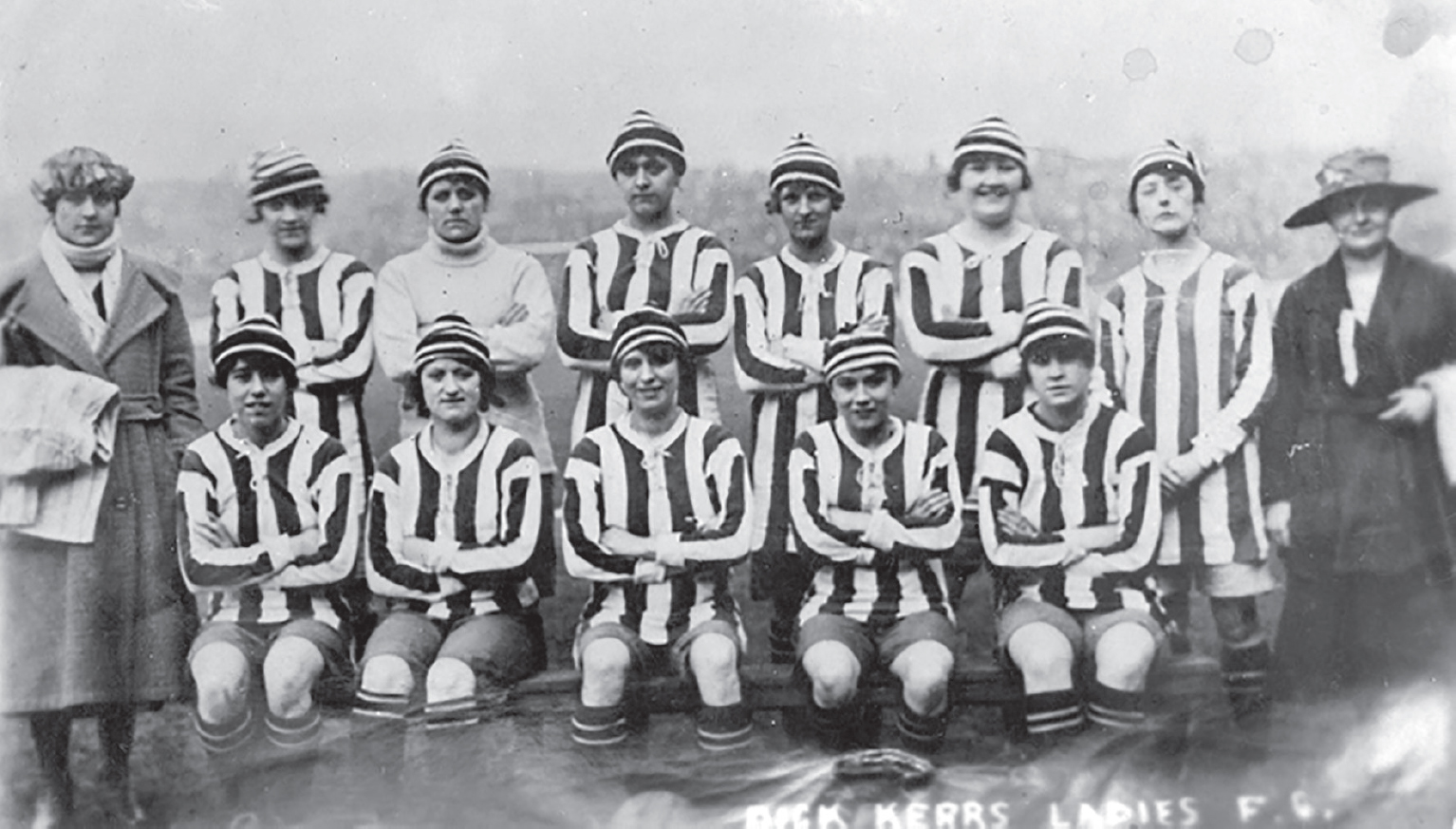
    At the same time, the international side, especially during World War I, shows a completely different version of what women’s soccer could be. With men away at war, women stepped into new roles, and soccer became part of that shift. Games were drawing huge crowds and raising money for charity, and for a moment it looked like the sport might actually stick at that level. But that visibility also created tension. Once the war ended, organizations like the FA stepped in and shut it down, claiming it wasn’t suitable for women. It’s hard not to see that as more about protecting control than anything else.

    Putting these together, it feels like women’s soccer wasn’t lacking interest or ability, it was lacking permission. In some places, like U.S. schools, it was allowed to exist but only in a controlled, low-stakes way. In others, like Britain during the war, it briefly broke through and showed what it could really become, only to be pushed back again. So the story isn’t one of steady growth, but more like stops and starts, shaped by who was willing to let women take the game seriously, and who wasn’t.

  • Week 11 Blog Post

    It’s easy to think of soccer as something that brings people together. Big matches, shared excitement, the overall collective feeling when something awesome happens. But the more you look at Spanish football, especially something like the Copa del Rey final, the harder it is to hold onto that idea. Because if anything, I believe it shows how divided people already are.

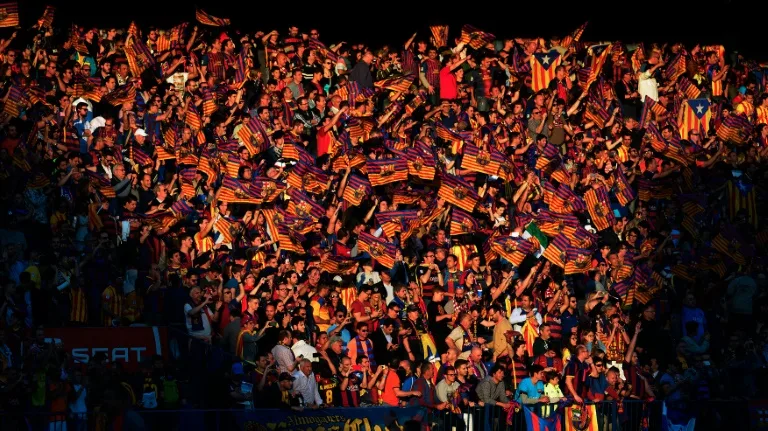
    What stands out most is how much meaning gets layered onto moments that on the surface have nothing to do with the game. The anthem before kickoff, for example, isn’t just a formality. It becomes this flashpoint. Some fans sing, others whistle, and suddenly the stadium feels less like a sporting event and more like a political arena.And it’s not spontaneous either, it’s almost expected. People show up knowing what role they’re going to play.

    That sense of expectation ties back to an older way of thinking about Spanish soccer, the idea that it reflects something essential about the country itself. The “fury and failure” narrative tried to explain everything through national character. When Spain won, it was because of passion and strength; when it lost, there was always something else to blame.

    But that kind of thinking only works if you ignore the contradictions.

    Even in the 1960s, writers were already showing that the reality didn’t match the myth. Players weren’t just fearless competitors, they were pressured, shaped, and sometimes exploited. Fans weren’t just united, they were caught up in something bigger than the game, whether they realized it or not. The sport might look simple on the field, but everything around it was complicated.

    That’s what makes modern moments like the Copa del Rey final feel so charged. It’s not just that politics has entered the sport, it’s that it was never really separate to begin with. The match just concentrates on it. All the tension, all the identity, all the disagreement gets compressed into a single moment that everyone is watching.

  • Week 10 Blog Post

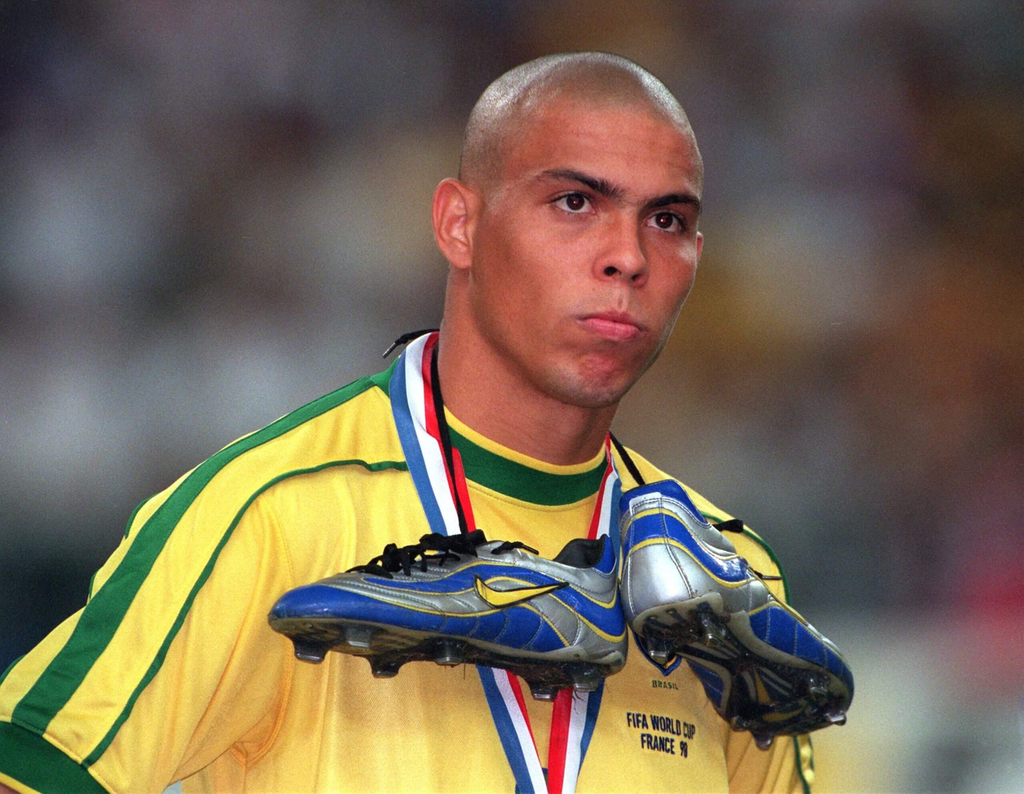
    There’s a word Brazilians use that doesn’t translate cleanly into English: alegria. It means something close to “exuberant joy,” but that definition doesn’t quite do it justice either. You know it when you see it, and in the summer of 1998, the whole world saw it every time a 21-year-old kid from a windowless house in Rio stepped onto a soccer pitch.

    Ronaldo was, by any honest measure, the most exciting player on the planet. Two FIFA World Player of the Year awards. A reported $110 million commitment from Inter Milan. Bobby Charlton calling him the best in the world, without question, on a talk show in Tokyo. The guy made a UN website crash just by showing up on it. In Italy, teammates fell to their knees after his goals and polished his boot with imaginary shoeshine rags.

    But here’s the thing about the World Cup that Ronaldo himself seemed to understand even then. Having the best players and winning are not the same thing. He said it himself, comparing Brazil to the Dream Team. Everyone knew they were better, but they still had to prove it. And that gap, between brilliance and proof, is exactly where the tournament lives. It’s what turns great players into legends, and sometimes into something else entirely. The World Cup has a long memory for both.

    Think about how many of the game’s most gifted figures have cracked under that same pressure. Maradona scored arguably the greatest solo goal in World Cup history against England in 1986 and in the same game, punched another one in with his hand. Zidane, in the final minutes of the 2006 World Cup final, headbutted Marco Materazzi in the chest and got sent off, throwing away a trophy in his last-ever act for France. Luis Suárez blocked a goal with his hand to knock Ghana out in 2010, then four years later bit an Italian defender on the shoulder in the middle of a group stage match.

    I don’t think the World Cup simply reveals talent I believe it reveals character, and sometimes the two aren’t living in the same house. Ronaldo in 1998 was pure alegria. The pressure hadn’t quite shown its teeth yet.

  • WK- 08 Well Beyond the Pitch

    When we think of the World Cup, we usually picture moments like match shifting goals, certain favorite players, and unforgettable moments that you can picture exactly where you were when you were watching it, and much of that spectacle is shaped by the tournament itself. The 1970 World Cup in Mexico is often remembered as a turning point in how the world experienced soccer. As the ESPN article by Mauro Diaz recounts, “Mexico 1970’s colorful innovations and historic landmarks put world soccer under a whole new lens,” introducing several elements that became essential to the modern game: the first World Cup broadcast in color, the debut of red and yellow cards, substitutions and even the iconic Adidas Telstar ball that defined the look of soccer balls for decades. It truly was a tournament of firsts, the first World Cup played outside Europe and South America, the first African country back in the mix since 1934, and even tactical evolutions like the “first goal with nine passes” that highlighted Brazil’s fluid teamwork. These innovations didn’t just change how the game was played; they changed how fans around the globe connected with it.

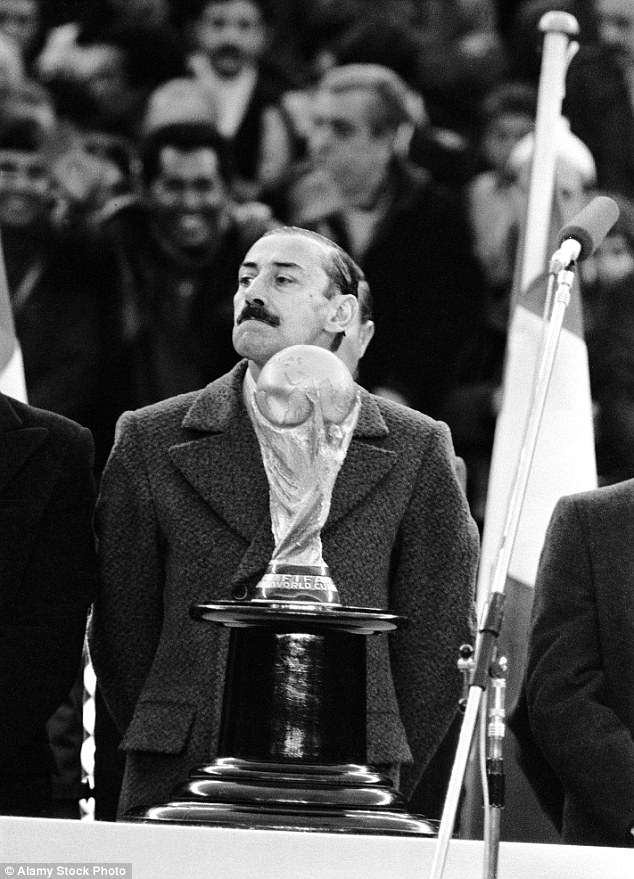
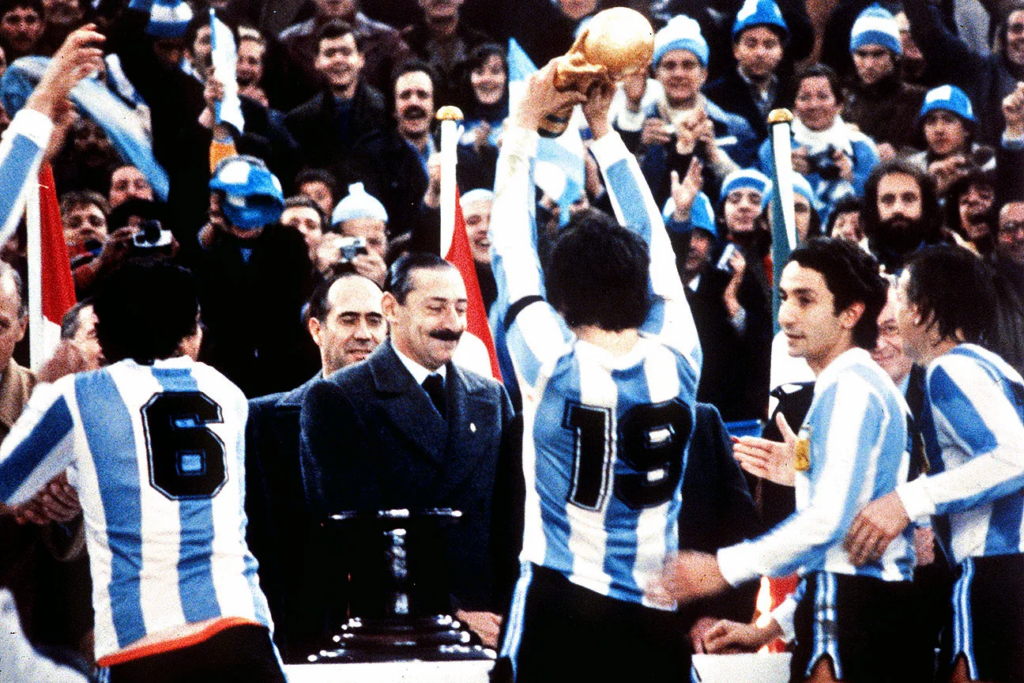
    Yet the World Cup’s power to captivate the globe means it has also been used as a backdrop for things far beyond sport. In an extremely disturbing ESPN feature article, Wright Thompson examines the 1978 World Cup in Argentina and how it is not remembered for its innovations, but for the dark political reality that unfolded alongside it. As that piece notes in the opening title, “At the same time Argentina hosted the 1978 World Cup, the nation’s dictators were waging their “Dirty War” of repression, kidnappings and torture.”

    While millions tuned in to watch Argentina lift the trophy, thousands of political prisoners suffered and died in secret detention camps. In the haunting narrative of that time, people inside Argentina grappled with cheering for national triumph while their neighbors disappeared, never to be seen again.

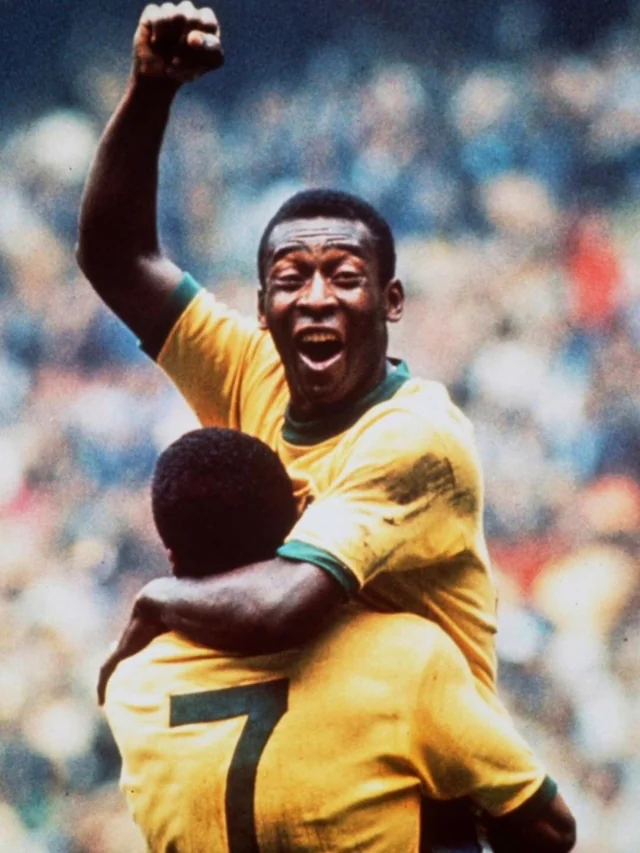
    Together, these two snapshots from World Cup history reveal something important about the tournament’s legacy. On one hand, it helped globalize and modernize soccer, innovating the way the sport is played, watched, and celebrated. And on the other hand, it also demonstrated the event’s broader cultural and political impact, sometimes beautiful, sometimes deeply troubling. Whether it’s the first time fans saw Pele’s Brazil in vivid color or the haunting echoes of a nation at war, the World Cup remains an event whose significance goes well beyond the pitch.

  • When Football Became Politics – Wk05

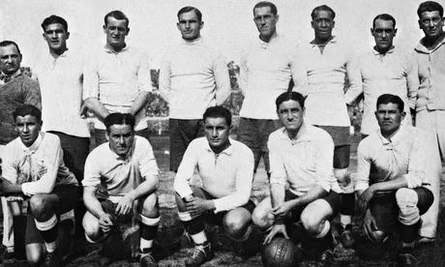
    The first-ever World Cup in 1930 wasn’t just about football,it was about proving something to the world. Uruguay, a small South American nation celebrating its 100th anniversary of independence, wanted to show its neighbors Argentina and Brazil that it belonged on the world stage. After winning back-to-back Olympic gold medals, the Uruguayans had the credentials. What they needed was the platform. But getting European teams to make the long ocean voyage proved nearly impossible. Only four showed up, and England, football’s birthplace, sent a dismissive note declining the invitation, a blunder that would haunt them for a generation. Uruguay won the final 4-2, but bitterly refused to defend their title in 1934 when the tournament moved to Mussolini’s Italy.

    What makes 1930 fascinating is how the tournament was captured and remembered. Photographers known as “Chasirettes” created images that told stories about who belonged in modern Uruguay. Women attended matches despite football being seen as a masculine space. José Andrade, nicknamed “The Black Marvel” by the French press, stood proudly in team photos despite racist attitudes of the era. Most striking was Héctor Castro, who scored the final goal despite having lost his right hand in a childhood accident. In the team portrait, he deliberately hides his disability, revealing anxieties about projecting a “perfect” national image even as these photos celebrate diversity.

    The 1930 World Cup marked both a peak and an ending. Uruguay’s progressive era, with labor rights, women’s suffrage, and economic prosperity, created the conditions for hosting. But within months, economic depression triggered authoritarianism across Latin America. Meanwhile, the 1934 tournament in fascist Italy showed football’s darker potential. Mussolini used the World Cup as propaganda, and Italy’s controversial victory fueled aggressive policies. The pattern was set,  football had become inseparable from politics, nationalism, and power, a reality still playing out in World Cups today.

  • Chapter 1 Bowman: Soccer Was Never Inevitable

    Soccer’s rise to global dominance can feel so obvious today that it is easy to assume it was inevitable. But in the nineteenth century, soccer was only one of many sports competing for attention. Horse racing, boxing, hunting, and other organized games all vied for popularity. What allowed soccer to pull ahead was not fate, but timing. As industrialization and urbanization reshaped daily life, people gained more structured leisure time. Soccer fit neatly into this world. Once its rules were standardized in England, the game became easy to understand, easy to organize, and easy to play almost anywhere, which allowed it to spread quickly beyond its original setting

    That spread was helped by something deeper than rules alone. Long before modern soccer existed, societies around the world had their own kicking and ball games. From cuju in China to the ritual games of Mesoamerica, these practices were central to cultural and religious life. While they were not direct ancestors of modern soccer, they mattered because they created a sense of familiarity. When soccer arrived in new places, people could connect it to older traditions and even claim a historical relationship with the sport. In this way, soccer carried both history and myth, allowing it to feel local even as it spread globally.

    In England and across Europe, modern soccer was shaped by attempts to impose order. Codified rules and formal organizations promised discipline and structure, and many elites believed soccer could help control and direct the energies of urban populations. Yet the game rarely behaved as planned. Violence, gambling, and unruly crowds followed this game wherever it went, reminding authorities that the sport could not be fully controlled. Soccer was organized, but never entirely predictable, and that tension became part of its identity.

    European powers introduced the game to colonial territories as part of a broader civilizing mission, assuming it would reinforce social and racial hierarchies. Instead, soccer often exposed their fragility. Colonized peoples learned the game, embraced it, and eventually challenged imperial powers on the field. By the early twentieth century, soccer had grown too large to manage informally, leading to the creation of FIFA in 1904. From the start, the global game was shaped by politics, power, and inequality, ensuring that soccer was never really just a game played for fun.

  • Week 03 Zayu/How the World Cup Serves Power

    When you analyze these two readings together they suggest that the World Cup has rarely ever been just a sporting event. Instead, it repeatedly becomes a tool through which political and economic power is exercised, disguised, or even defended. Whether through authoritarian regimes seeking legitimacy or private business networks consolidating control, the tournament often promises national unity while serving interests that extend far beyond the pitch.

    The case of Mexico 1970 shows how this process does not always rely on overt state control. Unlike Argentina in 1978, Mexico’s government was not the primary architect of the World Cup’s meaning. Instead, private businessmen tied to soccer administrations and television broadcasting shaped the event’s purpose. What mattered most was not reimagining the Mexican nation or addressing political realities, but transforming soccer into a televised product. The World Cup became less about civic identity and more about spectatorship, commercial reach, and media dominance. National imagery still existed, but it was secondary to the logic of trying to selling soccer globally.

    The broader historical chapter on the politics of the World Cup helps clarify why this shift matters. Across multiple tournaments, governments have repeatedly treated soccer success as a shortcut to political legitimacy. Argentina’s 1978 victory briefly masked the violence of the military dictatorship, but the celebration could not erase repression or economic instability. Similar patterns appear elsewhere; hosting or winning the World Cup creates emotional unity, but that unity is temporary or fragile. Once the tournament ends, unresolved political and social problems resurface, often more clearly than before.

    What connects these cases is the illusion of permanence. Whether driven by authoritarian regimes or corporate networks, the World Cup offers a powerful emotional moment that feels transformative but rarely produces lasting change.

  • Abram Stubbs

    Hometown: Brevard, NC

    Major: History Multi-Disciplinary w/Concentration in Education

    About: Full transparency, I know very little about the sport of soccer. I love sports in general, Baseball, Basketball, Football, and can talk extensively about all of them. However, soccer is a sport I lack any extensive knowledge in. So, one of my biggest reasons for participating in this class is to step out of my comfort zone of things I’m interested in and try to learn something new. I live with 7 other guys who all adore soccer, up early for Premier League matches Saturday and Sunday mornings, and their love for the game has definitely begun to wear off on me. The 2022 World Cup is the first time I began to watch soccer and genuinely care about the game. So my goal for this class is to grow in my historical knowledge of the sport in order to more enjoy the upcoming games happening this Summer.

  • Week 01 – Zayu

    When read together, the stories of Cole Palmer and Curacao show how football can turn inherited roots into something both personal and shared. Neither article is really about tactics or results. Instead, they highlight how identity, migration, and memory continue to shape the game, especially for small Caribbean nations that rarely sit at the center of global attention. Palmer’s connection to St Kitts and Nevis is quiet, but it carries real weight. He did not grow up there, and he represents England internationally, yet the flag stitched into his boots says more than any press statement could. It links his success back to his grandfather’s Windrush era migration and forward to an island community that sees itself reflected in his rise. What makes the gesture matter is that it feels genuine. Palmer is not trying to brand himself or perform an identity for an audience. He is simply acknowledging where his family comes from, and in doing so, he turns a personal history into something others can take pride in. Curacao’s World Cup qualification tells a similar story on a much larger scale. Most of the squad was born in the Netherlands and had other, more visible international options available to them. Choosing Curacao meant long travel, fewer resources, and less exposure. But as the article makes clear, this choice was about more than career calculation. Representing Curacao allowed these players to turn ancestry into commitment. Wearing the badge was not just a technical eligibility decision; it was an emotional one. What connects these two stories is the way football gives legitimacy to identities shaped by migration. For both Palmer and Curacao’s players, belonging is not defined strictly by birthplace or residence, but by memory, recognition, and choice. In a sport often dominated by money and power, these moments remind us that meaning does not always come from trophies or rankings. Sometimes, it comes from simply being seen. Together, the articles challenge the idea that globalization has weakened national identity in sport. Instead, they suggest that identity has become more flexible, and more intentional. Small nations and communities are not fading from the global game. They are finding new ways to assert themselves, carrying their roots forward.

css.php