Category: Digital Project

  • My project

    Switzerland: The Ultimate “Neutral Ground”

    You have to remember the headspace of Europe in 1954. Most of the continent was still a total mess. People in the UK were literally still using ration books for food until that July. Then you look at Switzerland: no bomb damage, fully functioning trains, and zero food shortages. It was this “Island of Peace” in a sea of reconstruction.

    For FIFA, picking Switzerland wasn’t just about their HQ being in Zurich; it was a strategic move. With the Cold War heating up, Switzerland was the only place where teams from the Eastern Bloc (like the legendary “Magical Magyars”) and the West could play without it turning into a diplomatic nightmare. It was basically the only safe space for a global party.

    The First “Modern” World Cup

    What’s even cooler is that this was the moment football went “tech.” This was the first World Cup ever televised. Thanks to the Eurovision network, people across Europe could finally watch the drama live instead of just reading about it the next day. It turned the sport from a stadium event into a global media phenomenon.

    And if you’re into sports gear, 1954 is basically the origin story of Adidas. In the final (the “Miracle of Bern”), the pitch was a total swamp because of the rain. The Germans actually won because they had these new screw-in studs from Adi Dassler that let them keep their footing while the Hungarians were sliding everywhere. It’s a classic example of how tech can close a talent gap.

    The “Miracle” and National Identity

    The biggest takeaway for me, though, is the psychological impact. For West Germany, winning this wasn’t just about a trophy. It was their first real “win” as a country after the horrors of WWII. Historians literally say the Federal Republic was “born” in that stadium in Bern. It gave a traumatized population a reason to feel like they belonged to the international community again.

    TL;DR

    The 1954 World Cup was the bridge between the old, broken world and the high-tech, televised era we live in now. It proved that football could be a neutral ground for healing, even when the rest of the world was divided. If you want to understand how sports became the massive cultural force they are today, you have to start with that rainy summer in the Alps.
  • Corruption, Crisis, and the 1986 World Cup

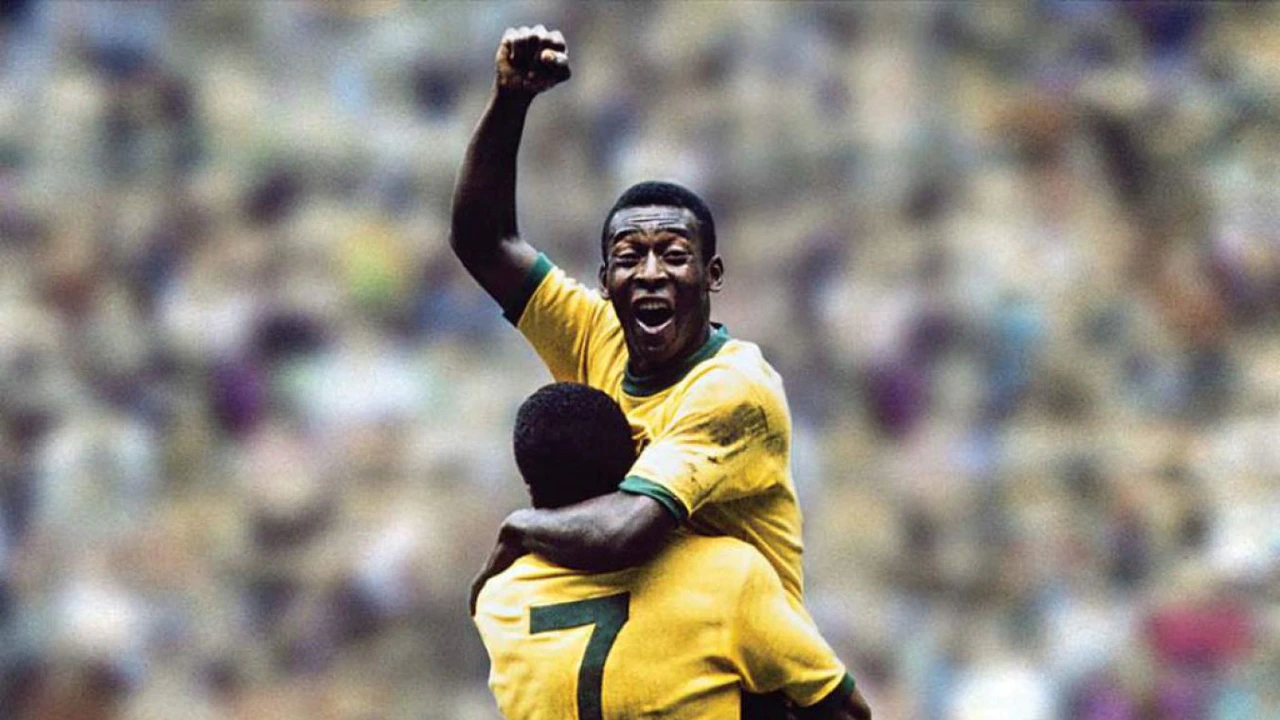
    I have always been in love with soccer and especially when it comes to Mexico. I grew up watching the games with my family and cheering for Mexico no matter what. It’s a sport that unites all of us and makes us feel the most patriotic ever. That is why I decided to base my research on the 1986 World Cup based in Mexico with it also being their second time as hosts. Prior to the 1986 World Cup kick off Mexico was surprised by a deadly 8.1 magnitude earthquake on the morning of September 19, 1985. It struck at the time where many people were just starting to wake up and get started on their daily routine. Within seconds tens of thousands of Mexicans lost their lives and thousands buried in rubble. It sent the capital into complete chaos and the government was nowhere in sight. During the time Mexico was under a sort of dictatorship as El PRI the one party to dominate the political landscape in Mexico was now being uncovered for their deep corruption. Their priority became to assure that the outside world could see them as strong and resilient and still capable enough to host the upcoming World Cup. Unfortunately the severity of the situation was too extreme and Mexico had to ask for outside help. While the people of Mexico were left to fend for themselves they had to dig up their own family, friends, and neighbors. Help came within your everyday people and not from the government. The corruption we can see more is the intertwined relationship of El PRI and Televisa. They made sure to be there for each other and back each other up. Televisa would block any bad press against El PRI and their response to the earthquake in return Televisa was given total rights to the 1986 World Cup. Unfortunately this corruption still occurs and Mexico faces these issues as we saw with the other devastating earthquake in 2017 on the 32nd anniversary of the 1985 earthquake. The corruption of the buildings that collapsed once again shined light on this ongoing issue. Overall the issue still occurs and researching this topic helped me a lot to learn more about the 1986 World Cup.

    https://arcg.is/1qzzGC1

  • The controversies of the 2018 and 2022 world cups – Daniel Blockley

    For my project I chose to look into the controversies behind the 2018 and the 2022 world cups and make a video, I mainly focused on the bidding process but also touched on the human right an ethical concerns. Russias corruptions was mainly due to power after they had been given the world cup not bribery or any thing to that extreme. Qatars bidding process was the opposite, lots of accounts showed vote trading and illegal corruption yet due to the rules back and the lack of transparency FIFA could not be held responsible.

    I was drawn to this idea as it fairly recent and growing up watching the world cups I knew about the controversy but have never looked into it more. I found that relating historical work in a different way to the norm was a fun way to get across information whilst making it a bit more fun and easier to follow. For me a hard limitation was the time limit for my video I found I needed to cut bits out to make sure I could stay within the limits.

    Here is my video –

  • USA and Mexico Men’s National Team’s Dominance Within CONCACAF

    For my project, I looked at the U.S.A’s and Mexico’s men’s national teams and the reasons as to why they have been so dominant in North American football. The two nations have a significant amount of economic and structural leverage over the rest of the region which is why they have been able to sustain dominance for many years. Mexico’s love for football on a very large scale has allowed them to produce lots of competitive young players year after year, while the United States has by far the largest economy in North America and some of that has more recently gone into the sport and its domestic league, while also sending younger players abroad to play in more competitive leagues where they could become better players. I found that many other nations in CONCACAF simply do not have the footballing infrastructure nor the financial might to compete with these two for prolonged periods of time and have attempted to use other strategies to compete at least for the short-term, such as dual-national recruitment.

    Originally I found 5 good primary research-based sources that helped me develop some key points to my argument, and over time I figured that I would incorporate some football databases like Transfermarkt and the CIES Football Observatory to help contextualize my argument a bit better as well. Though they may not be as “academic” as my original sources, the information that I was able to gather from them was valuable and helped me considerably in my research. I decided on using a video as my main digital tool since I felt that would be the best way to get my main points across. I used Canva for most of my graphs and charts to help visualize some of the statistics used in the video, as well as Clipchamp to put all of the visuals and voiceovers together. 

    Here is the video: https://drive.google.com/file/d/1JVyqnNrk06145KE6QXfSK1_yCxfQip9v/view?usp=sharing

  • Political Football in the Middle East

    This is a link to the map that I created using Google Maps in order to provide an argument for why Middle Eastern football is innately more political than in other regions of the world (South America for example). A lot of the focus of this map project is on Iran but I have also decided to include pins and stories for Turkey, Armenia, Israel, and Palestine as well in order to not have the focus solely be on Iran. This was a fun and interesting topic to research as it has helped me to better understand the connections that lie intertwined between sports and politics. One of my aunts and her family comes from Iran and much of her family still lives in the region so when narrowing down the focus for this particular research project between certain regions of the world I drew upon my familial connection to the Middle East. I firmly believe that Google Maps was one of the most appropriate tools to use to make my research come to life because of the story telling element that travels between different countries in the Middle East as well as the multimedia tools that are included with maps such as embedding photos and images to map pins that the user creates. In the future I would like to explore using StoryMaps just to see the differences between the two map creating tools and compare them.

    https://www.google.com/maps/d/u/1/edit?mid=1Tkx8YOnJmhZvMoPV17X97QutYv1T_Hg&usp=sharing

  • Religious & Political Tensions in Fandoms – Tommy Oneto – Final Project

    I chose for my topic to focus on soccer fans from the countries of Scotland, Ireland, and Northern Ireland. For this project I wanted to showcase how the tensions between fans in these nations give a look into the political and religious hostilities in the region. For Scotland, I primarily focused on Sectarianism that is shown in how fans of teams interact, primarily between the Irish-Catholic descendent fans of Celtic FC, and the Protestant fans of Rangers FC. For Ireland, and Northern Ireland, I also focused on Catholic and Protestant tensions, but with the addition of Irish Republicanism and British Loyalism.

    Using the tool, Omeka, I was able to create a website that people can look at on their own time that makes the argument that Football fandoms can showcase historical political tensions between groups of people. I hope that it was able to convey that argument to the best of my ability.

    Overall, this project has made me view fanbases, not just in soccer, but in all sports, completely differently. I wasn’t aware of how much politics can be seen in sports, especially in rivalries of local teams, and it has made me view fandom in a new lens that I quite frankly wasn’t look through before.

    Here is the link to the website: https://onetotj.omeka.net

  • Beyond the Barrier Digital Project

    I chose my topic for my digital project as an analysis on racism and the treatment of black soccer players around the county in “statistically non-black countries.” I define this for the sake of my project as a country that, quantitatively, has black people as a minority in their population, or a country that historically and culturally has seen and treated black people as a minority. With the tool I used, StoryMapJS, I used the value of showcasing location aswell as placing my points in a chronological point to showcase the evolution of the treatment and acceptance of black players into their respective societies over the years, taking information all the way from the late 19th century all the way to just a few years ago to truly encapsulate the time aspect of how racism and acceptance of minorities develops. This combination of the chronologic factor aswell as the geographical factor showcased by the map and it’s pacing is a beautiful and sturdy combo that I hope people will appreciate and understand.

    While there were some other places I did plan on researching for this project, such as East Asia, Australia, and maybe a bit more coverage into North America, I believe this research project does a successful job of showcasing the evolution of this issue aswell as how this issue is different, but also extremely similar in different parts around the world. I am sure that these places I listed would have supported my research, and I also believe that examples of racism both early on and nowadays in the global soccer world is not hard to come by, and showcasing even more examples for this project would have strengthened my research.

    I chose this topic after some thought when this project was introduced to us because I feel it’s something important to highlight. I find that for alot of these much older athletes in my project, being able to defy societal norms and get up on extremely large stages, knowing that there were going to be dissenters and people that were going to hate them almost solely based on skin color, and still doing it anyway is extremely moving to me, and shows their strength and power.

    I hope you take the time to look through this work of mine and appreciate both the time I placed into it, aswell as understanding and sitting with the stories and examples I present in this Storymap and how the things I talk about affect our world today. I look forward to hearing from everyone and also seeing everyone else’s work!

  • Beyond the Pitch: Women, Power, and Policy in FIFA – Final project – Hannah Bumm

    Working on this project about women’s influence in FIFA soccer definitely changed my perspective of the history of the sport, and soccer in general. Before starting, I knew soccer was a male-dominated sport, but I didn’t fully understand how much that inequality was woven into the game’s history. Learning about things like the 1921 ban on women’s soccer and the long-standing lack of funding and media coverage made it clear that these barriers weren’t accidental, they were part of a larger system that limited women’s roles for decades. At the same time, what stood out most was how persistent women have been in pushing back, whether through organizing their own matches, advocating for equal pay, or working their way into leadership positions.

    One of the most interesting parts of researching this topic was seeing how change has developed over time. It’s easy to look at where soccer is today and assume progress just happened naturally, but that’s not really the case. Women had to actively challenge the structures that excluded them, especially within organizations like FIFA. Learning about female referees officiating matches and women gaining leadership roles showed me that representation isn’t just symbolic, it actually impacts decision-making and the direction of the sport. It also made me realize that soccer reflects larger social issues like gender inequality, but it can also be a space where those issues are confronted and changed. At the start of my research, I did not fully grasp how many aspects go into the fight for equality in soccer, such as media viewing, unequal pay, and leadership opportunities.

    Using Prezi as a multimedia outlet changed the way I approached the assignment. Instead of just focusing on writing, I had to think about how to present my argument visually and in a way that would keep people engaged. Including images, videos, and music helped highlight the contrast between my sections. By having a clear timeline build within my project, I wasn’t only able to show the different aspects of the history of women’s soccer, but also show the progression. This project also pushed me to think more about my audience and how to communicate ideas effectively beyond just text.

    Overall, this project made me see soccer as more than just a game. It’s also a space where power, culture, and social change intersect. Women’s growing influence in soccer isn’t just about inclusion, it reflects a larger shift toward equality and recognition. Even though there’s still progress to be made, it’s clear that women have already had a major impact on the sport. This project not only deepened my understanding of soccer, but also showed me how sports can serve as a platform for meaningful change.

    https://prezi.com/view/fIGtyXfFyERIzXlmlr79/?referral_token=Hpjo6-lnB3FN

  • Digital Project By Grayson Banks

    This multimedia project really helped me to present my entire thesis on how immigration has affected international football and national identity in a fun and entertaining way. I chose to make a Google map with points on different countries across the globe that have a history of immigration in relation to international football, and how having a higher number of immigrant players on a team affects a country’s national identity. 

    I was able to incorporate links to relevant articles that expanded information on my topics and provided a great overview of some of my topics, like the articles about Jamal Musiala I linked in the Germany section, which talks about the young wonder kid deciding to switch from the English national team to the German national team. I was also able to use YouTube videos to show teams’ rosters like the 2014 German national team or the Malian national team, which have a large number of players with different cultural and ethnic backgrounds. I not only included YouTube videos in my research project, but I also included at least three images per point that showed national teams, maps breaking down ethnic areas, and charts that show immigration patterns. I also included images to mark important points on the map. I tried to make sure I used brighter images to contrast the boring background colors that were provided to me by Google Maps. I tried to use countries’ national teams’ logos for most of the points, but for a few points, I wanted to focus more on a specific World Cup, and for those countries, I chose to use a poster from the world cup im wanting to focus on. 

    One drawback I ran into while trying to create my digital research project was the confusing format of Google Maps. The format made it kind of hard for me to formulate my ideas for this project, and I would not recommend that someone create their own Google Maps to complete this project. There are alot of better alternatives to use instead of Google Maps, and if I had known about them before I put alot of my information on Google Maps, I would have used something like Story Maps instead. 

    This was a really fun and interesting way to learn about a specific topic in relation to the World Cup and global competition. Being able to find a way to incorporate multiple different types of media into the project made it alot more complex and interesting to research. It also made the research project more enjoyable as I was just finding text and quotes for something like an essay that I could use to prove my point; instead, I got to watch YouTube videos and search for images, which helped me to learn more about the topic and create a better-looking final project. 

    Link to Project

css.php