Author: WestonS

  • Digital Project- Weston

    For my digital sport history project, I created a StoryMap timeline titled Development, Identity, and Global Legitimacy: The U.S. Men’s National Team in Global Soccer. This project examined the history of the U.S. Men’s National Team with a focus on the gap between youth development success and inconsistent senior-level international performance. My main argument is that this gap is not simply about talent, but instead is shaped by structural and cultural factors such as the pay-to-play system, the late development of professional leagues, and the increasing globalization of player development. Using the StoryMap format allowed me to organize this argument through key moments in time, including early immigrant soccer communities, the NASL era, the 1994 World Cup, the creation of MLS, youth national team success, and more recent changes in player development.

    One of the biggest benefits of using a digital format like StoryMapJS is that it allows historical work to be presented in a more interactive and visual way. Instead of just reading about events, viewers can move through time and space, seeing specific locations tied to historical moments such as the Rose Bowl in 1994 or Trinidad in 2017. Finding images, videos, and maps for each slide actually helped me better understand the history because I could visualize the events and contexts I was writing about. It also made the project feel more like telling a story rather than just presenting information, which I think makes the argument clearer and more engaging. The digital format also allowed me to combine primary sources, like photos and match footage, with secondary research, which made the project feel closer to how historians actually work with evidence.

    At the same time, there are some drawbacks to this type of project. One challenge was making sure the argument stayed clear while also using images and media effectively. It is easy for a digital project to become more about visuals than analysis if you are not careful. I also ran into technical issues, such as images not loading correctly, which can affect how the project is presented. Another limitation is that you cannot include as much detailed writing as you would in a traditional paper, so you have to be more selective about what information you include. Because of this, I had to focus more on key moments and themes rather than trying to include everything I learned in my research.

    Overall, this digitally-infused research assignment helped me think about history in a different way. Instead of just writing about the past, I had to think about how to present it visually and how to guide an audience through a historical argument. The StoryMap format made it easier to show change over time and connect different moments in U.S. soccer history to a larger argument about development, identity, and globalization. While it comes with some challenges, I think the digital format is a powerful way to present historical research in a way that is both engaging and analytical.

    StoryMap Link: https://uploads.knightlab.com/storymapjs/ad9574865f02efa722730a1cd6fff217/development-identity-and-global-legitimacy-the-u-s-mens-national-team-and-the-role-of-youth-success/index.html

  • Playing Against the Odds: The Fight for Women’s Football

    One of the most interesting ideas in Chapter 7 of The History of Women’s Football is that women have always played the game, even when they were told they couldn’t. Women’s football didn’t just suddenly appear in the modern era; it has existed for decades, but it has constantly faced barriers like bans, lack of funding, and negative stereotypes. Instead of growing naturally like the men’s game, women’s football has had to fight for survival at every stage of its development.

    This idea connects strongly with the epilogue from Futbolera, which shows that even today, women’s football is still dealing with many of the same problems. For example, the reading explains how women’s teams in Latin America often receive very little funding, barely get to practice, and sometimes are not even active for long periods of time. While men’s teams travel the world and receive large salaries, women’s teams can struggle just to get basic resources like transportation or training facilities. This shows that even though the sport has grown, the inequality between men’s and women’s football is still very large.

    Another important point is how women players themselves have been the driving force behind the sport’s growth. In Chapter 7, women continue to organize teams, leagues, and competitions despite not receiving support from official organizations. This same idea appears in Futbolera, where players create unions, protest unfair treatment, and build grassroots leagues to keep the sport alive. The formation of groups like national player associations shows that women are no longer waiting for change; they are actively demanding it.

    The readings also highlight how media and culture play a role in slowing down progress. Women’s football often receives little coverage, and when it does, it is sometimes overshadowed by sexist attitudes or objectification of women athletes. This lack of visibility makes it harder for the sport to grow, because fans are not given the same opportunities to follow and support women’s teams.

    Overall, both readings show that women’s football has evolved through persistence rather than support. The sport has survived because of the dedication of players and fans, not because of strong institutional backing. While there have been signs of progress in recent years, the history of women’s football makes it clear that there is still a long way to go before true equality is reached.

  • Cathedrals of Football: Stadiums, Crowds, and the Power of the World Cup

    One of the most interesting ideas in Chapter 9 of Golazo! is how soccer became much more than just a sport in Latin America. Over time, football evolved into a massive public spectacle that represents national identity, pride, and culture. Instead of simply being a game played between two teams, soccer became something that entire countries rally behind, especially during major tournaments like the World Cup.

    This idea connects strongly with the concept of football as a global spectacle described in the reading. Modern football is often presented almost like entertainment or theater, where the excitement of the match, the atmosphere of the stadium, and the drama of the players all come together to create a larger experience for fans. The game itself is important, but the environment surrounding it, the massive crowds, the iconic stadiums, and the emotional investment of fans make football feel much bigger than a normal sporting event. The World Cup, in particular, attracts millions of viewers and fans around the world, turning matches into shared global moments.

    Another key part of this spectacle is the role of stadiums and crowds. The reading explains that some stadiums have almost mythical status because of the huge crowds and historical matches they have hosted. For example, famous stadiums like the Maracanã in Brazil or Wembley in England are often described as “cathedrals” of football because of the emotional energy they generate during big games. These stadiums are not just buildings where games are played; they symbolize national pride and the importance of football in a country’s culture.

    Campomar also shows how this passion for soccer developed in Latin America through decades of competition and cultural influence. Countries such as Brazil, Argentina, and Uruguay helped shape the global identity of football through their style of play and legendary players. As these nations became successful in international tournaments, soccer increasingly became tied to ideas of national greatness. Fans didn’t just support teams; they supported the reputation of their country on the world stage.

    Overall, both readings show that football’s evolution has transformed it into one of the most powerful spectacles in global culture. The sport brings together massive crowds, iconic stadiums, and national pride in a way that few other activities can. Because of this, the World Cup is not simply a tournament; it is a global event where sport, culture, and identity all come together.

  • Behind the Stadium Lights: The World Cup and Hidden Political Realities

    The ESPN article on Argentina’s Dirty War and the reading on the 1962 World Cup in Chile both focus on how countries use the World Cup to present a positive national image to the world, even when serious political or social problems exist at home. A shared theme across these readings is that hosting the World Cup allows governments and national leaders to promote unity and progress, but the reality on the ground often tells a more complicated story.

    An example of this appears in Argentina’s 1978 World Cup. According to the ESPN article, the military dictatorship invested heavily in stadiums, infrastructure, and media promotion to portray Argentina as modern and successful while it was secretly carrying out kidnappings, torture, and killings during the Dirty War. Matches were played and celebrations occurred even as prisoners were held in detention centers nearby. The tournament created a sense of national pride and excitement, but it also functioned as a distraction that helped the regime hide repression from both international audiences and many citizens.

    Chile’s 1962 World Cup shows a similar use of sport to shape national image, though in a different political context. The Chilean organizing committee promoted the country as democratic, modern, and socially harmonious, emphasizing that racial and political divisions supposedly did not exist. Official publications described Chile as stable and unified to attract foreign visitors and improve its global reputation. However, the same reading reveals that this image masked deep internal conflicts, including class tensions between amateur and professional clubs and inequalities affecting working-class communities. The World Cup spotlight, therefore, highlighted Chile internationally while hiding domestic struggles. Both cases show that the World Cup often creates a national narrative that is cleaner and more positive than reality. In Argentina, the contrast was between global celebration and state terror. In Chile, it was between projected unity and underlying social divisions. In each situation, hosting the tournament allowed leaders and organizers to frame the nation in a specific way for global audiences.

    Taken together, these readings suggest that the World Cup is not only a sporting event but also a powerful tool of national storytelling. Governments and elites can use it to emphasize progress, stability, and pride, even when those qualities are contested or incomplete. Yet the gap between image and reality does not disappear. Over time, historians and citizens reinterpret these tournaments in light of what was happening behind the scenes. Both Argentina 1978 and Chile 1962 show that the World Cup can simultaneously represent national hope and conceal national problems.

    Weston Scambler, Maple Group, Week 8.

  • More Than a Jersey- Week 7

    This section of The World Cup as World History by William Bowman, along with the articles on Afro-European players and Brazil’s World Cup legacy, all focus on how race and heritage have shaped the way fans and nations view their own teams. A common theme across these readings is that players representing a country but from different racial or ethnic backgrounds are often judged as outsiders, until success forces the nation to reconsider who truly belongs.

    An example of this appears in discussions of European national teams with immigrant backgrounds, often described as “Afro-European” squads. As immigration increased in countries like France, Germany, and the Netherlands, national teams began to include players whose families came from Africa or other former colonies. Even when these players were born and raised in Europe, fans and media often questioned whether they were truly national representatives. Bowman explains that the World Cup exposes these tensions because it places national identity on display in a highly emotional setting. When diverse teams succeed, they challenge older ideas that nationality must equal ethnicity.

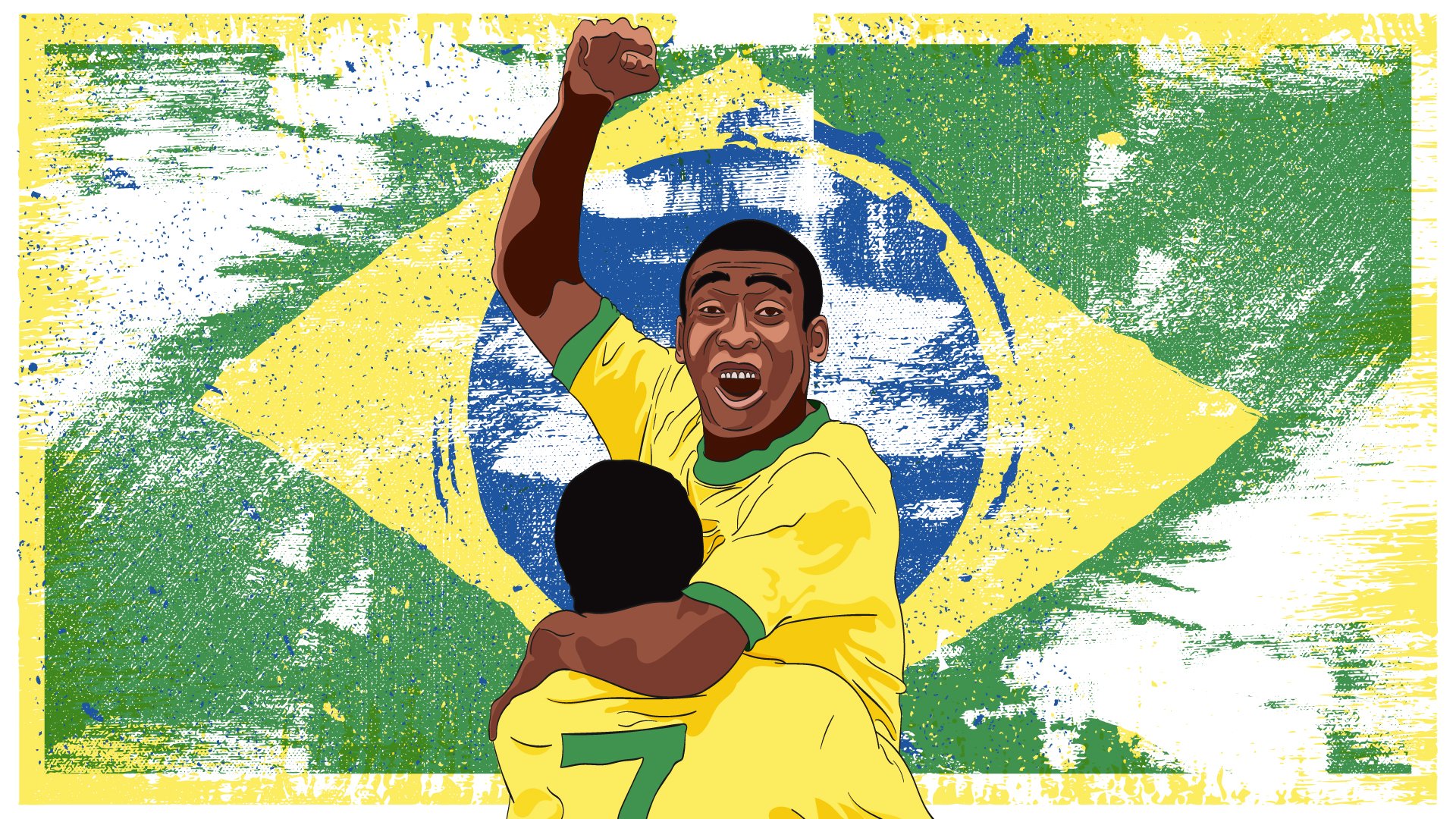
    Brazil’s history shows a similar pattern in a different racial context. As described in both the Bowman textbook and the Brazil article, the loss in the 1950 World Cup final led to heavy blame placed on Black Brazilian players, reinforcing racial hierarchies within Brazilian society. For a period afterward, there was pressure to favor lighter-skinned or European-descended athletes on the national team. This dynamic changed dramatically with the rise of Pelé and other Afro-Brazilian stars in the late 1950s and 1960s. Pelé’s dominance on the field and global popularity made him not only Brazil’s greatest athlete but also a national symbol who complicated racial stereotypes. Alongside players like Garrincha, he helped lead Brazil to World Cup victories in 1958, 1962, and 1970, proving that the country’s identity and success were rooted in its racial diversity rather than in European heritage alone.

    Pele and 1970: How the greatest player of all time cemented his legend -  BBC Sport

    The Afro-European discussion and Brazil’s experience ultimately point to the same idea: success in international sport can transform social attitudes faster than politics alone. When diverse teams win, they force fans to associate national pride with players they may have previously viewed as different. The World Cup becomes a moment where identity is renegotiated in real time. Victories create new symbols of belonging, while defeats often revive exclusionary thinking.

    Taken together, these readings suggest that the World Cup is not only about competition but also about defining who represents the nation. Teams that reflect migration and racial diversity often face skepticism at first, yet their achievements, especially those of icons like Pelé, can expand national identity itself. In this way, soccer becomes a powerful space where societies confront and sometimes overcome their own prejudices.

    Weston Scambler, Maple Group

  • From Ancient Kicking Games to Global Sport

    In The World Cup as World History, William D. Bowman begins by emphasizing how difficult it is to trace the exact origins of soccer. Because the sport is now the most popular game in the world, many cultures have tried to claim it as their own. Bowman argues that, rather than searching for a single birthplace, it is more accurate to view soccer as part of a long human tradition of ball and kicking games. Across different civilizations and time periods, humans have consistently created sports centered on movement, competition, and teamwork, all of which laid the groundwork for modern soccer.

    One of Bowman’s earliest examples comes from ancient China during the Han dynasty. A game resembling soccer involved two teams, goals, and a leather ball, with players primarily using their feet to advance the ball. Written records show this game being played as early as the seventh century CE. While this version does not directly evolve into modern soccer, its existence shows that kicking ball games were already embedded in human culture long before standardized rules existed. Bowman uses this example to argue that soccer’s popularity today is rooted in its deep compatibility with human social life.

    Andreas Campomar builds on this idea in Golazo! by shifting attention to Mesoamerica. Long before European contact, civilizations such as the Aztecs and Maya played physically demanding ball games dating back to at least 1500 BCE. These games were often ritualistic, communal, and highly symbolic. Campomar highlights how Spanish conquistadors and Catholic clergy were fascinated by these contests, particularly by the use of rubber balls, which made play faster and more intense. At the same time, Europeans were uneasy with the violence and disorder they associated with the games, revealing early tensions between admiration and control that would later shape how soccer developed globally.

    The final major step in soccer’s evolution occurred in England. For centuries, various forms of folk football existed, but it was within elite public schools that attempts were made to organize and regulate the game. As different schools and clubs developed their own rules, the need for standardization grew. This led to the formation of the Football Association in 1863, which established a unified set of rules and marked the birth of modern soccer. From there, England’s economic and imperial networks helped spread the sport across Europe, Latin America, and beyond.

    Together, Bowman and Campomar show that soccer did not suddenly appear; it evolved. The modern game is the product of ancient traditions, cultural exchanges, and systems of power that shaped how people played, watched, and understood the sport.

    Maple Group, Weston Scambler

  • More Than a game: How The 1986 World Cup Exposed Political Failure In Mexico

    In moments of crisis, the line between spectacle and responsibility becomes painfully clear. When the state fails its citizens, public space and popular culture can either mask that failure or expose it. What makes the Mexican case especially striking is how the World Cup functioned simultaneously as a tool of political distraction and as a site of resistance.

    After the earthquake, the Mexican government’s slow and impersonal response shattered expectations of state production. citizens did not wait passively; they organized rescue brigades, shelters, and relief networks on their own. This grassroots action challenged the long-standing authority of the PRI by proving that collective power could exist outside official institutions. Rather than acknowledging this civic mobilization, the government pushed forward with preparations for the World Cup, signaling that international image and national prestige mattered more than addressing human suffering. Stadium renovations costing billions of dollars became a symbol of misplaced priorities, reinforcing public anger toward the state.

    The World Cup, however, did not operate only as a distraction. As Patrick Ridge shows, stadiums like Estadio Azteca became spaces where political meaning was contested rather than controlled. while the government and Televisa attempted to stage the tournament as proof of national unity and recovery, fans disrupted this narrative through boos, whistles, and chaotic collective behavior, what they called el desmadre. This disorder was not apolitical; it echoed the same popular energy that fueled earthquake relief efforts. In both cases, ordinary people reclaimed public space to make visible the government’s failures.

    Taken together, these readings suggest that mega-events do not automatically consolidate state power. Instead, their meaning depends on how people engage with them. The Mexican government hoped the World Cup would overwrite memories of corruption and incompetence with images of celebration. Yet fans repurposed the spectacle, transforming it into a platform for dissent and solidarity. The stadium mirrored the streets after the earthquake: both became arenas where citizens asserted agency when formal leadership fell short.

    Ultimately, the 1986 World Cup reveals a paradox. Designed as a symbol of order, progress, and nationalism, it exposed the fragility of those claims. Far from unifying the country under state authority, the tournament helped amplify a growing civil society that questioned who the nation truly belonged to, and who it was being run for.

    Week 3, Maple, Weston Scambler.

  • Weston Scambler

    Hometown: Sneads Ferry/Jacksonville NC

    Major: History/Social Studies Education

    About: My interest in soccer stems from being around my sister while growing up. She played soccer for about 2 years, but that is what started my interest in athletic competition, and being a twin, it was an outlet to compete with him. That’s when I began playing soccer in my youth, but I only played for a few months before moving and switching to baseball.

css.php