Author: NicoleB

  • Final Digital Project: Understanding White Elephants

    My final digital project for this course revolved around the idea of white elephant stadiums, focusing specifically on the Cape Town Stadium, also known as Green Point Stadium or DHL Stadium.

    I first became interested in the topic of stadiums during the last World Cup held in 2022 in Qatar. I remember hearing about the horrendous working conditions employed to build stadiums and how they now sit empty. I started here, working my way through secondary research about stadia, with specific focus on World Cup stadia, before landing on the 2010 FIFA World Cup hosted by South Africa and the Cape Town Stadium.

    I chose to host my project on my personal website, bejanns.com, due to my familiarity with website-building through WordPress and my desire to create an informational project in which viewers could click on what subjects interested them the most.

    My overarching topic revolved around Cape Town Stadium’s status as a white elephant. My sub-topics are presented in the following order:

    -The World Cup Comes to Africa: World Cup Bids, Danny Jordaan, and Organizing a Mega Event

    -Stadia Development: The Role Played by the Government of South Africa to abide by FIFA Requirements and Regulations

    -The Role of the Host City

    -Usage During the 2010 World Cup

    -Local Views Following the World Cup

    These sub-topics were chosen to provide viewers with a general understanding of how the World Cup found it’s way to South Africa, how South Africa chose to organize their hosting effort from a national, provincial, and city scale, how FIFA impacted stadia development as well as specific insights on the Cape Town Stadium in usage statistics, local perceptions of the stadium, and how it has evolved over time. Although organized in chronological order, I believe that the ability for viewers to chose which topics they wish to explore is crucial to their enjoyment of my project. For example, if a viewer wants to learn about South Africa as a host, they can focus on the first three topics and ignore the rest. Or perhaps a viewer is initially interested in the role of the host city and would rather jump around in their exploration of Cape Town Stadium’s existence as a white elephant stadium.

    The project concludes with a section titled “Concluding Thoughts” in which I explain how these sub-topics, seemingly connected only by the role they play in hosting a mega sporting event, all affect the development of stadia such as Cape Town Stadium and can lead to the emergence of stadia as white elephants.

    My work can be found on my website under the “projects” heading or direct at: bejanns.com/understanding-white-elephants
  • The U.S. Women’s National Soccer Team’s Impact on the development of Women’s Soccer Globally

    Women’s sports have long been plagued by the issues of gender discrimination, stereotyping, homophobia, sexualization, as well as other common issues faced by women in daily life and in fields traditionally dominated by men.

    These issues have impacted the development of many women’s sports, ranging from hockey to, of particular note, soccer/football.

    Women’s soccer is undoubtedly dominated on the international level by the U.S. Women’s National Team (USWNT). Since the inaugural FIFA Women’s World Cup in China in 1991, the USWNT has never once placed below third and has earned themselves four championship titles. This is in stark comparison to their male counterparts, who struggle to qualify for their World Cup. Yet, the USWNT have faced unequal treatment not only in pay but training and playing conditions as well.

    The USWNT’s fight against this unfair treatment is detailed by Caitlin Murray in The National Team: the Inside Story of the Women Who Changed Soccer. Following a shift in the landscape of women’s sports in the U.S., symbolized by the opening match of the 1999 FIFA Women’s World Cup at New Jersey’s Giants Stadium, the USWNT banded together to fight for equality. The USWNT’s battle, well known to any interested in women’s sports, established a playbook not only for other women’s sports in America – such as in hockey – but also for teams across the globe.

    Women’s football in Latin America, like in many other nations, found itself in a sort of boom-and-bust cycle, as detailed in Futbolera: a History of Women and Sports in Latin America. The sport would gain rapid popularity before facing the reality of lack of recognition beyond their status as women, proper and sustainable salaries, consistent training schedules, and institutional support. Additional issues arose in the form of misogyny in all aspects of the sport – journalists, coaches, players, referees – and homophobia against players – even against players that do not identify as homosexual. These have all reached extremes in Latin America, with instances of male journalists making lewd comments and gestures towards their female counterparts, as did Romai Ugarte against Grace Lazcano in 2017 on Chile’s Canal De Futbol.

    Many woman football players in Latin American countries have experienced discrimination and inequality similar to that faced by the USNWT but often at levels beyond the USNWT. Yet, the USNWT’s story serves as hope, a life line, for women playing in male dominated sports, not only in Latin America but all across the globe. Their story and continued fight has inspired and helped bring awareness to the issues women face in sports, but also in their everyday lives.

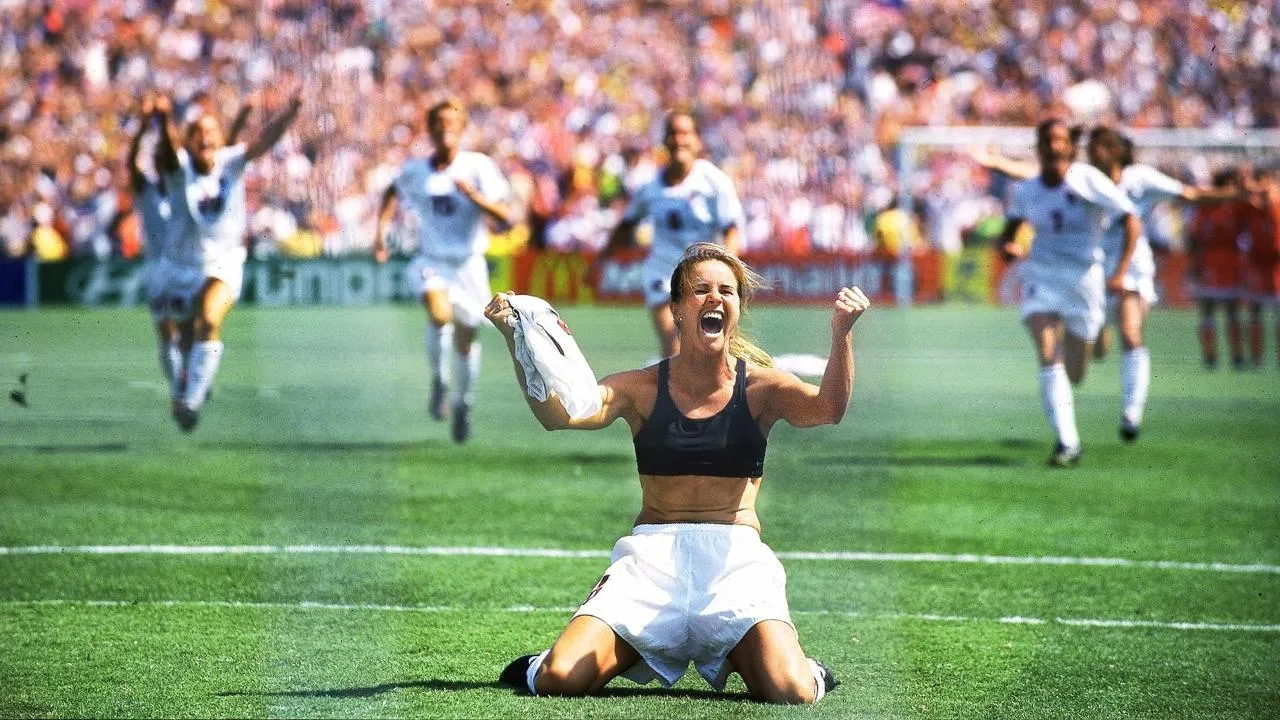
    USWNT win the 1999 FIFA Women’s World Cup

  • Heroism and Villainy In soccer

    Soccer, like all forms of entertainment, acts like a reflection of everyday life. One moment, the sport can be enchanting and beautiful while at the next it’s chaotic and drama ridden. It is often in the chaos that soccer can become that the sport reflects a common aspect of life: the creation of heroes and villains.

    Heroes are quite easy to describe in the world of soccer. These are players who scored under stressful situations, played despite their injuries or the horrible conditions of the pitch, pr lead their teams to victory despite the odds. Villains, in the world of soccer, just line in the wider world itself, are much harder to pinpoint and describe.

    Tom Sunderland, writing for Bleacher Report, attempts this in his 2014 article “Ranking the World Cup’s 25 Biggest Villains of all Time.” These villains, as proclaimed by Sunderland, often committed acts of violence (physical or verbal) against the opposing team, cheated, and overall displayed a lack of sportsmanship. Yet, some of these so-called villains, if viewed in a different light, don’t seem so evil.

    Take Antonio Rattin of Argentina, ranked number 16 by Sunderland, for example. Sunderland’s descriptions of Rattin’s villainy omits a few key details: Rattin was well within his right to speak with the referee as he was captain of his team and that the referee had no idea what he was saying, as he did not speak Spanish, and assumed Rattin was insulting him. Of course, this is not to disregard Rattin’s actions following the referee’s decision, but context is key to understanding the actions of others. The description given by Sunderland, omitting key details, leads a reader to a view that paints Rattin in nearly-pure villainy.

    This idea of the impact of context on perception, as well as situations informing actions, can be seen Simon Critchley’s 2014 article for Roads & Kingdoms, “Working-Class Ballet.”

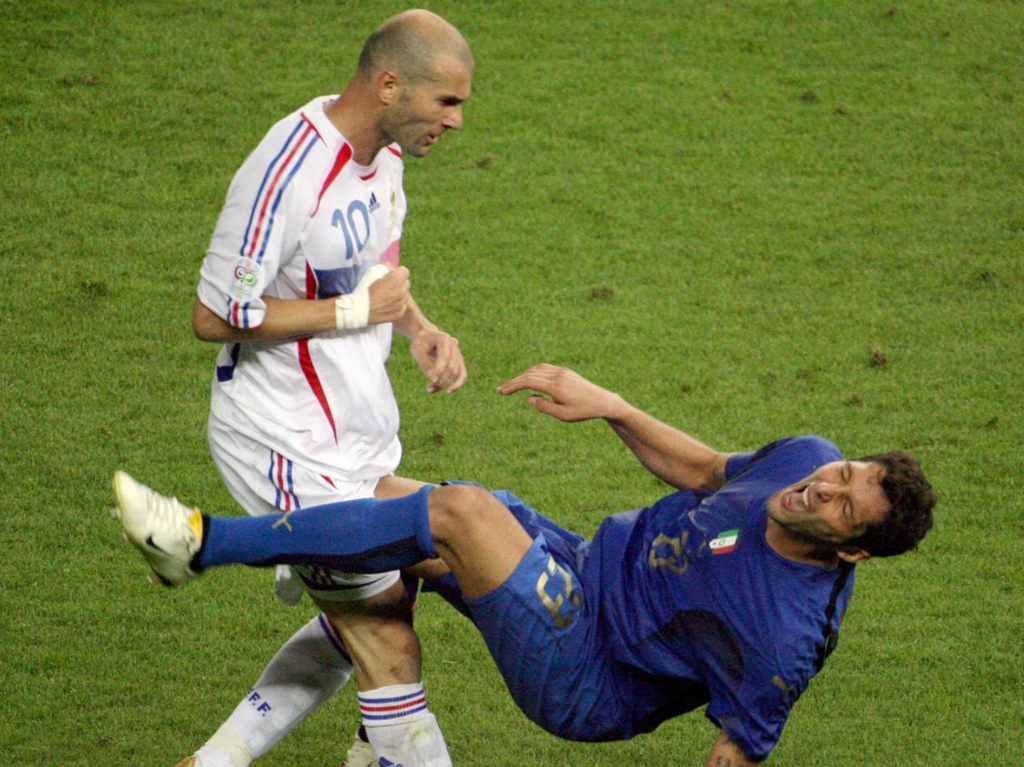
    Critchley briefly discusses the context surrounding Diego Maradona’s (ranked number 2 by Sunderland) “hand of god” goal before delving into Zinedine Zidane (ranked number 7 by Sunderland), speaking primarily about the film titled Zidane: a Portrait of the 21st Century.

    Critchley finds himself comparing Zidane to Orpheus – working hard but messing up so badly that he is remember near solely for that action. It seems, almost, that if you remove Zidane’s headbutt against Italian Marco Materazzi you get a person more akin to a hero. Yet, if that moment is removed, is Zidane really Zidane?

    Just like in the wider world, soccer finds itself struggling to understand the grey. Players are often painted in shades of black and white – heroes and villains – when reality often drops them in a contentious grey zone, where context and situations matter to properly understand these players and their actions.

  • FIFA’s Bottom Line – Revenue over Ethics

    “The rulers made the tournament slogan a pun of the phrase ‘human rights’ — roughly, We are human and we are right — mocking the international community fighting the kidnapping and torture of political enemies.”

    -Wright Thompson in While the World Watched

    FIFA has a patten of supporting controversial regimes.

    This behavior is not outright – the organization isn’t standing on rooftops and screaming their support – rather, it’s a support shown in what they don’t do. Actions speak louder than words, and FIFA’s decisions to allow nations with egregious human rights abuses to host the World Cup speaks volumes to what the organization values most – their revenue.

    Kevin Tennent and Alex Gillet, in their 2018 article published in The International Journal of the History of Sport, discuss the commercial aspects relating to the organizing of a World Cup by comparing the 1966 English-hosted and the 1996 U.S.- hosted World Cup. Of particular note to this post is the fact that the World Cup is FIFA’s “…main revenue stream and its flagship activity…” FIFA, in any event that bears their name, stands as a major stakeholder alongside leaders of nations in which their events are being held. Needless to say, FIFA, as an organization, relies on successful World Cups to replenish their coffers quadrennially – the same coffers from which FIFA officials fill their own.

    FIFA’s decisions to allow World Cups to be hosted by nations violating human rights is, undoubtedly, tied to their need for revenue.

    The 1978 Argentine-hosted World Cup is a pertinent example of FIFA turning a blind eye. The horrors committed by the Argentine regime were known to those living under it and the international community. Public outcry from within Argentina and the international community painted the event – before, during, and after. FIFA, as major stakeholders alongside the Argentine regime, allowed this World Cup to continue. Business as usual for them. Yet, mere blocks from the Estadio Monumental, Argentines were being held prisoner and tortured. Their pained screams mixed with screams of excitement from the footballing crowd. Women marched in circles in the Plaza de Mayo, hoping and begging to know what happened to their loved ones. Hoping that it wasn’t their screams they could hear in the boulevards. Begging that they hadn’t already been dumped into the rivers and oceans from death flights. All as they faced threats of their own disappearances for daring to speak out against the state.

    Russia 2018 and Qatar 2022 show both FIFA’s compliance in human rights abuses and their reluctance to cancel World Cups. FIFA has seen backlash to the fast-approaching 2026 World Cup due largely to the Trump Administration’s immigration enforcement policies. This backlash and outcry has only intensified as cartel violence spurred by the government-backed killing of Nemesio “El Mencho” Oseguera Cervantes has rocked to-be host city Guadalajara and Mexico as a whole and the U.S. and Israeli attacks on Iran have led to retaliation attacks across the Middle East.

    As always, FIFA sits in a grey-zone. A non-governmental organization under the leadership of a president seen courting the world’s most powerful, FIFA’s decisions in the days to come – whether or not to continue on with the 2026 World Cup – will show the world where Football’s most important organization stands. Will they stand with a world desperate for peace or will they allow the World Cup to continue – filling their coffers once more?

    For additional information on the human rights abuses committed by Argentina’s dictators through the lens of the 1978 World Cup see While the World Watched and Papelitos.

  • Diversity in International Football

    This year [2018], there will be two additional African teams in the competition: France and Belgium.

    -Laurent Dubois in Afro-Europe in the World Cup

    Within the last few decades, Africa has established itself as a football powerhouse. The 2010 World Cup, held in South Africa and the politics surrounding the choice, serves as evidence of this fact. Yet, as football’s foothold has grown in the continent, so has Africa’s foothold on the sport outside the continent grown.

    The quote above is evidence embodies this idea. France and Belgium, two European teams, had been dubbed “African teams” by the media in the follow-up to the 2018 World Cup – hosted by Russia. This was, and is, due to the prominence of Afro-European players on their teams – players of African descent born in the European countries for which they now wear the flag for on their chests, playing on the international stage.

    These players, such as Romelu Lukaku for Belgium and Mamadou Sakho for France, stand out against the expectations of players from their countries – white skinned, light haired Europeans. Yet, these players are no less European than their counterparts, no less French than the French, no less Belgian than the Belgian. They were born in their nations, bear the flag of their nations, and represent their nations at the global stage, giving their all to win the game for their nation. Players of African descent, like Lukaku and Sakho, are often star players of their teams.

    Star players of African descent, playing for nations who do not accept their ethnicities and identities, is not new in footballing history. One cannot forget Afro-Brazilian players like Pelé, Garrincha, and Leônidas da Silva or Afro-Uruguayan players such as José Andrade, Isabelino Gradín, and Juan Delgado (additional information about these players can be found in The World Cup as World History). These players, like many Afro-European players playing for European teams, face racially-motivated insults and threats while playing for the country they call home.

    It’s, in a sense poetic, how European nations have found themselves “saved” in the realm of football by players from nations which they once colonized. France, a nation known for it’s harsh stances on diversity – take, for example, the bans on abayas and other religious coverings – has found itself relying on players from ethnically diverse backgrounds to propel it’s national football team. Yet, it seems no matter how hard these players fight for their countries (I’m thinking about Mbappé’s successes for France in 2018 here) they find themselves in a grey-zone – not white enough for the place they call home.

  • Differences in Approaches to Injury and Violence by Bowman and Campomar

    While reading chapter two of Bowman’s The World Cup as World History and chapter six of Campomar’s Golazo! I found a difference in their approaches to injury and violence as pertaining to the sport of soccer.

    Injury and violence has been imbedded in the sport and it’s accompanying tournament since it’s early days. It isn’t something that should surprise anyone interested in this sport and it’s history. Yet, the way that Bowman and Campomar mention this topic differs.

    Campomar seems to uses injury and violence almost as a sort of comedic break in between analysis of games. Here are some examples from chapter six:

    “Fortunately for Brazil, the Red Star Belgrade striker, Rajko Mitic, cut his head on a steel beam in the as-yet-unfinished stadium and could not start the game.” (pg. 212)

    “The Uruguayans now became swift and assured in attack, much to the astonishment of a crowd, whose attention had been momentarily diverted by a corpse being taken out of the stadium.” (pg. 217)

    “Although Buchan’s approach, in comparing crowd etiquette [Latin America and Europe], was rather high-handed, not to say xenophobic: he had a point: English referees were not renowned for brandishing pistols during matches.” (pg. 224)

    “Ellis would later recount in his memoir, ‘I haven’t been to Brazil for many years, I was told that if I dared to step into the country [Brazil]…I would be shot’” (pg. 229)

    All the quoted material above, especially those from page 217 and 224 respectfully, stand out from the text surrounding them. They force the reader to pause and re-read to make sure they understood what they just read.

    Campomar’s writing style, especially when discussing injury and violence, seems to reflect the target audience of his book: a more general public than that which Bowman targets. Bowman, targeting a more academic audience, refrains from as abrupt – seemingly snuck in – mentions of injury and violence. He, on the other hand, uses examples of injury and violence as ways of furthering discussion. This is evidenced in the following quote from Bowman:

    “When asked about the on-the-ground situation in the World Cup host country, Berti Vogts, captain of the West German squad, re-plied: “Argentina is a country where order reigns. I haven’t seen any political prisoners.” At the time, executions were being carried out in Buenos Aires.” (pg. 62)

    This quote was pulled from the end of a large paragraph discussing the political concerns of hosting the 1978 World Cup in a country under the control of a military junta. It serves to make a point in and of itself, unlike Campomar who uses examples of injury and violence as shock rather than to further discussion.

  • The World Cup as a Forum for Discussion

    The first FIFA World Cup was hosted by Uruguay, a small nation squished between Brazil and Argentina. Despite it’s size, Uruguay had proved it’s soccer prowess, winning both prior Olympic soccer titles. Additionally, Montevideo was home to Conmebol – South America’s Soccer association – making it a hub for soccer in the region.

    Despite it’s qualifications, Uruguay (and South America as a whole) was not seen as a global soccer powerhouse. Rather, the powerhouse title lay with the nations in which the sport originated – England and Scotland. A lack of belief in South American soccer was apparent when the English Football association and many other European associations did not send teams, despite Uruguay’s offers to offset travel and accommodation costs.

    The inaugural World Cup played out similarly as to what is expected today of the event – high ticket demand, passionate fans, rivalries, threats of violence, and of course, a stage for discussion.

    Uruguay and Argentina proved to be the biggest rivalry of the event, a rivalry that called back to the 1916 Campeonato Sudamericano held in Buenos Aires, Argentina. In fact, much of the posturing typical of World Cups could be seen in the 1916 Campeonato Sudamericano.

    This tournament, highlighted in From Beauty to Duty: A Footballing History of Uruguay, 1878-1917 by Martin DaCruz, highlighted racial injustices faced by players of color. Controversies surrounding players of color, such as Uruguay’s Juan Delgado, spread beyond Uruguay and framed discussions of the sport itself. The 1916 Campeonato Sudamericano soon found itself as a platform to discuss issues of race and inequality.

    These discussions were framed by the complicated topic of national identity as people grappled with their beliefs about race and their desires to see their nation succeed in a transnational sporting event.

    The inaugural World Cup helped cement the idea of South America as a hotbed for the sport, with Uruguay as it’s hub. Subsequent World Cups, such as the second held in Mussolini’s Italy or the recently held 2022 World Cup in Qatar, demonstrate how transnational soccer events can facilitate discussion, harkening back to the discussion of race and national identity during the 1916 Campeonato Sudamericano.

  • FIFA – Politics and Profit

    On page 63 of The World Cup as World History, William D. Bowman features a quote from then Colombian President Belisario Betancur:

    “The 1986 World Cup finals will not be held in Colombia. The golden rule whereby the championship would serve Colombia and not a group of multi-national companies was not observed. Here we have many other things to do and there is no time to attend to the extravagances of FIFA.”

    This quote, as Bowman expands upon in Chapter 2, was indicative of the direction FIFA was moving in – a direction that placed political posturing and profit at it’s forefront.

    Colombia’s decision to pull out of hosting the 1986 World Cup ultimately came down to the question of whether or not the investment the Colombian government would have to place into FIFA-related infrastructure and activities would pay off financially and culturally for the country as a whole. It was decided this would not be the case, especially due to the existing corruption and influence drug cartels had over the country’s professional leagues. The guarantee the country would profit from the World Cup was simply not there.

    Less than a decade later, the World Cup found itself hosted in the United States, a nation in which soccer had struggled to find a foothold in. Although record viewing numbers were achieved during this World Cup, which can be partially attributed to technological advancements in TV broadcasting, impacts on the sport overall in the nation were limited. Initial increases in youth leagues and interest in the sport at the professional level were felt but did not leave a lasting impact, especially since foreign leagues performed at much higher levels than U.S. leagues.

    Yet, as the authors of the article “What’s Left When the Circus Leaves Town? An Evaluation of World Cup USA 1994,” point out:

    “…the real legacy of the USA World Cup, once the circus left town, has been the model of a mean, lean, and immensely profitable event management…”

    This legacy of the 1994 U.S. World Cup seems to have held true and is likely to be proven again in the upcoming 2026 World Cup – where fans are facing high ticket prices and the current FIFA president, Gianni Infantino has cozied up to political leaders, such as president Donald Trump, in the run up to the event.

  • Nicole Bejan

    Hometown: Naples, FL

    Major: Applied/Public History

    About/interests: Growing up I consumed soccer “second-hand” through my dad, as he loves watching Romanian association football. Many of my friends growing up, like me, also came from immigrant families, usually from the Caribbean or Central/South America. Many of my teachers were immigrants or came from immigrant families themselves. Whenever the World Cup came around, there was always one teacher who would pause their lessons to watch the World Cup and support their home-nation’s team or those of their students. I’ve grown more interested in the sport as a whole, especially after watching the Romanian national team qualify for the last Euros and the energy of Romanian fans during that time.

  • Soccer’s Beginnings in the American South

    Chapter six of the book Soccer Frontiers: The Global Game in the United States, 1863-1913, delves into the origins of soccer in the American South, the challenges the sport faced in terms of popularity and expansion, and the overwhelming influence immigrants held over the sport.

    Patrick Sullivan, the author of this chapter, makes clear that the South’s relationship with soccer has often been overlooked in discussions regarding the sport’s history in the U.S.. To this, he credits the region’s distinctiveness to the rest of the nation as well as it’s lack of urban industrial work opportunities that often attracted immigrant groups (especially those from the British Isles) who brought the sport along with them.

    New Orleans lays claim to the first established amateur soccer league in the South (1896) but from 1863-1913, Atlanta and Northern Georgia arguably saw the most success with the sport.

    The sport is believed to have made it’s way to Northern Georgia via immigrant stone workers (often from Aberdeenshire, Scotland and Penmaenmawr, Wales) who were recruited by quarry operators for their expertise in stonework. In the communities surrounding these quarries, immigrant laborers played soccer in their free time, a sport they often grew up playing. Lithonia, roughly 20 miles east of Atlanta, known as the capital of the southern granite industry, quickly became “the heart of soccer in Northern Georgia.” Different communities began challenging others to friendly matches and soon the sport found footing in metropolitan Atlanta, with the A.G. Spalding & Bros. sporting goods store becoming it’s hub. Similar stories of immigrant-led soccer leagues sprouted up in other southern cities such as Birmingham and the sport could be found at the collegiate level. Yet, organized soccer collapsed in the South when immigrants left to enlist in World War I.

    Sullivan, when describing why soccer struggled to find a stable foothold in the American South, even in markets that were receptive, never explicitly addresses the stigma soccer carried (and still carries) as a sport introduced and dominated by immigrant communities. His main arguments revolve around the lack of competition in the region, struggles to form consistent leagues and teams, and lacking transportation infrastructure. Yet, it can be argued, that much of this could have been solved had Americans taken up the sport in stride. Sullivan, when discussing Tom Harland’s move away from the South, states that there was a “…low level of commitment demonstrated by the American teenage players in Atlanta toward soccer…” It is not unlikely that stereotypes of the immigrant groups that played the sport – rowdiness and drunkenness – bleed into the American’s view of soccer as a something not worth their time, especially during the progressive era, and with growing support for prohibition.

css.php