Women’s sports have long been plagued by the issues of gender discrimination, stereotyping, homophobia, sexualization, as well as other common issues faced by women in daily life and in fields traditionally dominated by men.
These issues have impacted the development of many women’s sports, ranging from hockey to, of particular note, soccer/football.
Women’s soccer is undoubtedly dominated on the international level by the U.S. Women’s National Team (USWNT). Since the inaugural FIFA Women’s World Cup in China in 1991, the USWNT has never once placed below third and has earned themselves four championship titles. This is in stark comparison to their male counterparts, who struggle to qualify for their World Cup. Yet, the USWNT have faced unequal treatment not only in pay but training and playing conditions as well.
The USWNT’s fight against this unfair treatment is detailed by Caitlin Murray in The National Team: the Inside Story of the Women Who Changed Soccer. Following a shift in the landscape of women’s sports in the U.S., symbolized by the opening match of the 1999 FIFA Women’s World Cup at New Jersey’s Giants Stadium, the USWNT banded together to fight for equality. The USWNT’s battle, well known to any interested in women’s sports, established a playbook not only for other women’s sports in America – such as in hockey – but also for teams across the globe.
Women’s football in Latin America, like in many other nations, found itself in a sort of boom-and-bust cycle, as detailed in Futbolera: a History of Women and Sports in Latin America. The sport would gain rapid popularity before facing the reality of lack of recognition beyond their status as women, proper and sustainable salaries, consistent training schedules, and institutional support. Additional issues arose in the form of misogyny in all aspects of the sport – journalists, coaches, players, referees – and homophobia against players – even against players that do not identify as homosexual. These have all reached extremes in Latin America, with instances of male journalists making lewd comments and gestures towards their female counterparts, as did Romai Ugarte against Grace Lazcano in 2017 on Chile’s Canal De Futbol.
Many woman football players in Latin American countries have experienced discrimination and inequality similar to that faced by the USNWT but often at levels beyond the USNWT. Yet, the USNWT’s story serves as hope, a life line, for women playing in male dominated sports, not only in Latin America but all across the globe. Their story and continued fight has inspired and helped bring awareness to the issues women face in sports, but also in their everyday lives.
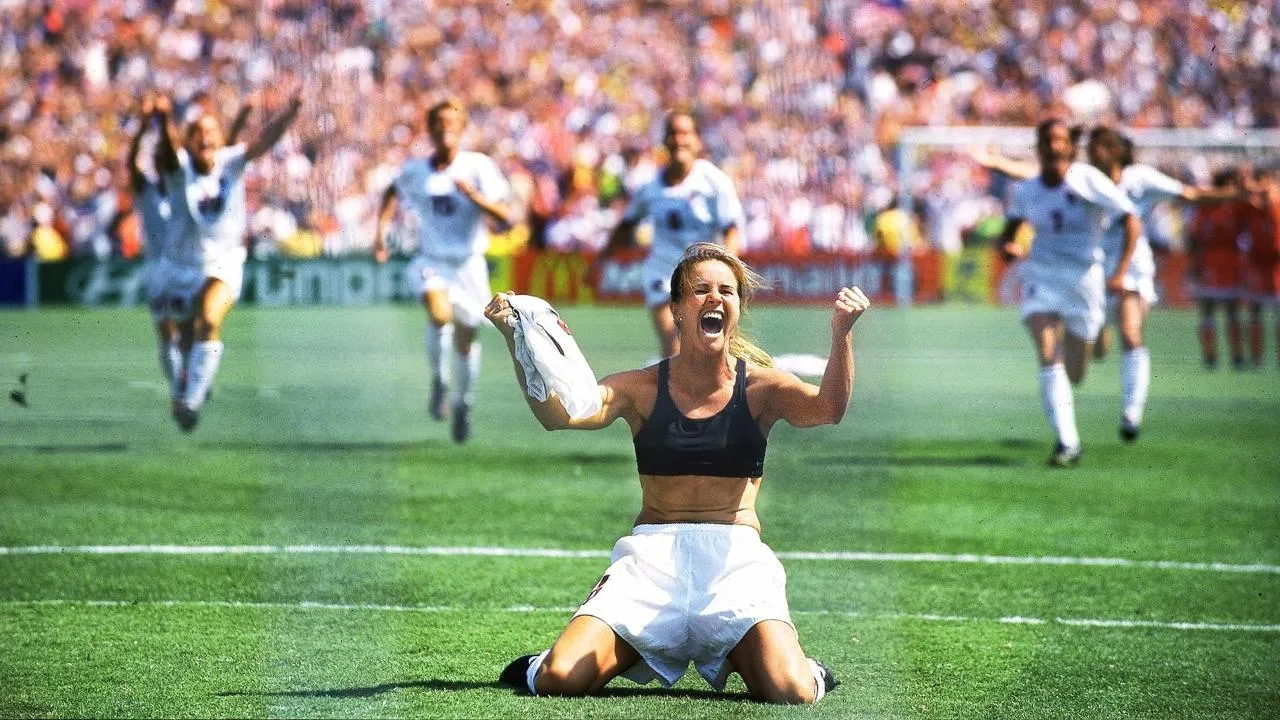
USWNT win the 1999 FIFA Women’s World Cup

Leave a Reply