Our main reading piece for this week was “National Dissonance: The Copa del Ray Soccer Final as a Site of Political Influence” by Adam Winkel, and it covered how soccer is so integral to the regionalism felt throughout Spain and the effect it has on the fandoms of these regions. I am hoping to use this topic to find out more about how the interest in soccer and its processes have grown in the global youth and what it may look like in Spain.
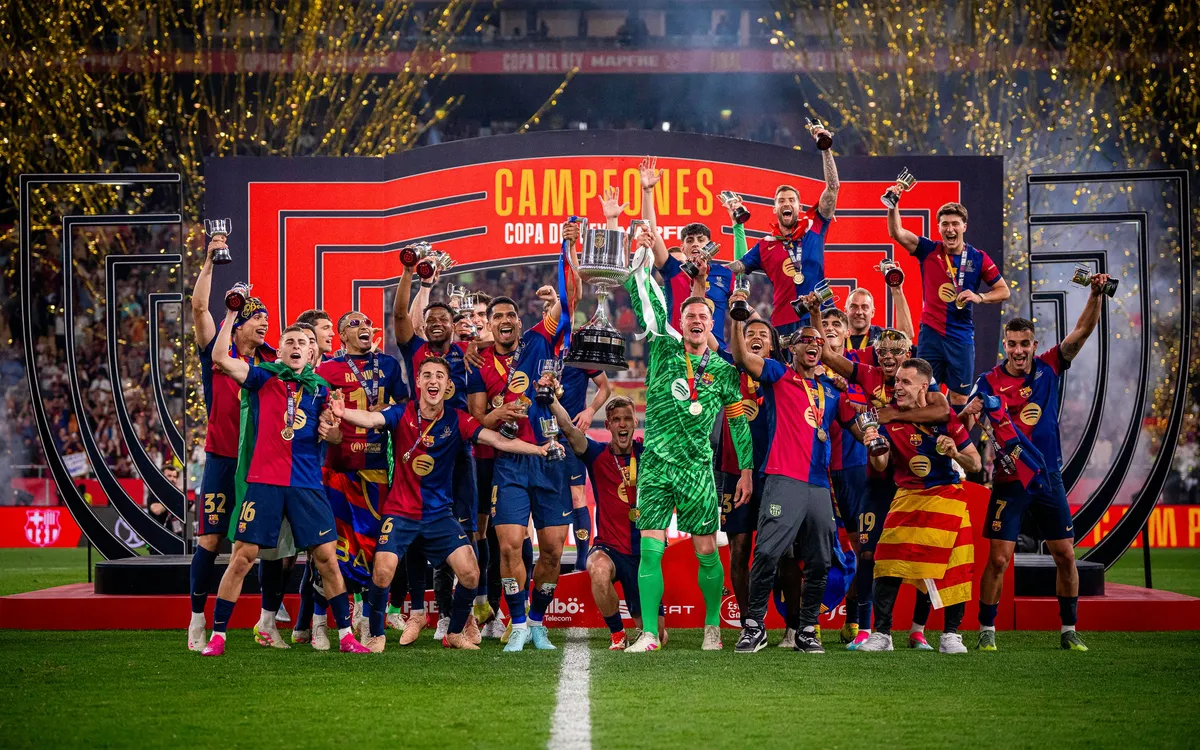
“Soccer fans enact their behavior as part of cultural performances, ‘occasions in which as a culture or society we reflect upon and define ourselves, dramatize our collective myths and history, present ourselves with alternatives, and eventually change in some ways while remaining the same in others’.”. With this tournament occurring annually, fans use this chance to either stand with their government or denounce it, and believing in a different dream of a “unified Spain”. Soccer is different in Spain, and we can see that ability of the sport to allow players to represent the countless regions in Spain while playing a game they just love, connecting that personal to national (or regional) identity.
During the Franco Regime (1939-75) however, this understanding of “unity” and personal identity had come under lock and key due to the oppressive powers that controlled the country. As Winkel describes it, “..used the football pitch to enforce discipline and uniformity across Spain, one of the Franco regime’s main objectives”. Having a platform such as soccer that is able to reach just about anyone can be used, good or bad, for the purpose of reaching the fans and speaking to what they believe and want to hear.
Our other reading for this week was Euro 2012: ‘Great Spain era’, says coach Vicente Del Bosque, and even though this was a shorter piece, the arguments made by Vicente seem like due to recent success for Spain on the international stage, these young stars cannot get complacent and need to understand that winning isn’t forever. The focus of this team should be on playing their own game and working together according to the teams strategies, regardless of how critics think.
So many factors go into the politicization of soccer, yet in Spain, through the Copa del Rey, the government, players, and fans alike all get a voice and the opportunity to share their thoughts and beliefs, and as alluded to by Winkel, these “soldiers” that are the players, represent so much more than just the region.

Leave a Reply