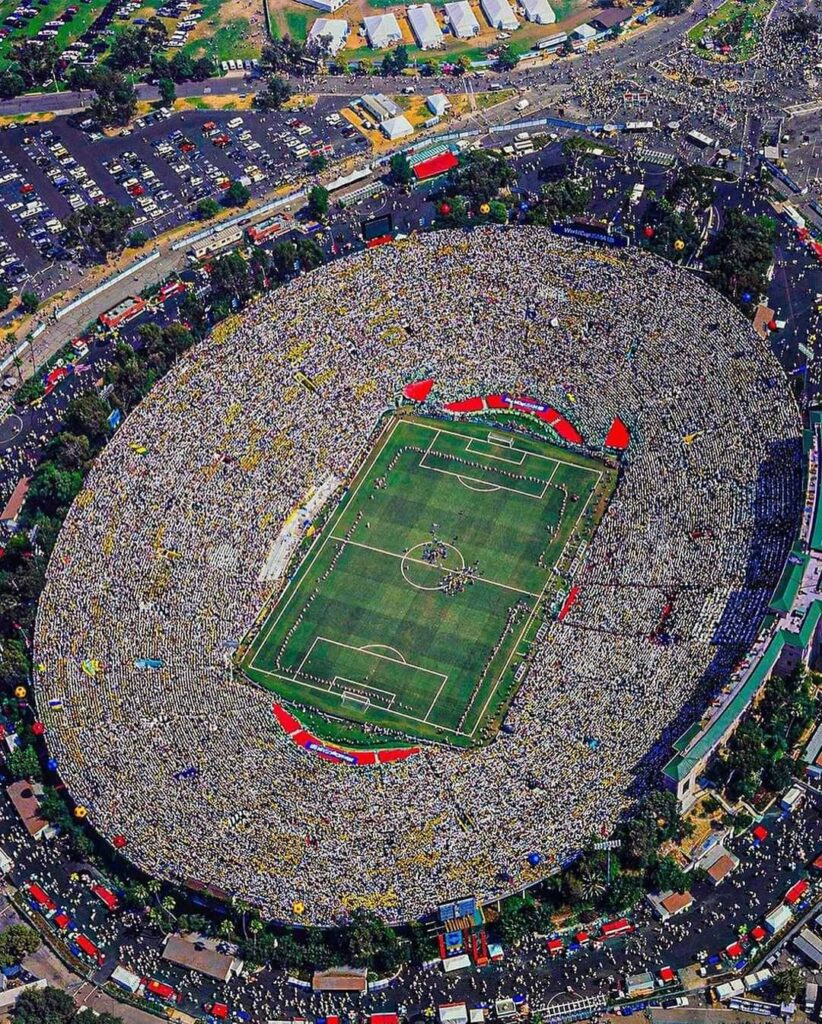
The 1994 World Cup was a massive success for FIFA. It broke records in attendance and viewership, and brought in a turnover of $4 billion according to the former (and disgraced) FIFA President Sepp Blatter. Despite this, soccer in the United States still struggled to replicate the results of the World Cup for a multitude of reasons.
For starters, soccer still had an image problem in the US. Soccer was, and still is, mainly viewed as a youth sport. Not that there’s anything wrong with that, but it has contributed to the struggles that soccer has had with gaining a big foothold in the US market. It also has the past connotations of being a sport for immigrants. Unfortunately, the US does have a pretty xenophobic past (and present), which has also contributed to the struggles of the sport.
Another issue, and probably the biggest one, is the struggle of the professional soccer leagues in America. The NASL (North American Soccer League) was the predominant US soccer league in the 1970s and 80s, but was struggling to stay afloat. The attempt to draw a World Cup to the United States was made in order to hopefully save the league, but the world cup came too late as it would fold in 1985. However, with the World Cup coming to the US, the MLS (Major League Soccer) would form, and while it would struggle at the start, it would eventually slowly expand to a 30 team league, similar to most of the big American sports leagues. While this sounds all fine and dandy, it ignores a big problem that the MLS has dealt with for much of its existence: the problem that Americans really do not like watching their teams not be “the best.” Every one of the big American leagues has one thing in common: they have the best the world has to offer in their sport, whether it be the MLB, NBA, NHL, or even the NFL, these leagues showcase the best athletes to an American (or even a World) audience. The MLS struggles to keep up with the likes of the European leagues, as the best players from the World, and even America, tend to play over there.
Soccer has struggled in the United States, and while the 1994 World Cup was a massive success, it still highlighted the struggles that soccer had faced, and would continue to face. Hopefully with the 2026 World Cup, the sport will be able to finally let go of its past struggles, and continue to expand into being one of the big sports in America.

Leave a Reply