Category: Wk04-Origins of Soccer

  • The origins of soccer – week04

    In The World Cup as World History, William D. Bowman explains that soccer didn’t come from just one place, even though many countries like to claim they invented it. Since soccer is the most popular sport in the world, it makes sense that people want credit for it. Bowman argues instead that kicking a ball is something humans have been doing for a very long time, no matter where they lived. Evidence of ball games similar to soccer have been found in ancient civilizations like China and Mesopotamia, showing that sports have always been part of human life.

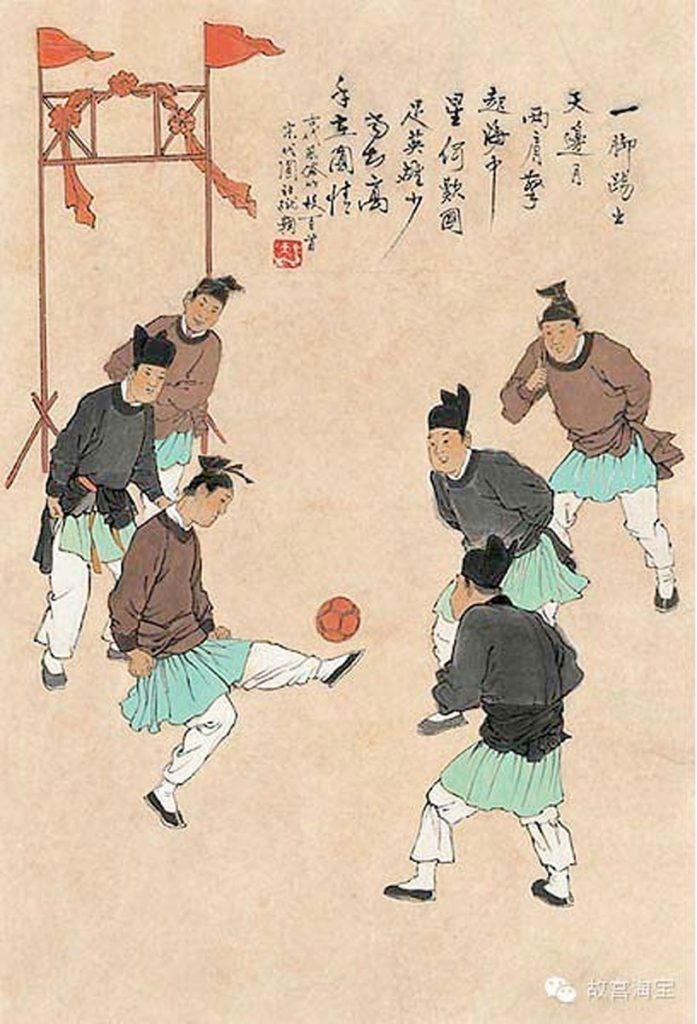
    One example Bowman gives is from China during the Han Dynasty. People played a game with two teams, goals, and a leather ball, and while players could move the ball in different ways, using their feet was the most common. Records show this game being played as early as 618 CE. Even though it wasn’t exactly soccer, it shows that organized kicking games existed long before modern sports.

    Bowman also points out that similar games were played in Mesoamerica by groups like the Aztecs and the Maya. Archaeologists have found evidence that these kicking games were being played as far back as 1500 BCE and continued until the Aztec Empire collapsed. When Spanish explorers first saw these games, they were impressed by how fast and intense they were, especially because the rubber balls bounced more than anything used in Europe. Some Catholic clergy wrote about these games when they returned home, although they were also concerned about how violent and rowdy they seemed.

    The version of soccer we recognize today, though, developed in England. Kicking games had been around there for centuries, but elite public schools began creating their own rules and styles of play. As more schools and clubs wanted to compete, it became clear that the game needed standard rules. This led to the creation of the Football Association in 1863, which officially set the rules for soccer.

    After that, soccer exploded in popularity across England. Because England had strong connections with other countries through trade, politics, and culture, the sport spread quickly to Europe and beyond. Over time, soccer became the most popular sport in the world, which eventually led to global events like the World Cup. 
  • Week 4: Origins of Soccer Globally

    The two readings this week, Chapter 1 of Golazo! and the first few pages of The World Cup as World History share themes of sports history being rooted in many different cultures and the evolution of “kicking ball” games through the centuries, highlighting that this game “akin” to modern day soccer was prevalent in many cultures across the globe. It goes into detail in specific places the phenomenon of simple games that consisted of advancing a ball, usually by kicking, through a goal.

    Bowman’s writing brings up the point and advances it that it was natural for the spread of soccer to take off in many cultures because of this, but he also delves into the history of not only soccer being used to “tame” a working and middle class in some European societies, specifically France. This relates to another point he makes in soccer being used as a tool to influence some European colonies outside of Europe.

    Golazo! furthers most of the points that Bowman introduces but with a more anecdotal focus on South America and Latin America, looking at Cricket being a dominant sport and how soccer gets it foot into the door in these places.

    The correlation between these two sections of the books is the early evolution of both soccer and similar sports in non-English countries, and the ways that soccer was used in the 19th and 20th century to spread across the globe to become the most popular sport for most of the world’s population.

    (Cuju, the ancient Chinese kicking game that had similarities to Association Football, seen in other cultures early history before the spread of soccer.)

  • The Origins and Evolution of Soccer By Grayson Banks

    The World Cup as World History by William D Bowman starts off by looking at the history of the game of soccer and how it can be hard to trace its exact origins. Soccer is by far the most popular sport in the world, and that has led to many different countries and nations laying claim to their own version of how the game was invented. However, the truth, Bowman argues, is that ball and kicking games are deeply rooted in the human experience, as evidenced by the discovery of people participating in games similar to soccer in ancient China and Mesopotamia.  

    The story of the Han dynasty in China and the ball game they played that involved two teams, a leather ball, and two goals. You could advance the ball in several ways when playing this game, but the preferred method seemed to be the feet, and we have recorded evidence of this game being played as far back as 618 CE. While these games don’t directly connect to soccer, it is still extremely important and show that society has always practiced sports, which directly ties into our sporting culture. 

    While kicking ball games were being played in Asia by the elites, these kicking ball games were also being practiced in Mesoamerica by civilizations like the Aztecs and the Mayans. Archaeological evidence indicates that kicking games had been played in Mesoamerica since 1500 BCE and were played through modern day central america, more or less, until the collapse of the Aztec empire. 

    Europeans, mostly Spaniards, were very interested in these kicking games when they first made contact with the indigenous people of Central America and of the rubber balls they used, which made the game faster and physically demanding. Catholic figures would often come back from expeditions to the New World and talk fondly about the games that the Aztecs played and tried to describe the games in a way the Europeans could understand. While being fascinated by this game, the clergy and conquistadors who went to Central America were also worried about the rowdiness and violence of the games that they witnessed. 

    The origin of modern soccer is in England. Kicking the ball games were a pastime that had existed in England for many centuries. But in public schools, which were usually reserved for the elite, young men started creating different varieties of soccer that they would play. Then the desire came to standardize the game so that schools could compete against one another, and this eventually evolved into clubs playing against one another. 

    In 1863, the football association was formed out of necessity because of the number of different clubs and organizations that were popping up around England at the time, playing different versions of soccer instead of the public school version. The creation of the football association gave more shape to the game and gave it a more comprehensive set of rules. After England had fully developed the sport, fandom took over, and it quickly became the country’s favorite sport. England’s political, economic, and cultural connections to Europe helped to allow the sport to spread all across the continent and beyond, with the sport becoming the most popular sport in the world by a clear landslide. 

css.php