Author: PorterC

  • National Soccer Styles

    Map

    For my project, I chose to examine the relationship between nations’ cultures and how we perceive their national teams. A national culture is reflective of the nation’s past, and sometimes nations build their culture to fit better the narrative they are perceived as. I am a big fan of the Apple TV show Ted Lasso, so much so that it inspired me to make this project. I have always preferred presenting to writing an essay.

    When I began this project, that was my end goal: a Google map with a video file explaining my findings for each country. However, this was easier said than done; it proved very difficult to embed the video files in a way I felt was up to my standard. So I decided to break it down into smaller sections for each country.

    I like studying cultures, and this allowed me to look into the reasons behind these beliefs. I am happy with my final project; it blends lots of what I wanted to do. I was even able to interview a friend of mine from Scotland to get some insight into English soccer.

    Overall, this assignment had its challenges; it was difficult to create the bridge between true culture and perceived culture. Germany, for example, is seen as a strategic powerhouse with ridged structure, but in reality, they play with an adaptive and fluid style. Additionally, finding places to put markers was a challenge. Some locations were easy to place because of their significance, while others were in random locations because I couldn’t place them in a meaningful way.

    This was a very fun assignment, and I enjoyed the creative liberties we were afforded for it.

  • Lamine’s Lament

    Euro 2024 final: Photographer who captured Lionel Messi with ...

    This week, I watched the CBS 60 Minutes segment about Lamine Yamal. Lamine is 18 years old and already a household name with many soccer fans. He is a soccer prodigy, and he has the reputation to back it up. He recently finished 2nd in the Ballon d’Or, world soccer’s MVP award, and has helped his team secure a victory at the World Soccer Championship in Germany. He was scouted by Barcellona when he was only six years old, and made his debut with the team when he was fifteen years old. 

    During the interview, he is asked about his “soccer superpower.” He humbly responds, saying that he just wants to brighten people’s day. Additionally, he claims that the soccer ball is his “first love”. He reinforces this by stating that if the ball could talk, he would “Ask it to marry me and to have lots of kids”. Later in the segment, a soccer analyst was asked how to describe him. He responded, saying, “How do you describe candlelight?” These descriptions make the grand scope of his career very interesting to me. As established in class, the non-American vision of soccer is incredibly romantic. This news segment and the interviews have further driven this fairy tale romanticism of the sport. 

    I think I have a good understanding of the view eastern nations have of the sport. But seeing it described about a player in this current time with a player younger than me has shown me that I couldn’t begin to understand it. I once met a guy from Scotland who was a die-hard Hearts fan and could talk for hours about it. He talked about the sport as if it were omnipotent and could hear him praise it. I knew he felt something about the sport i couldnt comprehend. This story held lots of similarities between that conversation, and i couldnt help but think about the divinity that soccer is to some people.

  • hope and soccer

    Zinedine Zidane - Simple English Wikipedia, the free ...

    This week, our reading covered Simon Critchley’s article “Working Class Ballet.” His article discusses the significance of soccer in his life. He and his father bonded over the sport, and it was largely what brought them together. He views soccer at three levels: personal, political, and aesthetic. Critchley sees soccer as an incredibly important source of collective identity, specifically in the working class. The games themselves are a spectacle that, he explains, serves as an escape from the grueling, labor-intensive world that so many people are part of. He derives the concept of  “blind hope” as of major importance. Teams provide a sense of belonging that goes beyond just the game. The mental fortitude required to suffer repeated failures and still be a fan of the team allows people a sense of unity. People don’t support teams because of their success but because of the people around them. 

    Critchley views the game as a political spectacle as well. Often using phrases such as “capitalist” and “socialist” to view the sport. He believes the game is now a capitalist asset, unlike how he viewed old teams as socialist. This conclusion is drawn from the ideal of the games being a community effort that required collective support. Soccer has been hijacked into a commercial spectacle sport, something that expresses his frustration over. While he does still believe the soul of soccer is saturated in the socialist ideals of communal effort, he sees its body as being taken over for profit. 

    Something I appreciate about this writing is Critchley’s view of hope. He keeps going back to the idea of blind hope being the driver of fans. He relates it to an exchange in the story of Prometheus. Prometheus was a god who gave humans fire and tecnology, as punishment he was chained to a rock and left to be eaten by birds. Prometheus was asked by the chours of the ocean if he had given the humans anything else. He says that he stopped us from foreseeing doom by sowing us with blind hope. The idea that maybe your team will win is what makes sports so entertaining, and i thing that Critchley does a great job of showing us that connection.

  • Money and Football

    USA 94: World Cup that Changed the Game, The: Evans, Matthew:  9781801501675: Amazon.com: Books

    FIFA events generate lots of revenue. Between sponsors, players, communities, and vendors, these tournaments offer significant economic benefits. The article we read this week covered the 1966 tournament and the 1994 World Cup. 

    A major part of this reading is understanding the “swarm” theory. The theory states that the FIFA brand is like a hive. Whenever a tournament begins, vendors, services, and committees have to get involved to ensure a successful game; these are compared to bees. The theory states that when a tournament starts, it’s comparable to a new hive being built. All the organizations, or bees, then work to set up the area to maximize profits. This can include civil services, emergency services, utilities, and local economies. 

    During the 1966 tournament, there was a serious push to see how a mascot would work. They settled on the first World Cup mascot, World Cup Willie. This World Cup was held in England, and the push to have a mascot paid off. The licensed mascot’s merchandising sales took off, proving that large-scale merchandising at one of these tournaments was a viable option. The 1966 World Cup set up the business model for the rest of the tournaments. 

    The 1994 World Cup was held in the United States. It was also the most financially successful World Cup. This can be attributed to the highly corporate world in which the US lives. TV advertisements provide a big area of gain. “Local marketing partners” became a big money-making opportunity. LMPs would provide their services under “USA 94’” instead of “FIFA World Cup”, allowing them to make revenue without sharing it with the FIFA organization. 

    This reading introduced me to many different topics that I was curious about. The economics behind these games have always interested me. So having a reading about the intricacies of it was entertaining.

  • Garrincha the Great

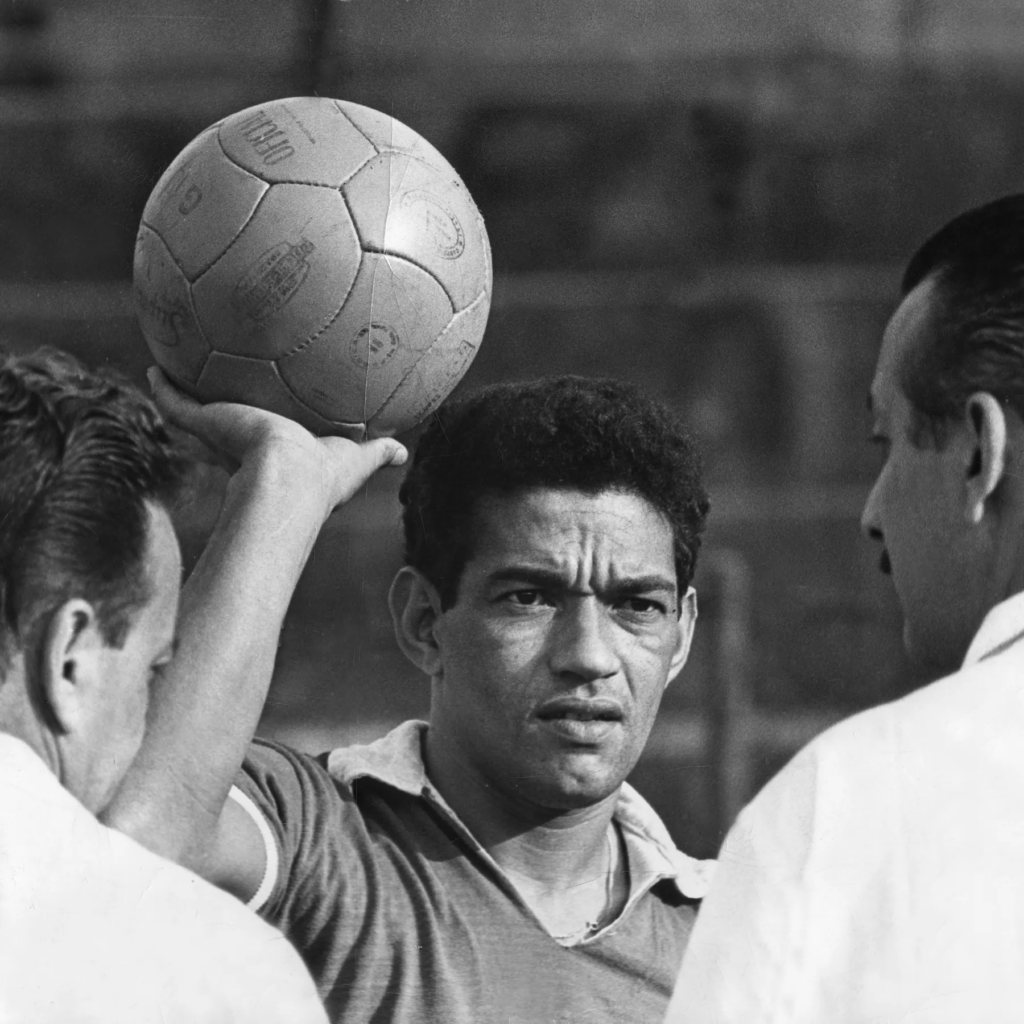
    Brazilian soccer player Garrincha was a star player back in the day. His dribbling and shooting abilities were unmatched during his hayday and he became one of soccer’s most successful players. Despite being born with an extremely disabled leg, he was one of Brazil’s greatest players. He was among the star players who immortalized Brazil’s name in the soccer world.

    His debut performance was during Brazil’s match against the USSR, where he played alongside a young Pelé. He transformed the game by leading the charge in a new, much more offensive-based play style. He would eventually help his team achieve a 5-2 victory against Sweden in the 1958 World Cup. After their victory, Garrincha and Pelé were boosted to celebrity status for their performances.

    However, it was his performance in the 1962 World Cup that truly made him a world star. After Pele was sidelined for an injury, he stepped up to help lead the team. During this tournament, he scored four goals, including an insane header against England and a long-range goal against Chile.

    After the tournament, he was named Player of the Tournament and brought the title back to Brazil. The 1966 World Cup marked his final appearance in the tournament. His remarkable record of only one defeat and fifty wins with Brazil was his legacy. He had earned titles such as the “King of Dribbling” and was immortalized as a symbol of Futebol Arte.

    He died in 1983 from a complication of cirrhosis in the liver, a result of years of alcohol abuse. The tragic end to the legend’s life did little to squander his reputation. His image as an artist of football is still present to this day. Going into this class i was not familiar with many Brazilian soccer players. But, after this video and a little side research, I will remember his incredible legacy.

  • Racial Tentions in Uruguay’s Tournament

    /\ Juan Delgado

    This week’s reading is all about Uruguay’s victory in the 1916 South American Championship. It was also the first tournament of this type. This reading covered a few interesting points and controversies. A big theme highlighted is racial tentions. Uruguay has been a very racially tense nation. In 1916, most South American countries experienced some sort of racial turbulence. As we will find out, Chile would gon out of their way to blame their loss on racial differences.

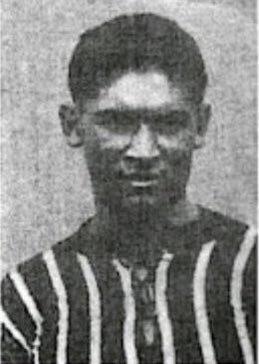
    Isabelino Gradin was the top scorer of the tournament; he almost quit over racial discrimination. Officials of the tournament had made some racially derogatory remarks to him. This was in the midst of the Afro-Uruguayans’ struggle for equality, something that is still present today. 

    This continued with the Uruguay and Chile game. Uruguay defeated Chile 4-0, and the Chilean team then said they only won because they had “African Professionals”. They chalked their entire win up to nothing more than racial differences. By downplaying the Uruguayan players’ skills to their skin colors, they created the narrative of racial differences. 

    Uruguayan player Juan Delgado was a star player in Uruguay. Before the tournament, when Uruguay was selecting its players. They intentionally left him out, favoring Alfredo Zibechi. An important note is that Delgado, much like Gradin, was a darker-skinned Uruguayan. Their decision stood until Zibechi stepped down to allow Delgado to play. 

    These events show the uncomfortable history of soccer in South America. While this was a single example, times were rough for racial minorities during this period. It wasn’t until major political shifts during the late 80s and 90s that they became visible. Mundo Afro, founded in 1988, was able to petition the government to collect racial data in 1996. These surveys revealed the true ethnic composition of the nation and challenged the notion that Uruguay was a “white nation”. Overall, this reading did show me the racial struggles that existed in Uruguay. I never thought of racial tentions in South American countries.

    Porter Cockrum

  • Soccer’s Spread

    Soccer Ball Around the World Stock Vector - Illustration of globe,  background: 9014128

    From the beginning of this class i knew that soccer originated in the 19th century Britain. I understood that it really became big with the younger generations there, and it eventually caused the two forms of soccer we know today. However i never thought about the intricacies of it. Things like how fast it spread throughout the culture of the world. British imperial and economic networks foster the growth of the sport. That’s why it became so popular in South America; the sailors who traveled there spread the sport. British imperialism also facilitated the growth of soccer in Africa. If there were British nationals, they carried Soccer with them.

    This is interesting to think about today. How the sport originated in Britian but it spread and became famous in their territories. So much so that the first major worldwide soccer tournament, the 1930 World Cup, was held in Uruguay. This chapter teaches us about the spread of the sport across the world. It also implies a subtext of control. Soccer spread through colonialism; areas that Britain controlled had the most soccer growth. Professor Sibaja made an interesting point in class, talking about how Soccer could also be a form of social control. Soccer was promoted in school to help get the youths’ energy out and promote attention in the classroom. Soccer was a booming industry in American mining towns, where the workers were treated poorly by the companies that owned the mines (look into early mining towns, Pullman, Alcoa). 

    This chapter talked a lot about the early formation of soccer and the slow solidification of rules. I enjoyed the information about the booming industry of the sport, not just in Britain, but South America and Africa. I lookforward to learning more about the expansion of Soccer and why it became so popular in these countries.

    -Porter Cockrum

  • World Cup of ‘94

    This week’s readings were about the 1994 World Cup in the US. It focuses on the influence of soccer on the US, both expected and in reality. Before going into this reading, I knew there was a huge, but unsuccessful, push to turn the US into a soccer nation. These efforts were prominent in the 1950s to 90s, and would eventually stagnate for years. This nation has never been closer to fully embracing soccer. Major shifts in the American soccer world, including Messi moving to Miami and the World Cup being held here, have contributed to it. The article talks about how, after the 94 World Cup, despite being held in America, the sport was still marginalized. There was a massive push to turn the sport into a major American sport industry. The authors tie this failure to a few different factors. The first was a lack of deeper girth in the population. While the World Cup was a spectacle, the soccer institutions of America didnt capatalize on this. The momentum that the World Cup gave died off after a few months.

    The 94 World cup majorly capatalized on corporate sponsors. The event was essentially shaped by them. This caused two major effects. Firstly, it established the new trend of corporate control over the sporting events, limiting the influence of grassroots and other smaller organizations. Additionally, it would cause these events to become major spectacles. Mechendisinng and advertisements would become a ludicrous business that future events would follow through on.

    This article highlighted lots of trends that started with the 94 World Cup. I found it interesting how many of these trends benefited the organization in the long run, but didn’t work in the US. I think this year’s Cup will be far more successful than the one well over thirty years ago. The unique mixture of our current soccer landscape in the world will produce an interesting World Cup.

    Week 3

    -Porter Cockrum

  • porter cockrum

    Home town: Topsail, NC

    Major: History with an Education concentration

    About: I have had very few experiences with soccer. My earliest memories of the sport include me kicking a soccer ball into the woods in my 4-year-old league. Later exposure was my little brother playing on the same team in Elementary School. Over the summer, I worked with a lot of people from Latin America and the UK. Despite having nothing in common, they all loved talking about soccer. I am interested in the impact this sport has had on its countries and the full extent of its influence on the world.

  • Early Southern Soccer

    During the early 1900s, Soccer began to become popular in the South. While it was seen as a Northern sport reserved for the Ivy League scholars, the small communities of Irish and British immigrants caused the sport to have a foothold in the South. Most of this influence came from them. The mining communities, particularly coal and granite, would have families who were knowledgeable in the sport. This allowed for an organized series of games to be held with a present fan base.

    Going into this reading, I knew about some soccer games held in the south. Particularly about the Dallas Athletics Program, a soccer team formed in 1908. However, learning about these communities in Georgia and Alabama that had a particular interest in the sport is new to me. It makes sense that communities of immigrants would want to engage in a shared past time, one that’s competitive in nature and relatively harmless, which would be sure to attract Westerners with an interest. I also thought it was interesting that the first game played in the south was a friendly charity match between the Irish and Scottish immigrants on St Patricks day of 1892. Another thing I found interesting was the 1911 Atlanta Soccer Football Club’s inclusion of a non-white player. They had a Native American on the team who went by the name “Charlie Wahoo.” Atlanta during this time was highly segregated, so the fact that they included him on the team speaks volumes about both his skill as a player and the progressiveness of the sport.

    Eventually, the sport would begin connecting the North to the South through games and clubs between them. The article talks about upcoming teams across the southeast that were contacted by the Alabama team. They wanted to have a more structured league and needed teams to play against. So the invitation to upcoming teams in Alabama, North Georgia, Florida, Tennessee, and Louisiana was sent out. I did not know that teams in these areas existed. Upcoming soccer leagues in the southeast during this time were rare. With baseball and upcoming football leagues, I imagine that the popularity of the sport was few and far between. I also imagine the stigma of the European immigrants making up a large portion of the community did no favors for the popularity of the sport. That may also play into how progressive the early clubs were.

    Week 2,

    -Porter Cockrum

css.php