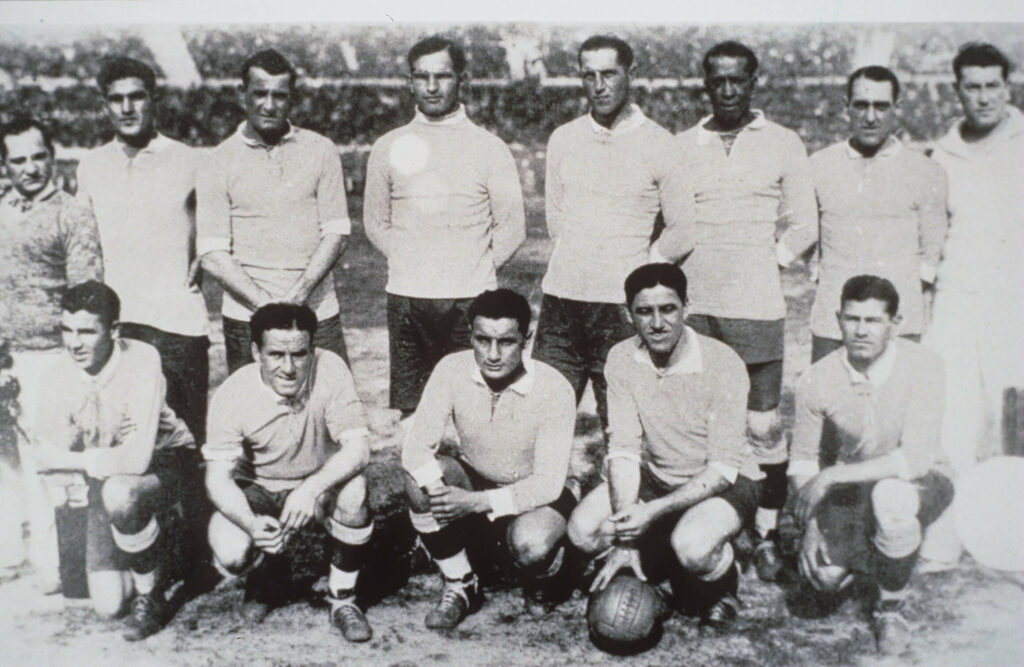
Pictured above is the 1930 Uruguay World Cup Championship Team
Both of these articles represent political influence on sports, especially how national identity being is being shaped, reinforced, and portrayed in sports. This is evident in the 1916 Campeonato Sudamericano held in Buenos Aires. After much reluctance, the Uruguay team chose to include Black players Juan Delgado and Isabelino Gradin. “In their defence of their Black compatriots Uruguay seemed to reaffirm the country’s whiteness, to deny and denigrate its African heritage. Delgado and Gradin’s heritage. As if their descendants had not been forced across the Atlantic. As if their cultural expressions every summer were not based on real connections to the continent. For them, Delgado and Gradin were simply Uruguayan, a result of an inclusive and integrated and peaceful society in which the racial question had been resolved. As if Gradin had not threatened to quit the national team over racism just weeks ago.” Uruguay’s reasoning for their inclusion is indicative of how racial and national identity was viewed during this period of time. This choice was certainly intention in pushing a political narrative. Delgado and Gradin were essential to Uruguay’s winning of the tournament. “Uruguay was at the vanguard of football and nation. The national team symbolised social inclusion, democracy, solidarity, in both personnel and style.”