Author: JudahB

  • Catalunya, Spain, and Futbol; How Soccer is Used as a Political Tool in Sub-National Spain – Judah bawcombe

    https://sites.google.com/appstate.edu/catalunyaspainandfutbolhowsocc/home?authuser=0

    The concept of nationalism in Spain means something different as to what we think here in the US. Spain has 17 autonomous communities who all have a range of unique cultural, economic, and linguistic differences. Catalunya, the region in the Northeast of the country is one of these communities. Over the history of the nation Catalunya has seen varying degrees of independence and autonomy – something that time and time again causes friction with the national government.
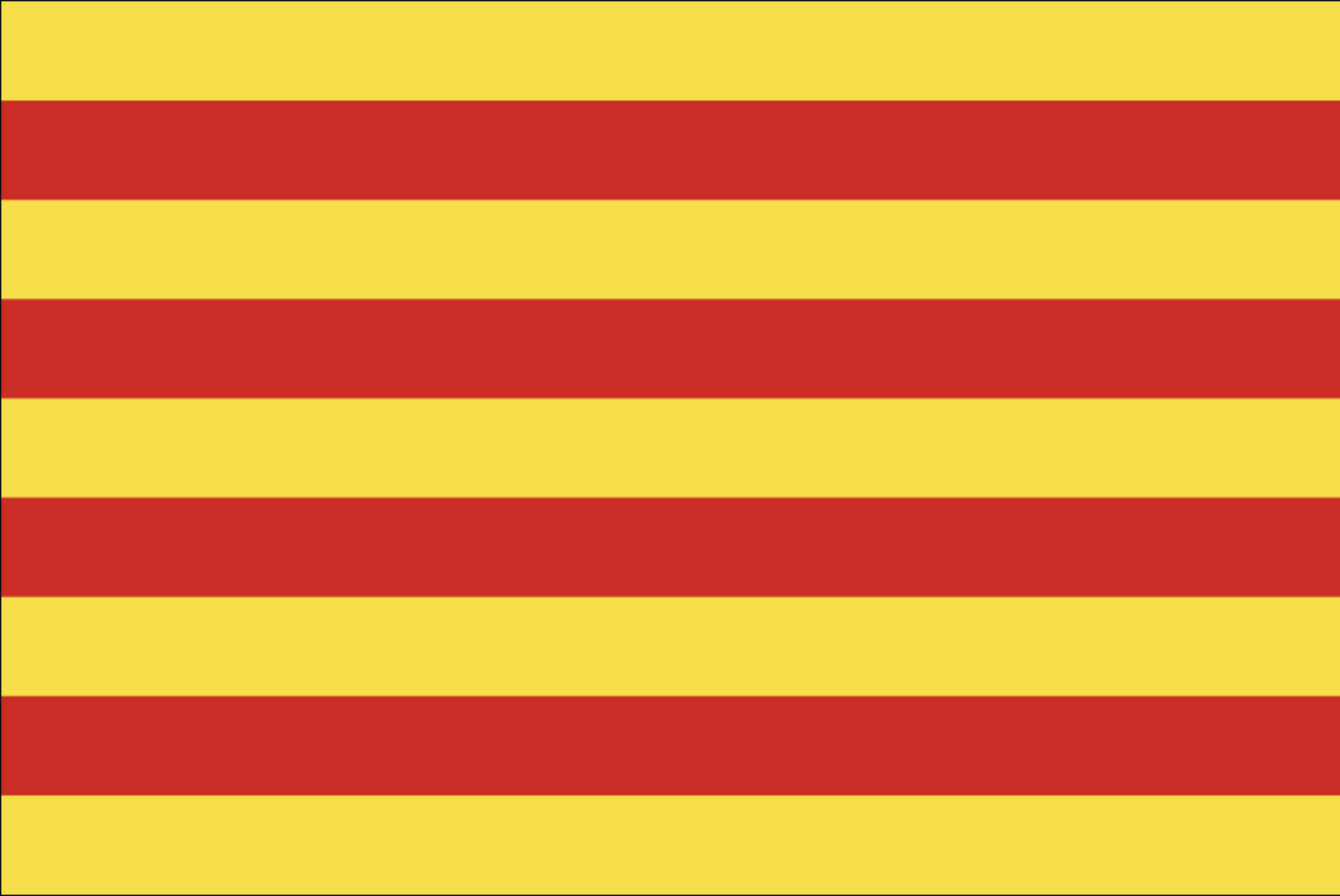
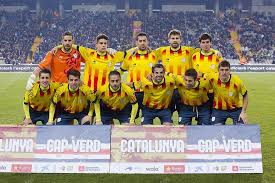
    Most known in the soccer world for FC Barcelona – the team that was home to Messi for over two decades, Catalunya is also home to its own sub-national team, the Catalan XI.

    From the founding of the Catalan Federation in 1900, the first match (and loss) in 1910, and most recently a victory in 2025, the Catalan XI has played many games over the years against FIFA recognized national teams, other regional (sub-national) teams in Spain, and other teams across Europe.
    The website that I created allowed me to break up different eras of the Catalan XI/Spain & Catalan history to create commentary on the development of Catalunya politically and as a footballing nation.

    My project is broken up into 4 different eras 1. Beginnings 2. Guerra Civil (Civil War) 3. Franco Era 4. Present Day. Breaking up the project like this allowed for more clarity of the topic at hand.

    I decided to switch from JSlab timeline as it was very hard to include lots of the strong sources that I had found as they would not upload well onto the website.

    Besides the formatting issue there were two other main issues. Firstly, lots of secondary sources focus specifically on FC Barcelona. Now while FCB is objectively a political force in Catalunya and linked directly with the Catalan Federation and Catalan XI (as mentioned in the project itself) I did not want to soley focus on the club. Secondly, there was lots of very cool information about different matches the Catalan XI has played however they did not tie into this project so they had to be left out.
  • Emergence of Womens Soccer

    This weeks reading’s dove into the early days of the beautiful game’s origins with women and the women’s game.

    These two pieces observed the development of the women’s soccer across the globe – although more specifically the UK and USA (however also touching on parts of South America & the rest of Europe). Throughout both readings the authors commented on the political, cultural, and economic factors that led to, and derived from, women beginning to play soccer.

    Soccer developed very differently in the USA and UK, the former best being described as “use sport to develop ‘womanly qualities’ preserve reproductive health, and provide recreational opportunities for all students” and the latter as “the business model of women’s football mirrored that of men’s football: attracting large paying crowds through advance publicity and playing games in large stadiums, therefore maximizing the sums of earned”

    Even though it is seen through two different scopes, the rise of women playing soccer goes hand-in-hand with the rise of opportunity, wether educationally or vocationally. In the US the rise of soccer is tied to education and college programs having the opportunity for women to play sports (tying in directly to the quote from earlier). On the other hand, soccer in the UK saw a sharp incline due to men going to war and women taking their jobs in factories.

    Additionally, the development in both countries came with political ties as well. In America Doris Clark, a prominent womens soccer player and journalist, is believed to have used her platfrom to promote womens issues. Womens soccer in the UK faced backlash and reprimands as it was believed it would “take over” the mens game.

    What highlights some of the differences in the way the sport developed is when Dick, Kerr Ladies came to play in the US (after being banned from playing in the UK) but were not allowed to play against collegiate teams in the US.

    I think that these two readings do a tremendous job of laying out the development of the sport in their respective countries and allows a reader to draw interesting conclusions when comparing the two. Most interesting for me was how clear it was that deespite their differences, the development of the game had real effects outside of just the sporting world.

  • Spanish Soccer: Politics, Power, and Fans

    Both National Dissonance: The Copa del Rey Soccer Final as a Site of Political Performance and Fury and Failure in Spanish Football Stories of the 1960s by Adam Winkel provide tremendous commentary on the intersection on politics and fandom in Spanish Soccer. Admittingly this is a topic that is of particular interest to me this semester as my research topic focuses on the political power/role of soccer in Catalunya.

    The role of soccer as a unifying (or a separating) power – both nationally or subnationally, as described in National Dissonance, comments how the Copa Del Rey tournament “has been a story that Spain has told about itself as ‘a single nation with the strong national identity or a conglomerate of nations with a variety of cultural identities.’”

    The Copa Del Rey is a political tool on both ends of the spectrum – the fans and the government. The tournament itself holding many different names such as; Copa de S. M. El Rey de España, Copa de S.E. el Presidente de la República, Torneo Nacional de Fútbol, y Copa de S.E. el Generalísmo, shows that political figures (including Franco) have understood the importance of the sport as a political tool. Fans historically have also used these games as a their own medium by which to express their political views. Fans have taken to the stands across the history of the tournament to express their political views – in connection to my topic for the semester some Barca fans (located in Catalunya) whistle and jeer at the Spanish national anthem as a sign of protest for their independence.

    This connect hand-in-hand with Fury and Failure and the commentary it makes on the literature of the game. There are two quotes that I find impactful from this reading. “When football is written about it is already over, and when the article is read there is no longer any value in the match; all that exists is the value of the writing” a quote from Karl Ove Knausgaard and “it falls to literature, no matter how tentatively, to present the reader with the sentimental aspects of sport and sport fandom” highlight the importance of literature in this context. Both of these quotes outline the space that sports literature holds in the broader context of sport in Spanish society. This literature is inherently political and shapes the perspective of soccer in society – these topics in turn influence the greater political sentiment/power that soccer holds in spanish society. I really enjoyed these two readings.

    No matter how you cut it, soccer in Spain was, is, and will continue to be a political tool.

  • What is a hero

    “World Player of the Year. It’s a title with few rivals in the international arena: pope, for sure; president of the US, perhaps.” There is no messing around when it comes to the fame of the top footballers in the world. Messi, Ronaldo, Maradona, Pele, etc. are household names in the many corners of the world.

    So what makes someone like them a hero?

    Is a hero someone that can dribble and entire team before slotting a goal past the keeper like the likes of Messi or R9, is it someone who can play with tremendous flair like Neymar jr., does this title fall upon the greatest personalities in the sport such as N’golo Kante or Mohammed Salah.

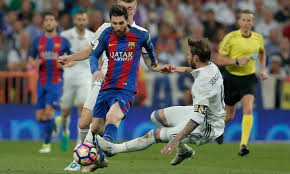
    My hero growing up was Sergio Ramos and in the stories of many others he is a villain. I loved him for the same reasons so many others hated him. He played hard, he was scrappy, he had an attitude, and he left it all on the field for his team. “I was running after Morata as fast as I could. At one point, I heard a voice in the distance saying “KILL HIM”…It was Sergio Ramos.” This quote from Valverde just about sums up Ramos. Is he a villian? sure. Is he also a hero? of course.

    The World Cup has had many heroes and many villains, in fact I believe that in order to be a hero, you must also be a villain.

    Looking at the “World Cup’s 25 biggest villains of all time” I think it is entirely possible to consider some of these people as hero’s – that is at least someone’s hero. Now as delicious as Chiellini’s shoulder may be, I am not here to defend his biting habits, however I think there is definitely an argument to be made that Suarez’s actions (handball) against Ghana could be considered heroic.

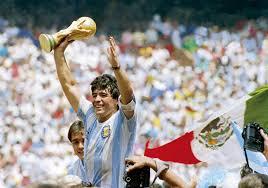
    The “hand of god” is another great example of the heroism of a villainous act, one that also considers the political influence. Argentina and England have a rocky history to say the least, and Maradona’s hand of god is a great example of political defiance. Now of course to the English (sorry Dan) this is the act of a villain, however I would be curious to see how the Argentinians felt about it. Plus can we really count this against him, it was God’s hand anyways…

    There are countless examples of villains in our reading this week and I want to re-emphasize my point from before to conclude my post – I believe that the villians to someone are the heros to someone else.

  • Kingdoms & Kings

    As someone who has been around the beautiful game nearly my entire life there is no denying its importance to the Billions of people around the globe who are immersed in the sport.

    This week our readings shifted focus to the fandom side of Soccer. Our readings this week from Golazo! and The World Cup as World History took us through the metaphorical pageantry of the sport.

    As much as sport is sport it also mimicks our way of life, our fantasies, our violence, and our prosperity… sport is war. Both on a micro level and a macro level the sport shapes the way that we interact with one another – from the hooligans of English football to the political manifestation in Argentina, Uruguay, and Brazil the sport will always mean something to someone.

    Although referred to as “Cathedrals” in our text to convey their importance I liken stadiums most to a kingdom (plus who doesnt like a little bit of alliteration in the title). These are the places that are crafted so beautifully to showcase their country/clubs prosperity, its where the people of the kingdom come together to cheer and celebrate. This is where the people come together, sing, chant, celebrate, and fight. I dont think there is anyway to hide how important these places are to the many people who occupy them.

    El Sueño del Pibe – The Kings

    These are the people who are loved and hated, put on a pedestal or spit on. The text talks a lot about the creation of these kings/legends, the way they fit different archetypes or stories. For so many reasons these people are believed to be the greatest (or overrated). Im not sure why but my inclination keeps going back to a quote from Ted Lasso from Roy Kent “Football is a game you played as a kid cause it was fun” (a little less colorful than the original quote). Maradona was just a pibe who played the game because he loved it – he wanted to win a World Cup for his country and he did, Im not sure it gets much more beautiful than that.

  • Progress or Repression – The WC as Political Spoils

    There is no denying across this course that the World Cup is a tremendous social, political, and economic opportunity for the host nation. The governments of Mexico (1970) and Argentina (1978) benefited greatly from having the contest inside of their borders.

    “In comparing Mexico 1970 to other World Cups via images, it’s clear to see it had more in common with the 12 editions that came after it, than it did with its eight predecessors.”

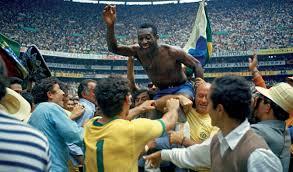
    Mexico 1970 was arguably the first “modern” world cup. The first contest featuring color TV (a fact that helped Mexico secure the tournament to begin with), the first tournament held in North America, and a streamlined version of soccer including the telstar ball and yellow & red cards. This was the final installation of the tournament using the Rimet trophy, awarded to Pele & Brazil.

    This tournament was an opportunity for Mexico to display its national pride and advanced technology on the global stage in lieu of internal political tension and repression.

    A famous picture of Pele which came out of the 1970 World Cup

    “He [Videla] was a serious man, and yet perhaps the most famous photograph of him shows him with a grin, in the clinching moments of the World Cup final, on June 25, 1978… The smile wasn’t a fan celebrating a win but a general celebrating a victory.”

    The military junta under Videla also used the World Cup as a political tool. This in my opinion was a significantly more deliberate use of the beautiful game as a political masking tool. Meer yards away from the stadium hosting world cup matches was a prison camp for political disentees.

    This quote highlights perfectly how Videla knew the power of the spectacle of the world cup. This event allowed him and his government to be portrayed positively on an international scale – something of huge importance to the legitimacy and rule of his government.

    Lots of people who were imprisoned or affected by the dictatorship look back with poor memories of this world cup and the political power that it gave to the government that caused so much harm. In some cases not even eating in restaurants that display pictures of the team from this year.

  • The Importance of Football

    As the title states, this week the legacy and importance of the beautiful game was on full display. The period following World War Two saw an immense growth in the sport, ranging from the 1950 resuming of the World Cup in Brazil, to the election of Joao Havelange as the first Non-European President of Fifa, the World Cup was increasingly growing in importance.

    One thing that I knew before the readings this week is that football is of great importance for much of the worlds nations. This is seen all across the globe with football unifying people, creating opportunity, and creating a sense of shared passion. The readings this week drove home this point with lots of new information surrounding the topic.

    “Throughout the history of football’s foremost global event, the question was whether the game had the ability to ameliorate some of these tensions and play a constructive political role. Or, on the other hand, did the football matches tend to exacerbate existing political problems?” pg 61 of Bowman The World Cup as World History

    I think that this quote sums up the main idea of the readings very well. Focussing on their hosting, and importantly their subsequent runner-up finish of the 1950 World Cup, the Brazilian national team shows how football has the power to unite and divide.

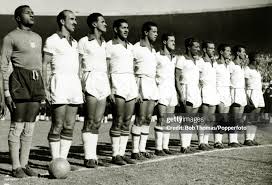
    Brazil’s 1950 World Cup Final Squad

    The 1950 World Cup was a spectacle for many reasons, it was the first World Cup post World War II isolation era of football, Brazil built a brand new stadium named Maracaná, and a moment for Brazil to highlight itself athletically, economically, and socially (themes that were very apparent in the world cups we have already covered in class)

    “You who I already consider champions… you take the field as authentic representatives of Brazil who will prove the worth of the Brazilian people to the entire world” a quote from the President speaking to the team prior to the World Cup Final Match against Uruguay.

    Now it is very clear how this World Cup presented such a promising sociopolitical opportunity for Brazil, so how does this prove that football can ‘exacerbate’ political differences?

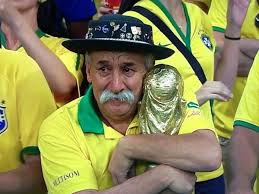
    Brazil ended up losing the match 2-1 to a Uruguay – a tragedy for the Brazilian fans, although not from that year (obviously) I think this picture shows how deeply football is rooted in Brazilian culture.

    Furthermore, this loss exacerbated the racism problem that was rattling Brazils society in the decades leading up to the World Cup. Many Brazilian fans blamed the loss on the African descended goalie – Barbosa. Some scholars even pointing out that it was decades until an African descended goalie was called up to the national team again.

    In conclusion, the World Cup is a beacon of hope for the host country to promote themselves to the world – however it can also have negative consequences domestically (as is the case in 1950).

  • Pictures and Power; How football highlighted political power

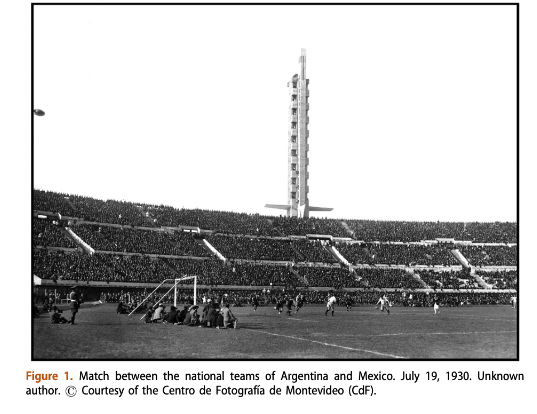
    Stretching across the Atlantic, the FIFA World Cup brings a particularly unique opportunity to showcase a country and provide it a political boost. 100 years after its constitution and independence from Spain, Uruguay (the 2 time defending olympic champions) hosted the 1930 World Cup. They used this opportunity to highlight the prosperity of their country as well as celebrate their centennial. Uruguay were eventually crowned champions over their rivals, Argentina, capping off a successful tournament for the nation. In some ways very similar the 1934 World Cup was hosted in an increasingly fascist Italy, who were also in turn crowned champions at home. Mussolini (and other fascist leaders) used sport as a way to enact their social changes, proving the 1934 WC championship was very important for Mussolini

    The 1934 World Cup saw a great expansion in teams from the 1930 version, mostly due to its more centralized location in regards to European teams. I would argue that this increase in size further legitimizes the political/social impacts that the sport has, as it continues to grow and be influential across the globe. Mussolini was able to promote himself and his party/cause through this event – even paying for opposing team fans to come to Italy.

    “Photographers created narrative understandings about football that had broader political and cultural meanings.”

    Jumping back across the pond, I think it is possible that the author of this article slightly overplayed the importance in the hand that photographers played in showcasing Uruguay during the 1930 World Cup, however there is no denying that, similarly to the 1970 WC in Mexico, technological advances played a key role in the overarching importance of the event. These photographs show us not only the players and teams, but also dive into the fans and the infrastructure of the event – something that I would argue really showcases Uruguay beyond just the sport.

    These photographs are a prime example of how Uruguay used this event to showcase itself to the world. Building a new stadium Estadio Centenario and financing other countries stays in the country, Uruguay was serious about using this tournament as a showcase of its national prosperity, even in light of a global financial depression. Although this good fortune would be cut short in the coming years, the pictures remain. Giving us a direct insight into how the World Cup has always been used as a political tool.

  • The formation of Football

    This week our readings surrounded how modern football came to be. From ancient “ball kicking” games around the world, English public schools & the codification of rules, to the use of sport in globalization, this weeks readings explored the topics of how the game we all know and love came to be.

    The first thing that I thought was really interesting and important from this weeks reading was the importance of other ball kicking games from around the world. China had their game cuju that they played during the Han dynasty, Japan had kemari, The Olmecs, Mayans, and Aztecs also had their version of kicking ball games that stretched all over the continents that we know today as the Americas. Even the Popol Vuh has its own ball kicking game. Although soccer did not directly come from any of these sports, the similarities are an important factor as to why the sport was able to be loved across many different countries, languages, and cultures.

    Soccer can be played anywhere with some open space and a ball. Thats what made it appealing when there were 40 of us playing at 7:30am before school in 7th grade – and why soldiers played in during the Christmas Truce of WWI. This simplicity is one of the driving factors as to why the game has grown in the ways that it has. The game was originally spread from England through laborers and the working class – similar to how cuju was spread along trade roots out of China.

    Imperialism and globalization also has a big hand to play in the spread of football. When I think of imperialism and the culture that spreads, religion is the first thing that comes to mind. Football on the other hand was also spread this way, which is something I had never thought about. England and France are two countries that spread football through their imperialist endeavors. Additionally, it could be used to assert racial/social dominance and control over these populations, something that could however backfire.

    Sport can imitate war. This is why we see areas in the Caribbean that are so good at baseball, if you cant beat on the Americans occupying your country (physically), beat on them at a sport. In terms of soccer this helped during the decolonization period post WWII. One prime example used in the text is Senegal beating France at the 2002 World Cup. I had never thought of Soccer as a politically/socially motivating axtivity in this way before.

    Lastly, Argentina and Uruguay are the two most dominant nations in South America in Rugby, the former being a member of The Rugby Championship (southern hemisphere version of 6 nations). It has interested me why these two nations seem to have a leg up on the rest of the region – something that the first chapter of Golazo! made clear. These two sports grew out of one another with the difference during this period being more of a formality on the rules that two completely different sports that it is viewed now (association vs union/soccer vs rugby). Some of the clubs in Argentina, specifically those founded by Anglo populations, switched between association and union rules in their early years, I imagine this is why we see dominance from Argentina in the sport today.

  • Who is Mexico? How the 1970 WC Final displayed Mexican Modernity

    “The 1986 World Cup finals will not be held in Colombia. The golden rule whereby the championship would serve Colombia and not a group of multi-national companies was not observed. Here we have many other things to do and there is no time to attend to the extravagances of FIFA” – Belisario Bentacur. Without getting too deep into the technicalities/reasons behind the 1986 Fifa World Cup Finals (WC) being hosted in Mexico instead of Colombia, I believe that this quote is a good analysis of the power, both politically and monetarily that the WC holds. This was evident 16 years earlier with the 1970 World Cup in Mexico – and the way it was displaying Mexican Identity.

    The 30 years after 1940 Mexico experienced a period of economic growth and relative political stability – a period dubbed “Mexican Miracle.” During this time the government exhibited this progress through different mediums, most notably sports and television. One of the main ways that the Mexican Government thought to present themselves to the world was through hosting of large-scale, international sporting events. The Mexican government wanted to hose The Olympics & World Cup, amazing opportunities to present “an image of a modern Mexico”. The Mexican government applied to host the 1956, 1960, and 1968 Olympics, eventually hosting the 1968 edition.

    Although there was interest from the Mexican Government as early as 1958 to host the World Cup, the actual 1970 bid was posed from a a group of businessmen. Emilio Azcárraga Milmo and Guillermo Cañedo being two of the most prominent. Azcáarrga, who was the heir to his families media empire controlling lots of the Mexican TV stations and later becoming owner of Club America. His family had broadcasting rights to the Mexican Football League which gave him a foothold into the world of Mexican Sports. Cañedo, on the other hand, rose through the ranks of soccer administration via his success with ‘Club Zacatepec’ winning 2nd and then 1st division titles. He became President of the Mexican Football Federation and director of Club America in 1961. It is at Club America where these two men met, a partnership that saw Cañedo get involved with Azcárraga’s media company. This created a bond where soccer and media grew off of one another, and later became influential in the World Cup organizing commitee (OCMX70)

    Connecting this back into the theme for the week, this partnership became an important stakeholder in the 1970 World Cup. Although they were approaching the same task as the Mexican Government had been with the Olympics, that is displaying the modernity and culture of their Nation, they were also doing so in a way that consolidated both their power/wealth and that of their friends. But hey no one ever said FIFA wasnt corrupt.

    Bowman, William D. The World Cup as World History. Available from: Appalachian State University, Bloomsbury USA, 2019.

    [CT] Bunk, Brian D. “Colleen Bawns and Bonnie Lassies: Women’s Soccer and Sporting Culture in Late Nineteenth-Century San Francisco.” In Soccer Frontiers.

css.php