Author: GraysonB

  • The 1986 Mexico World Cup and 1985 Mexico city earthquake By Grayson Banks

    These two articles provide a detailed examination of the infamous 1986 World Cup, held in Mexico, which was marred by significant controversy. In 1985, Mexico City was struck by a magnitude eight earthquake that devastated the city. Normally, when a disaster of this magnitude strikes a city, you expect the government to quickly organize rescue efforts to save people and provide relief, including food, housing, and other necessities, to those who have lost everything.

    But the Mexican government was very delayed in responding to the earthquake due to several factors, such as the earthquake taking out state-run hospitals and communication centers. The people of Mexico City took matters into their own hands after the government failed to help people in a timely manner. They formed rescue parties to try and find survivors, created food and clothing shelters, and assumed duties normally fulfilled by the government. The president of Mexico at the time, Miguel de la Madrid, and the Mexican government as a whole, responded very poorly to the disaster, as President Madrid limited his on-site interactions with people affected by the earthquake, making speeches he gave about the disaster seem more like dehumanized statistics instead of affirmations for rescue efforts being organized by the government and the citizens. 

    Despite this devastating earthquake hitting Mexico City only eight months before they were scheduled to host the World Cup, the government insisted on still hosting the event in the country. The Mexican government told the people that they only planned to spend fifty-six million dollars to host the World Cup, but they needed to update far more stadiums than they initially planned, so that number soared all the way to two billion dollars by the time all of the renovations were completed. This, along with the lack of support from the government during the earthquake, had a lot of people outraged and made alot of them question if the government cared more about the World Cup than they did their own people. 

    This political consideration isn’t anything new for the World Cup, however, as the competition is usually used as either a statement of political power from countries like fascist Italy who hosted the event in 1934, or as a cover-up like the 1978, which was supposed to distract from the horrible things like tortures and murders of political opponents that were committed by the junta in Argentina. In conclusion, the World Cup is a privilege to host as you have the eyes of the whole world on your country for a while, but it can very easily be used for alternative means by the governments in power in certain countries.
  • Grayson Banks

    Hometown: Asheville, NC

    Major: Secondary History Education

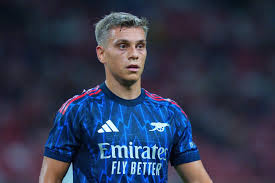
    About Me: I have a genuine passion for sports, particularly football and basketball, but I also have a keen interest in almost every other sport I’m familiar with. I used to play soccer in a youth league when I was younger, and that was the peak of my soccer experience. I had a roommate last year who was a big soccer fan, and he played FIFA all the time. I would often ask him questions about the game and the sport in general. He really helped to pique my interest in the sport again, and I want to use this class to further my knowledge of soccer. Also, my roommate was a huge fan of Leonardo Trossard for some weird reason, so he has always stuck with me when I think about soccer.

    (My short hero)

  • The Oneida Football Club By Grayson Banks

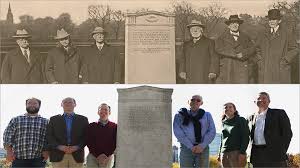
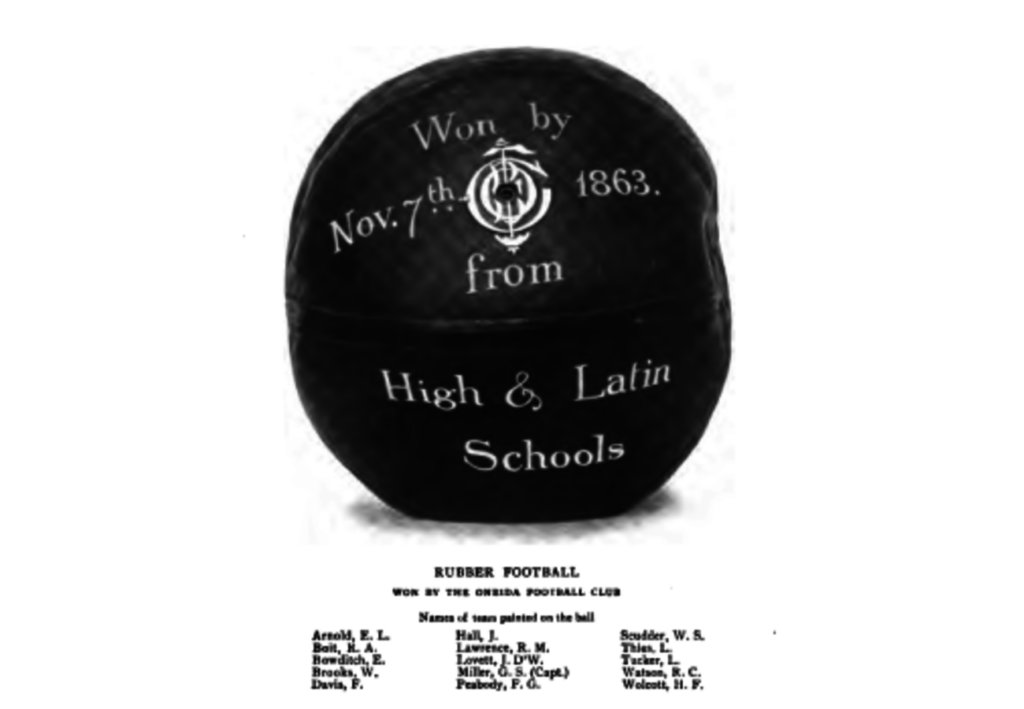
    Soccer supposedly first began in the United States with the formation of the Oneida Football Club in Boston, Massachusetts. The Oneida football club was formed in the fall of 1862 by a group of boys from the Dixwell Private Latin School, making it the first organized football club in the United States. The club only lasted three years, but during this time, other informal clubs in public and private secondary schools across Boston started to compete in sports like football and baseball. Eventually, football would spread across the Charles River to Harvard University, where students would transform the sport, and they would start competing in the “Boston Game,” eventually developing intercollegiate gridiron football matches.

    The Oneida Football Club claims that its club was the first organized soccer club in the United States and that it is the inventor of American Gridiron football. In reality, sports have very long, convoluted histories that can often be hard to pinpoint specific founders or inventors of sports. These sports often evolve and change over time, with different people and time periods bringing different ideas that either stick or don’t stick. And in most cases, like with Abner Doubleday, who supposedly invented baseball, myth can often overtake the reality of the sport’s creation. Usually, these myths are created long after the passing of the supposed creators of the sports, but with the Oneida football club, a lot the the members actually lived to see the sport they are said to have invented become popular. 52 members were included in the monument to the Oneida football club, and this really signified that the club was not really organized in the sense we think of today, but instead it was a group of boys who would meet up to play the game whenever they had time. A lot of the boys in the groups came from affluent Boston families, with a lot of them having connections to Harvard University, with 37 of the 52 boys attending Harvard.

    The Oneidas never really laid claim to being the inventors of gridiron football or the first organized football club; instead, they just viewed it as they always had a group of friends playing their game in the Boston Commons.

css.php