Author: DanielleD

  • Final DIGITAL Project

    Link: https://www.sutori.com/en/story/sportswashing-and-political-manipulation-in-the-1934-fifa-world-cup–oukC4uhHsC6UN6q2hSYmdAZq

    For my project, I used Sutori to build a timeline that explores the 1934 FIFA World Cup. The 1934 World Cup was exploited by the Italian fascist regime as a means of sportswashing. In my project, I examine the infiltration of fascism into Italian football and culture. I analyzed key events during this World Cup, including the quarterfinals, semi-finals, and the final match. Each match Italy played was marked by controversy and pure aggression. This project explores how these matches were more than just a sporting torment, but a carefully orchestrated display of propaganda.

    To present the history of this World Cup, I used Sutori to create an interactive timeline of the tournament’s key moments. In the Sutori, I included primary sources to illustrate the regime’s tactics and integration into the World Cup. Furthermore, I included photographs from the events and matches. These primary sources help bridge the gap between history and reality by showing the real-time stories of the games.

  • Early Womens soccer

    Both of these weeks’ readings explored the introduction of women to football. The bunk reading shared the US perspective, and the Williams shared the UK’s perspective on women playing soccer. I thought the vastly different reactions of both places were very fascinating. The UK wanted to put an immediate stop to women post World War I, while the U.S. was intrigued by the idea of women playing soccer, especially in the schools. Women’s soccer in the U.S seemed to be heavily integrated within the college and schooling system. Therefore, drawing the famous UK women’s teams to tour the U.S in 1922. The U.S. brought opportunity and new components to women in the sport.

    While the U.S were intergrating women’s soccer into schools, the UK put a full stop to women in the sport in 1921, post world one. They deemed sport “not suitable for the female body.” This example of institutional gatekeeping is really interesting to me since it is a striking contrast compared to women’s soccer in the U.S at this time. It is very clear in the UK that once men came back from war, they felt threatened by the crowds women’s soccer was bringing. I believe that the ban in the UK was strategic and was placed in order to transfer the focus back to men’s football. Post World War I, UK men had no interest in sharing the sport with women. Across the sea in the U.S, soccer was seen completely differently. The sport was refined as a “safe” or  a “schoolgirl” sport for women, further supporting the claim that men’s soccer in the UK was threatened by women, therefore causing a ban on women in the sport.

    Ultimately, the stark contrast between these two nations reveals the many perspectives on the introduction of women in football. With the U.S bringing curiosity to women in the sport, it was viewed as a “safe” sport and a better alternative to violent sports that were “not suitable for women” at the time. The U.S allowed women in the sport to flourish in an academic setting; on the other hand, in the UK their was a just a complete ban on women in the sport. In conclusion, it is profoundly ironic that the U.S. welcomed women into the sport because it was defined as “safe,” while in the UK, women were banned from playing specifically because the game was labeled as “unsafe” for the female body.
  • Week 10 Blog post

    Both Simon Critchley’s “Woking Class-Ballet” and the article on a Ranking of the 25 worst World Cup villains support the idea that football is more than just a game; it is an outlet for fostering identity and culture. However, ‘Working-Class Ballet’ focuses more on the impact football has on the fan and viewer rather than the players on the pitch. Tom Sunderland’s ranking highlights notorious players who have ruined a World Cup for a team or for the viewers. While Simon Critchley shares personal experiences he has had with football and with Sunderland, the focus is primarily on the game. With that being said, they both represent the effect and impact football can have on individuals, whether they are a player or a supporter.

    The “Working Class-Ballet” had a heavy emphasis on how football had a huge impact on his relationship with his father and family. I find this resonates with my childhood, as baseball really brought my family together. Critchley also discussed how his father passed down his love for Liverpool football club, which supports the idea that football clubs can offer a shared identity and unity among others. From my personal experience with sports clubs and teams, they can serve as an inherited identity among family, and the reading “Working Class-Ballet” further supports this.

    While Simon Critchely writes about how his football created a bridge between him and his father and how Liverpool football club gives him a sense of belonging, he also has a heavy focus on the player, Real Madrid player Zidane. Critchely idolized and viewed Zidane as a remarkable and an overall infamous player. Another similarity between these readings is that the concept of football and the World Cup has “heroes and villains.” Simon Critchley very much viewed Zidane as a hero on the pitch. The Ranking of the 25 worst World Cup villains showed that players most likely will be viewed as a villain if they act out of anger or cheat on the field. Ultimately, readings do contrast each other, but they do support the ideas. Both readings support the idea that football and the World Cup have heroes and villains in the sport. Furthermore, they both provide strong examples of how football is far more than just a sport.

  • Week 8: state and soccer

    The FIFA World Cup is far more than just a sports game; it is a complex business model of entrepreneurial innovation where the line between business and sport is constantly being crossed. The 1966 and 1994 games are clear examples of the FIFA business model in use. The 1966 game introduced new rules for licensing, merchandising, media, and broadcasting. The 1994 game brought viewership and a new use of commercialism for the World Cup. The game of 1966 also introduced the use of a “swarm theory,” which, in this context, means that each stakeholder (such as sponsors, teams, media, and fans) acts independently like individual bees, but collectively supports and contributes to the World Cup—the hive. While the 1966 and 1994 games demonstrate the success of the “swarm theory,” the 1978 World Cup shows how the “swarm theory” can be used as a weapon.

    What I found the most interesting was the contrast of each World Cup. The 1978 World Cup demonstrated how the sport was used as a distraction for kidnappings and tragedies occurring in Argentina. The Argentinan governement was the expioting the business model that was established by the 1966 World Cup. It is almost chilling how the entrepreneurial innovations work exactly as intended in the 1978 World Cup. Unfortunately, these innovations were used for the wrong reasons. The use of advertising and commercialism in 1978 created enough noise and cheers to cover up the screams and voices of those suffering in Argentina.

    The readings also demonstrated how the FIFA business machine is heavily intertwined with who is at the controls, whether it is the government or citizens. This highlights how the World Cup is heavily influenced and thrives on political power. Together, these readings and three World Cups prove that the FIFA World Cup is not only about the sport anymore but rather, money, buniesss and power.

  • Politics and national identity

    The post-war World Cups were filled with corruption and political bias. This is a common occurrence I’ve noticed throughout this course. The 1950 World Cup is a prime example of the persistent political influence on the FIFA World Cup. Bowman writes about Brazil’s goals to prove themselves not only in terms of football but also politically, economically, and culturally. Following Brazil’s shocking loss during the final match against Uruguay, there was the racial scapegoating targeting players of African descent. The blame shifted to one player, in particular, goalkeeper Moacir Barbosa. Ultimately, Barbosa became a symbol of national failure. Barbosa’s blame stands as a testament to how the interwining of racial bias into the FIFA World Cup can affect the players and the team.

    Another point that stood out to me in the readings was the “Football War.” In the 1969 qualifying matches, there was a huge outbreak of violence between El Salvador and Honduras. Furthermore, the “Football War” was the final trigger in a deep-seated conflict over land, immigration disputes, and economic inequality. Moreover, this “War” is a stark reminder of how the World Cup is woven into politics and racial bias. The World Cup provides people with a sense of national pride and unity, which is often exploited and used as an instrument for political propaganda and brainwashing. The treatment of goalkeeper Moacir Barbosa and the “Football War” highlights the recurring theme of the political ties in the FIFA World Cup. Furthermore, they emphasize how these political ties can lead to violence, disputes, and conflicts.

  • The Images Behind the 1930 World Cup

    This week’s readings focused on the 1930s World Cup in Uruguay. The Passage “From Beauty to Duty: A Footballing History of Uruguay” wrote about the racial controversy during the 1916 South American World Cup. This World Cup was intertwined with politics and racial biases. Furthermore, these readings illustrated how football can be used as a tool for political diplomacy.

    Players Juan Delgado and Isbelino Gradin were excluded from the 1916 tournament because of their race. Uruguayan media defended Delgado and Gradin as Uruguayan nationals. With this being said, the World Cup provides a sense of national identity, and Delgado and Gradin were denied this due to racial bias.

    Ultimately, these three readings showed the intersection of football and politics. Furthermore, they discussed the racial execution of players Juan Delgado and Isabelino Gradin. The World Cup can be used as a tool of political unity and national identity. However, the World Cup can also be used as a way for political leaders to conduct political brainwashing.

  • Danielle Debone

    Hometown: Holly Springs, NC

    Major: History

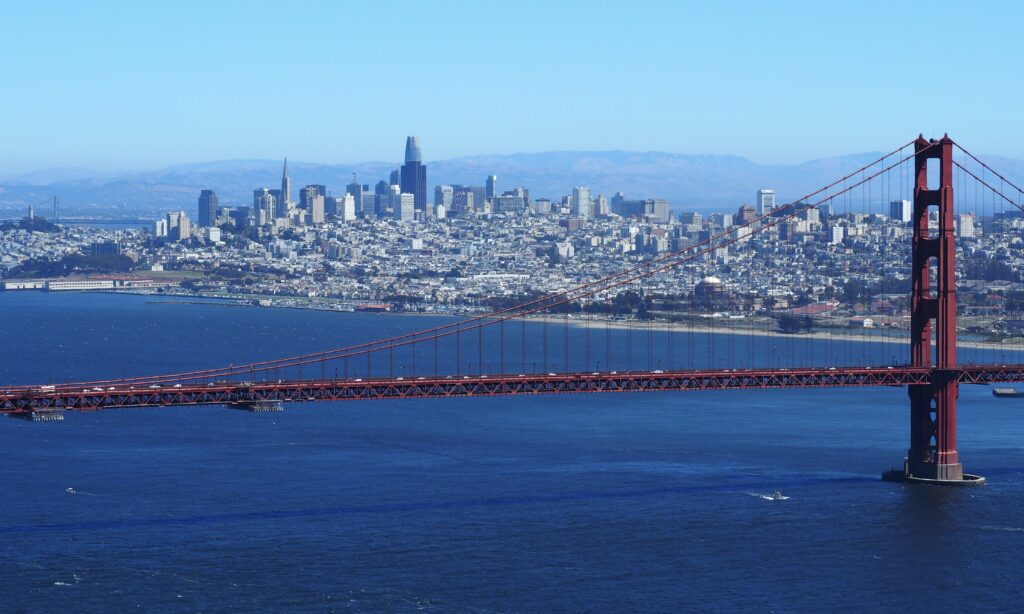
    My name is Danielle DeBone, and I have a strong interest in history and sports, which is what drew me to this class. However, my soccer knowledge is quite poor. I grew up in the Bay Area, surrounded by baseball, which sparked my interest in sports at a young age. As I have gotten older, I have gained more of an appreciation for sports on a global level. With this being, I also love being outdoors and travelling. The picture I have chosen is of San Francisco, which is where my love for sports started.

    OLYMPUS DIGITAL CAMERA
css.php