For my project I chose to look into the controversies behind the 2018 and the 2022 world cups and make a video, I mainly focused on the bidding process but also touched on the human right an ethical concerns. Russias corruptions was mainly due to power after they had been given the world cup not bribery or any thing to that extreme. Qatars bidding process was the opposite, lots of accounts showed vote trading and illegal corruption yet due to the rules back and the lack of transparency FIFA could not be held responsible.
I was drawn to this idea as it fairly recent and growing up watching the world cups I knew about the controversy but have never looked into it more. I found that relating historical work in a different way to the norm was a fun way to get across information whilst making it a bit more fun and easier to follow. For me a hard limitation was the time limit for my video I found I needed to cut bits out to make sure I could stay within the limits.
Women’s football didn’t just appear randomly it took lots of set backs before it started to create growth and popularity around the world, the readings looked into how women’s football started with key milestones throughout the early 20th century. The readings look into both Europe and the US growth of the sport.
The readings both use similar ways to say that the main start to women’s football’s popularity is through moments where society temporarily allowed women more roles in the public eye, like world war 1 when the men went to fight, as well as it evolving alongside immigration. After this women’s football wasn’t just ignored the men actively sought to get in the way and put a stop to the games, for example they ended up being banned by the FA in 1921 due to men trying to push them out after returning from the war.
Even when the women were allowed to play they faced other issues due to their gender, the readings emphasize issues like their clothing, bodies and negotiating social boundaries, these are all things not found in the male game and are only due to femininity. As well as these issues women faced issues with how they played, typically most games were internal or semi organised, showing their growth and how they navigated their way to be able to play organised football.
The main differences in these readings is showing how one focused more on how football grew in the US vs the other emphasising it on a more global scale. Over in America women’s football was mainly played in colleges and informally which is how it gained its popularity as over in England there were leagues just facing challenges of their own. Either way they both showed similar patterns in the growth showing that it grew big during the war times, and began with a strong early interest, which then followed by pushback after the men returned, all showing that they were treated as if they were insignificant
I think these are both really cool and informative pieces and both look at different areas of the world but almost tell the same story. I also think that more recently women’s soccer has become even more popular and more widely accepted in recent times, but there was clearly always an interest and it would have been interesting to see its development if it wasn’t scrutinised in its early development.
Football becomes more than just a game because it thrives on heroes and villains. The difference between the two creates unforgettable moments that keep fans invested beyond the scoreline.
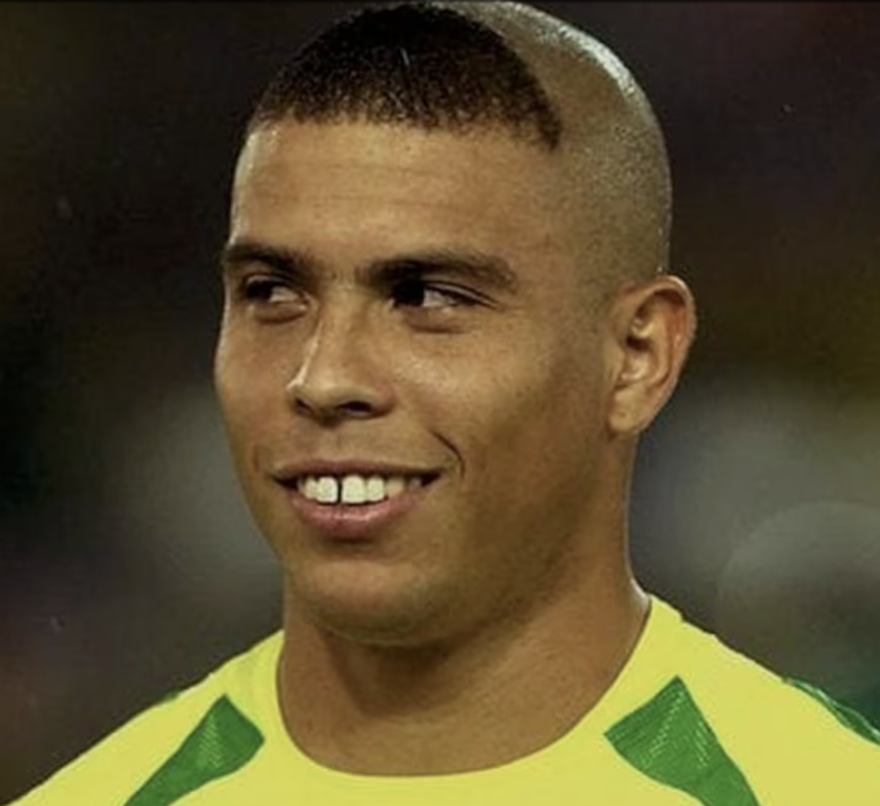
Heroes represent the beauty and joy of the sport. Players like Ronaldo Nazário, someone who plays with “alegria” a Brazilian idea of pure, childlike joy. In the lead-up to the 1998 FIFA World Cup, Ronaldo was celebrated not only for his dominance as a striker but for the way he played with freedom, flair, and visible happiness. He embodied the idea that football is an art form, something that brings people together and makes them fall in love with the game. Heroes give fans someone to believe in, someone who represents the best version of the sport.
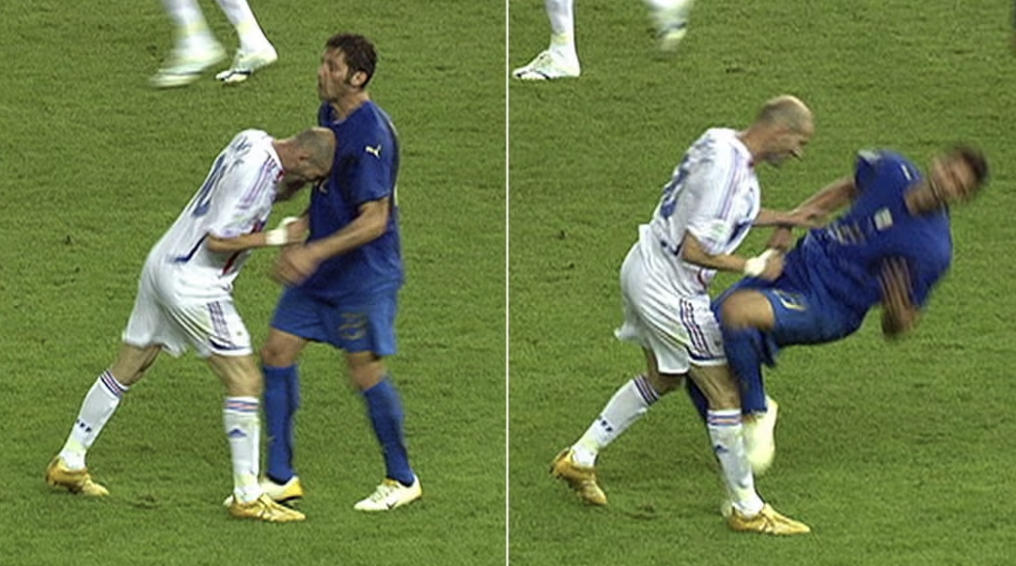
But villains are just as important, they introduce conflict, controversy, and a range of different emotions, without them, the game would feel predictable and less meaningful. For example, Zinedine Zidane, was widely admired for his brilliance, yet he became a villain in the 2006 FIFA World Cup Final when he head butted an opponent in his final professional match for the ‘les bleus’. I personally see Zidane as brave and somewhat heroic for this moment as he was defending his sister. Although violence like this should not be a part of the game we love, I don’t think attacking family members of your opposition should be either, which typically goes unnoticed in these moments. That moment didn’t erase his greatness, but it added complexity and drama, turning a world cup final into a global controversy.
Villains also help define heroes, a great performance feels even more meaningful when it comes against adversity whether that’s a good opponent, a controversial referee, or an unsportsmanlike act. Having a bad guy makes victories more satisfying and defeats more painful. It starts to build a kind of narrative of struggle, redemption, and to a certain extent resilience that fans remember.
Ultimately, football needs both because it mirrors storytelling heroes like Ronaldo show what is possible when talent and joy come together, while villains highlight the challenges and imperfections that make success meaningful. The interaction between the two is what transforms matches into spectacles and makes players remembered not only for the brilliance but the role they played as a good or bad guy. Without heroes, there would be no inspiration and without villains, there would be no drama, yet together, they create the full emotional experience that makes football the world’s game.
Reading The World Cup as World History and Chapter 9 of Golazo! made me think differently about the fan experience, especially how the readings describe stadiums almost like “cathedrals.” That idea really stuck with me as it captures what a fan feels. Fans aren’t just watching a game they are a part of something emotional and collective, the chanting, the energy, and the colors it almost feels like a ritual.
What I found interesting is that even though both readings talk a lot about commercialization of sponsorships, FIFA’s power, and the global business side of football, that is not really how fans experience it. From a fan’s perspective, the World Cup is about national identity and pride. It’s more about representing where you are from, that emotional side is what gives the event true meaning and draws in billions of spectators.
At the same time, there’s definitely a disconnect whilst fans are treating these moments like something sacred, the system behind it is more about money and control. Golazo! talks about how players move all over the world to play in different leagues, which can make teams feel less national in a way. Yet when the World Cup happens, fans still fully buy into it that sense of connection doesn’t go away.
I believe both perspectives highlight the crucial role fans play. Without them, the World Cup’s significance would be diminished, regardless of the financial stakes. The “cathedral” concept sums it up for me; football may be a worldwide enterprise, yet for the supporters, it retains a personal quality
The article “While the World Watched” looks into the connection between Argentina’s victory in the 1978 FIFA World Cup and the violence of the country’s military at the time. Argentina was ruled by Jorge Rafael Videla and the military responsible for the Dirty War, a period which had kidnappings, torture, and the disappearance of thousands of citizens. While the world focused on football, the government used the world cup to improve its international image and distract everyone from the truth.
The government presented Argentina as unified, strong and independent, stadiums were filled with fans, representing national pride.There were also detention centers nearby the stadiums showing disparity between the country. At ESMA in Buenos Aires, prisoners were held and reportedly could hear the celebrations from nearby matches; the contrast between all the joy and the suffering shows how the World Cup was a propaganda tool.
Argentina’s 3 – 1 win over the Netherlands national football team in the final brought genuine happiness to the public. Argentina’s win still remains a historic moment in the country’s history. However, the government used that success to gain more power and cement their rule over the country, presenting the win as proof of national strength and stability.
Groups like the Mothers of the Plaza de Mayo continued to protest, demanding answers about their missing children, their activism highlighted the reality that celebration and repression existed side by side. Ultimately, the 1978 World Cup represents both national achievement and moral complexity, showing how sports can be integrated with politics.
The readings all look at the idea that the World Cup isn’t just a soccer tournament, it is a stage where countries find out identity, race, power, and money.
In the Diamonds in the rough reading, the author uses Pele and Garrincha to show two different sides of Brazilian football. Pele became the global icon closely tied to sponsorships and Garrincha feels like the opposite, deeply connected to ordinary fans. By setting this contrast during the 2014 FIFA World Cup, the article suggests that Brazil feels split. There’s pride in hosting the world cup, but also frustration about corruption, inequality, and how commercial the sport has become. Soccer, which symbolized national creativity and unity, now also reflects tension.
The afro europe in the world cup reading looks at race and belonging in Europe it focuses on how players of African descent have reshaped national teams like the France national football team and the Belgium national football team. These teams show what modern Europe actually looks like which is diverse and shaped by immigration. The article also points out how fragile acceptance can be when these teams succeed, diversity is celebrated yet when they struggle, some fans question whether those players are actually French or Belgian. The World Cup becomes a spotlight, exposing unresolved debates about race and citizenship.
In The World Cup as World History, Bowman looks broader; he argues that the tournament mirrors global history from decolonization and migration to the rise of international media and corporate power. The World Cup didn’t grow in isolation; it expanded alongside globalization and the influence of massive governing bodies. He argued Issues of race, nationalism, and economics aren’t separate from the sport they are built into it.
These all work to show that the World Cup symbolizes more than just the game. Whether in Brazil’s debate over commercialization, Europe’s struggle with ethnic identity, or the broader forces of globalization, soccer becomes a way countries can tell stories about who they are.
The world cup openly has lots of controversy through proven situations and public gossip stating whether certain things are fair or not fair. Bowman goes into depth on the England world cup in 1966 and the 1978 world cup in Argentina. According to reporters and other recognised people both world cups had bad reputations.
In 1966 there was lots of political tension with African countries boycotting the competition due to the limit sport the continent had been allowed, lots of latin american countries believed there was a bias towards the europing nations from the referees. Not only latin america but germany who played England in the final felt that they had lost due to ‘shoddy refereeing’. The ‘political and cultural wangling’ led to changes within FIFA with the latin americans feeling aggrieved from the outcomes of the world cup. This ultimately led to Havelange (a Brazilian) becoming the head of FIFA to make latin america, africa and asia feel represented again.
The 1978 world cup also had political issues with the economic state of the country and the event being pushed on the country hiding violence within the people of Argentina. A long serving observer stated ‘Argentina was the worst. Won by the worst . . . in the worst and most unsatisfactory circumstances. Disfigured by negative football, ill temper, dreadful referee-ing, spiteful players, and the wanton surrender of Peru’.
Chapter 6 of Golazo! and Bowman’s readings focused on the connection between football, politics, and national identity. As the sport grew, governments realized it could help with unity and develop a strong sense of pride among the people. Global tournaments like the World Cup became opportunities for countries to showcase themselves on the world stage. The outcomes of matches and who hosted the cup carried political and emotional significance, shaping public mood and reputation abroad.
Bowman started off by explaining the growth of soccer in the twentieth century and showing how it is the most popular game in the world today. Bowman stated ‘yet it would be football that would gradually and definitely become the world’s game’ followed by ‘it boast more players, leagues, sponsors, spectators, viewers, gamblers, and global impact than any other sport in the world’ this sentence emphasis the sport as the ‘worlds game’ by people the most popular in all categories relevant to popularity.
The chapter then moved on to discuss kicking games from around the world, and although there are many there are few if any which have a direct connection to the contemporary sport of soccer. Ancient Chinese and Mesoamerican ball games are two early kicking games showing the deep rootedness of kicking games in human history. There are also records of kicking games among humans as far as Patagonia on the southern tip of the continent, native Americans also had their versions of kicking games as did the indigenous people of Australia.
Modern soccer originated in England in the mid nineteenth century although kicking and ball games had been known in Great Britain for centuries although they had wide rules. Places such as Sheffield and Lancashire did the most to spread the popularity of the established rules and commercialise it for the wider public by using professional players.
Soccer burst on to the scene in Europe as England introduced it to some of the countries and others started hearing about the established rules and making their own leagues. Police reports in Europe show that the authorities were not always in control of a game that was spreading like wildfire throughout the continent. The sport had spread to the Americas but yet there was still no control over the sport, which led to the creation of FIFA in Paris in 1904. FIFA helped set clear rules and organized international competitions, the governing body helped the sport come to where it is today and be known as the world game.
In today’s world the organization is under scrutiny and lots of international pressure with recent events sparking controversy about the organizations, although these are mainly to do with the people running them at this time.
The 1970 world cup held in Mexico saw outstanding athletic performances with this being the first world cup in which yellow and red cards were used and there wasn’t a single red card in the tournament. Mexico had experienced growth since the 1940s by showing relative political stability and large economic growth. The FIFA archives show that the Mexican football federation (FEMEXFUT) had shown interest in organizing the 1970 World Cup as early as 1958 before the bid for the 1968 Olympic Games was placed, the government was not directly engaged in football but still supported the World Cup bid.
FIFA’s recognition of FEMEXFUT allowed teams representing Mexico to participate in international tournaments from 1929 onwards. Mexico sent a team to the 1928, 1948, 1964 and 1968 Olympic Games as well as other tournaments as for World Cup appearances, Mexico was represented by a team in every tournament except 1934 and 1938. Throughout the twentieth century, the Mexican Government used cultural diplomacy to communicate a favourable image abroad. As journalist Armando Ferrer wrote in 1964: ‘Mexico City is particularly interesting because it provides modernity and many comforts, as well as a rich history with colonial and pre-colonial elements’ This comment enforced the governmental campaigns that represented Mexico as modern and traditional.
Government officials such as Ernesto P. Uruchurtu, Marte R. Gómez and José de Jesús Clark Flores bid for the 1956, 1960 and 1968 Olympic Games with the goal of using sport to show the world of modern Mexico. The first attempts to host the Olympics in 1956 and 1960 were unsuccessful, yet Mexico’s bid for the World Cup was successful on its first attempt; this may have been due to Latin American countries having already bid for and organized the World Cup previously. Mexico was elected as the host of the 1970 World Cup on 8 October 1964, with 56 votes, while Argentina received 32, and there were 7 abstentions.
The main organizers for the 1970 World Cup were mostly Mexico City’s elite financial citizens, as the federal government participated through Foreign Affairs, providing visas and regulating international travel. Mexico organized the World Cup once again in 1986, after Colombia withdrew from organizing the event and FIFA held a last-minute selection. In 2026 Mexico will again host the world cup alongside Canada and the United states showing their development and putting their mark on the sport.
About: My interest about soccer is from my up bringing, as i am from England it is the main sport played and talked about therefore I grew up playing it. I typically call the sport football but have adapted to calling it soccer whilst out here in America.