Author: AbrahamCH

  • Corruption, Crisis, and the 1986 World Cup

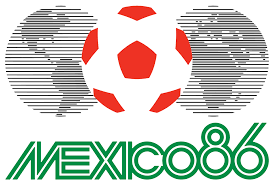
    I have always been in love with soccer and especially when it comes to Mexico. I grew up watching the games with my family and cheering for Mexico no matter what. It’s a sport that unites all of us and makes us feel the most patriotic ever. That is why I decided to base my research on the 1986 World Cup based in Mexico with it also being their second time as hosts. Prior to the 1986 World Cup kick off Mexico was surprised by a deadly 8.1 magnitude earthquake on the morning of September 19, 1985. It struck at the time where many people were just starting to wake up and get started on their daily routine. Within seconds tens of thousands of Mexicans lost their lives and thousands buried in rubble. It sent the capital into complete chaos and the government was nowhere in sight. During the time Mexico was under a sort of dictatorship as El PRI the one party to dominate the political landscape in Mexico was now being uncovered for their deep corruption. Their priority became to assure that the outside world could see them as strong and resilient and still capable enough to host the upcoming World Cup. Unfortunately the severity of the situation was too extreme and Mexico had to ask for outside help. While the people of Mexico were left to fend for themselves they had to dig up their own family, friends, and neighbors. Help came within your everyday people and not from the government. The corruption we can see more is the intertwined relationship of El PRI and Televisa. They made sure to be there for each other and back each other up. Televisa would block any bad press against El PRI and their response to the earthquake in return Televisa was given total rights to the 1986 World Cup. Unfortunately this corruption still occurs and Mexico faces these issues as we saw with the other devastating earthquake in 2017 on the 32nd anniversary of the 1985 earthquake. The corruption of the buildings that collapsed once again shined light on this ongoing issue. Overall the issue still occurs and researching this topic helped me a lot to learn more about the 1986 World Cup.
    https://arcg.is/1qzzGC1

  • Gender Inequality

    By: Abraham Cruz-Hernandez

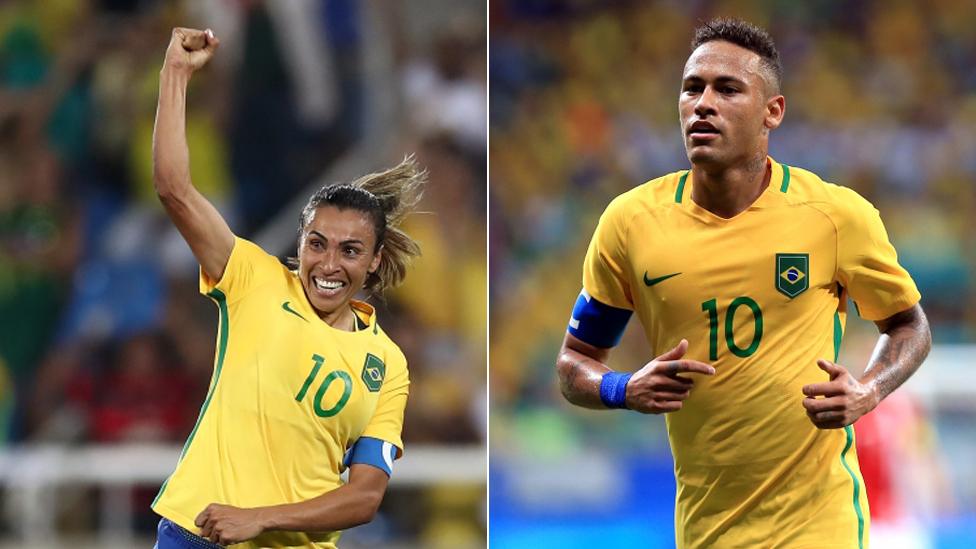
    Brazil football stars Neymar and Marta in 'battle of the ...

    While reading The Atlantic we can see that Neymar and Marta are the top soccer players of Brazil and it highlights the gender inequalities of these top soccer players. It highlights the way they both are portrayed differently

    Neymar is portrayed as a global icon in modern day soccer. He is surrounded by sponsorships, main media attention, and immersive financial gains. He represents modern day Brazilian soccer culture and benefits from being a male and being amplified to the main soccer stage. Meanwhile Marta who is a well known soccer player is being undermined despite being very decorated with her awards. Marta has has to navigate through a system that undermines women’s sports.

    The comparison between the two shows how the system is set to support different genders by the way they do institutional support, media coverage, and audience investment. Brazil takes pride in their nationality they uprise Neymar and praise him for his success. All while Marta is downplayed and not given the same attention as the most successful Brazilian female soccer player.

    We can see the inequalities by the most viewed final World Cup matches between the two genders.

    • Men’s FIFA World Cup Final Match
      • 2022 Qatar (Argentina Vs France)
        • 1.5 billion
    • Women’s FIFA World Cup Final Match
      • 2019 France (US Vs Netherlands)
        • 263.6 million

    We can see the difference between the two most successful soccer players and how it is because of their genders. It leaves you wondering why soccer in women’s sports is overlooked and the need to show them the same respect and value as we do with men’s soccer.

  • Women and Soccer

    By: Abraham Cruz-Hernandez

    The WWI-Era Women's Soccer Team Who Could Beat the Men | HISTORY

    During the World War’s many of the men who played soccer left to go to war. So women took over the working industry and sports.

    During this time the norms of women in the industry were frowned upon and they were not allowed to play in a sport like soccer. Despite it being frowned upon they started their own teams and leagues and had their own games. The chapter highlights the issues women faced during the time and the way they used this as a way to gain more independence and visibility int he public life.

    When World War I came around the women had a chance to play more through the roles of men. It was a society where many of the men of the countries involved were at war and women were left behind to take care of the day to day. Women became involved in soccer and their matches drew in large crowds. Unfortunately they were only seen as a form of entertainment to forget about the war but never as a true and legitimate competition. Institutional Barriers limited long term growth. Organizations and governing bodies never took it serious and did not support women’s soccer as they saw it as a male sports only.

    Women during this time were not only athletes but also breaking barriers and trying to reach gender equality. It highlights the struggles they had and how they had to reemerge later in the twentieth century.

  • La Dictadura of Franco in Spain

    By: Abraham Cruz-Hernandez

    In “Spain: Fury and Failure” it examines the collapse of the Democracy in Spain during the 1930’s. That emphasized the double forces of the intense social conflict “Fury” and the political breakdown “Failure”. Throughout the article we can see how it argues that the Spanish descent into Civil War was not caused specifically by one thing but the accumulations of a lot of tensions that many democratic institutions around Europe could not handle.

    The “Fury” that is mentioned in the article can be described as the violence and hostility that occurred throughout the Spanish society as Franco took over. The clash was between working class, elites, left wingers, and right wingers. The issue occurred as left winger believed a reform was needed and right wingers believed that their reforms threatened society. Similar to how the United States is currently under where each political party hates the other and believes that the other party will be the end of the country. It actually did occur for Spain.

    Each political party in Spain ultimately did believe that it would be the end of Spain if whoever won the elections won. It unfortunately led to the 1936 Spanish Civil War where Franco took over and declared himself as leader and where his dictatorship would last until his last breath, which was around 40 years.

    You may be asking yourself what this has to do with soccer. Well Franco would use Real Madrid FC as the team that would be linked with Spanish Nationalism and part of the Central State. This also led to the regions of Spain to have extreme pride in their teams for example FC Barcelona is associated with the strong Catalan Identity and left leaning politics. Soccer will always be political no matter how hard many people will try to separate them.

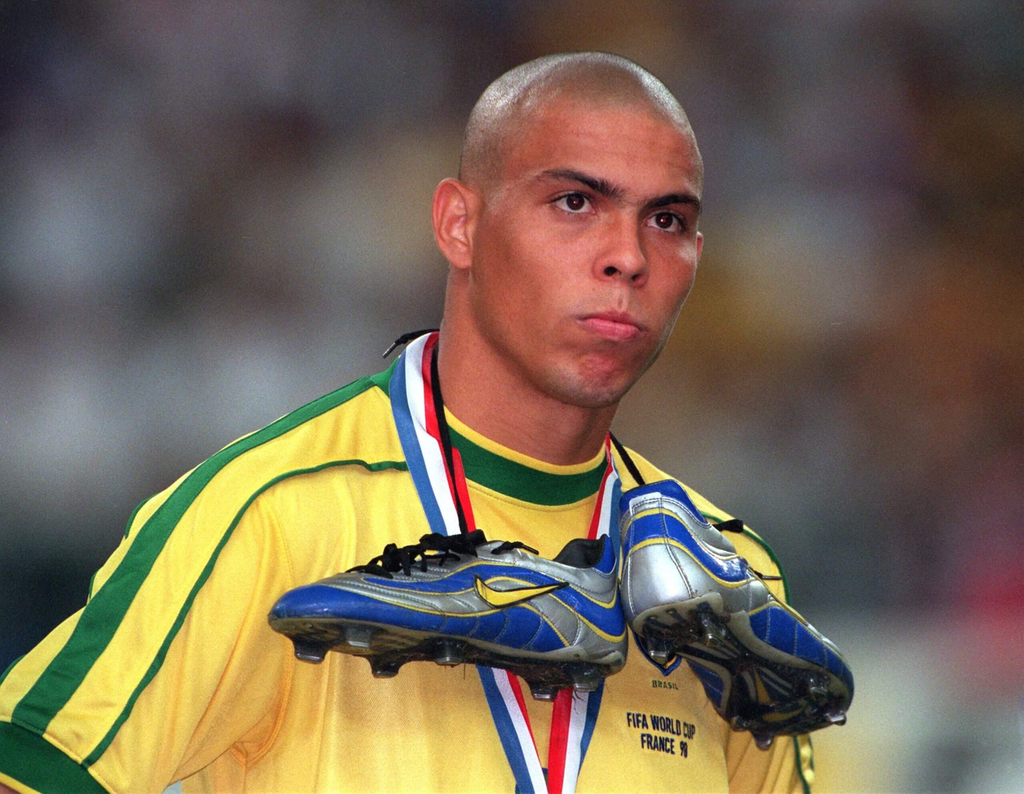
  • Ronald’s Journey to the 1998 WC

    In the 1998 sports illustrated article highlights Ronaldo as one of the most dynamic and exciting players that were heading into the 1998 FIFA World Cup. It emphasized how rare he was with his blend of speed, strength and creativity, and how he also brought so much joy into the games he would play, setting him aside from other stars. Ronaldo is portrayed as a player who had to carry inventive expectations from his team and from the nation of Brazil in hopes of securing their fifth World Cup title.

    Despite his global theme, the article pinpoint that Ronaldo had to face, intense pressure and criticism, especially with his scoring begin to slump. Despite that he would’ve consistently tried to prove his talent through remarkable performances. Although the article also seems to contrast his worldwide recognition with the lack of popularity he had within the United States. The article presented Ronaldo as both a symbol of Brazilian soccer culture in the global icon, whose talent and his personality defined him through his tournaments. Making him a crucial piece during the 1998 World Cup.

    By: Abraham Cruz-Hernandez

  • Ronaldo’s Success and Downfall

    By: Abraham Cruz-Hernandez

    In Golazo, Chapter 9 it deepens the focus on the dramatic and mysterious events that surrounded the final of the 1998 World Cup around Ronaldo. It centers around the sudden medical crisis before the match. At the age of 21, Ronaldo is described as one of the best players in the world, combining his speed, strength, and extraordinary skill. His rise from his childhood from poverty in Rio de Janeiro to professional athlete highlights both his natural talent and his relentless scoring ability across European clubs.

    This piece emphasizes how Ronaldo’s style reflects Brazils broader national identity. Expressive, confidence, and joyful. Despite intense pressure and fame. He remained focus on enjoying the sport and proving himself to the world and his haters. As Brazil heads into the 1998 World Cup, Ronaldo symbolizes both the teams immense talent and their ambition to win their fifth title, bringing their own signature joy and flair to the global stage.

  • Mexico City 1970 Pele Win

    Mexico’s 1970 World Cup was for many firsts

    First in

    • North America
    • In Color
    • Higher Altitude
    • First Adidas soccer ball
    • Use of Substitutions
    • Foul Card

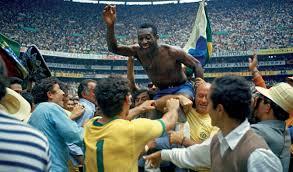
    The World Cup in Mexico proved the success that soccer can have globally. It was the first World Cup to broadcast in color, allowing millions of viewers around the world to watch the sport in the new, vivid and colorful way, allowing it to grow more popular around the world. Like I mentioned before, it was the first time yellow and red cards were introduced, which gave the referees a more clear way to communicate warnings and expulsions to players and fans watching. Substitutions also became a new major change that allowed new tactical possibilities for teams throughout the tournament. The first game that also featured the new Adidas Telstar ball, which was actually designed for a black and white color display, but captivated the audience during the games as it was now televised in color. As well as becoming and iconic World Cup as Pelé was photographed in the Estadio Azteca after their victory, and becoming world champions. Overall the tournament helped modernize soccer and expand its global influence through invasion. Media exposure, and unforgettable performance is performed by the players.

    Abraham Cruz-Hernandez

  • 1930 Uruguay world cup

    Snapshots of Modernity shows how Uruguay became a powerhouse in soccer by hosting the first ever World Cup in 1930. The article shows how photography helped Uruguay present itself as a modern in progressive nation during its centennial celebrations from its independence of Brazil.

    The photographs help highlight, new stadiums, huge crowds, and heroic athletes, who is symbolize technological advancements and a civic unity. The images of packed stands and thrilled spectators, suggested a Democratic participation which portrayed soccer as a shared national experience, that appeals to all sorts of class divisions. They emphasize masculine athleticism, respectable femininity, and racial struggles.

    Acuña shows that the World Cup is within a broader political context. Uruguay used the tournament and the images that circulated around the world as a way to enhance their international prestige and to show their political stability. As well as how football photography functioned as a way of showing both domestic and foreign audiences how to perceive a nation. In the end, the 1930 World Cup photographs show that there is meaning to these images as they helped construct a narrative of Uruguay as a modern democratic and unified country as well as how sports and media shaped national identity during the early 20th century.

    – Abraham Cruz-Hernandez

  • Chapter 1 (Abraham Cruz-Hernandez)

    Chapter 1 explains how modern day football has developed and how the first World Cup emerged. It talks about ball games in MesoAmerica where the Europeans were interested in the ball game. Although modern-day football took place during the 19th century, England, that plays standardize rules in schools and clubs. The creation of the football Association helped distinguish the difference in ball game and helped it spread easily around the world.

    Countries in Latin America like Uruguay and Argentina embraced the sport as symbol of modernity and gaining international status This led to the creation of FIFA in 1904leading to the 1930 Uruguay World Cup despite European lack of participation the tournament united the countries. The sport demonstrated how it united countries and shows nationalism

  • How Mexico’s 1970 world cup changed futbol forever

    This weeks article was about the first World Cup ever hosted in North America. Which has a huge impact on the way the rest of the world in how Mexico represented a different model of nation-building and showing the modernity instead of the state-led project behind the 1968 Olympic Games. During 1940’s-1970’s known as the Mexican Miracle the Mexican Government used sports as part of their cultural diplomacy. It wasn’t until the 1970 World Cup where it wasn’t planned out by the state instead it was through private networks of the football and media elites.

    When it comes to Mexico it very politically dominated and corrupt and although it brought economic growth to the country it was also unfortunately under the authoritarian rule of the PRI political party. Unlike other countries where they had a major input on the outcome of these events. Soccer was completely dominated by rich private businessmen who owned clubs, stadiums, and media outlets.

    The article highlights the rise of Guillermo Cañedo and Emilio Azcárraga. As Azcárraga rose to fame as the heir of Televisa which owns Club America and controlled the television broadcasting at the time. Cañedo rose to fame from a small club owner to President of the Mexican Federation and Vice President of FIFA. Together they both dominated the Soccer industry in Mexico.

    Despite Mexico winning as host nation for the 1970 World Cup not just because of their infrastructure but as well as the Cold War and decolonization issues going on. This also reinforced the power of Cañedo and Azcárraga as their business grew bigger as they did also the planning for the World Cup.

    -Abraham Cruz-Hernandez

css.php