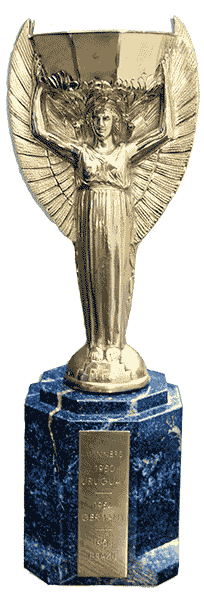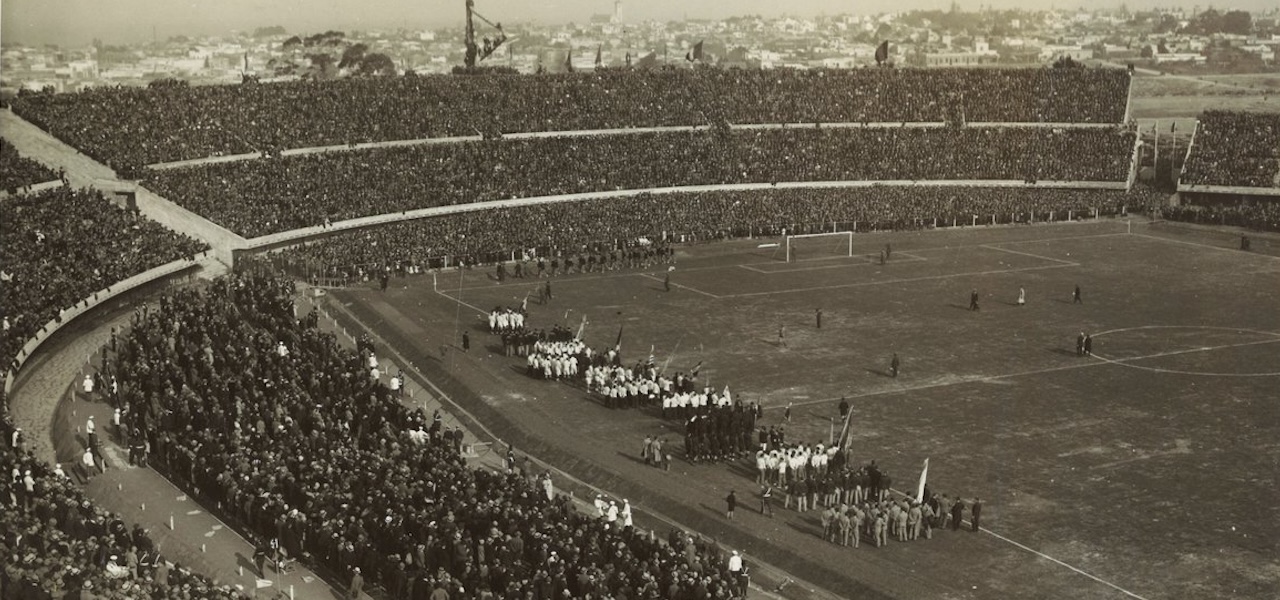
The FIFA World Cup is the biggest sporting event in the world, watched by more than four billion people around the world. But it didn’t start that way. In this unit, we will look at the amateur beginnings of world football, the emergence of FIFA as an economic and political entity, and the early history of the tournament. Before FIFA created its own tournament, the International Olympic Committee (IOC) asked FIFA to organize the men’s football event at the 1924 and 1928 Summer Olympics, held in Paris and Amsterdam respectively. Football fever gripped Europe at the time. However, it was the small South American nation of Uruguay that won the gold medal and captivated audiences with its free-flowing style of play. Their triumphs generated the Europe-South America rivalry that continues to define international football
In this unit, we examine the early roots of association football, the first international tournaments in South America and the Summer Olympics, first World Cup held in Uruguay in 1930, and the rise of Italian calico under Mussolini’s Fascist Italy. We end with an overview of the FIFA World Cups in the Cold War era.
Topics to Discuss
- Origins of “Soccer” (Association Football) [Feb 3 and 5]
- 1910-30s. Early tournaments, the first World Cup (1930 Uruguay), and Fascist Italy. [Feb 10 & 12]
- 1950. The “Miracle on Grass” and the “Maracanazo”: 1950 World Cup final in Rio de Janeiro (Uruguay vs Brazil) [Feb 17]
- 1950-1982. World Cups in the Post-WWII & Cold War era. [Feb 19]